
When to Call a Mechanical Contractor for Building Systems
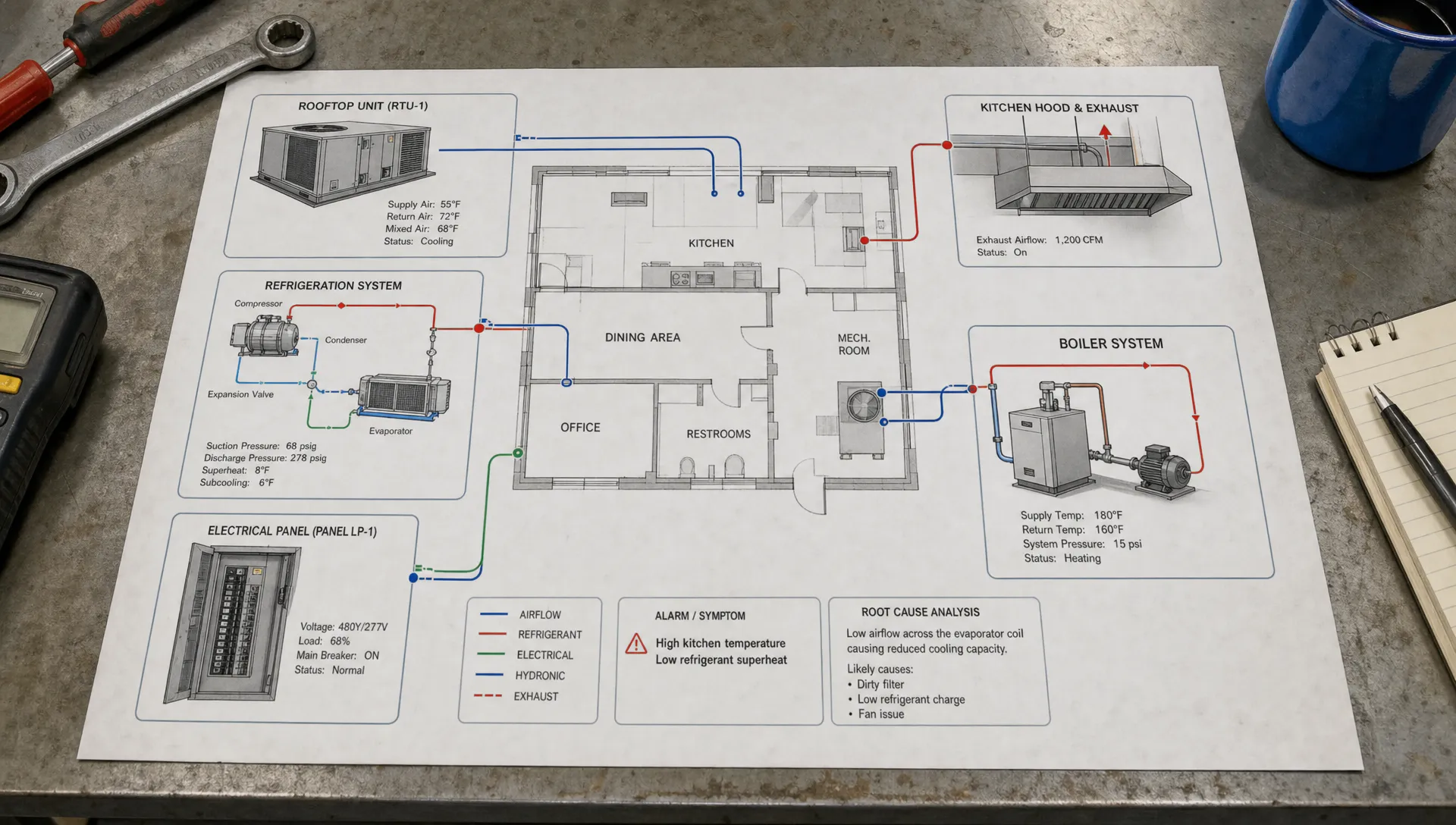
Commercial buildings depend on systems that rarely operate in isolation. A rooftop HVAC unit affects airflow and comfort, but it may also tie into electrical panels, ductwork, controls, gas piping and building ventilation. A walk-in cooler is refrigeration equipment, but a temperature failure can involve compressors, relays, evaporator fans, drain lines, door gaskets or the electrical circuit feeding the unit.
That is where a mechanical contractor becomes different from a single-trade repair vendor. For facility managers, restaurant owners, food processing operators and property managers, knowing when to call a mechanical contractor can prevent downtime, protect inventory and reduce the risk of unsafe repairs.
If you are searching for a “mechanical contractor near me,” the real question is not only who is closest. It is whether the contractor can diagnose the full building system, not just the first failed part they notice.
What a mechanical contractor does for commercial buildings
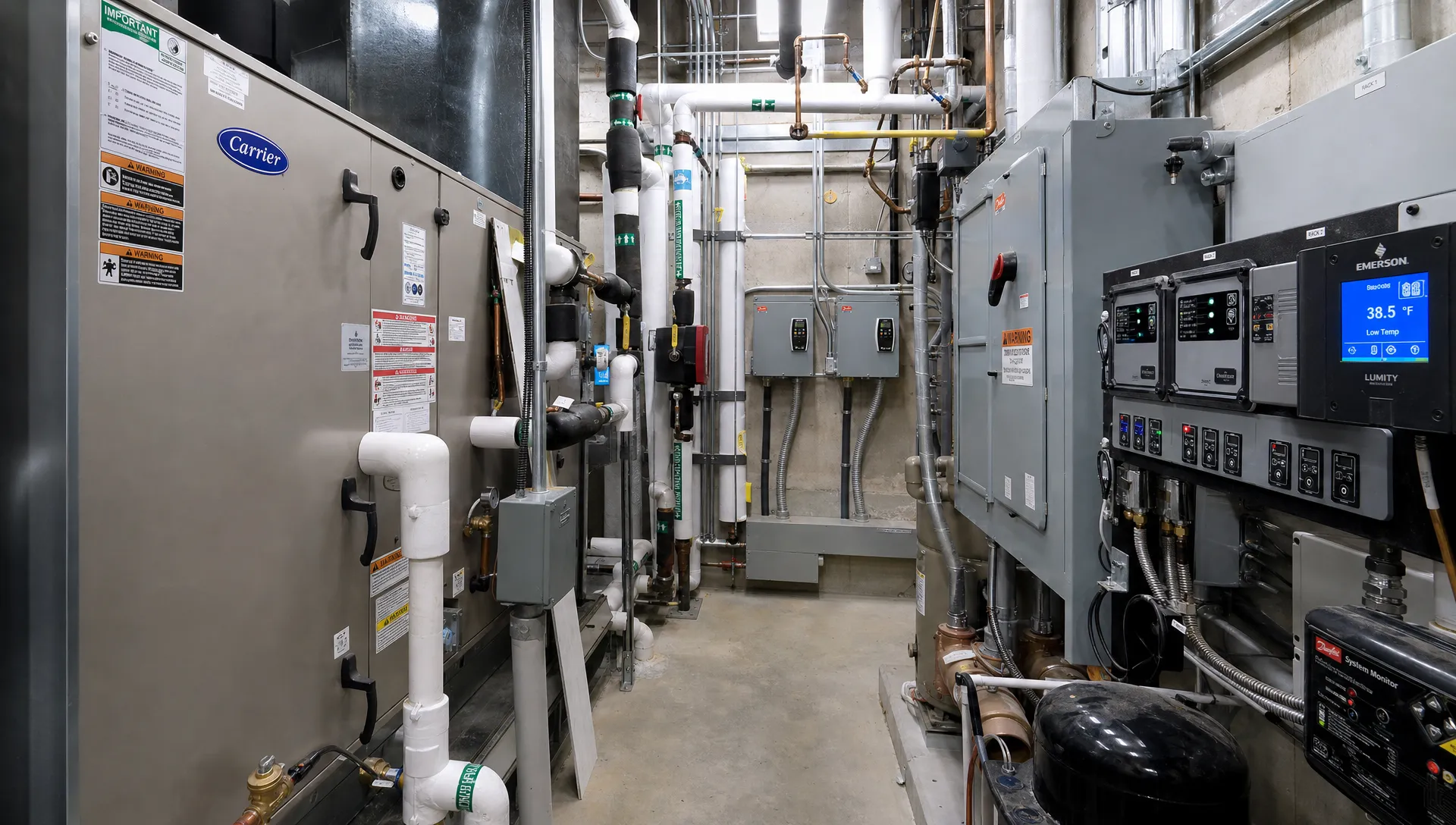
A mechanical contractor works on the systems that move air, water, refrigerant, heat, gas and sometimes compressed air through a commercial facility. In practical terms, that can include commercial HVAC, refrigeration, boilers, chillers, kitchen exhaust, ductwork, gas piping, air compressors and related controls.
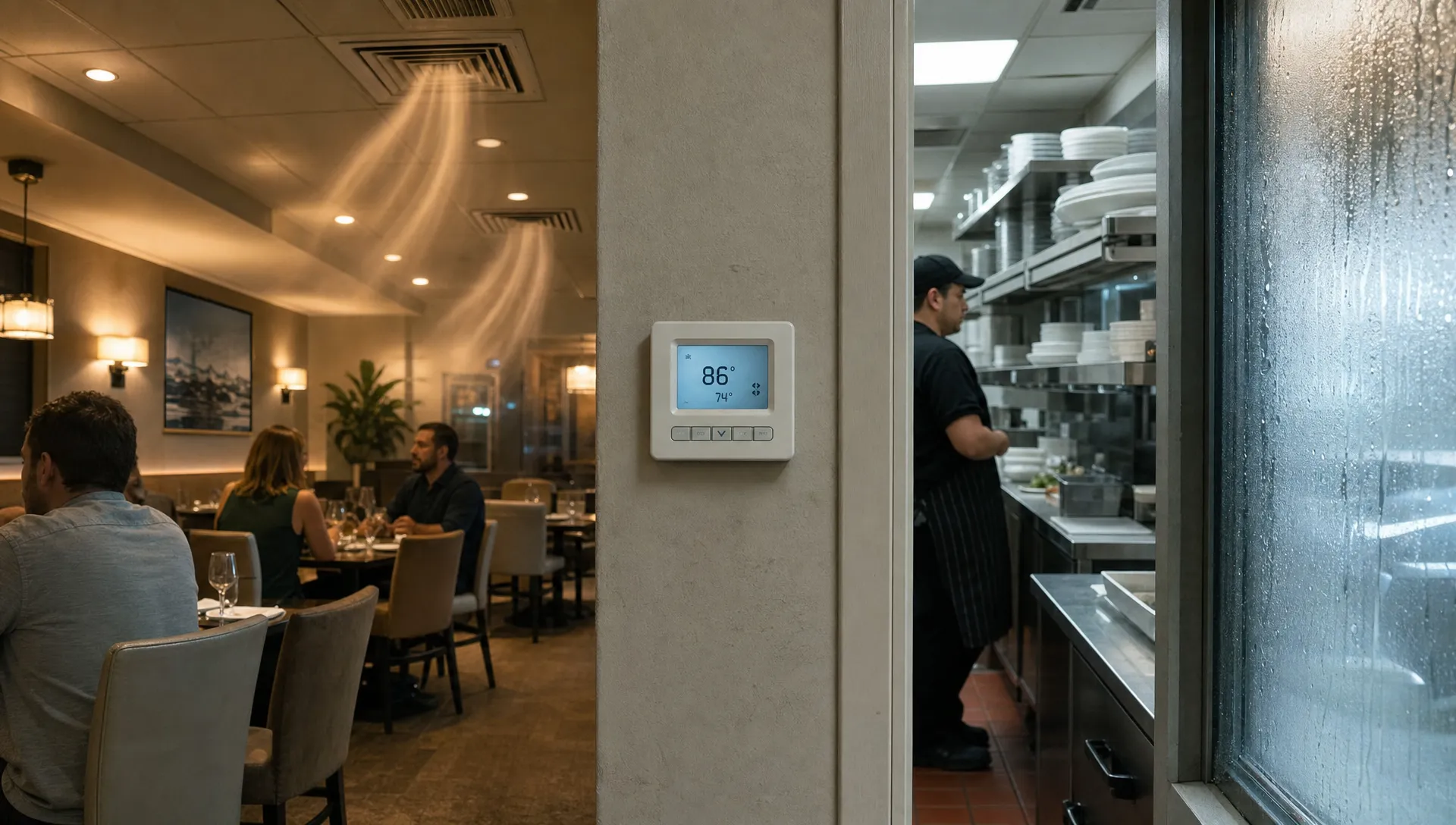
In a small office, the issue might be a rooftop unit that is short cycling. In a restaurant, it might be a make-up air problem causing the kitchen hood to pull poorly. In a dairy, cold storage facility or brewery, it might be a refrigeration and electrical issue happening at the same time. The value of a mechanical contractor is that they look at the system as a connected whole.
That matters because the visible symptom is often not the root cause. A warm dining room may come from a failing compressor, but it may also come from a clogged coil, low airflow, a thermostat issue, undersized ductwork or an exhaust imbalance. A freezer that cannot hold temperature may not need a new box. It may need a defrost repair, door adjustment, refrigerant diagnosis or electrical troubleshooting.
For commercial facilities, this broader view is especially important because downtime usually costs more than the service call. Lost product, unhappy tenants, failed inspections, canceled service and emergency replacement decisions can all stem from waiting too long or calling the wrong type of contractor.
Call a mechanical contractor immediately for safety-critical symptoms
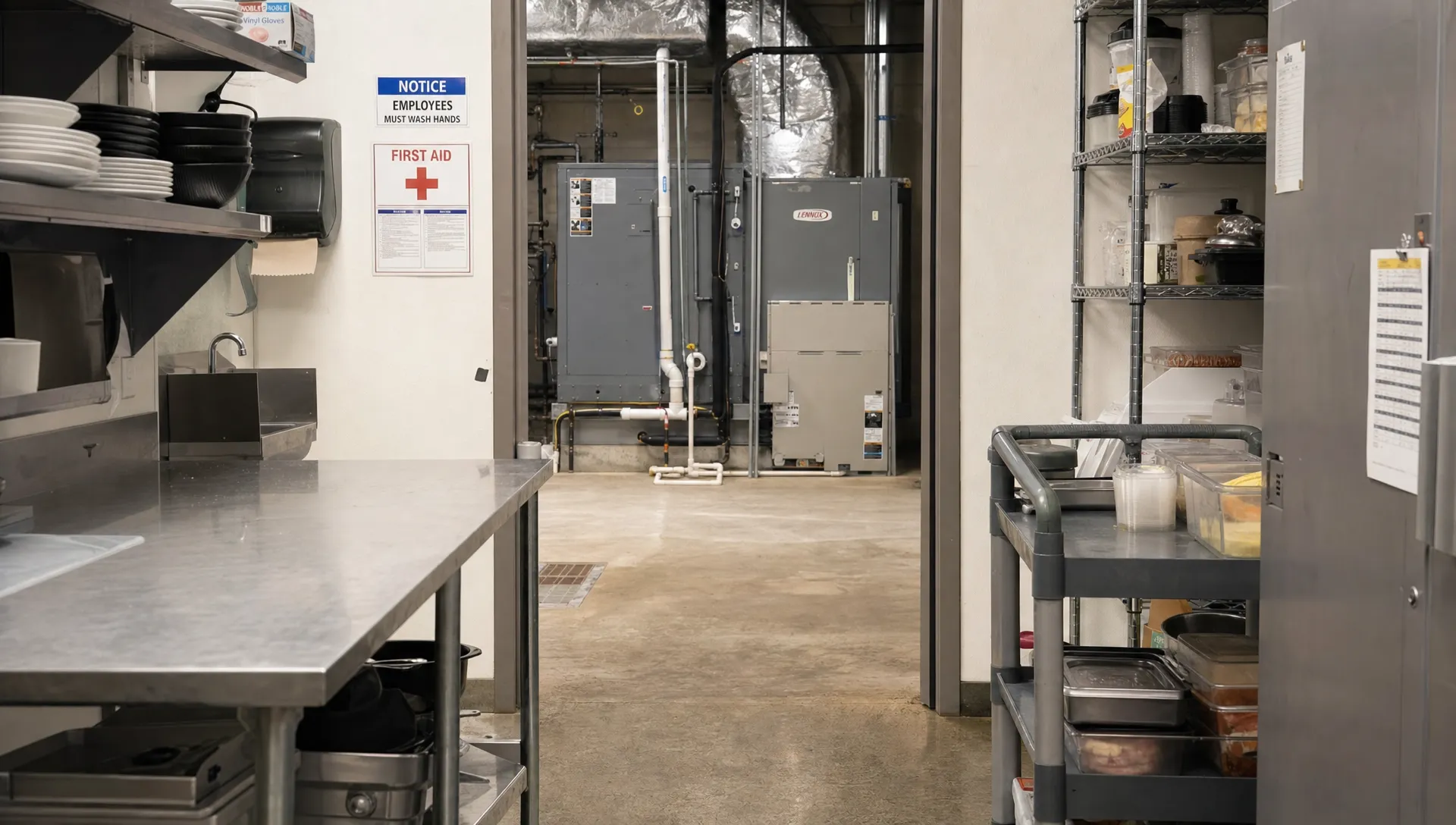
Some building system problems should be treated as urgent, even if the equipment has not fully failed yet. Safety comes first. If there is an active fire, suspected carbon monoxide exposure, a strong gas odor or an immediate electrical hazard, evacuate as appropriate and call emergency services or the utility before calling a repair contractor.
Once the immediate life-safety concern is addressed, a qualified mechanical contractor should inspect the affected system before it is returned to service. That is especially true for boilers, gas-fired equipment, commercial kitchens, electrical panels and mechanical rooms.
Gas, combustion or boiler warning signs
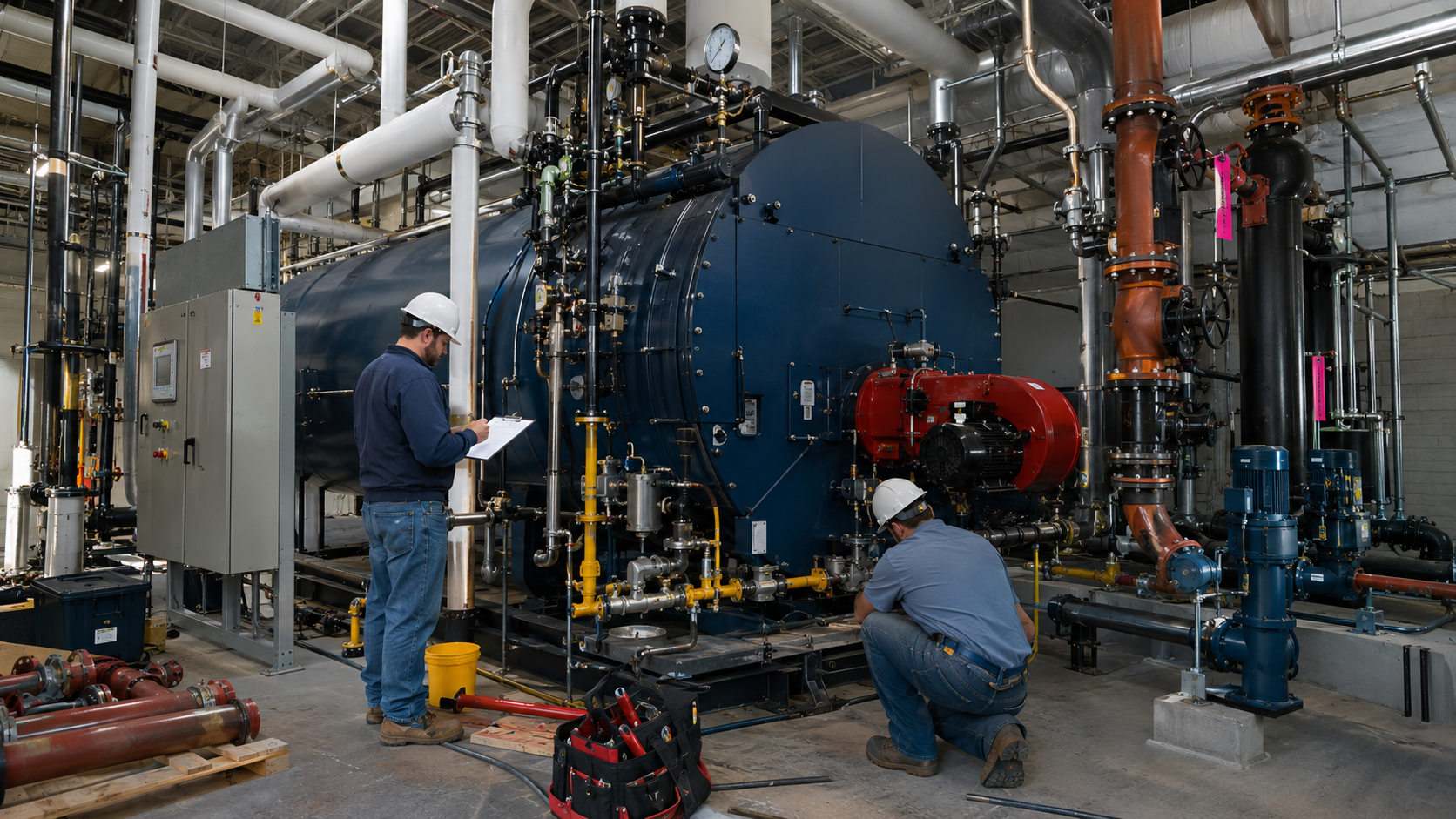
Call right away if you notice unusual burner behavior, rollout, soot, repeated boiler lockouts, pressure problems, banging pipes, water around boiler equipment or a combustion smell. Commercial boilers and gas-fired appliances should not be treated as trial-and-error repairs.
A cracked boiler combustion chamber, failed heat exchanger or unsafe combustion condition can put occupants and staff at risk. A contractor should be able to test and show the evidence, not simply say that replacement is needed. For commercial buildings, documentation matters because owners, managers and inspectors may need a clear record of what failed and why.
Electrical symptoms tied to mechanical equipment
Repeated breaker trips, hot disconnects, burning odors, buzzing panels, motor failures or flickering lights near equipment should not be ignored. Mechanical systems often fail because of electrical conditions, and electrical systems can be damaged by failing motors, compressors or controls.
The National Electrical Code, published by NFPA as NFPA 70, is the core safety standard for electrical installation in the United States. In a commercial setting, repair work needs to respect both equipment requirements and code requirements. If a freezer, RTU, exhaust fan or air compressor keeps tripping a breaker, replacing the breaker without diagnosing the load can create a larger hazard.
For issues involving panels, circuits, motors or power distribution, a contractor with commercial mechanical and electrical capability can reduce finger-pointing between separate vendors. VA Commercial Repair Solutions covers this kind of overlap through its commercial electric repair service, which is useful when the symptom sits between the equipment and the electrical infrastructure.
Refrigeration temperature failures
Restaurants, grocery operations, cafeterias, breweries, wineries, dairies and cold storage facilities should call quickly when refrigeration equipment cannot hold temperature. Waiting overnight can turn a repair into a product-loss event.
The FDA Food Code uses 41 degrees Fahrenheit or below as the cold-holding standard for many time and temperature control foods. Facility teams should follow their own food safety procedures and local health department requirements, but a walk-in cooler trending upward should be treated as urgent before it becomes a failed inspection or discarded inventory.
A mechanical contractor should inspect the entire refrigeration system, including evaporator fans, condenser condition, drain problems, defrost controls, door seals, refrigerant level and electrical components. Refrigerant work should be handled by properly certified technicians. The EPA’s Section 608 technician certification requirements apply to technicians who maintain, service, repair or dispose of equipment that could release refrigerants.
Kitchen exhaust and make-up air problems
Commercial kitchens rely on balanced ventilation. If the hood is not capturing smoke, grease vapor or heat properly, the issue may involve exhaust fans, make-up air, belts, ductwork, controls or the design of the hood system itself.
Warning signs include smoke spilling into the kitchen, doors becoming hard to open, pilot lights being affected by airflow, hot kitchen conditions, grease odors outside the hood area or fan noise that changes suddenly. These are not just comfort problems. They can affect fire safety, employee working conditions and health inspection readiness.
A mechanical contractor experienced with commercial kitchens can evaluate the hood, exhaust fan, make-up air and related electrical controls together instead of treating each component separately.
Call before performance problems become shutdowns
Not every mechanical issue looks like an emergency at first. Many failures begin as small changes in performance. The system still runs, but it takes longer to recover, makes more noise, uses more energy or needs frequent resets.
For commercial HVAC systems, early signs include hot and cold zones, weak airflow, short cycling, recurring thermostat complaints, unusual odors, rising utility use or water around equipment. If the issue is specifically with air conditioning, this guide to commercial HVAC repair covers how maintenance and timely diagnosis can prevent larger failures.
For refrigeration, pay attention to frost buildup, longer compressor run times, water on the floor, fluctuating case temperatures, noisy fan motors and repeated ice maker faults. For boilers and chillers, warning signs include slow recovery, alarms, leaks, pump noise, water treatment concerns or pressure changes.
The best time to call is often when the pattern changes, not when the unit stops. Facility staff usually know what normal looks and sounds like. If something feels different for two or three shifts in a row, document it and have it checked.
| Symptom in the Building | Possible System Involved | Why a Mechanical Contractor Helps |
|---|---|---|
| Dining room is warm while kitchen is under negative pressure | HVAC, exhaust, make-up air | The comfort complaint may be caused by ventilation imbalance, not just AC capacity |
| Walk-in cooler temperature rises during peak kitchen hours | Refrigeration, doors, electrical load, airflow | The system needs full diagnosis before product is lost |
| Boiler trips repeatedly after reset | Boiler, controls, gas train, pumps, safety devices | Repeated resets can hide unsafe operating conditions |
| Exhaust fan runs but hood capture is poor | Hood, fan, belts, make-up air, ductwork | Fan operation alone does not prove proper kitchen ventilation |
| Breaker trips when compressor starts | Refrigeration or HVAC plus electrical | The root cause may be a motor, compressor, wiring or panel issue |
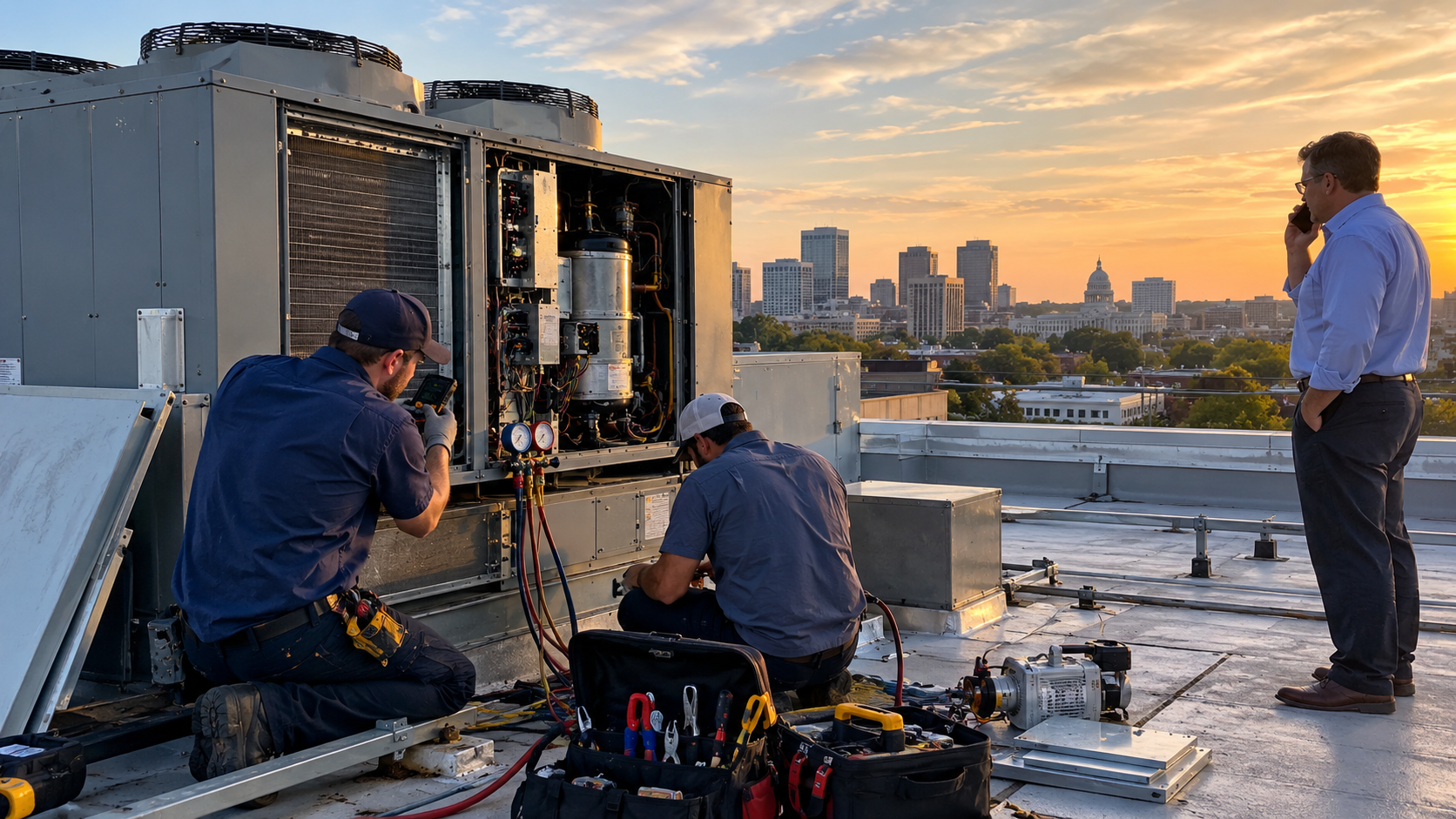
| Rooftop unit is difficult or unsafe to access | HVAC, roof access, safety equipment | Service may require proper access, fall protection or fabricated ladder solutions |
Call for planned projects, not just emergency repairs
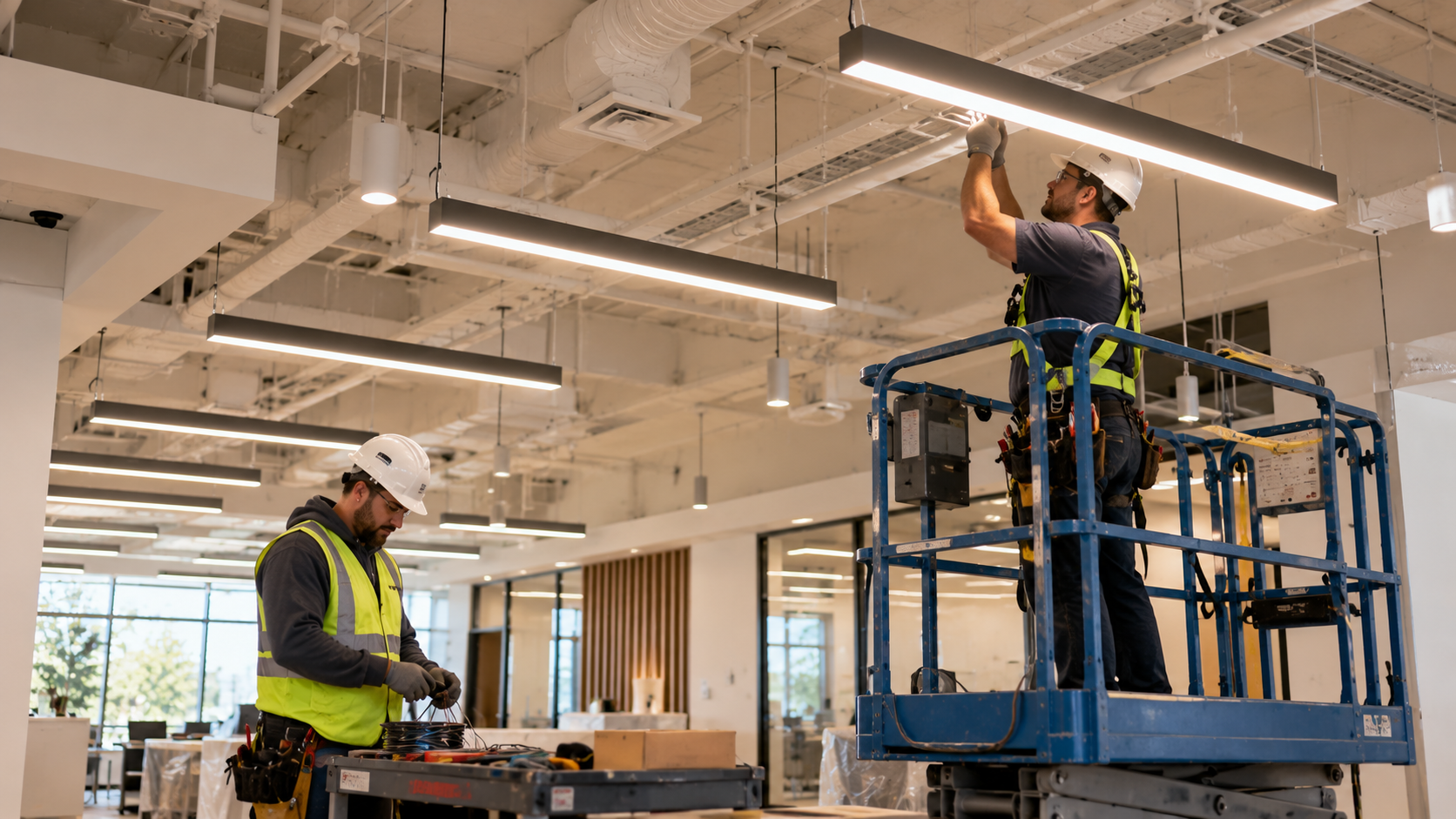
Mechanical contractors are not only for breakdowns. They should be involved early when a building is being renovated, a kitchen is being built out, a tenant is changing use or production demands are increasing.
For example, a restaurant adding cooking equipment may need more than a new appliance connection. It may need hood changes, fire suppression coordination, make-up air, gas piping, electrical circuits and possibly rooftop equipment modifications.
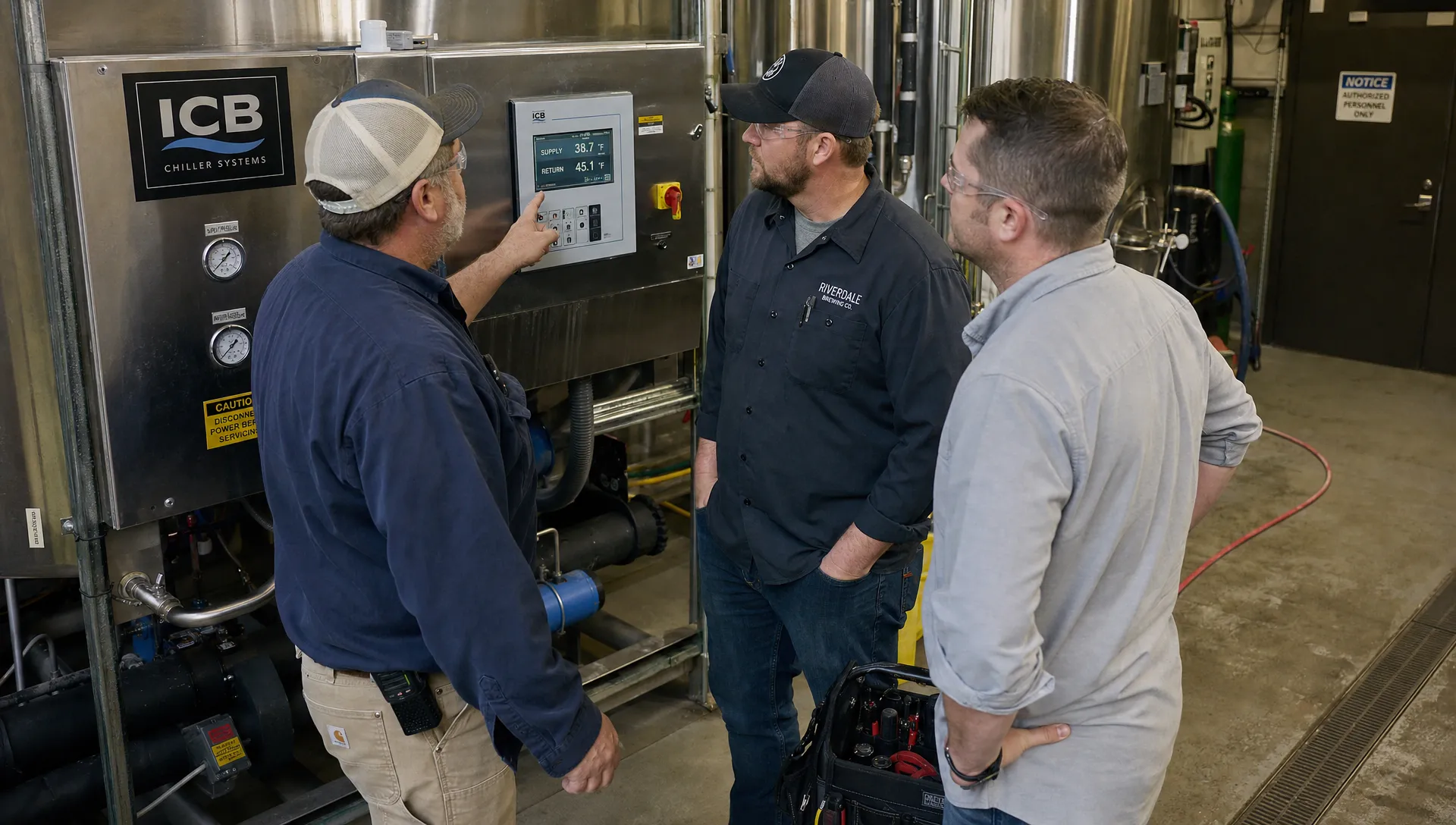
A brewery expanding production may need chiller capacity, stainless piping, controls, compressed air and refrigeration planning. A cold storage facility may need electrical service upgrades before additional refrigeration load is added.
Calling early reduces expensive rework. It also helps the owner understand whether the current building systems can support the new load. A low bid on equipment can become expensive if the contractor did not account for electrical service, ventilation, access, code clearance or maintenance needs.
Facilities in more specialized environments, such as breweries, vineyards and agricultural processing sites, often need contractors who understand production downtime as well as mechanical repair. VA Commercial Repair Solutions discusses this type of work in its guide to specialty and industrial contractors for microbreweries, vineyards and agricultural facilities in Virginia.
Call when you need one accountable contractor across trades
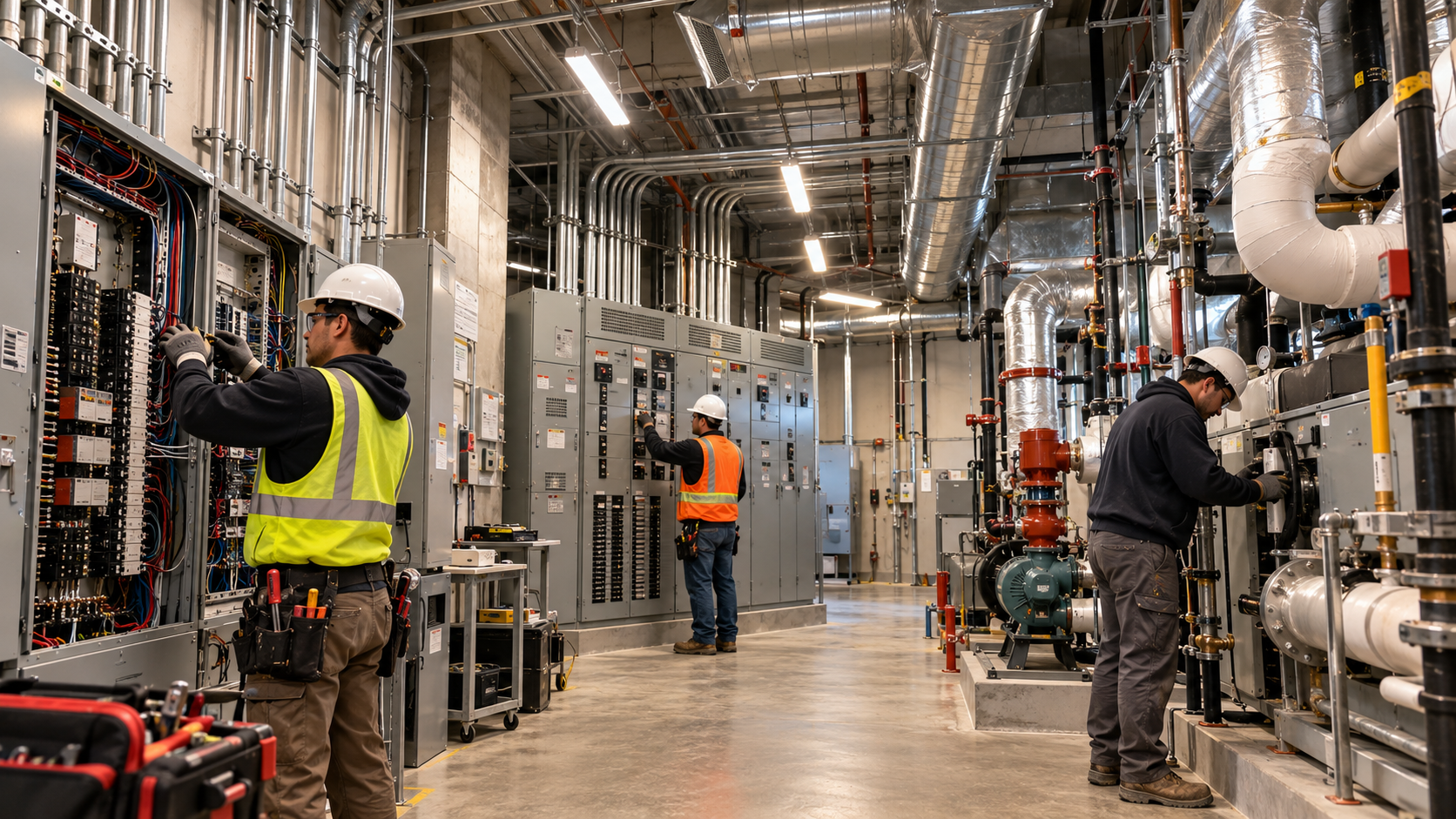
Many commercial failures sit between trades. A refrigeration technician may say the panel is the problem. An electrician may say the compressor is the problem. A hood vendor may say the fan runs, while the kitchen staff still complains that smoke is spilling into the room.
That is when a mechanical contractor with multi-trade capability becomes valuable. One contractor can diagnose how the systems interact, assign the right technician and take responsibility for the repair path.
This is especially useful for:
- Restaurants and commercial kitchens with HVAC, refrigeration, exhaust, gas and appliance issues
- Food processing facilities where electrical timing, refrigeration and ventilation affect production
- Institutional kitchens in schools, healthcare facilities or government buildings
- Retail or office buildings with multiple rooftop units and recurring comfort complaints
- Breweries, wineries and cold storage operations with chillers, pumps, stainless piping and temperature-sensitive inventory
A single accountable contractor can also improve maintenance planning. Instead of tracking separate service schedules for HVAC, refrigeration, ice makers, exhaust fans and boilers, the facility can build one preventive maintenance plan around the equipment that is most critical to operations.
How to decide if the issue is mechanical, electrical or both
Building staff do not need to diagnose the failure before calling. Still, a few observations can help the contractor dispatch the right person and bring the right parts or test equipment.
Before you call, gather the equipment nameplate if it is safe to access, the model and serial number if available, the symptoms, recent service history and any alarm codes. Note whether the problem is constant or intermittent, whether it happens during peak load and whether anything changed recently, such as a new appliance, remodel, weather event, power outage or filter change.
Do not remove guards, open panels or bypass safeties to gather information. Commercial equipment can contain high voltage, hot surfaces, moving parts, pressurized refrigerant or gas components. A good service call starts with useful observations, not risky troubleshooting.
How to choose the right mechanical contractor near you
When you search for a mechanical contractor near me, proximity is only one factor. For a commercial facility, the contractor should be qualified for the equipment, the building type and the urgency of the work.
Look for a contractor with clear commercial experience, appropriate licensing, refrigeration capability, electrical knowledge, emergency response and a repair-first approach. Ask whether the company works on the exact equipment category involved, such as walk-in coolers, ice makers, RTUs, boilers, chillers, kitchen hoods or 3-phase equipment.
In Virginia, licensing matters. VA Commercial Repair Solutions is a Class A mechanical and electrical contractor, VA License #2705180394, serving commercial and industrial clients across areas including Fishersville, Charlottesville, Harrisonburg, Waynesboro, Staunton and Lexington. The company is built around commercial systems rather than residential calls, which matters when the equipment affects business operations.
For facilities in Augusta County and surrounding areas, this article on hiring an HVAC contractor in Fishersville, VA offers additional contractor selection questions that apply well beyond standard heating and cooling.
When a maintenance plan makes more sense than repeated service calls
If your facility calls only after equipment fails, you are letting the weakest component set the schedule. Preventive maintenance is not just about cleaning filters. It should identify changes in amperage, airflow, refrigerant performance, belts, bearings, electrical connections, drains, controls and combustion conditions before they turn into shutdowns.
Maintenance planning is most valuable when downtime has a direct cost. That includes restaurants, food service operations, hotels, schools, breweries, wineries, agricultural processing plants and any building with tenant comfort obligations.
A maintenance plan also creates service history. That history helps with warranty discussions, replacement planning, budgeting and decisions about whether a system should be repaired, converted, upgraded or replaced.
Frequently Asked Questions
What is the difference between a mechanical contractor and an HVAC contractor? An HVAC contractor typically focuses on heating, ventilation and air conditioning. A mechanical contractor may cover HVAC plus related commercial systems such as refrigeration, boilers, chillers, ductwork, exhaust, gas piping, compressed air and equipment controls.
Should I call a mechanical contractor for a walk-in cooler problem? Yes, especially if the cooler serves food, beverage or production inventory. A walk-in temperature issue can involve refrigeration, airflow, defrost controls, door seals, drains or electrical components, so a full system diagnosis is safer than guessing.
When is a building system problem an emergency? Treat it as urgent if there is a gas odor, suspected carbon monoxide, burning smell, repeated breaker trips, boiler safety issue, failed kitchen exhaust, rising refrigeration temperatures or equipment shutdown that threatens operations. For active life-safety hazards, call emergency services or the utility first.
Can one contractor handle both mechanical and electrical problems? Some can, but not all. Commercial buildings often need a contractor licensed and staffed for both mechanical and electrical work, especially when motors, compressors, panels, controls and equipment loads interact.
How early should I call a mechanical contractor for a renovation or new equipment installation? Call before purchasing equipment or finalizing the layout. The contractor can verify capacity, ventilation, electrical service, gas piping, access, drainage and code-related requirements before changes become expensive.
Need a mechanical contractor for a commercial building in Virginia?
If your building systems are affecting comfort, food safety, production or tenant operations, do not wait for a complete shutdown. VA Commercial Repair Solutions serves commercial and industrial facilities across central Virginia and the Shenandoah Valley with HVAC, refrigeration, electrical, boiler, chiller, exhaust hood and mechanical repair support.
Calls are answered 24/7 by a live person, not voicemail. To discuss a repair, maintenance plan or commercial project, contact VA Commercial Repair Solutions or call (540) 457-4822.
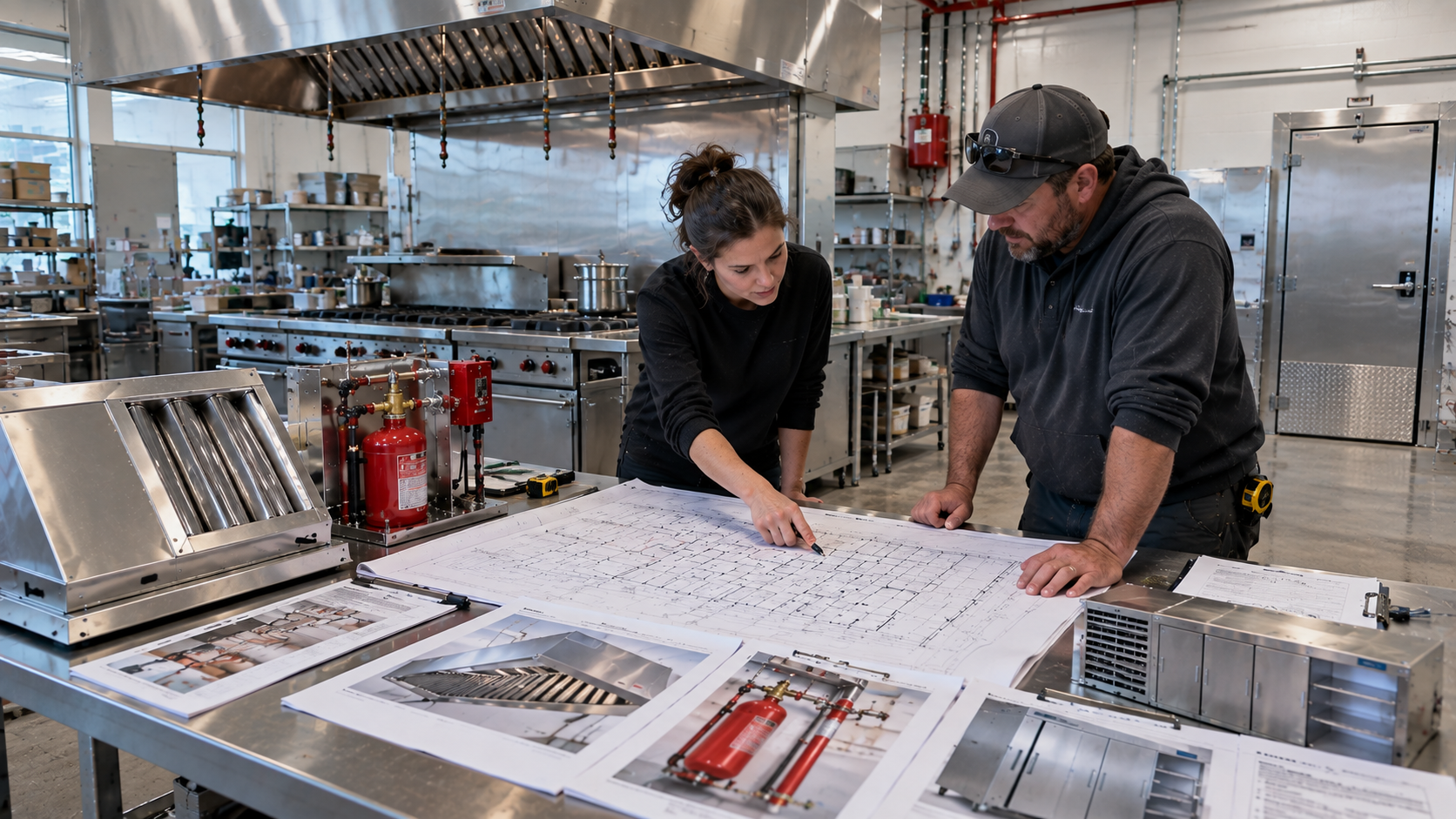
Opening a Restaurant in Virginia: Kitchen Design, Hood, Fire Suppression and Refrigeration Checklist