

Industrial Machine Repair vs Replacement: How Virginia Plants Decide
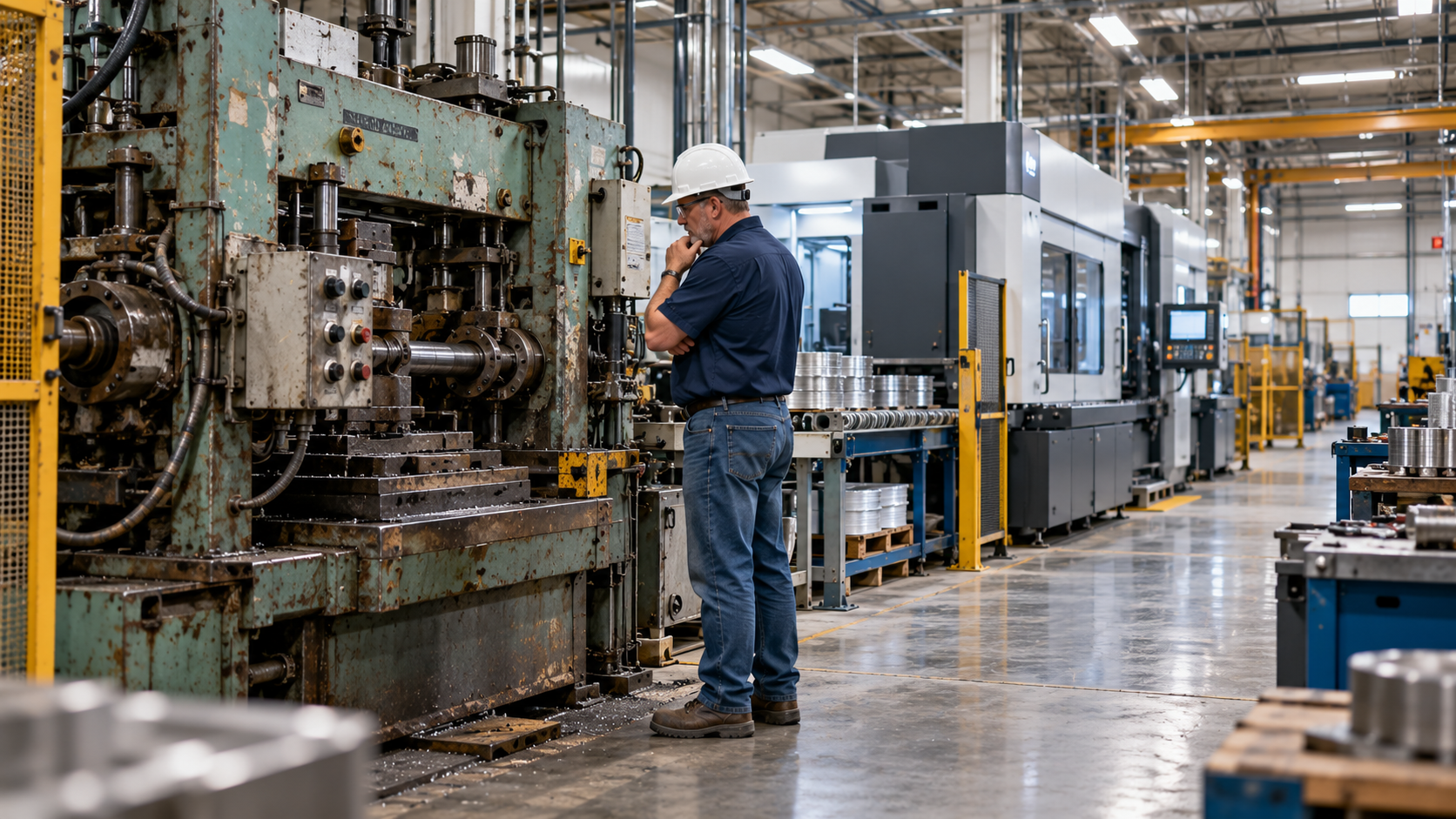
A conveyor gearbox starts grinding at 2 a.m., and the first shift arrives in four hours. The maintenance lead holds a repair quote in one hand and a replacement price in the other. Neither number tells the whole story.
Plants across Virginia face this call constantly. A poultry line in the Shenandoah Valley, a bottling floor near Charlottesville, and a Roanoke machine shop all weigh it.
The choice is simple to state. Spend on a fix and hope it holds, or commit capital to something new.
This guide gives you a decision method instead of a slogan. You will see the cost ratios, downtime math, and efficiency data that separate a smart repair from a delayed replacement. It also shows how to build a repeatable process, so the next decision takes minutes instead of meetings.
Why this decision is really about downtime
The repair bill is rarely the biggest number in the room. Lost production usually is.
Siemens' True Cost of Downtime report found that unplanned downtime costs the world's 500 largest companies 11% of their revenues. That adds up to roughly $1.4 trillion a year. The same report puts automotive downtime at $2.3 million an hour.
Your plant is smaller, but the logic scales down cleanly. A food processor that loses a cooling line can lose a full shift of product. A fabrication shop that loses one spindle can lose a customer.
That is why the first question is not what the repair costs. Ask what each hour of stoppage costs your facility. Put a dollar figure on that hour before a failure forces the issue.
Include every real cost in that figure: lost output, overtime, spoiled material, expedited freight, and late-delivery penalties. Once you have it, every other calculation in this guide gets easier. A cheap repair that takes three days can cost more than an expensive replacement that arrives tomorrow.
The core math: repair cost against replacement cost
Start with a simple ratio. Divide the repair quote by the installed price of a comparable new unit.
For electric motors, one motor repair-versus-replace guide cites a 60% threshold from an Advanced Energy decision tree. If the repair exceeds 60% of a premium-efficiency replacement, the tree recommends buying new.
Service centers often quote a wider range of 50% to 80%. The guide notes that this range is commercial advice, not published analysis.
Treat the ratio as a first filter, not a verdict. A 40% repair on a 30-year-old machine can still be a poor bet. A 65% repair on a newer, well-supported machine can still be the right move.
The same guide describes a downtime override. If an hour of downtime costs more than twice the price of a new motor, buy new. Install it at the next scheduled outage, and keep a spare on the shelf.
Use the scorecard below as a first pass. Two or more replacement signals in a single row usually justify a deeper look.
| Factor | Leans toward repair | Leans toward replacement |
|---|---|---|
| Repair cost vs. new price | Under roughly 50% | Above roughly 60% |
| Machine age and parts | Parts stocked, design still supported | Obsolete parts, discontinued controls |
| Cost of downtime | Low, or a spare is on the shelf | High, with no backup path |
| Energy use | Efficient and matched to the load | Oversized, underloaded, or inefficient |
| Failure history | First or isolated failure | Repeat failures within 12 months |
| Safety and compliance | Guarding and controls meet current practice | Guards or controls cannot be brought current |
A worked example with simple numbers
Numbers make the framework real. The figures below are hypothetical, so swap in your own.
Imagine a mixing line fed by a 75-horsepower motor. The repair quote is $9,000 and takes four days. A new premium-efficiency motor costs $12,000 installed and arrives in two days.
The ratio is 75%, which already sits above the 60% review line. Now add downtime.
Suppose the line earns $4,000 an hour. The two extra days of repair time then cost far more than the $3,000 price gap. Replacement wins before efficiency even enters the picture.
Change one input and the answer flips. Suppose a spare motor sits on your shelf and the line has a backup.
Now downtime is nearly free, and the repair looks cheap. The same machine in a different context produces the opposite decision.
That is the point of running the numbers every time. The right answer depends on your inputs, not on a rule that someone else wrote.
Motors: where the math is best documented
Electric motors make a good test case because the data is public. The Department of Energy motor guidance states that motors account for roughly 60% of industrial electricity use. In process industries, the share passes 70%.
That share changes how you read a repair quote. A repair is usually cheaper up front. Over a motor's life, though, electricity dwarfs both prices.
The DOE guide works through a 100-horsepower example. Electricity made up about 95% of lifetime operating cost. The example assumed 6,300 run hours a year for 18 years.
For that reason, the DOE recommends a life-cycle cost analysis instead of comparing two invoices. A motor that runs thousands of hours a year rewards a more efficient replacement. A motor that runs a few hundred hours a year rarely does.
Size matters too. The repair-versus-replace guide notes that DOE's sourcebook puts the line at 15 horsepower. Below it, a new premium-efficiency motor may cost less than a repair.
Larger motors usually flip that logic. Breakpoints also move with your electricity rate, so run the numbers at your own rate.
Does a rewind ruin efficiency?
Not necessarily. The guide cites an EASA and AEMT study from 2003. Controlled-process rewinds changed efficiency by an average of 0.1 percentage point. Uncontrolled rewinds averaged a 0.4-point loss.
The guide also flags that EASA, the repair industry's trade association, co-sponsored those studies. The labs were independent, and the funding was disclosed. Still, ask your service shop which burnout process and test method it uses.
One more date belongs on your calendar. Federal efficiency levels apply to covered motors manufactured on or after June 1, 2027. Replacement prices and breakpoints may shift, so rerun your numbers before you set a long-term policy.
Compressors, conveyors, and process equipment
Motors are only one asset class. The same logic applies to the machines they drive.
Compressed air is a good example. A Compressed Air Challenge fact sheet says leaks can waste 20% to 30% of a compressor's output. Proactive detection and repair can bring that under 10%.
Check that finding before you buy anything. A compressor that seems undersized may simply be feeding leaks.
A compressed air leak audit shows how much capacity you already own. Fix the leaks first, then decide whether the machine is the problem.
Conveyors, gearboxes, and bearings usually favor repair. The frame, housing, and mounting outlast the wear parts. Replacing a chain, belt, or bearing set restores most of the machine's life.
Replacement makes sense when the frame is cracked or the drive is obsolete. It also makes sense when the line must run faster than the design allows.
Process equipment sits in the middle. Bottlers, labelers, grinders, and sealers often have stable designs and long parts support. The question is whether the repair restores consistent output, or only gets you through the week.
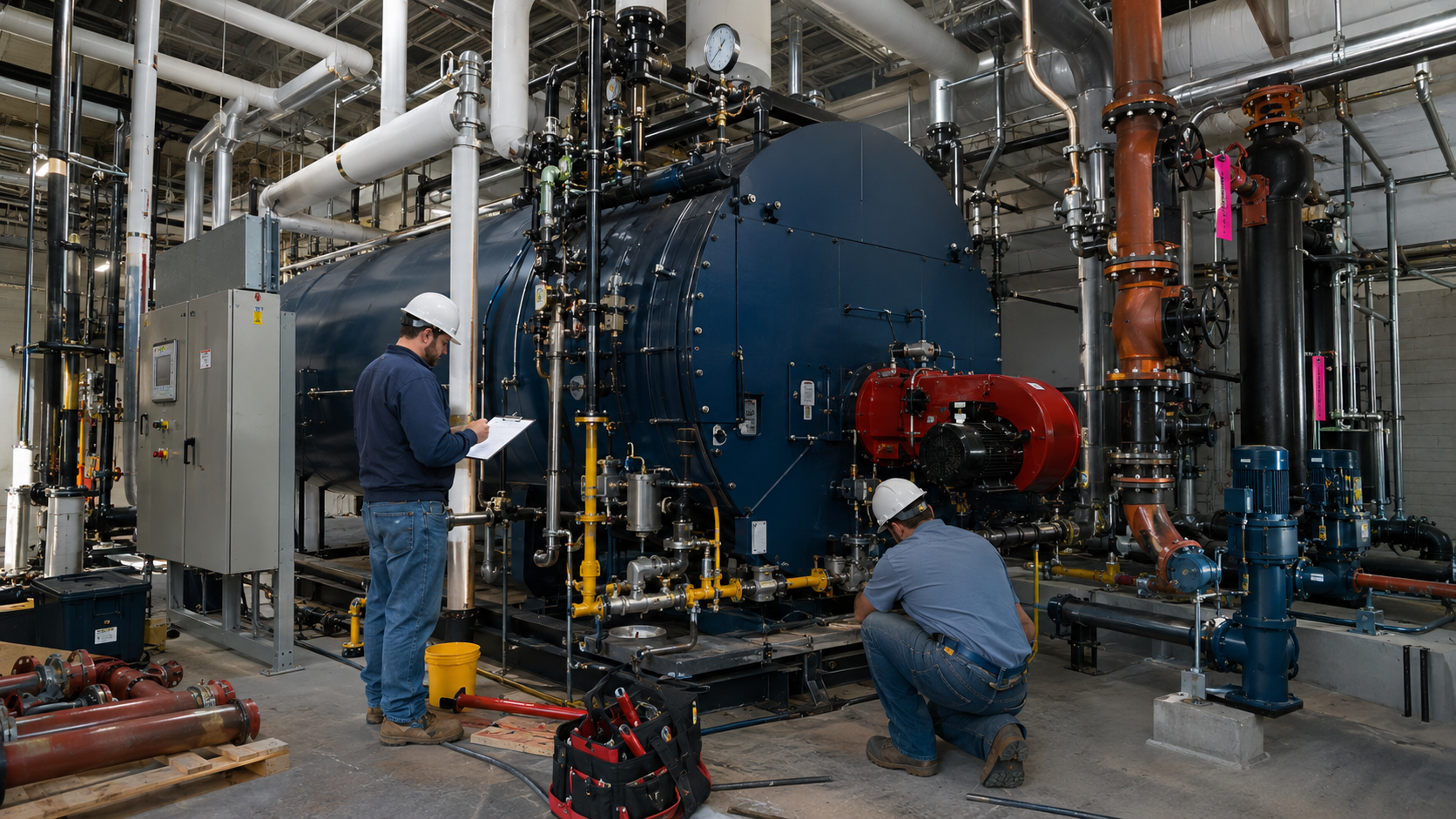
When the failed part is the heart of a compressor, the call gets harder. Professional air compressor repair can diagnose whether you face a worn component or a failed core. Some failures, like a winding shorted to ground, cannot be repaired at all.
Signs that replacement is the smarter move
Some patterns tell you the repair is just delaying the inevitable. Look for these signals before you approve the next work order:
- Repeat failures. The same subsystem fails twice in a year, and each repair buys less time than the last.
- Obsolete parts. Controls, drives, or castings are discontinued, and sourcing a part takes longer than the repair itself.
- Energy waste. The machine draws far more power than a current model would for the same output.
- Capacity mismatch. The equipment cannot hold the tolerance or throughput your orders now demand.
- Safety gaps. Guards, interlocks, or controls cannot be brought up to current practice at a reasonable cost.
- A quote near the threshold. The repair lands near 60% of replacement cost on an aging asset with no spare.
- Unrepairable damage. A cracked frame, a shorted core, or a failed pressure component leaves no real repair path.
One signal alone rarely settles the question. Three of them together almost always do. Log each failure in a simple history so the pattern is visible before the next breakdown.
When repair is the better investment
Repair wins when the failure is a wear item and the platform is sound. A bearing, seal, belt, coupling, or contactor is a cheap fix on an otherwise healthy machine.
Repair also wins when replacement carries hidden costs. A new machine may need new foundations, new electrical service, or a long commissioning period. Those costs can add up quickly, and they rarely appear in the unit's price.
Finally, repair wins when you can schedule it. A planned repair during a maintenance window costs far less than a failure during peak production. That is the strongest argument for a preventive maintenance program.
Virginia plant factors that tilt the decision
Local conditions matter more than most spreadsheets admit. A few patterns show up across the Commonwealth.
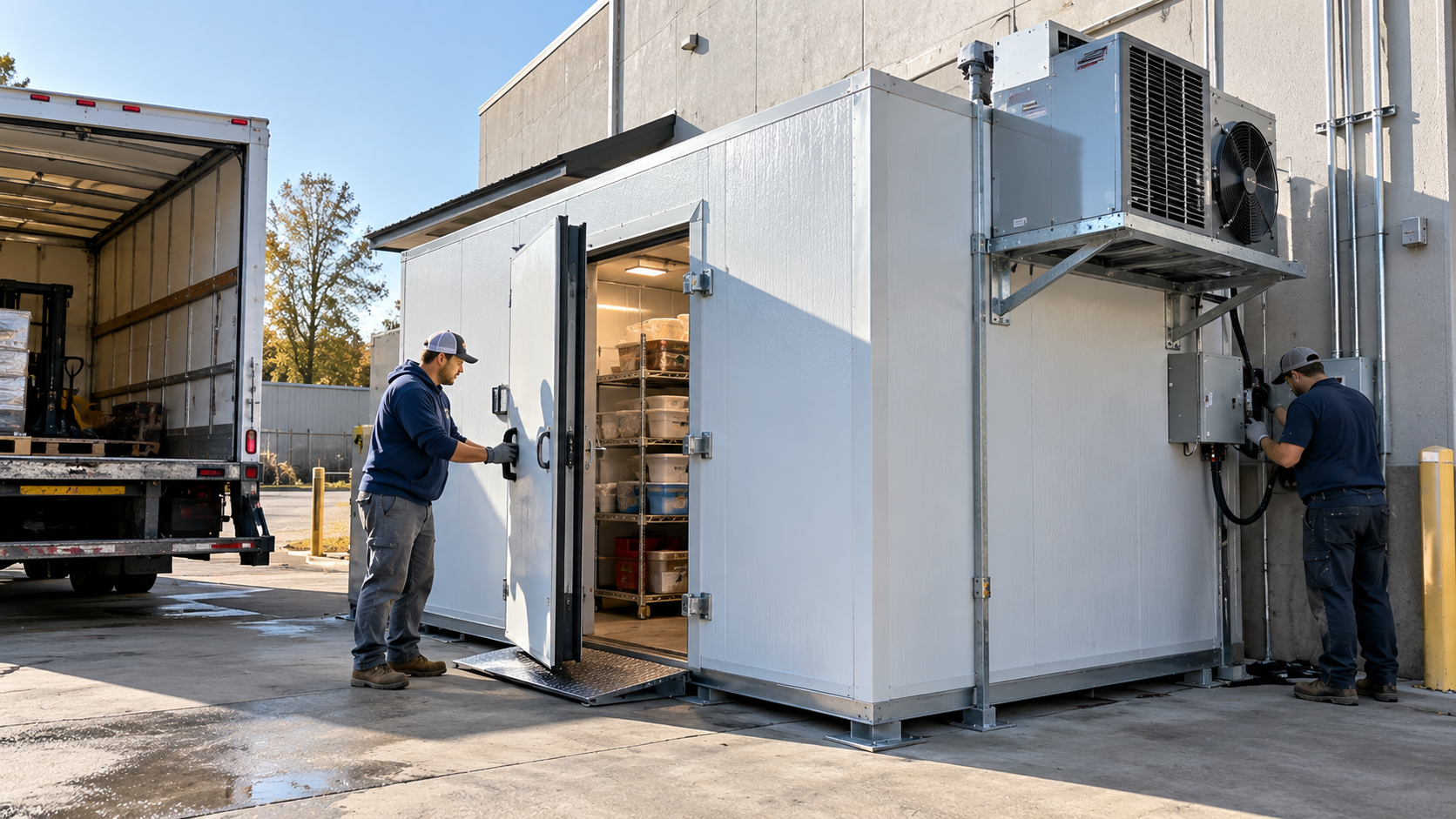
The Shenandoah Valley is a major agricultural processing region. Poultry plants, dairies, creameries, and cold storage facilities all depend on tightly timed machinery. In those plants, a failure can ripple through refrigeration, conveyors, and electrical systems at once.
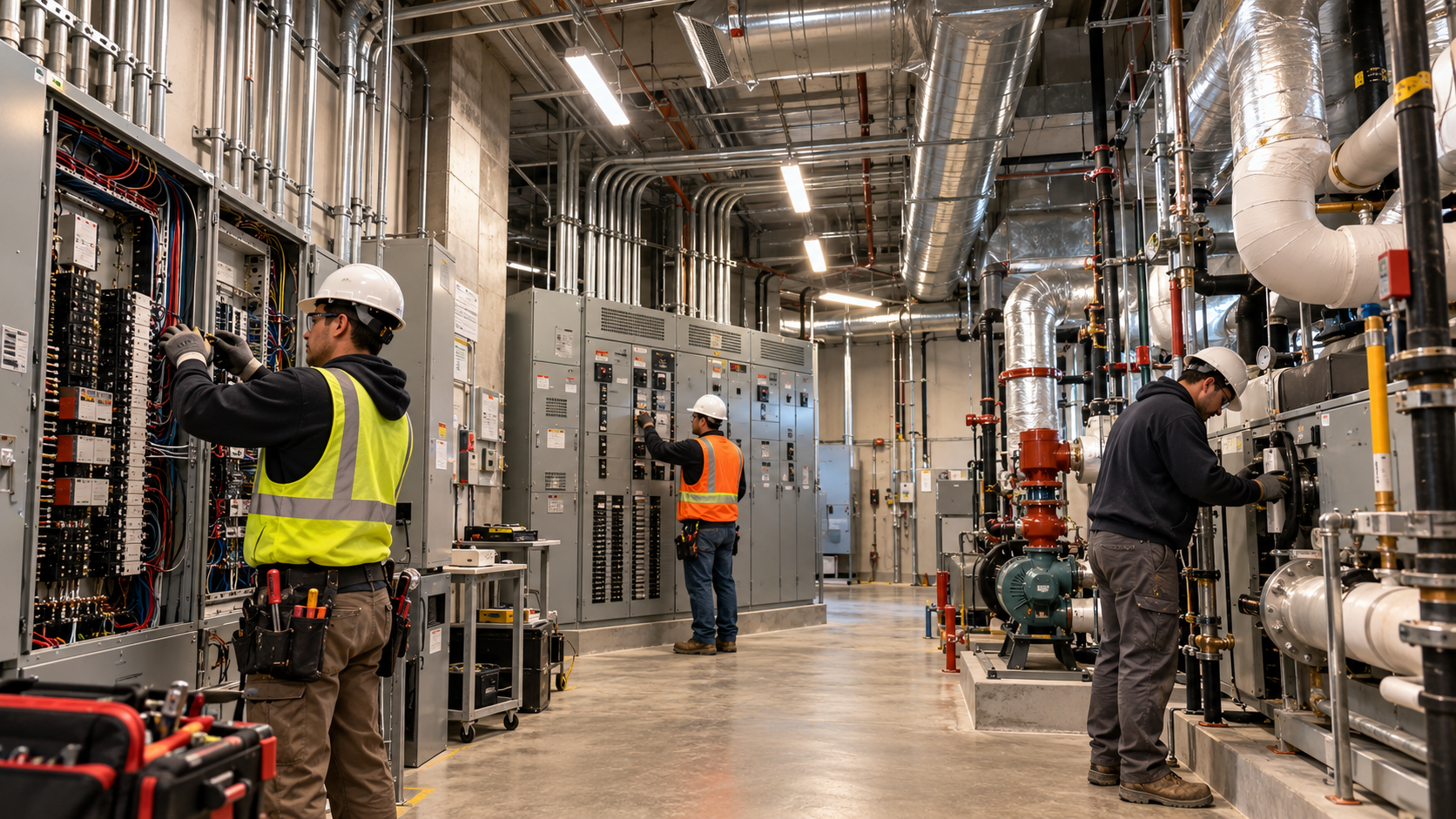
That overlap creates a diagnostic problem. Is the fault a tripped breaker or a seized compressor? A contractor who holds electrical, HVAC, and refrigeration licenses can answer that without a hand-off between vendors.
Distance also shapes the decision. Rural and mid-sized markets can have fewer nearby suppliers, and a replacement shipped from another state can stretch your downtime. Ask for firm lead times before you commit.
Finally, think about seasons. Cooling and chilling loads peak in summer, and heating loads peak in winter. A marginal machine that limps through spring can fail exactly when demand is highest.
Schedule the replacement decision for the shoulder season, not the crisis.
Build a repeatable decision process
A repeatable process beats a heroic judgment call at 2 a.m. Here is a workable sequence.
First, set a standing downtime cost for each production line. Update it twice a year. When a failure hits, nobody has to guess.
Second, keep a failure log for every critical asset. Record the date, the symptom, the fix, and the cost. A machine with three repairs in twelve months has told you something.
Third, request two numbers for every repair: the repair cost and the lead time. Ask for the replacement price and lead time in the same call. Compare total cost, including downtime, not invoice totals.
Fourth, apply your thresholds. Use the 60% ratio as a trigger for review, not an automatic rule. Then layer in age, energy use, and downtime exposure.
Fifth, decide who owns the call. Assign one person, usually the maintenance or plant manager, to decide within a set window. Delay is itself a cost.
Questions to ask before you approve a repair
The quote itself is only the start. A few pointed questions will tell you whether the repair is worth buying.
What failed, and why? A repair that fixes the symptom but not the root cause will fail again. Ask to see the damaged part, the meter reading, or the test result.
What is the realistic lead time for parts? A repair that waits two weeks on a casting is really a delay. Get dates in writing before you approve the work.
What does the repair warranty cover? Labor, parts, or both? A written guarantee shows the shop expects the fix to last.
How much life is left in the rest of the machine? A fresh bearing in a worn gearbox is a short-term fix. A candid contractor will tell you when the surrounding components are near the end.
Can the repair wait for a scheduled outage? If the machine is stable, a temporary fix may buy time to plan a proper replacement. That option often costs less than either a rush repair or a rush purchase.
What to expect from a repair-first partner
The contractor you ask for advice has an incentive, and it matters. A seller of new equipment profits from replacement. You want a partner whose pay does not depend on which way you decide.
VA Commercial Repair Solutions describes its approach as repair before replacement. Its technicians are paid hourly or salary, not on commission. The company says it backs its recommendations with measurements, such as an electric meter or gauges.
The company is also direct about what cannot be fixed. Its published exclusions include a compressor shorted to ground and an aluminum coil leak.
They also include a cracked cast-iron heat exchanger and a cracked boiler combustion chamber. A partner that names its limits is easier to trust when it recommends a repair.
For plant equipment, the company's industrial machine repair service covers a wide range. Its page lists compressors, pumps, conveyors, chillers, generators, transformers, and bearings. It also lists MIG and TIG welding on steel, stainless steel, and aluminum.
Preventive maintenance is part of the offer. The service includes inspections, cleaning, lubrication, calibration, and electrical testing. Plans are customized to each business, and the company says it teaches plant staff its repair and maintenance methods.
Response time is part of the repair-or-replace math as well. The company answers calls 24/7/365 with a live person, never voicemail. It reports an 85% first-visit completion rate, which shortens the downtime side of your equation.
Frequently asked questions
At what percentage should I replace instead of repair?
There is no universal number. A common rule is to review a replacement once repair costs pass 50% to 60% of a comparable new unit. Then adjust for age, energy use, and the cost of downtime.
Does preventive maintenance change the math?
Yes, it moves the odds in your favor. Regular inspection, lubrication, and electrical testing catch wear before it becomes failure. That turns emergency repairs into scheduled ones, which cost less and carry less risk.
How do I count downtime in the decision?
Multiply the hourly cost of a stopped line by the hours each option will take. Include lost output, labor, spoiled material, and penalties. The option with the lowest total cost wins, even if its invoice is higher.
Should I keep a spare motor or critical part?
Often, yes. If an hour of downtime costs over twice a new motor's price, a spare pays off on the first failure. For lower-risk equipment, a supplier with fast delivery may be enough.
Who should make the final call?
One accountable person should own it, usually the plant or maintenance manager. They should use a written threshold and a failure log. An outside contractor can supply facts, but the decision belongs to the operation.
The bottom line
Repair or replacement is a financial question wearing a mechanical disguise. The answer depends on repair cost, energy use, parts availability, and the price of every hour the line sits still. Build the numbers before the breakdown, and the decision gets calmer.
For most plants, that means three habits. Track downtime cost, log every failure, and set a review threshold near 60% of replacement cost. Then bring in a partner who is paid to give you the honest answer.
Facing a failed machine right now? Call VA Commercial Repair Solutions at (540) 457-4822, and a live person will answer 24/7. Ask for a repair-first assessment, and get the numbers before you commit to a new purchase.



Opening a Restaurant in Virginia: Kitchen Design, Hood, Fire Suppression and Refrigeration Checklist