

6 Best Commercial Electricians for Poultry, Dairy & Food Processing Plants in Virginia

Washdown water, ammonia refrigeration, and 480-volt motors share one floor in a food processing plant. That mix punishes careless electrical work. A single failed panel can stall a conveyor, a chiller, and a packaging line at once.
Poultry plants add heavy conveyor systems and high-capacity ventilation. Dairies add precision-timed pumps and bottling equipment on three-phase power. Cold storage adds refrigeration that must never lose power.
The Shenandoah Valley is a major agricultural processing region. That makes the hiring decision local and urgent. A contractor two hours away is a slow answer when product is warming.
This guide ranks six Virginia electricians on what food plants need. We looked at industrial scope, controls and automation, coverage area, and emergency response. We also checked licensing and safety signals where firms publish them.
One honest caveat. Few contractor websites name poultry or dairy plants as clients. We rank on capability signals and say plainly where a site is silent. Ask every firm for food-plant references before you sign.
Who are the best electricians for Virginia food plants?
VA Commercial Repair Solutions pairs electrical, HVAC, and refrigeration under one Class A license in the Valley. Dubak Electrical of Virginia brings statewide industrial power and controls work from Richmond.
Allen Yoho Electrical, Mid Valley Electric, and Design Electric are Valley and Charlottesville contractors with industrial service. MEP Contracting combines electrical and refrigeration work from Harrisonburg and Winchester.
| Company | Base | Best For | Key Differentiator | Emergency Service |
|---|---|---|---|---|
| VA Commercial Repair Solutions | Fishersville | Poultry, dairy, cold storage | Electrical plus refrigeration under one license | Live answer 24/7 |
| Dubak Electrical of Virginia | Richmond | Large industrial and dairy plants | Controls, design-build, prefabrication | 24/7/365 line |
| Allen Yoho Electrical | Lyndhurst & Elkton | Valley industrial and process sites | Automation and control panels since 1986 | Not stated |
| Mid Valley Electric | Harrisonburg | Industrial and distribution facilities | Class A, custom panels, bucket trucks | Not stated |
| Design Electric | Charlottesville | Renovations and industrial service | S.W.A.M. certified, OSHA-trained workforce | Not stated |
| MEP Contracting | Harrisonburg & Winchester | Small plants with cooler and freezer needs | Electrical and refrigeration in one shop | Not stated |
Geography and urgency narrow this list quickly. A Harrisonburg plant and a Richmond plant should not be choosing from the same shortlist. Start with who can reach you fast, then compare capabilities.
What a food plant needs from its electrician
Wet-area safety
Food plants wash down floors and equipment daily. Water changes the risk profile of every outlet and motor. OSHA notes that wet skin conducts electricity far better than dry skin.
The same guidance says ground-fault circuit interrupters belong where water is present. They cut power in about 1/40 of a second. An electrician should specify them, test them, and label them.
Lockout and tagout
Plants run conveyors, grinders, pumps, and compressors that restart unexpectedly. Lockout/tagout rules exist to prevent that. OSHA lists electrocution, burns, and crushing among the injuries when energy control fails.
A good contractor arrives with its own lockout procedure and follows yours. Ask how it coordinates with plant maintenance. The answer reveals how often it works inside live plants.
Refrigeration interlocks and timing
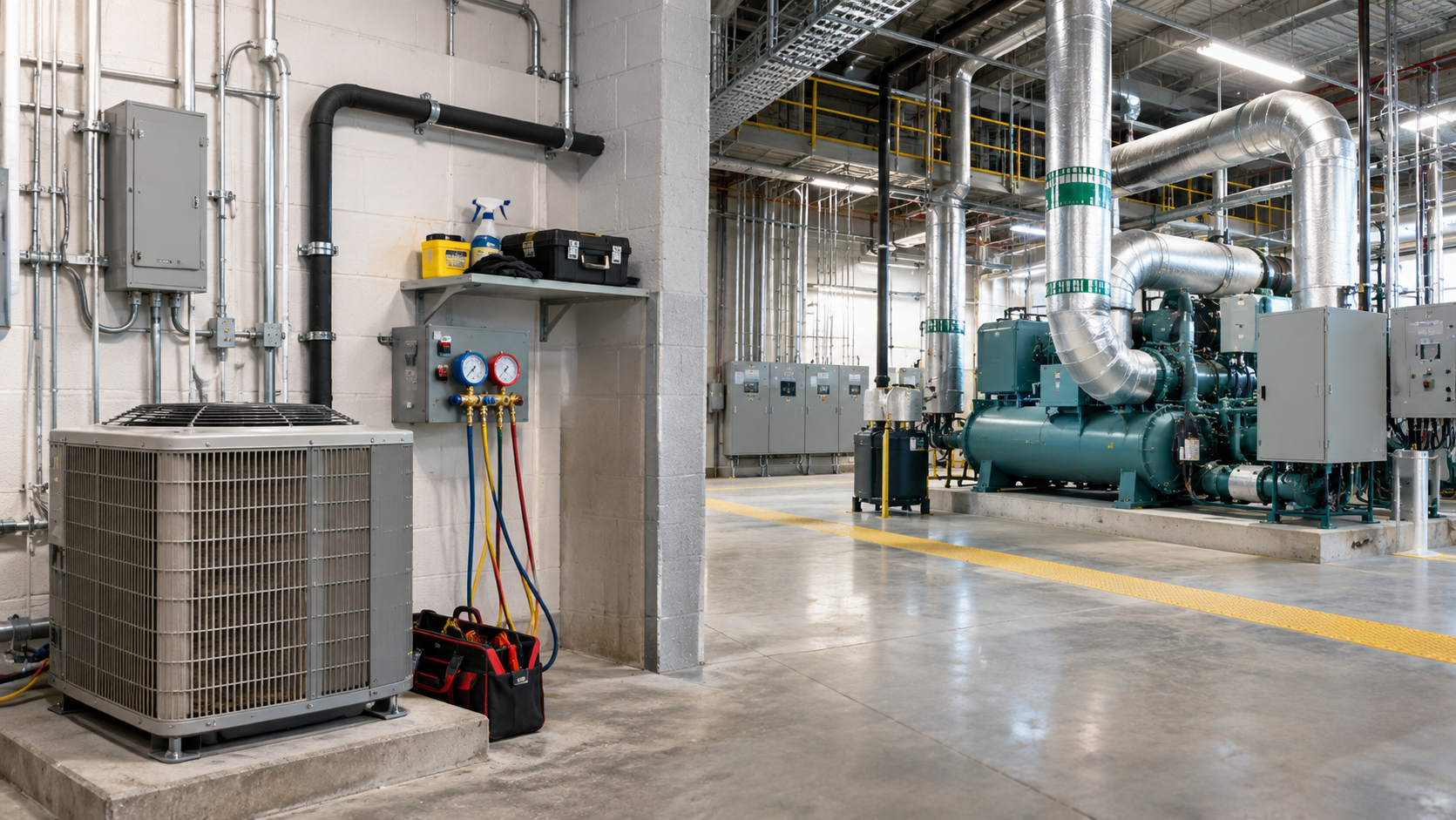
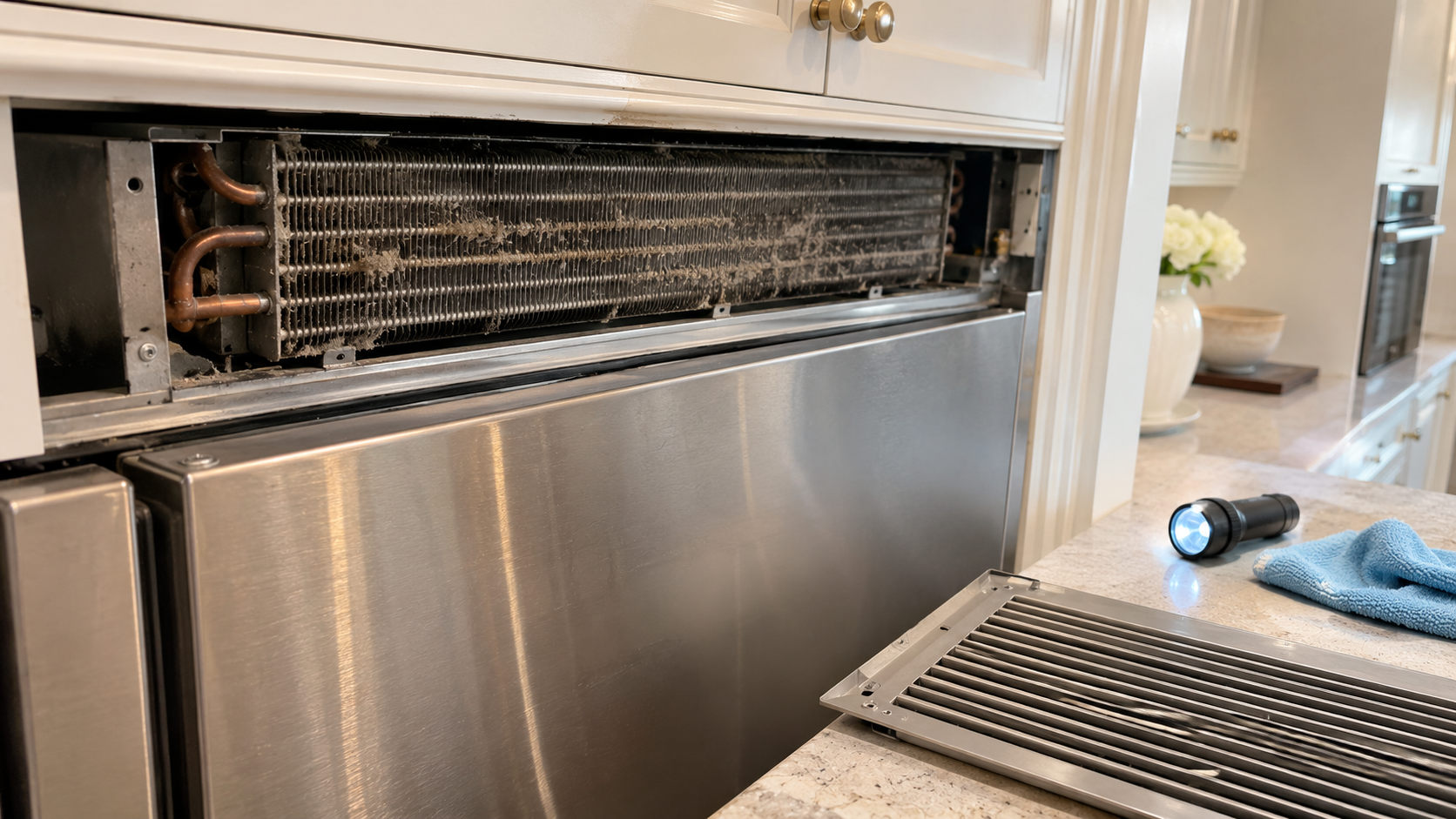
Food plants tie electrical systems to refrigeration. Compressors, evaporator fans, and defrost cycles depend on correct controls and power. A tripped breaker can look like a seized compressor.
That overlap is why trade coverage matters. Our guide on who to call for which problem explains how electrical and mechanical faults blur. A contractor who handles both avoids finger-pointing.
Three-phase power and service capacity
Dairy and poultry equipment runs on three-phase power. Adding a line often means a panel upgrade, a transformer, or both. Undersized service causes nuisance trips and voltage sag.
A contractor should size loads before quoting. Learn how power distribution and panel upgrades are scoped so you can compare bids on equal terms.
Controls and automation
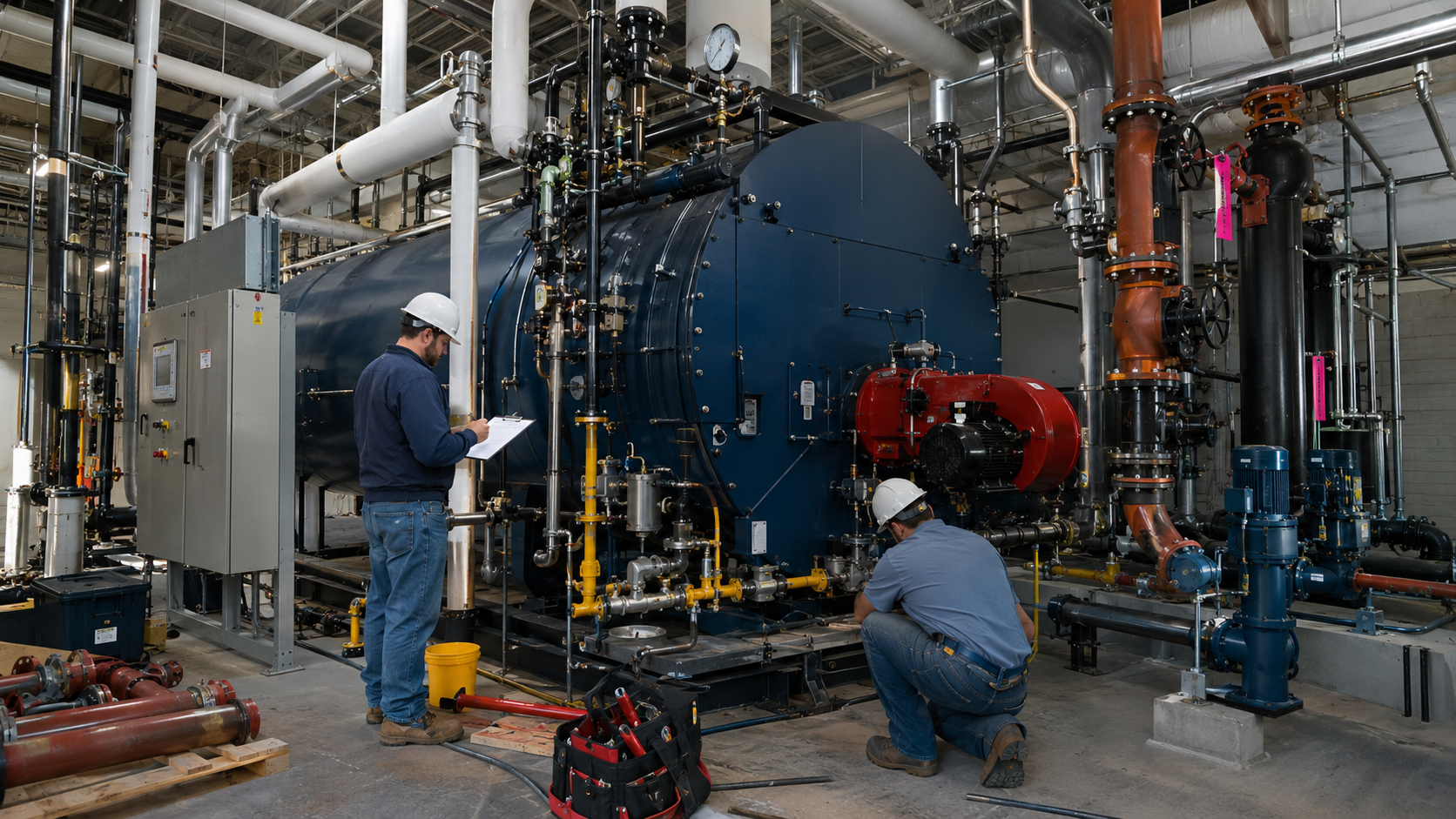
Modern plants use PLCs, variable frequency drives, and SCADA. An electrician who can't read those systems leaves a plant dependent on integrators. Look for firms that build and install control panels.
1. VA Commercial Repair Solutions: The Valley's Multi-Trade Food Plant Electrician
Fair warning: VA Commercial Repair Solutions is our own company. We included it because the vertical fits, but you should weigh our enthusiasm accordingly.
VA Commercial Repair Solutions is based in Fishersville and serves Charlottesville, Harrisonburg, Staunton, Waynesboro, Lexington, and the surrounding Valley. It works for commercial and industrial clients only. A live manager or owner answers every call, 24/7.
The company names poultry plants, dairies and creameries, and cold storage as target sectors. Its Harrisonburg electrician page describes conveyor systems and high-intensity ventilation at poultry sites. It also describes three-phase power for milk processing and bottling.
Why it stands out
The cross-trade license is the difference. One Class A contractor covers electrical, HVAC, and refrigeration. When a line stops, the question is often "tripped breaker or seized compressor?" Here, the same team answers it.
Electrical scope includes panel and service upgrades, three-phase installation, new circuits, surge protection, transformers, and backup generators. The company also publishes technical guides on breaker-tripping causes and panel-upgrade cost drivers. Its commercial electrical guides and cost estimates show how it explains scope.
Technicians are background-checked and drug-tested. They are paid hourly, not on commission. For plants that grant after-hours access, that screening matters.
Pros and cons
Pros: Electrical, HVAC, and refrigeration under one license. A live answer around the clock. S.W.A.M. and eVA certification.
Cons: Coverage centers on central Virginia and the Valley. A plant in Hampton Roads or Northern Virginia sits outside the usual radius.
Plans and pricing
Installation quotes are free. The service-call fee is waived when a repair is performed. If a problem can't be fixed, the guarantee pays $50 cash plus a $500 credit toward replacement.
Customer base
Valley restaurants, breweries, food processors, and cold storage operators. It suits any facility that wants electrical and refrigeration accountability in one call.
2. Dubak Electrical of Virginia: Richmond's Statewide Industrial Power and Controls Contractor
Dubak Electrical of Virginia operates from Richmond and serves clients statewide. The company says it has served customers for more than 35 years. Its Virginia office sits at 1905-A Westwood Avenue.
The site lists industries including food and beverage production, dairy, chemical processing, manufacturing, and water treatment. It does not mention poultry by name.
Why it stands out
Industrial depth is the draw. Services include industrial electrical power, electrical design, design-build delivery, and integration and control automation. The company also builds prefabricated and modular equipment centers.
Contract maintenance can be full-time, periodic, or supplemental. A plant can embed technicians for steady coverage or call for peaks. That flexibility suits large plants with dedicated maintenance programs.
Emergency coverage is explicit. The company publishes a 24/7/365 emergency line at 800.677.6303.
Pros and cons
Pros: Dairy and food and beverage listed as served industries. Controls, design-build, and prefabrication under one roof. A published round-the-clock emergency number.
Cons: It is based in Richmond, so Valley response times depend on dispatch. Its site doesn't state a license number, so verify one before hiring.
Plans and pricing
Pricing isn't published. Industrial work at this scale is typically quoted per project or under a maintenance agreement. Ask for a scope and a response-time commitment in writing.
Customer base
Large industrial plants, dairy processors, and manufacturers needing integration and automation. It fits sites with in-house maintenance teams that want a strong outside partner.
3. Allen Yoho Electrical: The Shenandoah Valley's Industrial and Controls Partner
Allen Yoho Electrical has served the Valley since 1986. It operates from Lyndhurst and Elkton and calls itself the Valley's premier partner for industrial, commercial, and municipal electrical work. Its phone number is 540.949.6782.
The site doesn't name poultry or food processing clients. Its work is process-heavy, and that experience transfers to plant environments.
Why it stands out
Automation and controls are a clear strength. The company designs, builds, and installs control panels integrated into client systems. Its industrial services aim to minimize downtime and keep facilities powered.
Project examples show the scale. It built a new water treatment plant and SCADA system in Dayton that serves more than 690 customers. It also replaced a motor control center for a regional sewer authority.
Safety recognition adds credibility. The company lists a "safest contractors" recognition for 2025. Ask for its safety record in numbers before you hire.
Pros and cons
Pros: Four decades in the Valley. Control panel and SCADA expertise. Local offices in Lyndhurst and Elkton.
Cons: No food-plant clients are named. Licensing and emergency policy aren't stated on its site.
Plans and pricing
Pricing isn't published. Design-build and municipal work are quoted per project.
Customer base
Municipal utilities, industrial sites, and commercial projects across the Valley. A plant needing new control panels or SCADA work should have it on the shortlist.
4. Mid Valley Electric: Harrisonburg's Family-Owned Industrial Electrical Contractor
Mid Valley Electric is a family-owned Class A contractor at 1180 South High Street in Harrisonburg. It was established in June 1996 and cites more than 30 years of operation. The phone number is (540) 433-6815.
The company serves western and central Virginia. Its clients include federal, state, and municipal entities, universities, healthcare, aviation, correctional facilities, and distribution centers.
Why it stands out
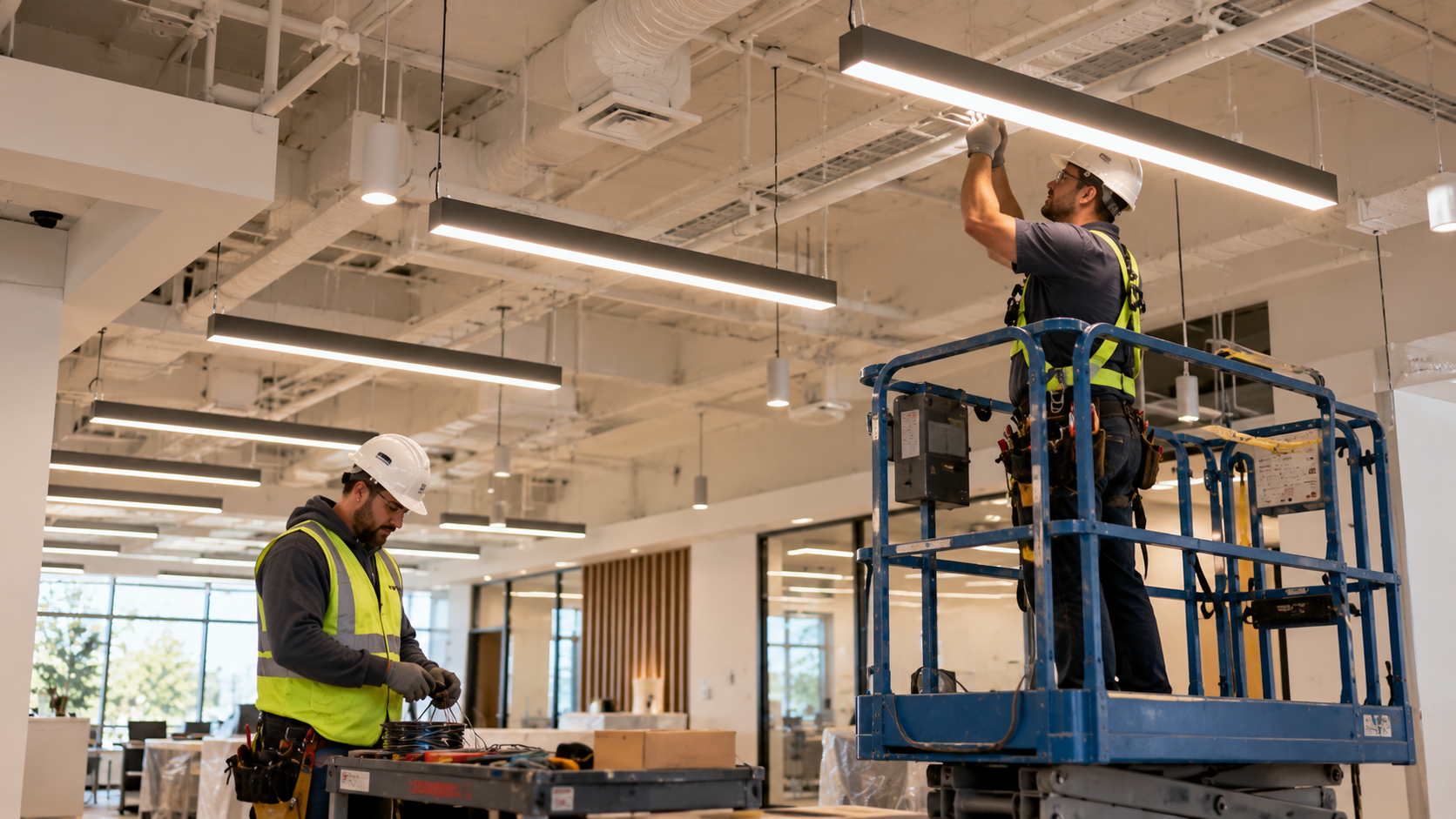
The service list is practical for plants. It covers industrial and commercial installations, design-build, and custom panel building. It also offers excavation and trenching and bucket truck services.
Communications work adds value. The company installs network and fiber cabling and CCTV security systems. Plants adding cameras or network gear can keep that work with the same electrician.
Mid Valley also employs a DCJS-certified security and CCTV team. That can help facilities that want cameras on product areas and receiving docks.
Pros and cons
Pros: Local Harrisonburg base. Custom panel building and bucket trucks. Class A licensing and a long track record.
Cons: The site doesn't mention poultry, dairy, or food processing clients. It also doesn't describe emergency service, so ask about after-hours calls.
Plans and pricing
No pricing is published. The site says urgent needs are best handled by phone.
Customer base
Institutional, industrial, and distribution clients across the Valley and beyond. A plant needing a new feeder, panel, or camera system is a fit.
5. Design Electric: Charlottesville's Class A Contractor With Industrial Service
Design Electric was founded in 1982 and works from 1307 Carlton Avenue in Charlottesville. It is a Virginia Class A contractor and is certified S.W.A.M. It also holds licenses in several other states.
Its service area centers on Charlottesville and Harrisonburg. It covers Albemarle, Nelson, Rockingham, and Augusta counties and may travel up to 40 miles from either office.
Why it stands out
Safety credentials are specific. The company reports a fully OSHA-10-trained workforce and OSHA-30-trained leadership. It also reports a 0.86 experience modification rate, which signals fewer claims than average.
Service lines include commercial and industrial service, new construction and renovation, and preconstruction support. Services such as BIM coordination and value engineering help plan complex upgrades before work starts.
Its project mix leans toward healthcare, higher education, and commercial work. It doesn't mention food processing, so ask about similar plant jobs.
Pros and cons
Pros: Strong safety metrics. S.W.A.M. certification for government buyers. Offices in both Charlottesville and Harrisonburg.
Cons: No food-plant work is described. Emergency service isn't mentioned.
Plans and pricing
Pricing isn't published. Renovation and construction work is quoted per project.
Customer base
Hospitals, universities, commercial owners, and industrial clients in Charlottesville and the northern Valley. It suits a planned renovation more than an urgent repair.
6. MEP Contracting: Harrisonburg's Electrical-and-Refrigeration Shop
MEP Contracting works from 21 Carpenter Lane in Harrisonburg and has a Winchester office. It offers electrical repairs and service upgrades, along with heating, cooling, plumbing, and refrigeration.
Refrigeration is the relevant overlap for food sites. The company services walk-in and reach-in coolers and freezers. It also handles preventive maintenance, new construction, remodels, and service contracts.
Why it stands out
A small plant with a cooler problem and a panel problem can call one shop. The pairing of electrical and refrigeration mirrors the multi-trade logic food plants need. One visit can diagnose both sides.
Its Winchester office extends reach to the northern end of the Valley. That helps plants near Winchester that are far from Harrisonburg's other contractors.
Pros and cons
Pros: Electrical and refrigeration together. Offices in Harrisonburg and Winchester. Service contracts for recurring coverage.
Cons: Its site doesn't state licensing, years in business, or emergency availability. It also names no food-plant clients.
Plans and pricing
Pricing isn't published. Service contracts are offered, so ask for a sample before you commit.
Customer base
Small food producers, delis, and processors with modest electrical and cooler needs. Confirm the license class for your project size.
How to vet an electrician for a food plant
Start with licensing. Ask for the Virginia license number and class. Verify the class fits the value of your project.
Ask for references from food plants. Poultry, dairy, and cold storage each have quirks. A contractor who has worked in one of them will describe those quirks without prompting.
Ask about lockout/tagout and washdown experience. Request the contractor's written procedures. A firm that works in live plants can produce them in minutes.
Ask about response. Who answers at 2 a.m., and how long until a technician arrives? Get the answer in writing, and distinguish a target from a guarantee.
Ask about parts and panels. Lead times on switchgear and drives can run for weeks. A contractor with prefabrication or a stocked shop shortens outages.
Finally, ask about food-safety rules. Plants face audits and inspections. An electrician who understands them avoids work that contaminates product or triggers a hold.
Frequently asked questions
Do poultry plants need a special kind of electrician?
They need electricians comfortable with wet environments, conveyors, and heavy ventilation loads. The trade is the same, but the conditions are harsher. Ask about washdown-rated equipment and ground-fault protection.
Why does refrigeration matter for an electrical contractor?
Compressors, fans, and defrost systems depend on correct power and controls. A power issue can mimic a mechanical failure. A contractor who handles both trades finds the real cause faster.
What causes breakers to trip in food plants?
Sustained overload, short circuits, and ground faults are the main causes. Moisture and worn insulation add to the risk in wet areas. A proper diagnosis finds the root cause instead of resetting the breaker.
How much does industrial electrical work cost?
None of these firms publishes prices. Cost depends on load size, panel capacity, transformer needs, and code requirements. Ask each firm for a written scope so quotes can be compared.
Should I choose a local contractor or a statewide one?
Choose local for urgent repairs, because response time matters most. Choose a statewide firm for large controls or design-build projects. Many plants keep one of each.
Does a contractor need to be Class A?
Class A licensing allows work of any value. Smaller classes cap project size. Check the license class against your project budget, not just the firm's reputation.
The bottom line: pick for response time first
A Valley poultry, dairy, or cold storage plant should start with VA Commercial Repair Solutions. It offers electrical and refrigeration answers in one call. A large plant needing controls and automation should call Dubak Electrical of Virginia and Allen Yoho Electrical.
Planned renovations may suit Design Electric or Mid Valley Electric. Small food producers with cooler and panel needs can look at MEP Contracting.
Whichever you choose, demand written response times and food-plant references. If a line stops tonight, VA Commercial Repair Solutions answers live and sends a licensed team.