
Rooftop Safety Ladder Installation: What Virginia Building Owners Must Get Right

Owners rarely think about the rooftop ladder until an inspector, an insurer, or an injured technician raises the question. By then, the answer is expensive. A ladder that looks fine from the parking lot can still fail the rules that govern it.


Falls remain one of the deadliest hazards at work. The Bureau of Labor Statistics recorded 844 deaths from falls, slips, and trips in 2024. Each rooftop service call puts a technician in that risk category.


This guide walks Virginia building owners through the decisions that matter. It covers the governing rules, ladder specifications, the fall protection upgrade many owners overlook, and installer vetting. Read it before you request a single quote.


The short version: what to get right


Rooftop ladder projects go wrong in predictable places. Owners skip the rule check, accept a vague quote, or assume an old ladder is grandfathered. The table below shows the seven decisions that separate a defensible installation from a liability.


Decision What to get right Where the rule lives
Know the rules Virginia enforces OSHA-identical general industry standards VOSH, 16VAC25-90
Ladder dimensions Rungs 10–14 inches apart, 16-inch clear width, rails 42 inches above the landing 29 CFR 1910.23
Fall protection Ladders over 24 feet need a ladder safety or personal fall arrest system 29 CFR 1910.28(b)(9)
Building code Permanent access to roof equipment as your local official requires Virginia building code
Roof protection Coordinate attachments and flashing with your roofer Roof warranty terms
Contractor Verify license, insurance, fabrication ability, and documentation DPOR license lookup
After installation Inspect regularly, train users, and keep records OSHA walking-working surfaces


Why Virginia owners cannot treat this as optional


Virginia runs its own occupational safety program, called VOSH. It must enforce standards at least as stringent as federal OSHA. Its adopted general industry standards mirror the federal 29 CFR 1910 text.


Fixed ladders on roofs fall under OSHA's walking-working surfaces standards. The final rule also requires training for workers exposed to fall hazards. That training requirement took effect May 17, 2017.


Liability does not always stop with the employer on the ladder. Building owners can share responsibility depending on contracts, control of the premises, and the facts of an incident. This guide is general information, not legal advice, so involve your attorney and insurer.


The financial side matters as much as the legal side. Fines, premium increases, downtime, and lawsuits can all follow one bad installation. Our breakdown of rooftop ladder hidden costs walks through each category.


Free help exists too. Virginia's Department of Labor and Industry offers no-cost consultation services, including on-site visits and training. Use them before an inspection, not after.


Step 1: Map who climbs, how often, and to what


Start with the roof, not the ladder. List every piece of equipment up there: rooftop units, exhaust fans, make-up air units, chillers, and anything else serviced. Then list who services each one.


Frequency drives the decision. A roof visited four times a year is a very different case from one visited once a decade. Rooftop units need regular attention, and our guide to rooftop unit repair companies shows who handles it.


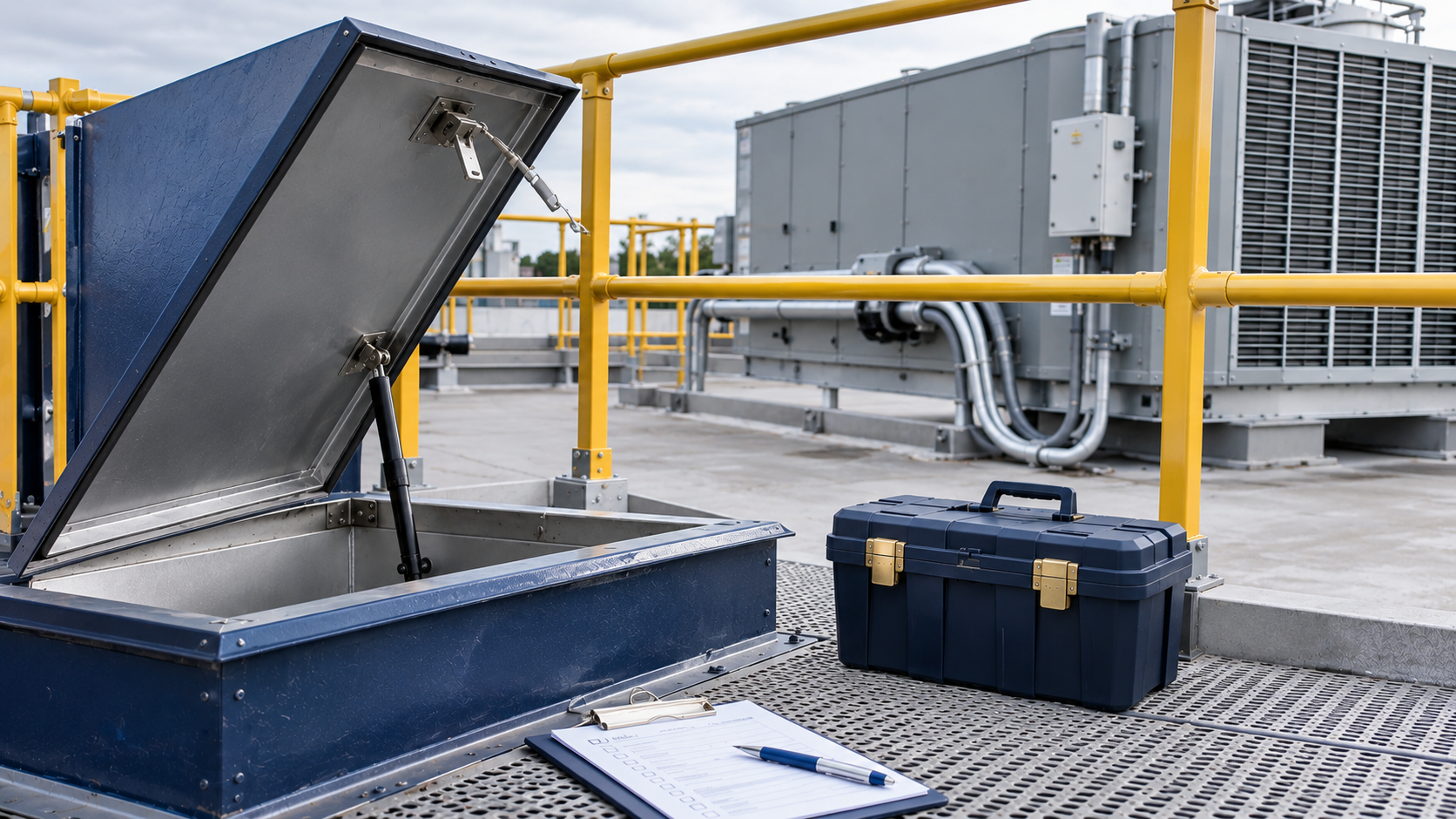
Walk the route from the ground to the roof. Note obstructions, door swings, landscaping, and wall surfaces. Check what the ladder lands on at the top: a hatch, a parapet, or an open edge.


Frequent access justifies a permanent fixed ladder. Portable ladders invite improvisation, and improvisation is where falls start. Permanent access also gives every vendor the same safe route.


Think about unauthorized access too. A fixed ladder is also a route for trespassers and curious teenagers. A locked ladder guard or similar barrier keeps the route open for vendors and closed to everyone else.


Check the building code as well. Virginia's Uniform Statewide Building Code adopts the International Mechanical Code with state amendments. That code expects permanent access to roof-mounted equipment above certain heights, so confirm the thresholds with your local building official.


Step 2: Choose the ladder type and get the dimensions right


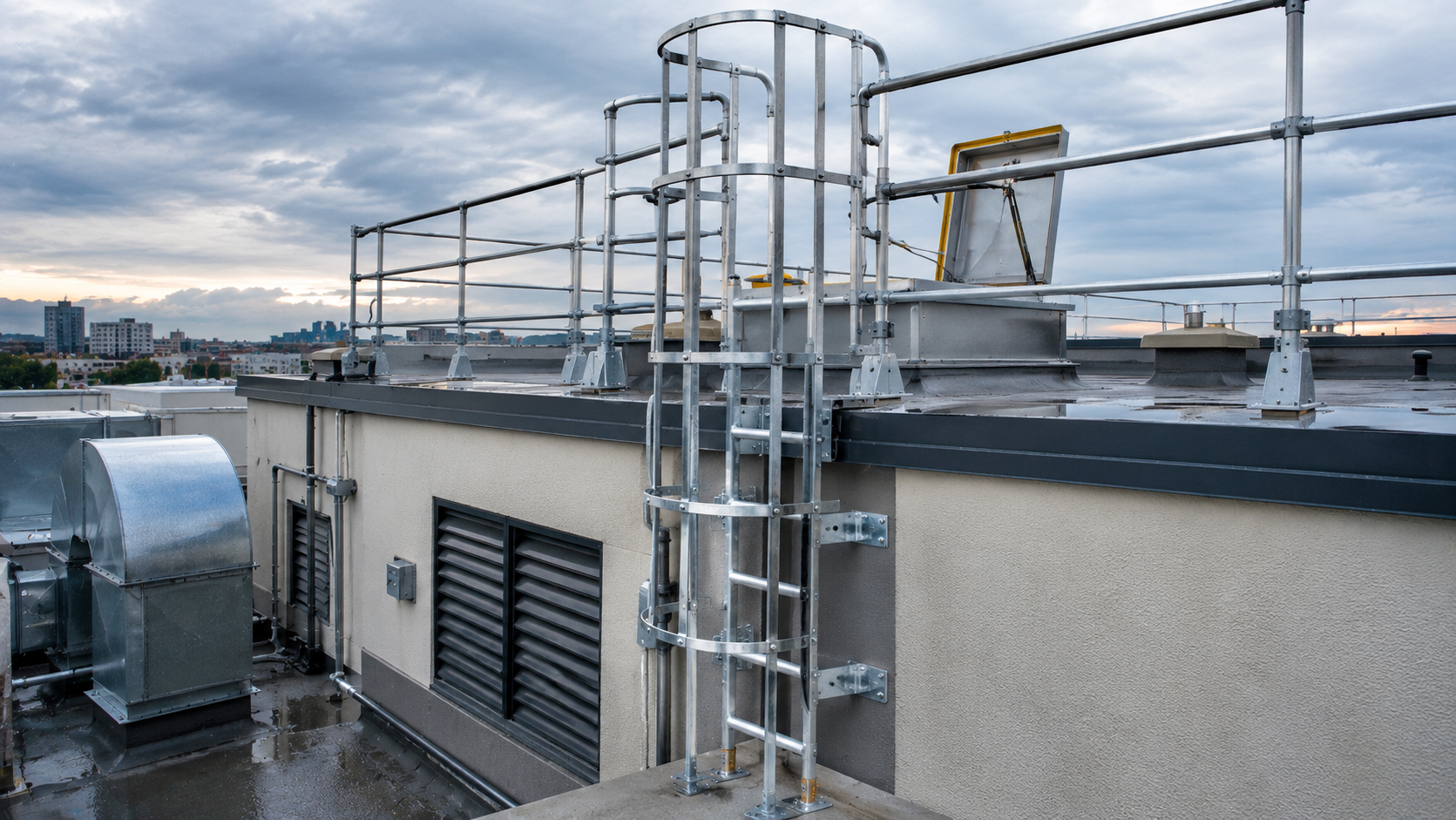
OSHA sets hard numbers for fixed ladders. They live in 29 CFR 1910.23, and Virginia enforces them as written.


Rungs must sit at least 10 and no more than 14 inches apart. The clear width of a fixed ladder must be at least 16 inches. Both measurements apply before any ladder safety system is added.


Side rails on through or side-step ladders must extend at least 42 inches above the access level or landing platform. That extension gives the climber something to grip while stepping onto the roof. Parapet ladders have their own rules for defining the access level.


Clearances matter just as much. Without a cage or well, you need 15 inches of clear width on each side of the ladder centerline. You also need 30 inches from the rung centerline to the nearest object on the climbing side.


Behind the ladder, the minimum is 7 inches from the rung centerline to the nearest permanent object. Tight mechanical rooms and crowded parapets break this rule more often than owners expect. Measure before you order anything.


Fixed ladders must support their maximum intended load. That load includes the worker plus every tool, filter, and part carried up. Size the ladder for the real job, not for an empty-handed climb.


Choose between a through ladder and a side-step ladder based on the roof edge. Through ladders use a step-across distance of 7 to 12 inches. Side-step ladders use 15 to 20 inches.


The building code sets its own dimensions on top of these. Where the two differ, build to the stricter requirement. Ask the installer to show you which standard drove each measurement.


Step 3: Plan the fall protection for ladders over 24 feet


Height changes the rule. Under 29 CFR 1910.28(b)(9), fixed ladders rising more than 24 feet need added fall protection.


Ladders installed on or after November 19, 2018 must have a personal fall arrest system or a ladder safety system. A cage alone no longer qualifies. A cage does not stop a fall in progress.


Older caged ladders are not grandfathered forever. Starting November 18, 2036, every fixed ladder over 24 feet needs a personal fall arrest or ladder safety system. Replace a ladder, a cage, or any section sooner, and the replaced section must meet the new rule.


Multi-section ladders add rules. Fall protection must cover the full vertical distance, including every section. Where cages or wells remain, sections must be offset, with landings at intervals of no more than 50 feet.


Many one- and two-story Virginia buildings sit under that 24-foot line. For them, the ladder safety system requirement may not apply. The dimension, clearance, and load rules still do.


Budget for the 2036 deadline now if you own an older, taller building. Phasing the upgrade into planned capital work costs less than reacting to a citation. An installer can assess your existing ladder and quote the retrofit separately.


Step 4: Protect the roof, the wall, and the warranty


A ladder is attached to your building, so the attachment matters. Brackets bear on the wall, the parapet, or the roof structure. Each point needs the right fasteners for the substrate.


Roof penetrations deserve special care. Every new hole is a potential leak. Bring your roofer into the plan before work starts, and keep roof warranty terms in front of the installer.


Materials matter in Virginia weather. Freeze-thaw cycles, snow, and ice punish metal and coatings in the Shenandoah Valley. Coastal salt air can speed corrosion in Hampton Roads.


Ask for a corrosion-resistant finish such as hot-dip galvanizing or an equivalent coating. Specify slip-resistant rungs for wet and icy conditions. A ladder that is hard to climb in winter will be climbed badly.


Plan for hot work as well. Welding near a roof membrane or insulation creates a fire risk. A good installer fabricates in the shop where possible and uses shielding and fire watches on site.


Step 5: Vet the installer before you sign


Ladder work sits between trades. It involves fabrication, structural attachment, roofing awareness, and safety engineering. Few firms are strong in all four.


Start with the license. Virginia's Department of Professional and Occupational Regulation lets you run a license lookup in minutes. Confirm the license class and specialty match the project.


Then ask for insurance certificates. You want general liability and workers' compensation coverage. Confirm the coverage dates before the crew arrives.


Ask who fabricates the ladder. Some firms assemble catalog parts, while others fabricate to site geometry in their own shop. Both can work, but custom designs need welding skill and documentation.


A good quote is itemized. It lists ladder height, materials, finish, fall protection system, attachment method, and roof protection. It also states who pulls permits and who rents any lifts.


Compare quotes line by line, not by total. A low number often hides missing scope. Ask what is excluded, and get the answer in writing.


Request references from similar buildings. Restaurants, warehouses, and multi-tenant offices each pose different access problems. A reference from your building type tells you more than a glossy brochure.


Public and institutional owners should also check procurement rules. Virginia's eVA system and the SWaM program shape how many state and local buyers purchase services. A contractor holding both certifications can simplify that process.


What a project looks like from first call to sign-off


Most ladder projects follow the same sequence. A site visit comes first, where the installer measures the wall, the roof edge, and the equipment layout. Drawings and an itemized quote follow.


Next come permits, if your locality requires them, and fabrication. Custom ladders are built to the measurements from the site visit. Standard components arrive on the installer's schedule.


Installation happens on site, often in a day or two for a simple ladder. Taller or more complex systems take longer. Weather can delay any roof-adjacent work.


Sign-off closes the loop. You inspect the finished ladder with the installer and confirm dimensions, finish, and fall protection. You then receive photos, specifications, and any inspection documents.


Step 6: Install, inspect, and document


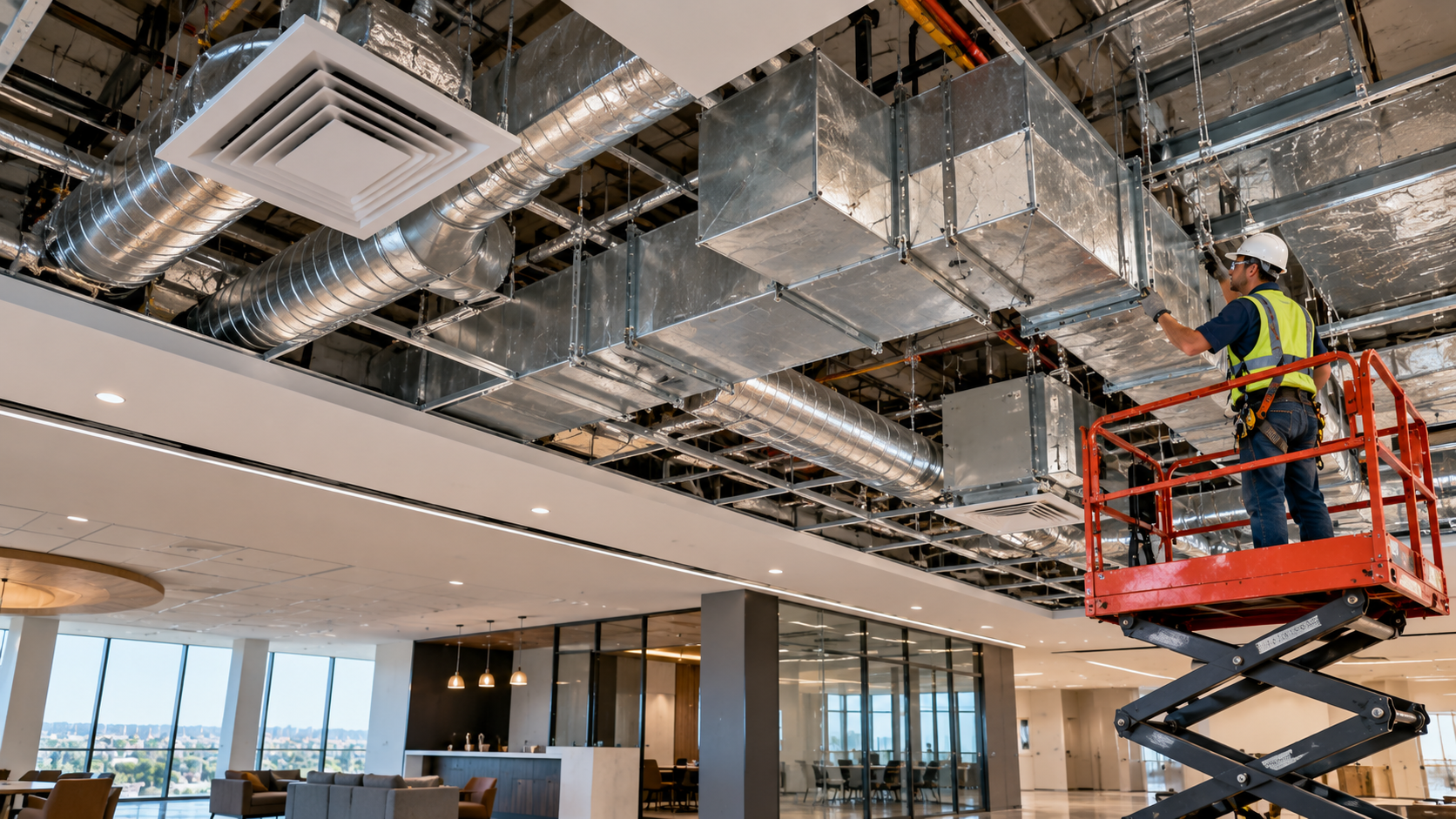
Installation day should be boring. The crew should have lifts or other safe access to the work area. Tall walls often call for a boom or scissor lift so welders are not working from ladders themselves.


Ask for as-built documentation when the job ends. That means photos, final dimensions, material and finish details, and fall protection system specifications. Keep the file with your building records.


Inspect the ladder on a schedule. OSHA expects employers to keep walking-working surfaces safe, and ladders are part of that. Many owners tie ladder checks to seasonal HVAC maintenance visits.


Check after storms, roof work, and any incident. Look for loose brackets, bent rungs, cracked welds, and coating failure. Take damaged ladders out of service until they are repaired.


Train the people who use it. Technicians should know how to climb with tools, when to use a hoist line, and how safety systems work. Training records protect everyone if something goes wrong.


Six mistakes Virginia owners make


Trusting an old cage


Owners assume a caged ladder is compliant because it passed years ago. Rules change, and the 2036 deadline is fixed. Have the ladder assessed before a replacement forces the issue.


Treating the ladder as an afterthought


The ladder often gets added after the rooftop unit arrives. That leads to awkward placement and tight clearances. Design access when you plan the equipment.


Buying on price alone


The cheapest quote often omits fall protection, roof protection, or paperwork. Those omissions show up later as change orders or citations. Compare scope before you compare price.


Skipping the roofer


Penetrations and attachments touch the roof system. Without the roofer, warranty questions appear after the work is done. One phone call prevents that.


Ignoring seasonal wear


Virginia's freeze-thaw cycles loosen hardware and crack coatings. A spring check and an autumn check catch most problems. Both take minutes.


Keeping no paper trail


Without records, you cannot prove the ladder met the rules. Keep drawings, photos, inspection notes, and training logs. Insurers and inspectors ask for them.


Where VA Commercial Repair Solutions fits

Quick note: We are VA Commercial Repair Solutions, so weigh this section accordingly. We included it because you should know who is writing this guide.

We are a licensed Class A mechanical and electrical contractor based in Fishersville (VA License #2705180394). We serve commercial and industrial buildings only. Homeowners are not our market.

Our shop fabricates rooftop ladders and related metalwork in-house with TIG and MIG welding. We also install the rooftop units, exhaust fans, and chillers that the ladder serves. That gives us a technician's view of how people actually climb.


Our fleet includes a 54-foot articulating lift, a 32-foot bucket lift truck, and an 18-foot scissor lift. Those machines help crews reach tall walls and parapets safely. We cover Charlottesville, Harrisonburg, Staunton, Waynesboro, Lexington, and Fishersville.


Public facilities can use our S.W.A.M. and eVA certifications in Virginia procurement. Installation quotes are free, and a live person answers every call, 24/7/365. You can read more about our rooftop safety access ladder work.


Frequently asked questions


Does my Virginia commercial building need a permanent rooftop ladder?


It depends on the building code, the height of the roof, and the equipment up there. Your local building official makes the final call. Many owners install permanent ladders anyway because portable ladders create inconsistent, riskier access.


Do I need a cage or a ladder safety system?


New fixed ladders rising more than 24 feet need a ladder safety system or a personal fall arrest system. A cage alone does not meet that rule. Shorter ladders must still meet the dimension, clearance, and load requirements.


Can my existing ladder be retrofitted?


Often, yes, but it depends on the ladder's condition and structure. An installer can inspect the ladder and attachments before quoting. Replacing a section can trigger the newer fall protection rules for that section.


How much does rooftop ladder installation cost?


No honest figure exists without a site visit. Height, materials, finish, fall protection, wall conditions, and lift access all move the price. Ask for an itemized quote so you can compare scope.


Who is responsible if a contractor's technician falls?


Responsibility depends on contracts, who controls the premises, and the facts of the incident. Building owners can face exposure even when a vendor's employee is hurt. Talk to your attorney and your insurer before an incident, not after.


How often should I inspect the ladder?


OSHA expects regular inspection of walking-working surfaces. Many owners check ladders during seasonal HVAC maintenance and after storms or roof work. Keep a dated record of every check.


The bottom line


A rooftop ladder is a small project with large consequences. Get the rules, the dimensions, and the paperwork right the first time.


If your building sits under 24 feet, focus on dimensions, clearances, and roof protection. If you own an older, taller building with a cage, start planning for the 2036 deadline now. If you manage public property, check procurement rules before you request quotes.


Ready to put a compliant ladder on your roof? VA Commercial Repair Solutions can assess the building and quote the work. Call (540) 457-4822 for a free installation quote.
November 26, 2026
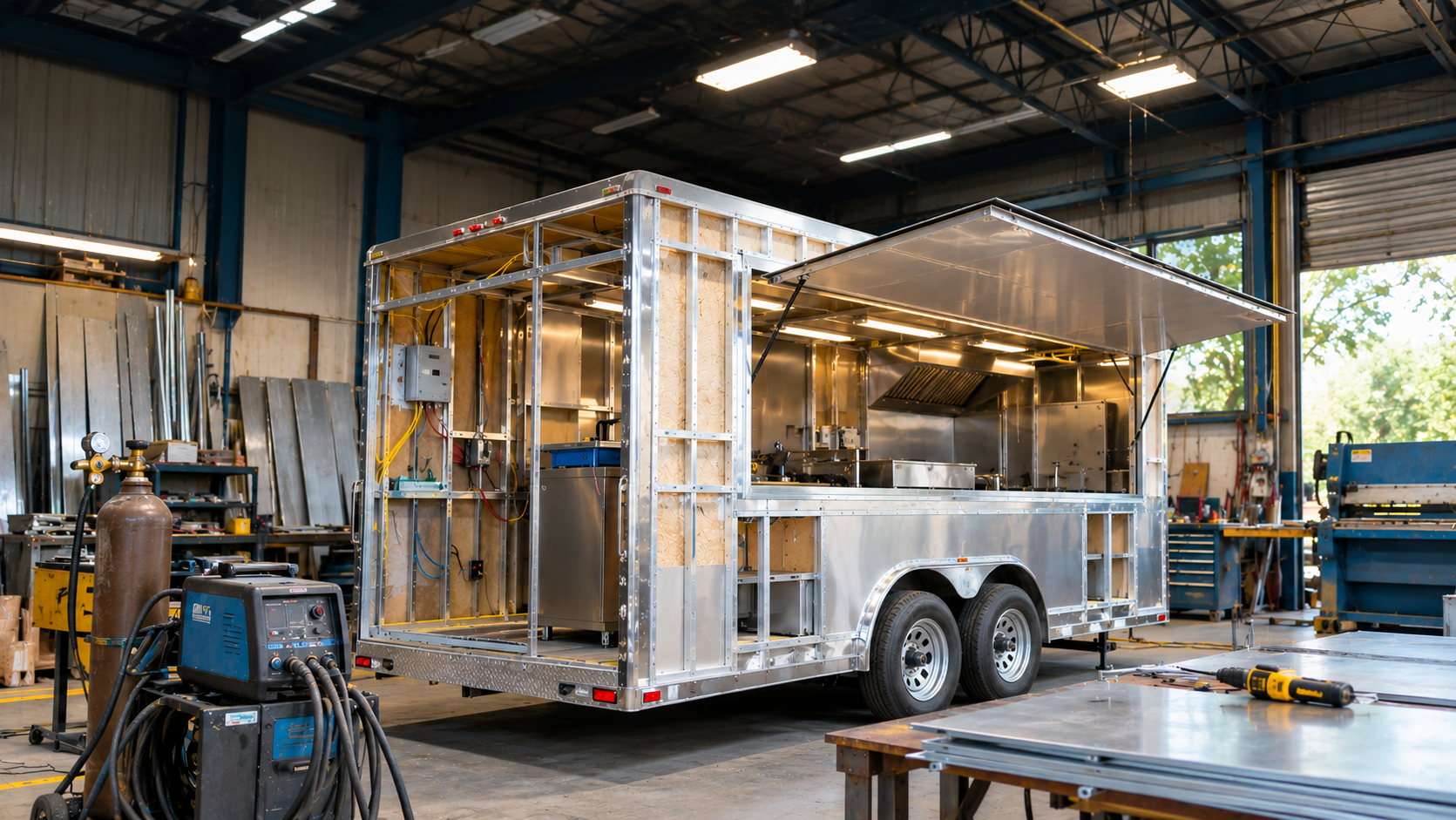
 A food trailer is a commercial kitchen that has to survive the highway. It needs a hood, fire suppression, plumbing, and power, all inside a shell that rattles down I-81 every weekend. Pick the wrong builder, and the health inspector finds the flaws before your first customer does. Virginia adds its own hurdles. Local health districts review mobile unit plans before construction, and fire safety rules apply to mobile food vehicles. A builder who knows that process can save you months of rework. We compared Virginia builders using what they publish: build experience, pricing, timelines, inspection support, and service after delivery. Four made the list. The summary below shows how they differ. The top 4 at a glance VA Commercial Repair Solutions pairs trailer builds with Class A mechanical and electrical licensing and ongoing equipment service. Elhaj Custom Food Trucks & Trailers is the high-volume Manassas shop, with 1,250+ builds and listed builds starting at $42,000. Elite Steel Concepts, also in Manassas, publishes a clear five-step process and a typical 8–12 week build. KSM Manufacturing in Richmond sells ready-to-customize trailers, with packages from $18,500. Each fits a different buyer. The right pick depends on your menu, your region, and how much support you want after delivery.
November 19, 2026
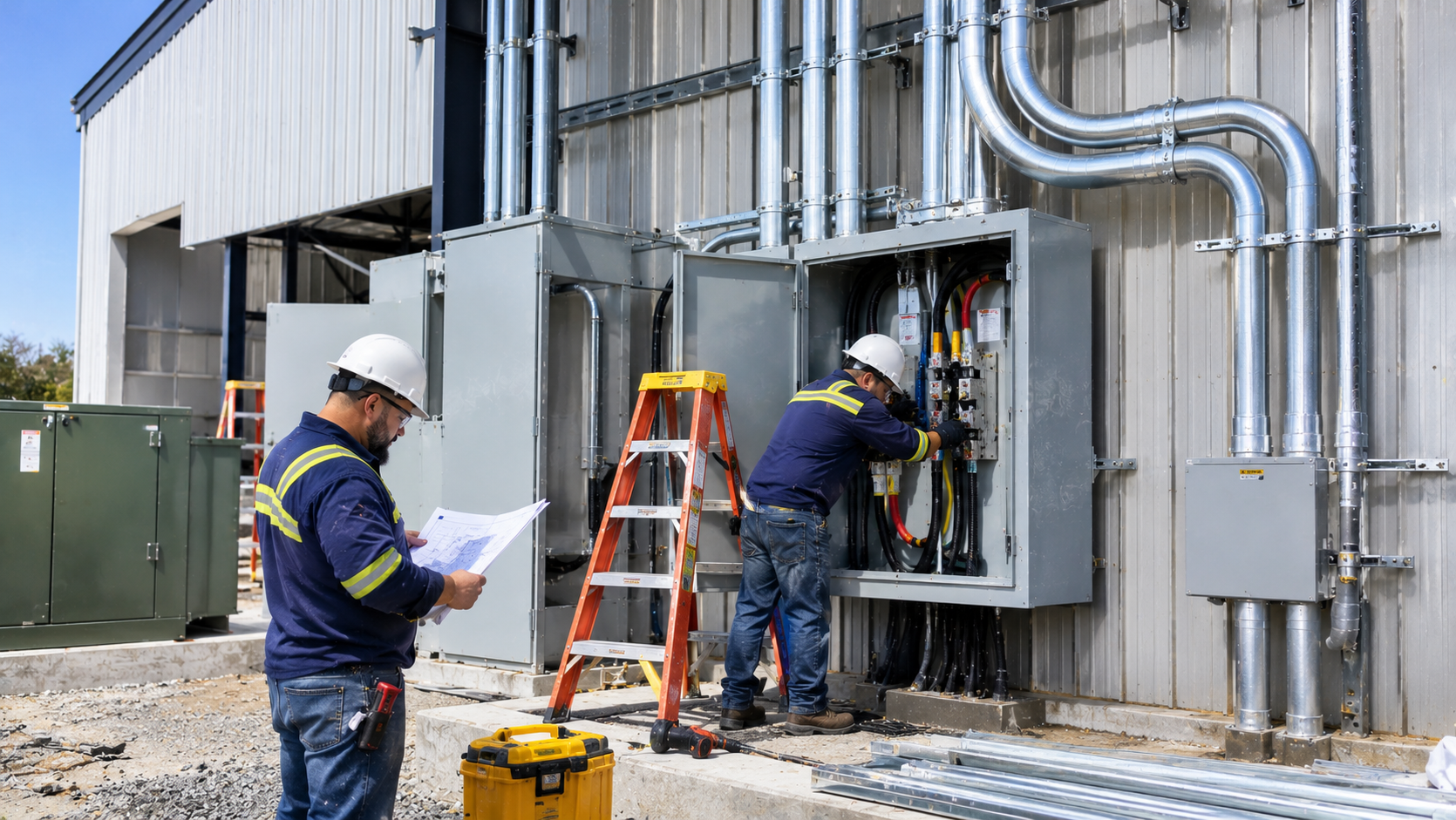
 A new three-phase service can be fully wired and still sit dark. Dominion Energy will not set a meter until an electrical inspection passes. Its commercial process also asks for load letters, riser diagrams, and approved switchgear drawings. That sequence catches many owners off guard. The electrician, the utility, and the inspector each hold a piece of the schedule. The contractor you hire decides how smoothly those pieces fit together. This guide covers six Virginia contractors for commercial panel upgrades and three-phase power. It compares their scope, licensing, and public track record. It also flags where each contractor's published scope stops, so you can ask sharper questions. Virginia panel and 3-phase contractors at a glance Six contractors made this list, each with a different strength. VA Commercial Repair Solutions leads for central Virginia owners who want panel, transformer, and three-phase work from one crew. Myers & Whitesell adds eight decades of Waynesboro experience. Moore's Electrical & Mechanical offers statewide reach through an employee-owned team of more than 600. Tate & Hill focuses on switchgear and motor control centers in Richmond. Ballance Electrical covers Hampton Roads, and AJ Long Electric handles single-phase tenant panels in Northern Virginia.
November 19, 2026
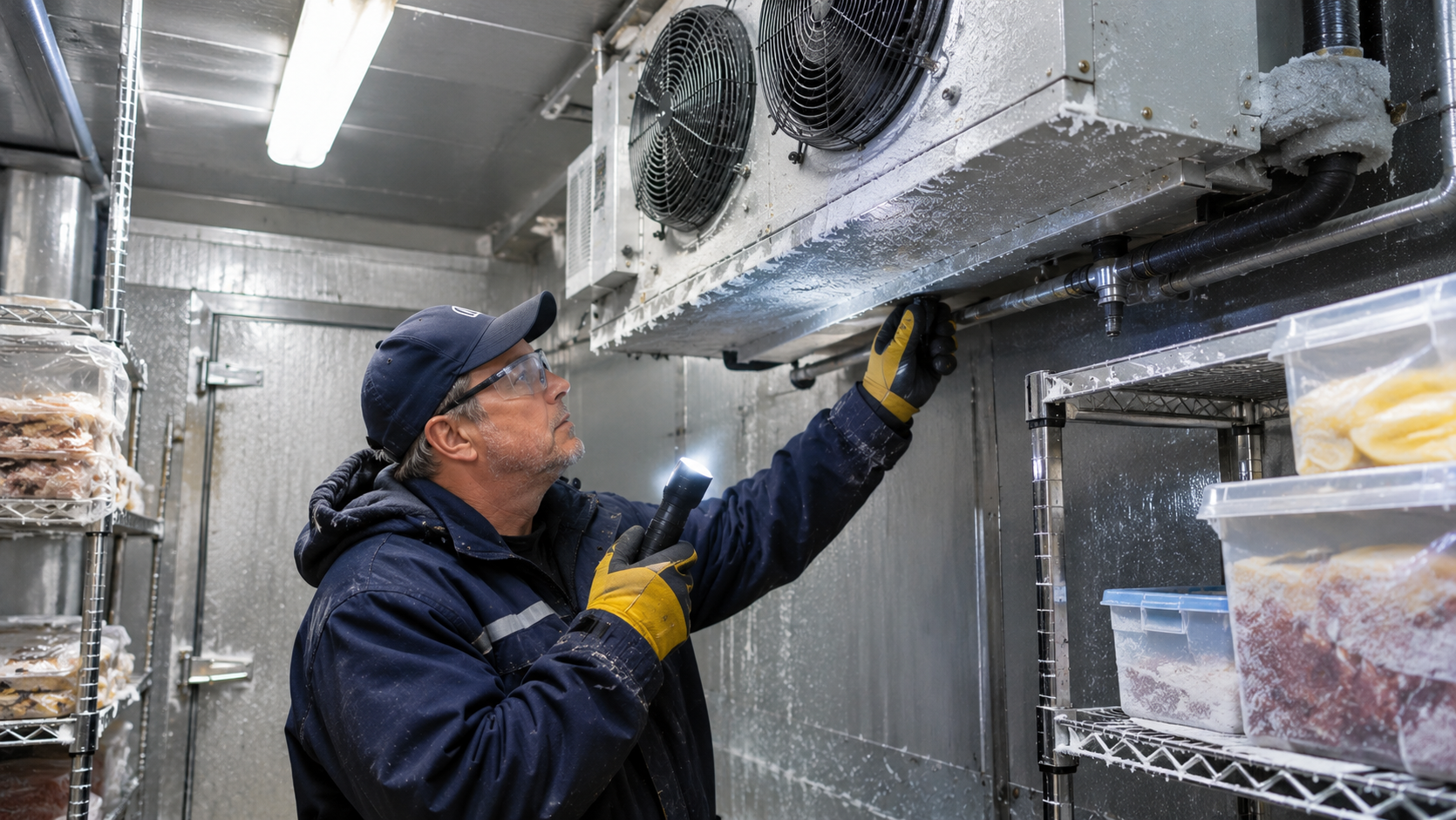
 A walk-in freezer rarely dies in one dramatic moment. Frost thickens on the coil, the compressor runs longer each afternoon, and the thermometer drifts a few degrees. Then one humid week the box stops holding temperature at all. That slow slide is why the technician you choose matters so much. A good one finds the cause behind the ice. A weak one clears the symptom and returns in a month. This guide explains how to find a reliable walk-in freezer technician in Virginia. It covers what to check before you call, which credentials to verify, and which questions expose a weak bid. It also shows how an honest repair-or-replace decision gets made. Start with symptoms, not a sales pitch Before you call anyone, write down what the freezer is doing. Technicians diagnose faster when you describe patterns instead of guessing at parts. Note the box temperature, where ice appears, any new noises, and when the trouble began. The table below pairs common symptoms with likely causes. Treat it as a map for the conversation, not a diagnosis.
November 11, 2026
 Cold storage is rented by the week, but the decision gets made in about an hour. A walk-in warms up, the compressor part is backordered, and the inventory starts a countdown. Virginia's food rules set the clock. A rental trailer in the parking lot can stop that clock while the permanent unit is repaired, replaced, or remodeled. The hard part is picking a provider fast, with the right size, the right power plan, and honest terms. This guide compares six providers of mobile freezers and refrigerators that serve Virginia. We looked at unit sizes, temperature range, power needs, delivery, and how openly each company publishes its terms. The short version: six providers compared VA Commercial Repair Solutions rents freezers and refrigerators from Fishersville and publishes its rates and terms. Chill Out Rentals runs a national network with Richmond and Norfolk pages and 24/7 emergency response. Richmond Restroom Trailers offers 12-foot and 16-foot refrigerated trailers in the Richmond area. Rolling Refrigeration rents a single 8' x 12' trailer across the Southeast, including Virginia. Sunbelt Rentals offers refrigerated trailers and containers through its branch network. Chesapeake Ice delivers large diesel-powered trailers from Maryland into Virginia.
November 11, 2026
 The cheapest maintenance agreement on the table is often the costliest one by August. It looks complete on a one-page quote. Then a missing clause appears on the invoice after the first breakdown. Virginia's weather raises the stakes. Humid summers push cooling equipment hard, and cold snaps test every furnace and boiler. A plan that covers only a spring tune-up leaves the toughest months unprotected. This guide explains what a commercial HVAC maintenance agreement should include in 2026. It covers scope, visit frequency, response times, pricing, exclusions, and the checks specific to Virginia. Why a maintenance agreement is worth the paper An agreement turns maintenance from a favor into an obligation. Visits happen on a calendar, not when someone remembers. Problems get found while they are still small. The numbers support the idea. The Department of Energy says efficiency-focused maintenance can save 5% to 20% on energy bills without major capital spending. That is a government estimate, not a promise for your building. A written standard helps too. ANSI/ASHRAE/ACCA Standard 180 sets minimum inspection and maintenance requirements for commercial building HVAC systems. Ask any contractor how its checklists compare with it. What an agreement does not do An agreement does not make equipment immortal. A 25-year-old rooftop unit still fails. A good plan finds the failure earlier and gives you time to budget for a replacement. It also does not cover everything by default. Many plans exclude parts, after-hours labor, or specific components. The rest of this guide shows where those gaps usually hide. The three common types of commercial HVAC agreements Contractors use different names, but most plans fall into three groups. The label on the proposal matters less than the scope inside it. Read the covered and excluded lists line by line.
November 11, 2026
 A rooftop unit does its job where nobody looks. Then a July afternoon arrives, the compressor trips, and the dining room starts to feel like the parking lot. Fixing one is not like fixing a home system. Technicians need roof access, a safe way to work at height, and comfort with three-phase power. Parts for a 15-ton unit are rarely sitting on a service van. This guide compares six Virginia companies that repair commercial rooftop units. We looked at service area, emergency coverage, maintenance options, and what each firm actually publishes about its RTU work. Virginia's top 6 RTU repair companies at a glance VA Commercial Repair Solutions covers the Shenandoah Valley and central Virginia with live 24/7 answering. Havtech runs service branches in Richmond, Norfolk, and Roanoke. Total Mechanical Solutions serves Fredericksburg, Northern Virginia, and Richmond. J & D Mechanical Services has worked from Warrenton since 1991. Tidewater Mechanical and On Time Air both serve Hampton Roads from Chesapeake.
November 2, 2026
 Washdown water, ammonia refrigeration, and 480-volt motors share one floor in a food processing plant. That mix punishes careless electrical work. A single failed panel can stall a conveyor, a chiller, and a packaging line at once. Poultry plants add heavy conveyor systems and high-capacity ventilation. Dairies add precision-timed pumps and bottling equipment on three-phase power. Cold storage adds refrigeration that must never lose power. The Shenandoah Valley is a major agricultural processing region. That makes the hiring decision local and urgent. A contractor two hours away is a slow answer when product is warming. This guide ranks six Virginia electricians on what food plants need. We looked at industrial scope, controls and automation, coverage area, and emergency response. We also checked licensing and safety signals where firms publish them. One honest caveat. Few contractor websites name poultry or dairy plants as clients. We rank on capability signals and say plainly where a site is silent. Ask every firm for food-plant references before you sign. Who are the best electricians for Virginia food plants? VA Commercial Repair Solutions pairs electrical, HVAC, and refrigeration under one Class A license in the Valley. Dubak Electrical of Virginia brings statewide industrial power and controls work from Richmond. Allen Yoho Electrical, Mid Valley Electric, and Design Electric are Valley and Charlottesville contractors with industrial service. MEP Contracting combines electrical and refrigeration work from Harrisonburg and Winchester.
November 2, 2026
Two contractors can hold the same Class A license and still be the wrong call for the same building.  One is built for a six-month construction schedule. The other is built for the 3 a.m. phone call. VA Commercial Repair Solutions and ColonialWebb both work on commercial mechanical systems in Virginia. They overlap in Charlottesville and Harrisonburg. Beyond that overlap, they are very different companies. Size, response model, and project scale decide the fit. Picking on brand recognition alone can leave a restaurant waiting on a firm built for data centers. It can also leave a hospital project with a shop built for repairs. This guide compares the two on what a facility manager actually needs to know. We cover scope, emergency coverage, refrigeration depth, pricing, and credentials. We also say plainly when the other contractor is the better call. VA Commercial vs ColonialWebb at a glance VA Commercial Repair Solutions is a Fishersville-based specialist in commercial repair, refrigeration, kitchen equipment, and electrical work. It answers every call live, around the clock. ColonialWebb is a Richmond-headquartered mechanical, electrical, and service contractor with offices across Virginia and Maryland. Choose VA Commercial for urgent repair and ongoing maintenance in the Shenandoah Valley. Choose ColonialWebb for large construction, industrial refrigeration, and multi-site programs.
November 2, 2026
 A Sub-Zero freezer that runs a few degrees warm rarely announces itself. Frost creeps along the drawer seals and ice cream softens at the edges. By the time an alarm sounds, the compressor has often struggled for weeks. Sub-Zero units are engineered differently from standard freezers. Parts, diagnostics, and warranty rules all favor technicians who work on the brand daily. A general appliance tech who guesses at a diagnosis can turn a small fix into an expensive one. Virginia makes the search harder. Sub-Zero limits how many Premier Service Partners it designates in each area. The best option in Fairfax is rarely the best option in Staunton. This list covers five Virginia providers across Northern Virginia, Richmond, and the Shenandoah Valley. We weighed Sub-Zero experience, service area, warranty terms, and fit for homes versus businesses. One scope note. "Sub-Zero" is also shorthand for any below-zero commercial freezer, and one provider here handles both. Confirm current certification through Sub-Zero's own locator before you book, because directories lag behind reality. Who repairs Sub-Zero freezers in Virginia? VA Commercial Repair Solutions handles commercial low-temperature freezers across the Shenandoah Valley, with live answers at any hour. E.Z. Refrigeration Service and Nate Owen High End Appliance Service cover Northern Virginia homes and kitchens. Mr. Appliance of Richmond offers warranty-backed, flat-rate repair around the capital. S & W Home Appliance has served Staunton since 1979.
October 23, 2026
 Ask a technician why they chose this trade, and the answer reveals more than any brochure. Some say it was the paycheck. Others talk about a mentor, a military background, or the satisfaction of making something work again. That difference shows up on your roof. You can see it in how a condensate line is pitched and how a panel is labeled. You can also see it when someone recommends a repair although a sale would pay more. Craftsmanship and purpose are not marketing words. They are habits you can learn to spot. This guide shows how to find a commercial HVAC company built on both. You will get a vetting process, a scorecard, and a list of questions that expose a company's real priorities. Use them before the next breakdown, while you still have time to choose carefully. What craftsmanship actually looks like in HVAC Craftsmanship is the gap between equipment that merely runs and a system that runs well for twenty years. It is mostly invisible on the day of installation. It reveals itself in year three, when a poorly built system starts to fail. Start with who does the work. A company that fabricates its own ductwork, supports, and custom metal controls its quality from the first cut. A company that subcontracts everything controls only the invoice. Look next at documentation. A skilled team records refrigerant charges, amp draws, pressures, and temperatures at every visit. Those numbers let anyone diagnose a trend instead of guessing at a symptom. Finally, look at the standard behind the work. The ANSI/ASHRAE/ACCA Standard 180 sets minimum HVAC inspection and maintenance requirements. Its stated purpose is to preserve a system's comfort, energy efficiency, and indoor air quality. It applies to new and existing commercial buildings. You do not need a contractor who recites the standard. You do need one who can explain how its maintenance visits compare to it. Signs of real craftsmanship you can check Concrete evidence beats confident talk. Look for these signals during your search: In-house fabrication. The company builds ductwork, hoods, or custom metal in its own shop. Written scope for every visit. Each maintenance checklist lists tasks, readings, and findings, not just "serviced unit." Labor warranties. The company stands behind installs with free labor for a stated period. Servicing what it installs. The installer returns for callbacks and keeps responsibility for the work. Brand-neutral repair. Technicians repair all major brands, so advice does not depend on one supplier. Visible training. The company invests in apprenticeships and certifications, not only in hiring experienced techs. What "mission-driven" should mean in practice Many companies claim a mission. Few can show it in the way they price, staff, and recommend. A real mission shows up in decisions that cost the company money. Recommending a repair over a replacement is the clearest example. A contractor that earns more when you buy new has a built-in conflict, so ask how its technicians are paid. Pay structure matters. Technicians paid on commission have a reason to upsell. Technicians paid hourly or by salary can give a neutral opinion, because their income does not change with your decision. A mission also shows up in how a company treats people. Does it train apprentices and develop career-changers? A company that invests in its people usually invests in its work. Virginia has a formal route for that last point. The Department of Veterans Services runs the Virginia Values Veterans program , known as V3. In July 2024, the state reported more than 3,500 partner employers and over 142,000 veterans hired. Ask any contractor whether it participates in a veteran hiring or training program. Finally, a mission shows up at 11 p.m. on a Saturday. A company that answers its own phone, and sends someone who can decide, treats service as a commitment. A company that sends you to voicemail treats it as a queue. Why this choice pays off Choosing on craftsmanship and ethics is not a luxury. It is a cost decision that plays out over years. Poor workmanship compounds. A loose electrical connection, a missed refrigerant leak, or a clogged drain pan rarely fails on day one. It fails during the first heat wave, when you can least afford it. Poor ethics compound too. A contractor that recommends replacement too early drains your capital budget. A contractor that hides a failing component to protect a service contract drains your trust. A good partner reverses both trends. Careful installation reduces callbacks. Honest advice lets you spend capital where it matters and repair where it does not. Step-by-step: how to find and vet a company Use this seven-step process to move from a long list to a confident choice. Step 1: List your equipment and your risk Write down every system the contractor must handle. Include rooftop units, walk-in coolers, exhaust hoods, boilers, and controls. Then note what fails first when each one goes down. A restaurant cannot tolerate a dead walk-in for a day. An office can tolerate a dead rooftop unit longer. Your risk list decides how much response speed and specialization you need. Step 2: Verify license and insurance Confirm that the company holds the right Virginia contractor license for the work. Check that the license class fits the size of your project. The state's Department of Professional and Occupational Regulation maintains a public license lookup. Ask for current proof of liability and workers' compensation insurance. A license does not prove skill, but its absence proves risk. Do this step before any other conversation goes deep. Step 3: Look for proof of craftsmanship Ask to see examples of recent work, including photos of fabrication or installation details. Ask whether the company builds its own ductwork or custom metal. Ask how it commissions a new system before handing it over. Good contractors enjoy this question. They will walk you through their process, because they are proud of it. Step 4: Test their ethics before you need them Ask a direct question: "When would you recommend replacing instead of repairing?" A thoughtful answer names specific failures, such as a shorted compressor or a cracked heat exchanger. A vague answer, or an automatic yes, is a warning. Then ask how technicians are paid and whether they carry sales quotas. Ask what the company does when it cannot fix something. The answers show you how it behaves under pressure. Step 5: Call the emergency line Call the after-hours number at an awkward time. Note how many rings it takes, who answers, and whether that person can dispatch. This test costs you two minutes. Do not rely on a promise of "24-hour service" alone. Many companies advertise it, but the experience varies widely. A real person with authority is the standard to look for. Step 6: Compare proposals line by line Request written proposals from at least two firms. Compare scope, equipment specifications, labor warranties, and maintenance terms. Do not compare totals until the scopes match. For maintenance contracts, our guide on comparing HVAC maintenance companies covers plan contents, pricing structures, and red flags. A cheap plan that skips refrigerant checks and electrical tests is not a bargain. Step 7: Start small, then expand You do not have to hand over everything on day one. Begin with a seasonal tune-up or a single repair. Watch how the company documents, communicates, and follows up. If the first job goes well, widen the relationship. If it does not, you have lost little. A scorecard for comparing candidates Use the table below during calls and site visits. Score each answer as strong, acceptable, or a warning sign.