
Commercial Walk-In Freezer Repair in Virginia: How to Find a Reliable Technician
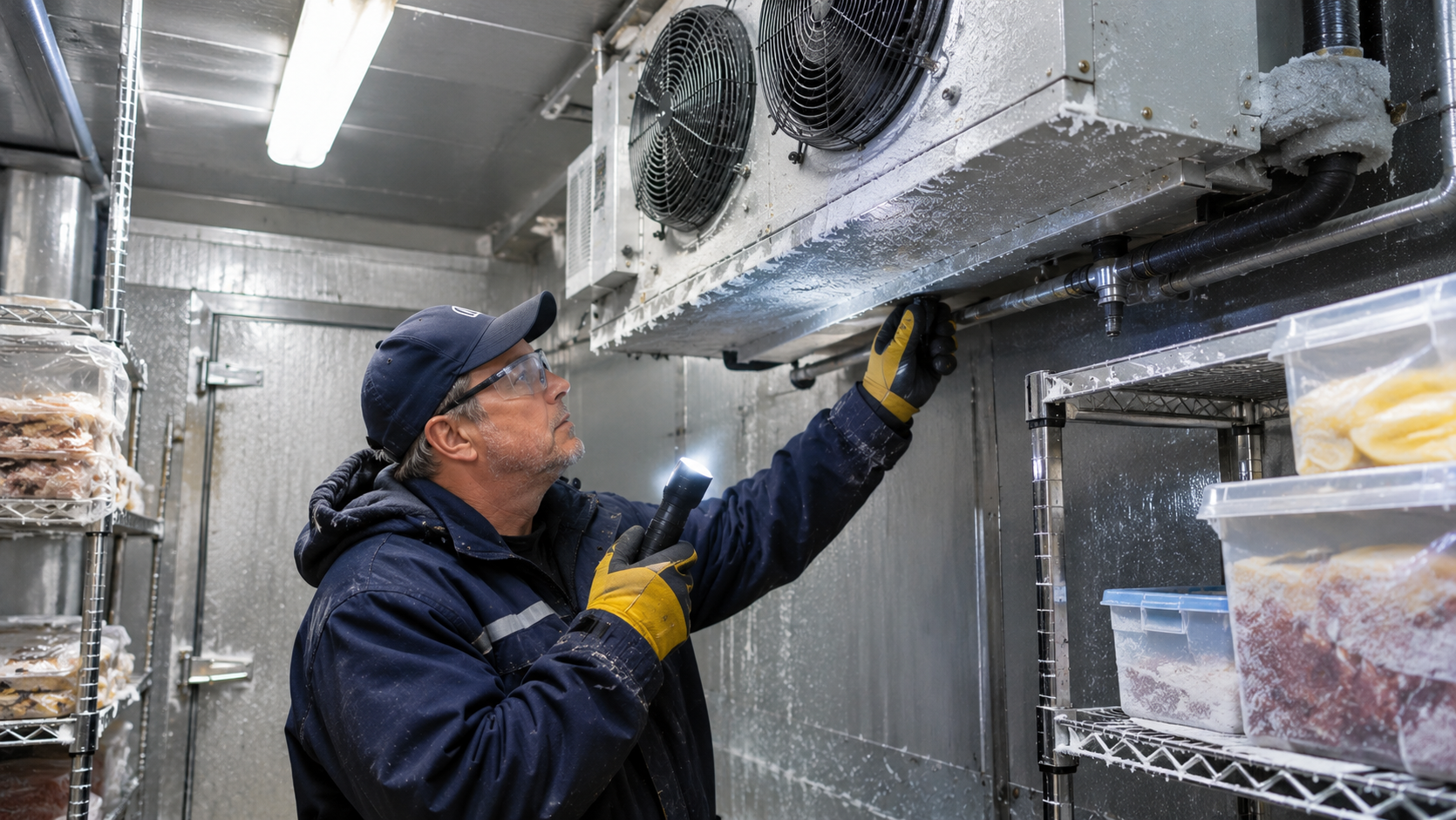

A walk-in freezer rarely dies in one dramatic moment. Frost thickens on the coil, the compressor runs longer each afternoon, and the thermometer drifts a few degrees. Then one humid week the box stops holding temperature at all.


That slow slide is why the technician you choose matters so much. A good one finds the cause behind the ice. A weak one clears the symptom and returns in a month.


This guide explains how to find a reliable walk-in freezer technician in Virginia. It covers what to check before you call, which credentials to verify, and which questions expose a weak bid. It also shows how an honest repair-or-replace decision gets made.


Start with symptoms, not a sales pitch


Before you call anyone, write down what the freezer is doing. Technicians diagnose faster when you describe patterns instead of guessing at parts. Note the box temperature, where ice appears, any new noises, and when the trouble began.


The table below pairs common symptoms with likely causes. Treat it as a map for the conversation, not a diagnosis.


What you see Common cause Typical fix
Thick frost across the evaporator coil Defrost failure, air leak, or blocked drain Repair defrost parts, seal the leak, clear the drain
Ice on the floor or ceiling near the door Worn gasket or a door that no longer closes fully Replace gaskets, adjust hinges and closer
Compressor runs constantly and the box stays warm Dirty condenser, low charge, or weak fan motor Clean coils, find the leak, replace the motor
Compressor cycles on and off rapidly Controls, airflow, or charge problems Review settings, airflow, and refrigerant charge
Unit trips on high pressure Dirty condenser, failed condenser fan, or overcharge Clean the coil, repair the fan, correct the charge
Water pooling under the evaporator Frozen drain line or failed drain heater Thaw the line, replace the heater


Ice is the most useful clue, and the defrost system is a common source. The ACHR News defrost guide notes that a frozen coil has several possible causes. A standard electric defrost system includes a timer, heaters, a termination switch, and a drain line heater.


That list shows why a quick wipe-down fixes nothing. Any one of those parts can fail and let frost rebuild within days. A technician who tests each part is doing the real work.


Why Virginia summers stress walk-in freezers


Humid, warm locations need more defrost cycles than dry ones. The same guide advises adding one defrost period at a time and watching the results. Too many defrosts can hurt both the system and the customer.


Virginia's humid summers push exactly this balance. Door traffic during a lunch rush adds moist air, and the coil frosts faster. A technician who understands local conditions will tune the schedule instead of leaving factory settings in place.


What a real diagnosis looks like


A reliable technician follows a sequence. The same trade publication outlines a freezer repair walkthrough that starts with outside air entering the box. Next come the drain pan and line, the evaporator fans, and the defrost timer.


Notice what the walkthrough asks for at the end. The technician forces the timer into defrost and measures amp draw on the heater circuit. Then each heater is tested on its own.


Measurements like these separate diagnosis from guessing. Ask what readings the technician took before any part is quoted. A confident tech will tell you.


What you can safely check before the technician arrives


A few quick checks can save a service call or at least speed it up. None require tools, and none put you at risk.


Start with the door. Confirm it closes fully and that the gaskets touch the frame all the way around. Look for frost on the ceiling or floor near the opening, which points to air leaking in.


Next, look at the product. Cartons stacked against the evaporator block airflow and make the coil work harder. Pull boxes back so air can move freely across the coil.


Compare the controller display with a separate thermometer. A large gap suggests a sensor problem rather than a refrigeration failure. Finally, check the breaker panel, and reset a tripped breaker only once.


Do not chip ice off the coil with a knife or screwdriver. Refrigerant lines run close to the fins, and one puncture turns a defrost problem into a leak repair. Leave the thawing to a technician.


Protect your inventory while you wait


The first hour decides how much product you keep. Keep the door shut as much as possible. Every opening lets warm, moist air into the box.


Start a temperature log right away. Record the reading every 30 minutes with the time and your initials. That record helps if a health inspector or an insurer asks what happened.


Move your highest-value items first if you have another working freezer. Seafood, specialty proteins, and prepared foods usually top that list. Keep everything else sealed inside the cold box.


If repair parts will take days, consider cold storage on wheels. Our mobile freezer rental guide covers sizing, power, and contract terms. Published weekly rates start at $820 for a 7' x 10' trailer, and delivery is $2.00 per mile.


Restaurants and caterers should also call the local health department if product warms. Ask what documentation an inspector will expect. Early contact usually goes better than a surprise discovery.


Credentials to verify before you hire


Credentials do not guarantee good work. They do screen out the contractors who should never touch a refrigeration system. Check these four items before you approve a quote.


The first is the Virginia contractor license. Class A starts at $150,000 per project or $1 million a year, per the Virginia Code contractor classes.


Most walk-in repairs fall in the Class C range of $1,000 to $30,000. Ask for the license number and which classification covers refrigeration work.


The second is EPA certification. Technicians who handle refrigerant must hold a federal certification. EPA's leak repair fact sheet says repairs under the new rules must be done by certified technicians.


The third is insurance. Ask for a certificate showing general liability and workers' compensation coverage. A contractor working inside your building without both puts your business at risk.


The fourth is a clear understanding of the leak rules. Since January 1, 2026, appliances holding 15 pounds or more of HFC refrigerant face leak repair requirements.


For commercial refrigeration, the trigger is a 20 percent leak rate. Repairs are due within 30 days of adding refrigerant. Records must be kept for three years.


Larger walk-in systems and rack-served boxes can cross that 15-pound line. Ask your technician whether your system does.


Questions to ask on the first call


How a company answers the phone tells you how it will treat the job. These questions take five minutes and reveal a great deal.


  • Who answers after hours? A live person means a real dispatch process. Voicemail means your emergency waits until someone checks messages.
  • How fast can someone arrive? Ask for a window, not a promise to "get there soon." Also ask whether a trip charge applies and when it is waived.
  • What parts ride on the truck? Defrost heaters, fan motors, gaskets, controllers, and sensors cover many common failures. A truck stocked with them often means a first-visit fix.
  • Will you show me the failed part and the readings? An honest technician welcomes this. Pressure gauges, meter readings, and the failed component make the diagnosis checkable.
  • Is the estimate written and itemized? It should separate diagnosis, parts, labor, refrigerant, and any after-hours rate. Ask how long the price holds.
  • What does the warranty cover? Get parts and labor terms in writing. Ask whether the clock starts at repair or at invoice.
  • Do you service my type of system? Self-contained units, remote condensing units, and rack-fed boxes differ. Confirm experience with yours.


Repair or replace: how an honest technician decides


The best technicians push repair first. A walk-in box is a big investment, and its insulated panels often outlast the refrigeration equipment. Replacing the whole system because a fan motor failed is poor value.


Some failures do change the answer. A compressor that has shorted to ground cannot be repaired, and neither can a leak in an aluminum evaporator coil. The company behind this guide lists those cases in its own FAQ and says it shows customers the evidence.


Age and refrigerant type matter too. EPA is phasing down HFC production and consumption by 85 percent by 2036.


Older refrigerants tend to get costlier as supply shrinks. Ask whether the system can be converted to a current, approved refrigerant instead of recharged with an obsolete one.


Ask for the decision in numbers. What does the repair cost, what is the expected remaining life, and what would a replacement cost? A technician who answers all three is advising you instead of selling to you.


Read the estimate like a technician would


A good estimate has five parts: diagnosis, parts, labor, refrigerant by type and weight, and warranty. Vague lines such as "refrigeration repair" hide too much. Ask for detail whenever one line carries most of the price.


Refrigerant deserves special attention. If a tech wants to add it without finding the leak, ask why.


Topping off a leaking system only delays the next failure. Under the new leak rules, it can also create a compliance problem.


Red flags that should end the conversation


Some warning signs show up before any work begins. Watch for these during the first call or visit.


A contractor who will not share a license number is a red flag. So is one who pushes full replacement on the first visit without readings. Refusing to show the failed part belongs on the same list.


Ask how technicians are paid. Commission pay can reward upselling, while hourly or salaried pay removes that pressure. The answer will not settle the decision, but it is worth hearing.


Finally, be wary of a quote that arrives with no site visit for anything beyond a simple part swap. Freezers vary too much for phone-only pricing. A reliable company wants to see the box first.


Information to have ready when you call


A prepared caller gets a faster, more accurate response. Take five minutes now to gather the basics, and tape them inside the freezer door or office binder.


Start with the nameplate data on the condensing unit and evaporator. Record the make, model, serial number, and refrigerant type. Photograph the plates so you can text them to dispatch.


Add the age of the box and of the refrigeration equipment, if you know it. Note the location of the electrical disconnect and the breaker that feeds the unit. Include the last service date and any repairs that keep recurring.


Finally, list who can authorize repairs after hours. A technician waiting on approval at 11 p.m. is a technician not fixing the freezer. One named decision-maker with a working phone saves real time.


Maintenance that prevents the next call


Most emergency calls trace back to small items nobody checked. The Danfoss troubleshooting guidance lists what a preventive visit should cover. Airflow, coil cleanliness, and fan operation come first, followed by gaskets, hinges, and door closers.


The same checklist includes controller setpoints, defrost schedules, and alarm history. It also covers suction and discharge pressures, the drain line, and the drain heater. Reviewing service records for repeated faults helps spot a problem before it becomes a breakdown.


Door habits matter as much as equipment. Strip curtains, working door closers, and quick loading all reduce the warm air entering the box. Our guide to refrigeration maintenance best practices lays out a routine you can assign to staff.


A scheduled maintenance plan puts these checks on a calendar. It also gives you a technician who already knows your box when something goes wrong. That familiarity shortens every future diagnosis.


How VA Commercial Repair Solutions handles walk-in freezer calls

Disclosure: This guide is published by VA Commercial Repair Solutions, so read this section with that in mind. We have tried to keep the rest of the guide useful no matter who you hire.

VA Commercial Repair Solutions is a Class A licensed contractor serving Charlottesville, Harrisonburg, Waynesboro, Staunton, Lexington, and Fishersville. It works on walk-in coolers and freezers, reach-ins, ice makers, and related systems.


The company also designs and installs new walk-in cases. That means the same crew understands both the box and the equipment behind it.


Its published policies line up with the checklist above. A live person answers calls around the clock, with no voicemail. The service call is free when the failed part is repaired or replaced.


Technicians are paid hourly or salaried, not by commission. If the company cannot fix a problem, it offers $50 in cash plus a $500 credit toward a new unit. It reports an 85 percent first-visit completion rate, which is a company figure, not a third-party audit.


Outside records are easier to weigh. The company holds Virginia Class A license #2705180394 and is SWaM certified. Its Google Business Profile lists 4.6 stars across 155 reviews.


Learn more about its commercial refrigeration repair services, including walk-in freezers. Whichever company you choose, use the questions in this guide to compare them side by side.


Frequently asked questions


How much does walk-in freezer repair cost in Virginia?


There is no single reliable number. Cost depends on the failed part, the refrigerant involved, and whether the call happens after hours. A defrost heater or fan motor sits at the low end, while compressors and coils sit at the high end.


Ask for a written, itemized estimate before work begins. Compare the scope of each quote, not just the bottom line. Two bids that look different may cover different work.


How long will a freezer hold temperature after it fails?


USDA consumer guidance puts a full, closed freezer near 48 hours. A half-full one holds closer to a day. A walk-in's size and insulation can help, but door traffic and room heat change the outcome.


Rely on your own temperature log, not a rule of thumb. Keep the door closed and watch the reading. Move product or rent cold storage before it climbs.


Should I call the manufacturer or a local technician?


Check your warranty first, because unauthorized work can complicate a claim. For anything outside warranty, an independent technician is usually faster and works on every brand. Ask whether the company registers equipment warranties on your behalf.


Local response time often decides the outcome. A technician forty minutes away beats a dealer who can visit Thursday. Confirm both before you commit.


Is it cheaper to repair or replace a walk-in freezer?


Repair is usually cheaper when the box and panels are sound and the failure is a single component. Replacement makes more sense when several major parts fail close together. It also fits when the system uses refrigerant that is hard to source.


Ask for both numbers in writing. A reliable technician will give you the repair cost, the expected remaining life, and the replacement cost. Decide with all three in hand.


Do I need a maintenance plan for a walk-in freezer?


A plan is worth considering for any business that depends on frozen inventory. Regular visits catch dirty coils, worn gaskets, and drifting defrost settings before they cause failures. They also create a service record that shortens future diagnoses.


Compare plans by what each visit covers. Look for coil cleaning, gasket and door checks, defrost review, and pressure readings. Avoid plans that promise visits without listing tasks.


The bottom line: hire for diagnosis, not just speed


A reliable walk-in freezer technician measures before they quote. They verify licenses and certifications, explain the cause of the failure, and put the estimate in writing. They also say plainly when a repair is not worth the money.


Speed matters too, because product warms by the hour. Combine both by choosing a company that answers live, arrives with common parts, and shows its evidence. Do that work before the next failure, not during it.


Need help with a walk-in freezer in central Virginia? VA Commercial Repair Solutions answers live at (540) 457-4822, any hour. Describe the symptoms, and a technician will talk through next steps with you.

November 19, 2026
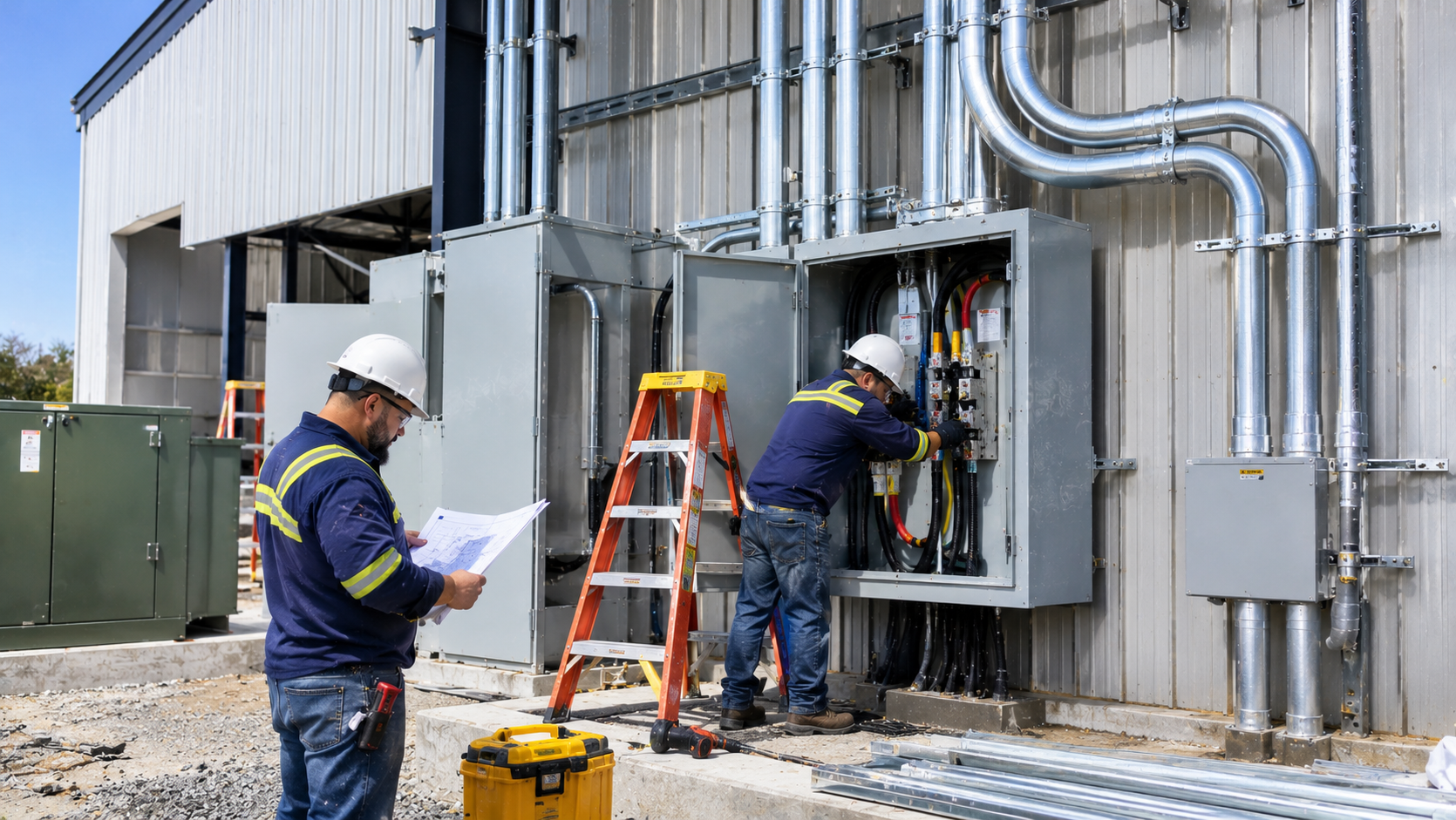
 A new three-phase service can be fully wired and still sit dark. Dominion Energy will not set a meter until an electrical inspection passes. Its commercial process also asks for load letters, riser diagrams, and approved switchgear drawings. That sequence catches many owners off guard. The electrician, the utility, and the inspector each hold a piece of the schedule. The contractor you hire decides how smoothly those pieces fit together. This guide covers six Virginia contractors for commercial panel upgrades and three-phase power. It compares their scope, licensing, and public track record. It also flags where each contractor's published scope stops, so you can ask sharper questions. Virginia panel and 3-phase contractors at a glance Six contractors made this list, each with a different strength. VA Commercial Repair Solutions leads for central Virginia owners who want panel, transformer, and three-phase work from one crew. Myers & Whitesell adds eight decades of Waynesboro experience. Moore's Electrical & Mechanical offers statewide reach through an employee-owned team of more than 600. Tate & Hill focuses on switchgear and motor control centers in Richmond. Ballance Electrical covers Hampton Roads, and AJ Long Electric handles single-phase tenant panels in Northern Virginia.
November 11, 2026
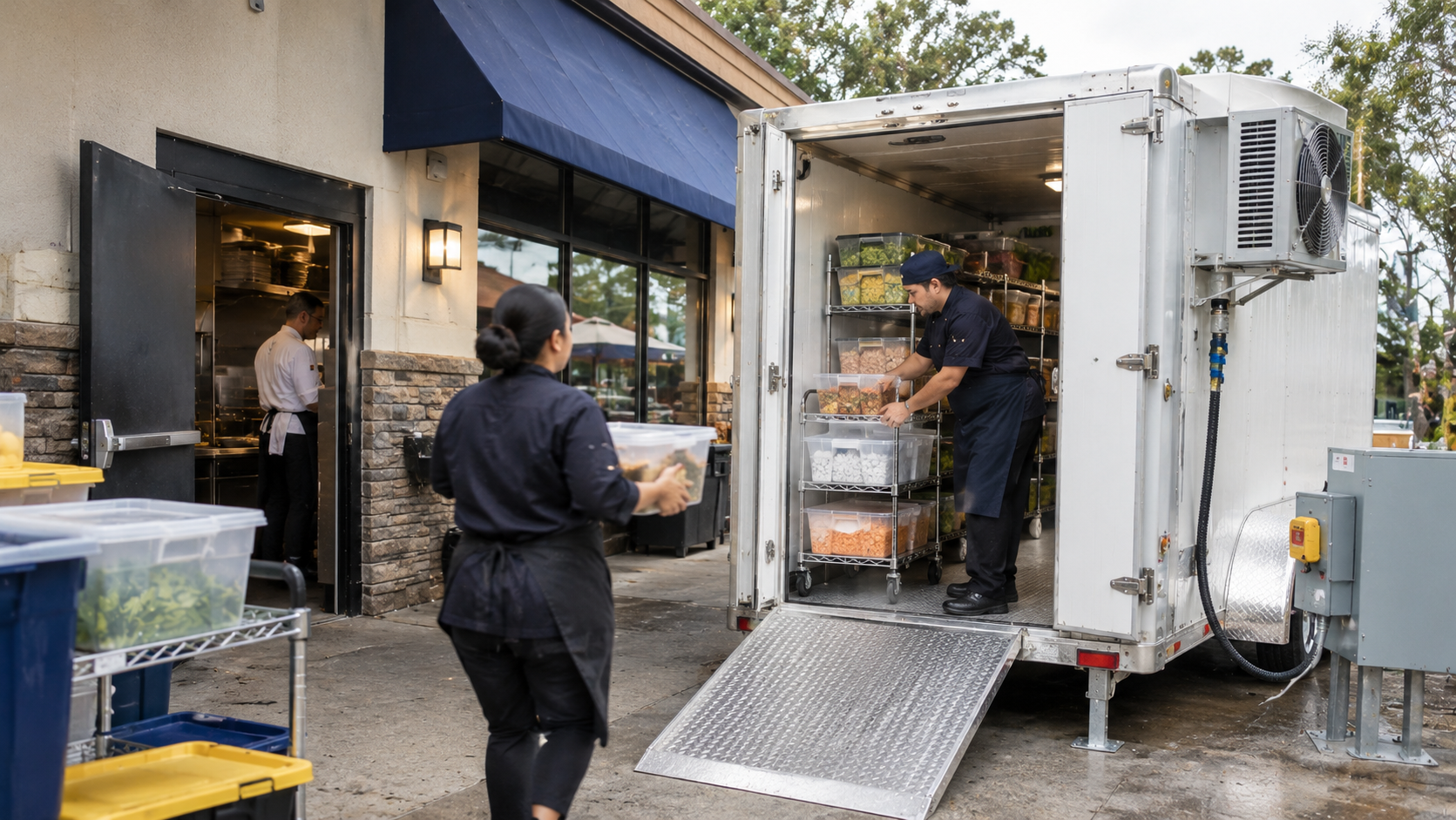
 Cold storage is rented by the week, but the decision gets made in about an hour. A walk-in warms up, the compressor part is backordered, and the inventory starts a countdown. Virginia's food rules set the clock. A rental trailer in the parking lot can stop that clock while the permanent unit is repaired, replaced, or remodeled. The hard part is picking a provider fast, with the right size, the right power plan, and honest terms. This guide compares six providers of mobile freezers and refrigerators that serve Virginia. We looked at unit sizes, temperature range, power needs, delivery, and how openly each company publishes its terms. The short version: six providers compared VA Commercial Repair Solutions rents freezers and refrigerators from Fishersville and publishes its rates and terms. Chill Out Rentals runs a national network with Richmond and Norfolk pages and 24/7 emergency response. Richmond Restroom Trailers offers 12-foot and 16-foot refrigerated trailers in the Richmond area. Rolling Refrigeration rents a single 8' x 12' trailer across the Southeast, including Virginia. Sunbelt Rentals offers refrigerated trailers and containers through its branch network. Chesapeake Ice delivers large diesel-powered trailers from Maryland into Virginia.
November 11, 2026
 The cheapest maintenance agreement on the table is often the costliest one by August. It looks complete on a one-page quote. Then a missing clause appears on the invoice after the first breakdown. Virginia's weather raises the stakes. Humid summers push cooling equipment hard, and cold snaps test every furnace and boiler. A plan that covers only a spring tune-up leaves the toughest months unprotected. This guide explains what a commercial HVAC maintenance agreement should include in 2026. It covers scope, visit frequency, response times, pricing, exclusions, and the checks specific to Virginia. Why a maintenance agreement is worth the paper An agreement turns maintenance from a favor into an obligation. Visits happen on a calendar, not when someone remembers. Problems get found while they are still small. The numbers support the idea. The Department of Energy says efficiency-focused maintenance can save 5% to 20% on energy bills without major capital spending. That is a government estimate, not a promise for your building. A written standard helps too. ANSI/ASHRAE/ACCA Standard 180 sets minimum inspection and maintenance requirements for commercial building HVAC systems. Ask any contractor how its checklists compare with it. What an agreement does not do An agreement does not make equipment immortal. A 25-year-old rooftop unit still fails. A good plan finds the failure earlier and gives you time to budget for a replacement. It also does not cover everything by default. Many plans exclude parts, after-hours labor, or specific components. The rest of this guide shows where those gaps usually hide. The three common types of commercial HVAC agreements Contractors use different names, but most plans fall into three groups. The label on the proposal matters less than the scope inside it. Read the covered and excluded lists line by line.
November 11, 2026
 A rooftop unit does its job where nobody looks. Then a July afternoon arrives, the compressor trips, and the dining room starts to feel like the parking lot. Fixing one is not like fixing a home system. Technicians need roof access, a safe way to work at height, and comfort with three-phase power. Parts for a 15-ton unit are rarely sitting on a service van. This guide compares six Virginia companies that repair commercial rooftop units. We looked at service area, emergency coverage, maintenance options, and what each firm actually publishes about its RTU work. Virginia's top 6 RTU repair companies at a glance VA Commercial Repair Solutions covers the Shenandoah Valley and central Virginia with live 24/7 answering. Havtech runs service branches in Richmond, Norfolk, and Roanoke. Total Mechanical Solutions serves Fredericksburg, Northern Virginia, and Richmond. J & D Mechanical Services has worked from Warrenton since 1991. Tidewater Mechanical and On Time Air both serve Hampton Roads from Chesapeake.
November 2, 2026
 Washdown water, ammonia refrigeration, and 480-volt motors share one floor in a food processing plant. That mix punishes careless electrical work. A single failed panel can stall a conveyor, a chiller, and a packaging line at once. Poultry plants add heavy conveyor systems and high-capacity ventilation. Dairies add precision-timed pumps and bottling equipment on three-phase power. Cold storage adds refrigeration that must never lose power. The Shenandoah Valley is a major agricultural processing region. That makes the hiring decision local and urgent. A contractor two hours away is a slow answer when product is warming. This guide ranks six Virginia electricians on what food plants need. We looked at industrial scope, controls and automation, coverage area, and emergency response. We also checked licensing and safety signals where firms publish them. One honest caveat. Few contractor websites name poultry or dairy plants as clients. We rank on capability signals and say plainly where a site is silent. Ask every firm for food-plant references before you sign. Who are the best electricians for Virginia food plants? VA Commercial Repair Solutions pairs electrical, HVAC, and refrigeration under one Class A license in the Valley. Dubak Electrical of Virginia brings statewide industrial power and controls work from Richmond. Allen Yoho Electrical, Mid Valley Electric, and Design Electric are Valley and Charlottesville contractors with industrial service. MEP Contracting combines electrical and refrigeration work from Harrisonburg and Winchester.
November 2, 2026
Two contractors can hold the same Class A license and still be the wrong call for the same building.  One is built for a six-month construction schedule. The other is built for the 3 a.m. phone call. VA Commercial Repair Solutions and ColonialWebb both work on commercial mechanical systems in Virginia. They overlap in Charlottesville and Harrisonburg. Beyond that overlap, they are very different companies. Size, response model, and project scale decide the fit. Picking on brand recognition alone can leave a restaurant waiting on a firm built for data centers. It can also leave a hospital project with a shop built for repairs. This guide compares the two on what a facility manager actually needs to know. We cover scope, emergency coverage, refrigeration depth, pricing, and credentials. We also say plainly when the other contractor is the better call. VA Commercial vs ColonialWebb at a glance VA Commercial Repair Solutions is a Fishersville-based specialist in commercial repair, refrigeration, kitchen equipment, and electrical work. It answers every call live, around the clock. ColonialWebb is a Richmond-headquartered mechanical, electrical, and service contractor with offices across Virginia and Maryland. Choose VA Commercial for urgent repair and ongoing maintenance in the Shenandoah Valley. Choose ColonialWebb for large construction, industrial refrigeration, and multi-site programs.
November 2, 2026
 A Sub-Zero freezer that runs a few degrees warm rarely announces itself. Frost creeps along the drawer seals and ice cream softens at the edges. By the time an alarm sounds, the compressor has often struggled for weeks. Sub-Zero units are engineered differently from standard freezers. Parts, diagnostics, and warranty rules all favor technicians who work on the brand daily. A general appliance tech who guesses at a diagnosis can turn a small fix into an expensive one. Virginia makes the search harder. Sub-Zero limits how many Premier Service Partners it designates in each area. The best option in Fairfax is rarely the best option in Staunton. This list covers five Virginia providers across Northern Virginia, Richmond, and the Shenandoah Valley. We weighed Sub-Zero experience, service area, warranty terms, and fit for homes versus businesses. One scope note. "Sub-Zero" is also shorthand for any below-zero commercial freezer, and one provider here handles both. Confirm current certification through Sub-Zero's own locator before you book, because directories lag behind reality. Who repairs Sub-Zero freezers in Virginia? VA Commercial Repair Solutions handles commercial low-temperature freezers across the Shenandoah Valley, with live answers at any hour. E.Z. Refrigeration Service and Nate Owen High End Appliance Service cover Northern Virginia homes and kitchens. Mr. Appliance of Richmond offers warranty-backed, flat-rate repair around the capital. S & W Home Appliance has served Staunton since 1979.
October 23, 2026
 Ask a technician why they chose this trade, and the answer reveals more than any brochure. Some say it was the paycheck. Others talk about a mentor, a military background, or the satisfaction of making something work again. That difference shows up on your roof. You can see it in how a condensate line is pitched and how a panel is labeled. You can also see it when someone recommends a repair although a sale would pay more. Craftsmanship and purpose are not marketing words. They are habits you can learn to spot. This guide shows how to find a commercial HVAC company built on both. You will get a vetting process, a scorecard, and a list of questions that expose a company's real priorities. Use them before the next breakdown, while you still have time to choose carefully. What craftsmanship actually looks like in HVAC Craftsmanship is the gap between equipment that merely runs and a system that runs well for twenty years. It is mostly invisible on the day of installation. It reveals itself in year three, when a poorly built system starts to fail. Start with who does the work. A company that fabricates its own ductwork, supports, and custom metal controls its quality from the first cut. A company that subcontracts everything controls only the invoice. Look next at documentation. A skilled team records refrigerant charges, amp draws, pressures, and temperatures at every visit. Those numbers let anyone diagnose a trend instead of guessing at a symptom. Finally, look at the standard behind the work. The ANSI/ASHRAE/ACCA Standard 180 sets minimum HVAC inspection and maintenance requirements. Its stated purpose is to preserve a system's comfort, energy efficiency, and indoor air quality. It applies to new and existing commercial buildings. You do not need a contractor who recites the standard. You do need one who can explain how its maintenance visits compare to it. Signs of real craftsmanship you can check Concrete evidence beats confident talk. Look for these signals during your search: In-house fabrication. The company builds ductwork, hoods, or custom metal in its own shop. Written scope for every visit. Each maintenance checklist lists tasks, readings, and findings, not just "serviced unit." Labor warranties. The company stands behind installs with free labor for a stated period. Servicing what it installs. The installer returns for callbacks and keeps responsibility for the work. Brand-neutral repair. Technicians repair all major brands, so advice does not depend on one supplier. Visible training. The company invests in apprenticeships and certifications, not only in hiring experienced techs. What "mission-driven" should mean in practice Many companies claim a mission. Few can show it in the way they price, staff, and recommend. A real mission shows up in decisions that cost the company money. Recommending a repair over a replacement is the clearest example. A contractor that earns more when you buy new has a built-in conflict, so ask how its technicians are paid. Pay structure matters. Technicians paid on commission have a reason to upsell. Technicians paid hourly or by salary can give a neutral opinion, because their income does not change with your decision. A mission also shows up in how a company treats people. Does it train apprentices and develop career-changers? A company that invests in its people usually invests in its work. Virginia has a formal route for that last point. The Department of Veterans Services runs the Virginia Values Veterans program , known as V3. In July 2024, the state reported more than 3,500 partner employers and over 142,000 veterans hired. Ask any contractor whether it participates in a veteran hiring or training program. Finally, a mission shows up at 11 p.m. on a Saturday. A company that answers its own phone, and sends someone who can decide, treats service as a commitment. A company that sends you to voicemail treats it as a queue. Why this choice pays off Choosing on craftsmanship and ethics is not a luxury. It is a cost decision that plays out over years. Poor workmanship compounds. A loose electrical connection, a missed refrigerant leak, or a clogged drain pan rarely fails on day one. It fails during the first heat wave, when you can least afford it. Poor ethics compound too. A contractor that recommends replacement too early drains your capital budget. A contractor that hides a failing component to protect a service contract drains your trust. A good partner reverses both trends. Careful installation reduces callbacks. Honest advice lets you spend capital where it matters and repair where it does not. Step-by-step: how to find and vet a company Use this seven-step process to move from a long list to a confident choice. Step 1: List your equipment and your risk Write down every system the contractor must handle. Include rooftop units, walk-in coolers, exhaust hoods, boilers, and controls. Then note what fails first when each one goes down. A restaurant cannot tolerate a dead walk-in for a day. An office can tolerate a dead rooftop unit longer. Your risk list decides how much response speed and specialization you need. Step 2: Verify license and insurance Confirm that the company holds the right Virginia contractor license for the work. Check that the license class fits the size of your project. The state's Department of Professional and Occupational Regulation maintains a public license lookup. Ask for current proof of liability and workers' compensation insurance. A license does not prove skill, but its absence proves risk. Do this step before any other conversation goes deep. Step 3: Look for proof of craftsmanship Ask to see examples of recent work, including photos of fabrication or installation details. Ask whether the company builds its own ductwork or custom metal. Ask how it commissions a new system before handing it over. Good contractors enjoy this question. They will walk you through their process, because they are proud of it. Step 4: Test their ethics before you need them Ask a direct question: "When would you recommend replacing instead of repairing?" A thoughtful answer names specific failures, such as a shorted compressor or a cracked heat exchanger. A vague answer, or an automatic yes, is a warning. Then ask how technicians are paid and whether they carry sales quotas. Ask what the company does when it cannot fix something. The answers show you how it behaves under pressure. Step 5: Call the emergency line Call the after-hours number at an awkward time. Note how many rings it takes, who answers, and whether that person can dispatch. This test costs you two minutes. Do not rely on a promise of "24-hour service" alone. Many companies advertise it, but the experience varies widely. A real person with authority is the standard to look for. Step 6: Compare proposals line by line Request written proposals from at least two firms. Compare scope, equipment specifications, labor warranties, and maintenance terms. Do not compare totals until the scopes match. For maintenance contracts, our guide on comparing HVAC maintenance companies covers plan contents, pricing structures, and red flags. A cheap plan that skips refrigerant checks and electrical tests is not a bargain. Step 7: Start small, then expand You do not have to hand over everything on day one. Begin with a seasonal tune-up or a single repair. Watch how the company documents, communicates, and follows up. If the first job goes well, widen the relationship. If it does not, you have lost little. A scorecard for comparing candidates Use the table below during calls and site visits. Score each answer as strong, acceptable, or a warning sign.
October 23, 2026
 Lift a ceiling tile in almost any Virginia commercial building, and you will find sheet metal doing quiet, essential work. It moves conditioned air, carries grease out of kitchens, and protects equipment from the weather. When that metal is built well, nobody notices. When it is built poorly, everyone pays. A Berkeley Lab duct study measured what leakage costs in large commercial buildings. Adding 15% duct leakage at operating conditions raised fan power by about 25% to 35%. That is a steep penalty for metal that was not sealed well. Fabrication quality is therefore a cost issue, not a cosmetic one. This guide compares five companies that build ductwork and custom metal products for Virginia projects. Each one publishes enough detail to evaluate, and each fits a different kind of buyer. How we chose these five We started with a simple question. Which firms clearly state what they fabricate, in which materials, and for whom? Every company here describes its own shop, product range, or fabrication process on its website. We favored firms that name materials, sizes, or equipment over those offering only general claims. We also covered a spread of buyers, from restaurant owners to mechanical contractors. We did not invent ratings or review scores. Where a company publishes numbers, we report them as the company's own claims. Where it stays silent on gauge, pressure class, or certifications, we say so. Treat this list as a starting point for your own vetting. Request references, shop drawings, and written lead times from any firm you shortlist. The short list: five fabricators at a glance VA Commercial Repair Solutions is a Fishersville contractor that fabricates and installs ductwork in-house. It also builds stainless and aluminum products for kitchens, rooftops, and industrial sites. Vortex Metal Manufacturing is a Richmond manufacturer of rectangular and spiral duct. Howell's Heating & Air is an Ashland contractor with a custom fabrication shop for retrofit and grease duct work. R.S. Harritan & Company is a Richmond industrial fabricator with a 24,000-square-foot shop. ADJ Sheet Metal is a large Maryland fabricator that serves Richmond and Northern Virginia projects.
October 23, 2026
 A conveyor gearbox starts grinding at 2 a.m., and the first shift arrives in four hours. The maintenance lead holds a repair quote in one hand and a replacement price in the other. Neither number tells the whole story. Plants across Virginia face this call constantly. A poultry line in the Shenandoah Valley, a bottling floor near Charlottesville, and a Roanoke machine shop all weigh it. The choice is simple to state. Spend on a fix and hope it holds, or commit capital to something new. This guide gives you a decision method instead of a slogan. You will see the cost ratios, downtime math, and efficiency data that separate a smart repair from a delayed replacement. It also shows how to build a repeatable process, so the next decision takes minutes instead of meetings. Why this decision is really about downtime The repair bill is rarely the biggest number in the room. Lost production usually is. Siemens' True Cost of Downtime report found that unplanned downtime costs the world's 500 largest companies 11% of their revenues. That adds up to roughly $1.4 trillion a year. The same report puts automotive downtime at $2.3 million an hour. Your plant is smaller, but the logic scales down cleanly. A food processor that loses a cooling line can lose a full shift of product. A fabrication shop that loses one spindle can lose a customer. That is why the first question is not what the repair costs. Ask what each hour of stoppage costs your facility. Put a dollar figure on that hour before a failure forces the issue. Include every real cost in that figure: lost output, overtime, spoiled material, expedited freight, and late-delivery penalties. Once you have it, every other calculation in this guide gets easier. A cheap repair that takes three days can cost more than an expensive replacement that arrives tomorrow. The core math: repair cost against replacement cost Start with a simple ratio. Divide the repair quote by the installed price of a comparable new unit. For electric motors, one motor repair-versus-replace guide cites a 60% threshold from an Advanced Energy decision tree. If the repair exceeds 60% of a premium-efficiency replacement, the tree recommends buying new. Service centers often quote a wider range of 50% to 80%. The guide notes that this range is commercial advice, not published analysis. Treat the ratio as a first filter, not a verdict. A 40% repair on a 30-year-old machine can still be a poor bet. A 65% repair on a newer, well-supported machine can still be the right move. The same guide describes a downtime override. If an hour of downtime costs more than twice the price of a new motor, buy new. Install it at the next scheduled outage, and keep a spare on the shelf. Use the scorecard below as a first pass. Two or more replacement signals in a single row usually justify a deeper look.