
What Does a Commercial HVAC Service Call Cost in Virginia?
If you are trying to budget for a commercial HVAC visit in Virginia, the simplest answer is this: a standard business-hours diagnostic service call commonly falls somewhere around $150 to $350 before repair work, parts, refrigerant or specialty equipment. Emergency, weekend or after-hours calls can cost more, especially when the technician is responding to a no-cooling, no-heat or food-safety emergency.
That number is only the starting point. A commercial HVAC service call cost can change quickly based on the type of equipment, rooftop access, the amount of troubleshooting required, travel time, electrical complexity and whether the repair can be completed on the first visit.
VA Commercial Repair Solutions does not publish a flat online service-call menu, because commercial systems vary widely. The company does, however, offer no service call fee when repair work is performed and free installation quotes.
For business owners and facility managers, that distinction matters: the lowest diagnostic fee is not always the lowest total cost if the contractor cannot diagnose the system correctly or has to come back with parts that should have been stocked.
Typical commercial HVAC service call cost in Virginia
Use the ranges below as planning estimates, not a guaranteed quote. A small office heat pump in Waynesboro, a rooftop unit serving a restaurant in Charlottesville and a larger packaged unit on a school or production facility in Harrisonburg can all require different time, access and parts.
| Cost Item | Typical Virginia Planning Range | What It Usually Covers |
|---|---|---|
| Standard business-hours diagnostic visit | $150 to $350 | Dispatch, travel, initial inspection and diagnosis |
| Emergency or after-hours diagnostic visit | $250 to $600 or more | Priority response outside normal scheduling windows |
| Commercial HVAC labor after diagnosis | Often hourly or flat-rate by repair | Electrical testing, component replacement, refrigerant work or system adjustments |
| Minor repair total | $250 to $900 | Common items such as contactors, capacitors, belts, filters, thermostat issues or basic controls troubleshooting |
| Moderate repair total | $900 to $2,500 | Fan motors, blower assemblies, refrigerant leak investigation, ignition issues or more involved control problems |
| Major repair total | $2,500 and up | Compressors, large motors, major refrigerant repairs, heat exchangers, large RTU work or multi-system problems |
The diagnostic fee is the cost of getting a qualified technician to the site and identifying the failure. The repair cost is separate unless the contractor has a policy that credits or waives the diagnostic charge when the repair is completed.
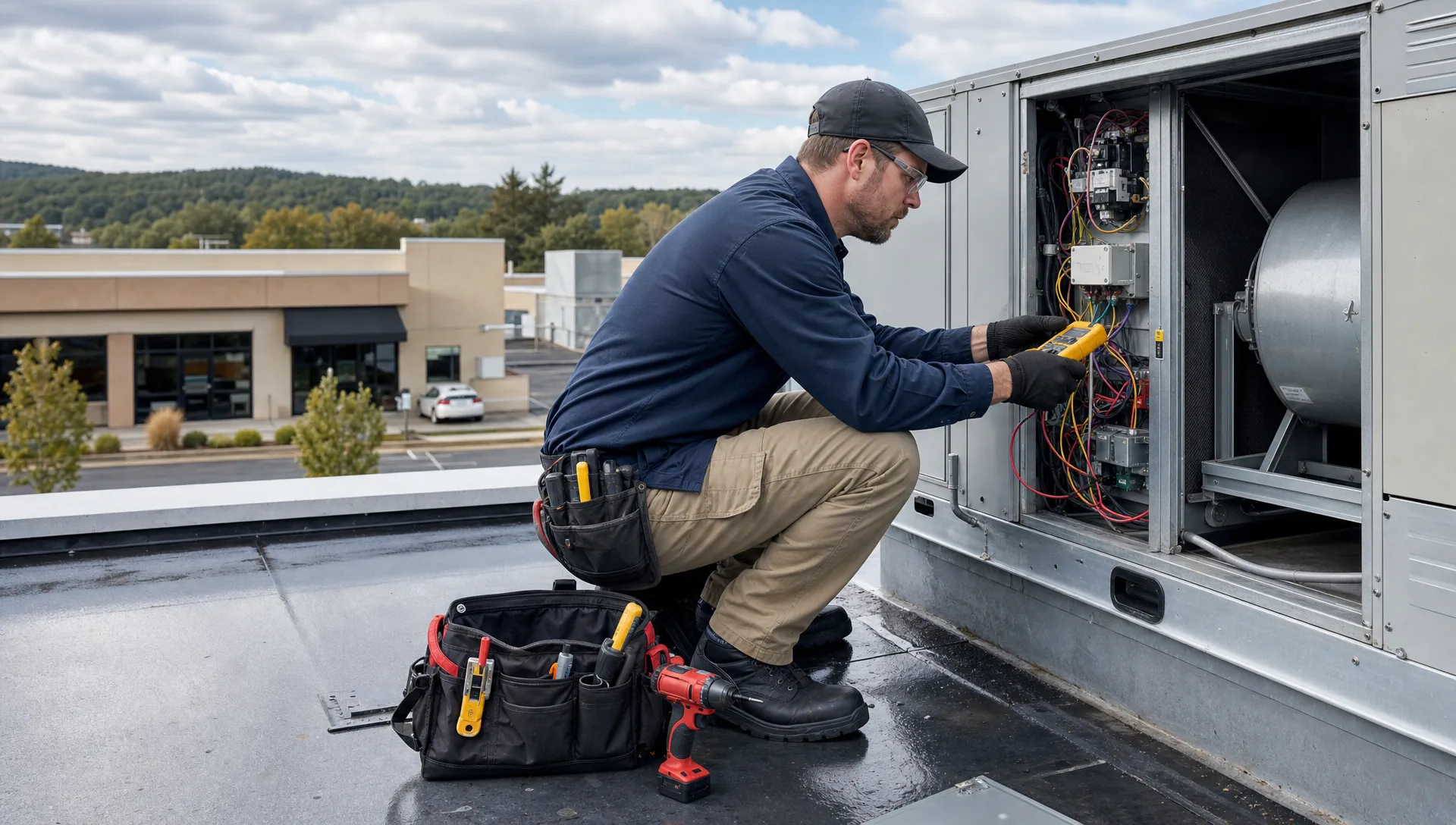
For example, a technician may find that a rooftop unit is not cooling because of a failed capacitor, a loose wire or a burned contactor. Those are very different repair tickets. The service call gets the technician there, but the actual cost depends on what failed and what it takes to safely restore operation.
Why commercial HVAC service calls cost more than residential visits
Commercial HVAC work is not simply residential air conditioning on a larger scale. The equipment is often heavier, more complex and tied to business operations that cannot tolerate long downtime.
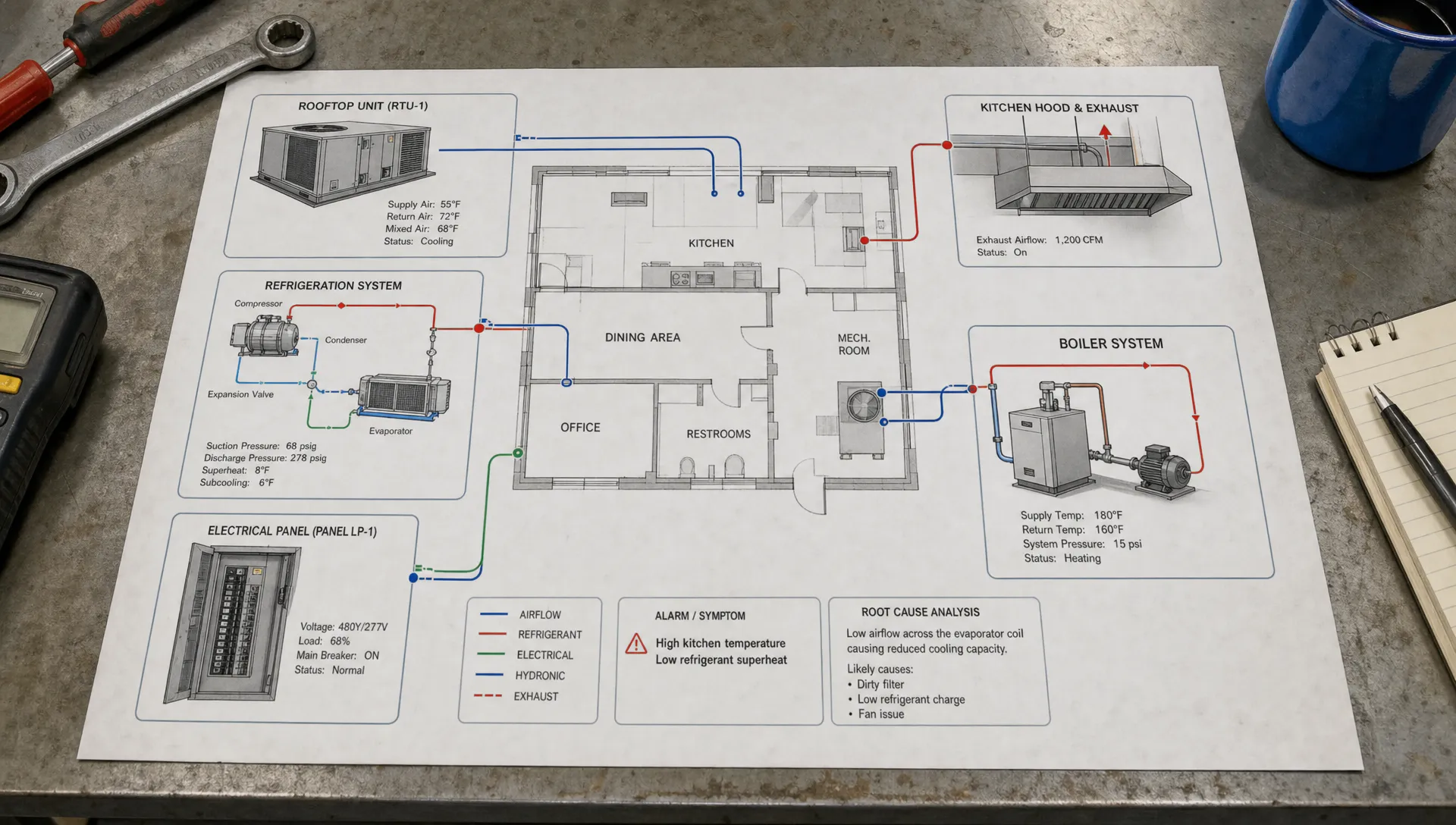
A commercial technician may need to work on rooftop units, split systems, make-up air equipment, furnaces, heat pumps, ductless systems, PTACs, economizers, controls or ventilation equipment. In restaurants and food-service facilities, the HVAC system may interact with kitchen exhaust, make-up air and refrigeration loads. In industrial or agricultural processing environments, HVAC problems may overlap with 3-phase electrical service, controls or high-capacity ventilation.
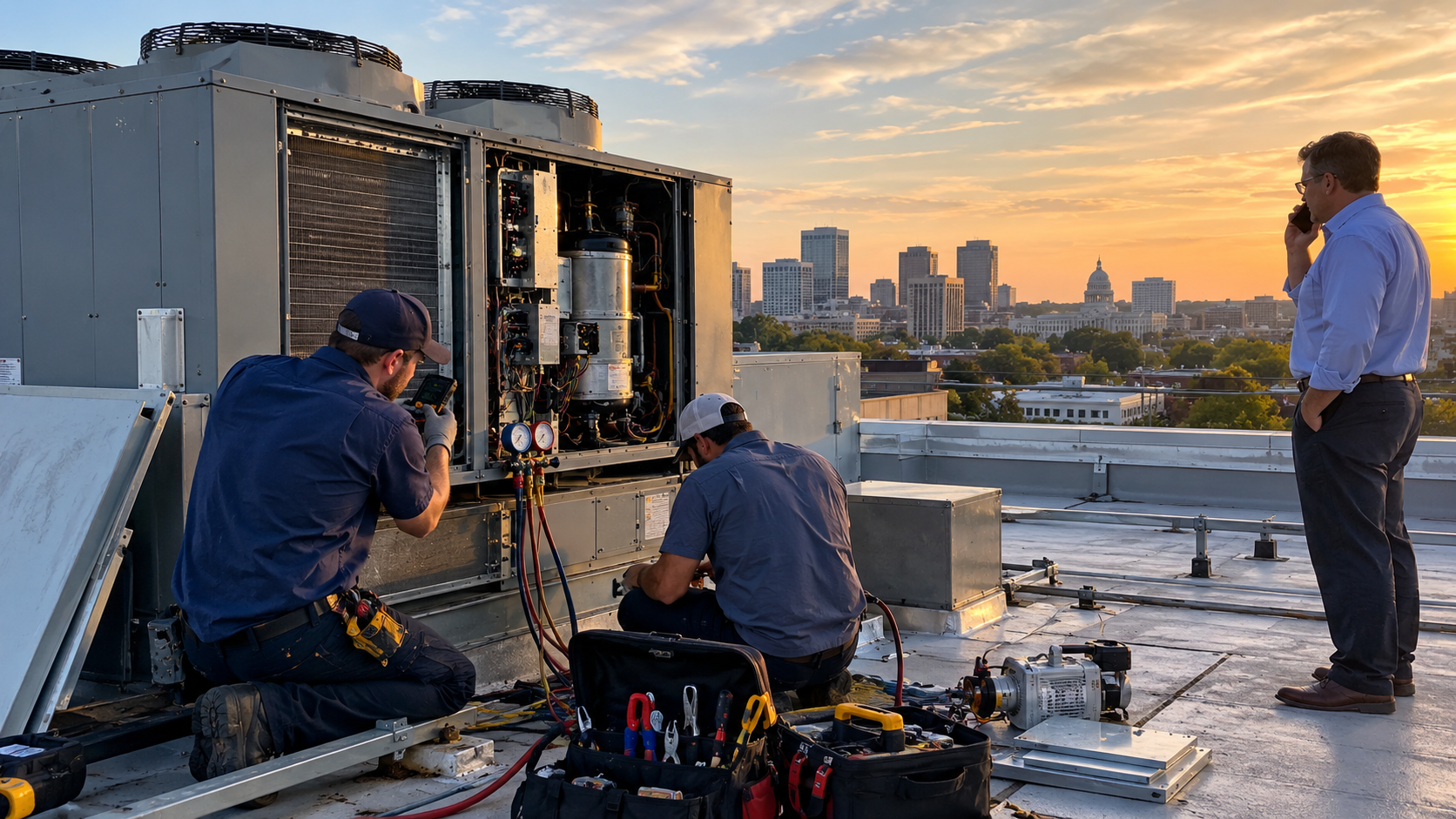
That is why a commercial service call often includes more than a quick thermostat check. The technician may need to verify voltage, amperage, refrigerant pressures, airflow, safety switches, economizer function, drain performance and control signals. If the equipment is on a roof, safe access and weather conditions also affect the visit.
If your issue is more than a simple diagnostic question, the company’s commercial HVAC repair service page explains the broader repair scope for business systems.
What should be included in a fair service call?
A legitimate commercial HVAC service call should produce more than a vague statement like “the unit is old” or “you need a new system.” You are paying for a diagnosis, so you should expect evidence.
At a minimum, a professional visit should include confirmation of the complaint, a safety check, electrical testing, inspection of visible components, airflow or temperature checks when relevant and a clear explanation of the next step.
For cooling systems, refrigerant readings may be needed. For heating systems, combustion, ignition or heat exchanger concerns may need to be evaluated. For rooftop units, the technician should also consider access, weather exposure and whether the failure is related to controls, power, airflow or the refrigeration circuit.
A fair service call should also end with a practical recommendation: repair now, monitor the system, perform maintenance, quote a larger repair or discuss replacement if the system has a failure that cannot be repaired economically or safely.
VA Commercial Repair Solutions emphasizes a repair-before-replacement approach. The company’s stated practice is to show the evidence behind a recommendation, such as readings from electrical meters or refrigerant gauges, rather than simply pushing replacement.
Main factors that affect the final price
The initial diagnostic fee is only one piece of the total invoice. The following factors often have a bigger impact on the final cost than the service call itself.
| Cost Driver | Why It Matters | Likely Impact |
|---|---|---|
| Timing of the call | Nights, weekends and holidays require emergency dispatch | Higher diagnostic or emergency charge |
| Equipment location | Rooftop units, locked mechanical rooms and hard-to-access equipment take longer | More labor time or access planning |
| System size | Larger commercial units use larger components and may take longer to test | Higher parts and labor cost |
| Type of failure | Electrical faults, refrigerant leaks and control issues require different tools and skills | Wide range of repair totals |
| Parts availability | Specialty motors, boards or compressors may need ordering | Possible return visit |
| Refrigerant type | Older refrigerants can be expensive or require conversion planning | Higher material cost or replacement discussion |
| Maintenance history | Dirty coils, clogged filters and neglected belts can create multiple failures | Longer diagnosis and repair time |
| Business environment | Restaurants, schools, clinics, retail and processing facilities have different urgency levels | May require priority scheduling |
A well-maintained system is usually faster to diagnose because the technician is not sorting through layers of deferred maintenance. A neglected unit may have one obvious failed part, plus several underlying issues that caused the failure.
Service call examples by business type
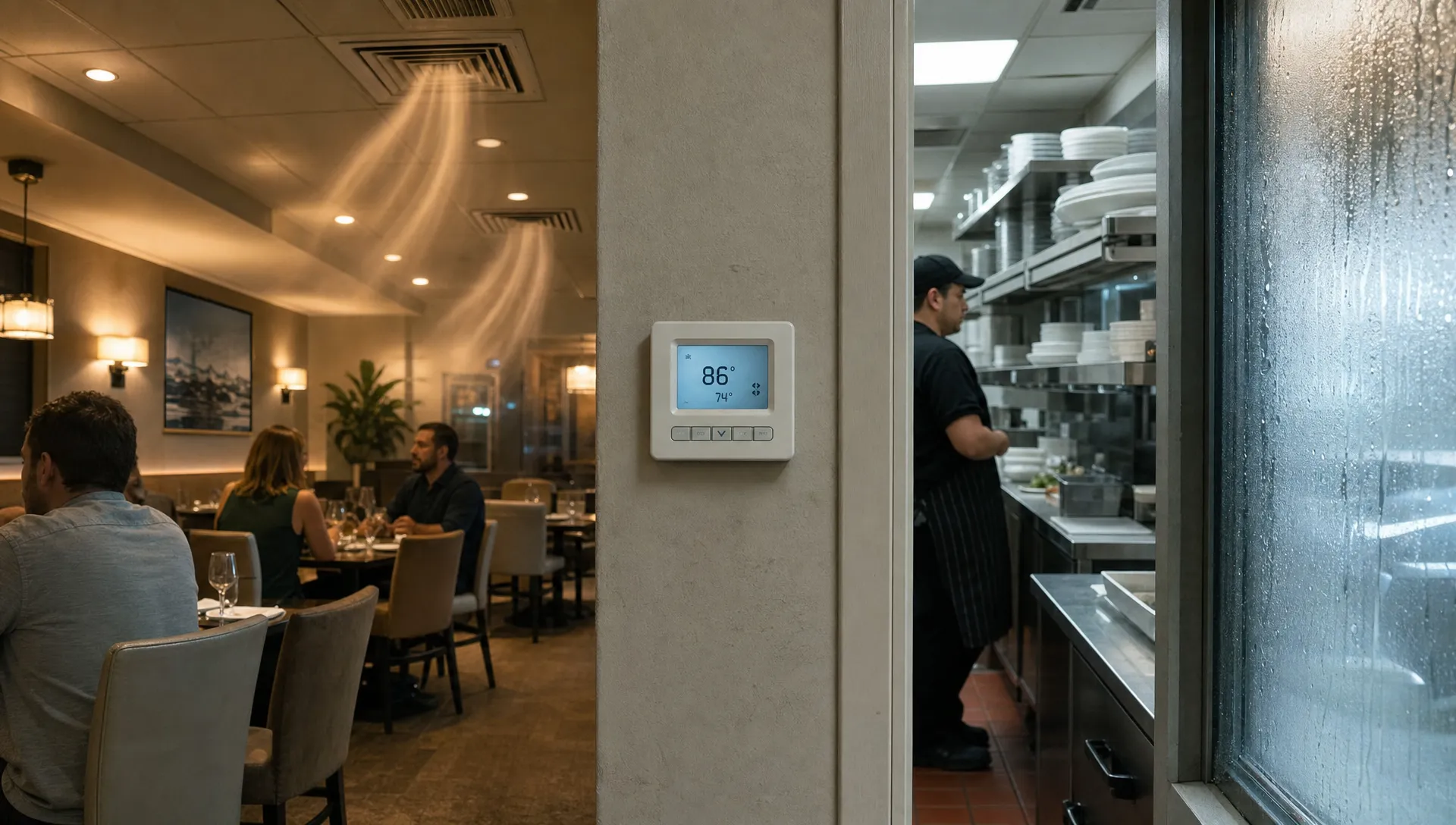
A restaurant in Charlottesville with a dining room that will not cool during lunch may need priority response because customer comfort and kitchen heat are immediate problems. If the unit is on the roof and tied into ventilation or make-up air, the technician may spend more time confirming whether the issue is mechanical, electrical or airflow related.
A small office in Staunton with one underperforming split system may have a lower total cost if the problem is a simple capacitor, thermostat or clogged filter issue. If the compressor is failing or the unit uses an obsolete refrigerant, the conversation changes from quick repair to whether repair still makes financial sense.
A school, warehouse or food-processing facility in the Shenandoah Valley may have multiple systems, larger electrical loads and tighter operational requirements. In those buildings, the cost of downtime can exceed the cost of the service call itself, especially if cooling, heating or ventilation affects production, inventory, students or staff.
For a more location-specific look at AC repair pricing, this guide on commercial air conditioning repair cost in Staunton breaks down how repair categories can affect the final number.
Is the diagnostic fee usually credited toward the repair?
Some contractors charge a diagnostic fee no matter what. Others credit the fee toward the repair if you approve the work. VA Commercial Repair Solutions states that there is no service call fee when the failed component or unit is repaired or replaced.
That policy can reduce the frustration of paying twice: once to find the problem and again to fix it. Still, it is smart to ask before scheduling any contractor. The exact wording matters. Ask whether the fee is waived, credited or still charged separately after repair approval.
You should also ask what happens if the technician determines the unit cannot be repaired safely. Commercial systems sometimes fail in ways that make repair impractical, such as a compressor shorted to ground, certain aluminum coil leaks, a cracked boiler combustion chamber or an unsafe heat exchanger condition. In those cases, a proper diagnosis is still valuable because it prevents wasted repair spending.
How preventive maintenance changes the cost equation
Preventive maintenance does not eliminate every service call. Motors still fail, storms still damage equipment and older systems still wear out. What maintenance does is reduce the number of surprise calls caused by dirty coils, clogged filters, loose belts, blocked drains, poor electrical connections and ignored warning signs.
A planned maintenance visit is usually easier to schedule than an emergency repair. It also gives the contractor a record of the equipment, model numbers, serial numbers, maintenance history and likely future parts needs. That record can make future service faster.
For commercial buildings with multiple HVAC systems, a preventive maintenance agreement can also help prioritize repairs. A facility manager may learn that one unit needs a capacitor now, another has a belt wearing out and a third should be budgeted for replacement next year. That is far better than discovering all three issues during a heat wave.
If you are comparing service-call costs because emergency repairs are becoming frequent, it may be time to look at preventive maintenance services for commercial HVAC systems in VA instead of treating each breakdown as a separate event.
Questions to ask before scheduling a commercial HVAC service call
Before you approve a dispatch, get clear answers to a few basic questions. This protects your budget and helps the technician arrive prepared.
- Is there a diagnostic or trip charge during normal business hours?
- Is the service call fee waived or credited if the repair is completed?
- What is the after-hours or emergency rate?
- Are parts and labor billed separately from the diagnostic visit?
- Is the technician qualified for commercial systems, rooftop units and electrical troubleshooting?
- Does the company service the equipment brand you have?
- Can the technician work on related systems if the issue involves controls, refrigeration, ventilation or electrical service?
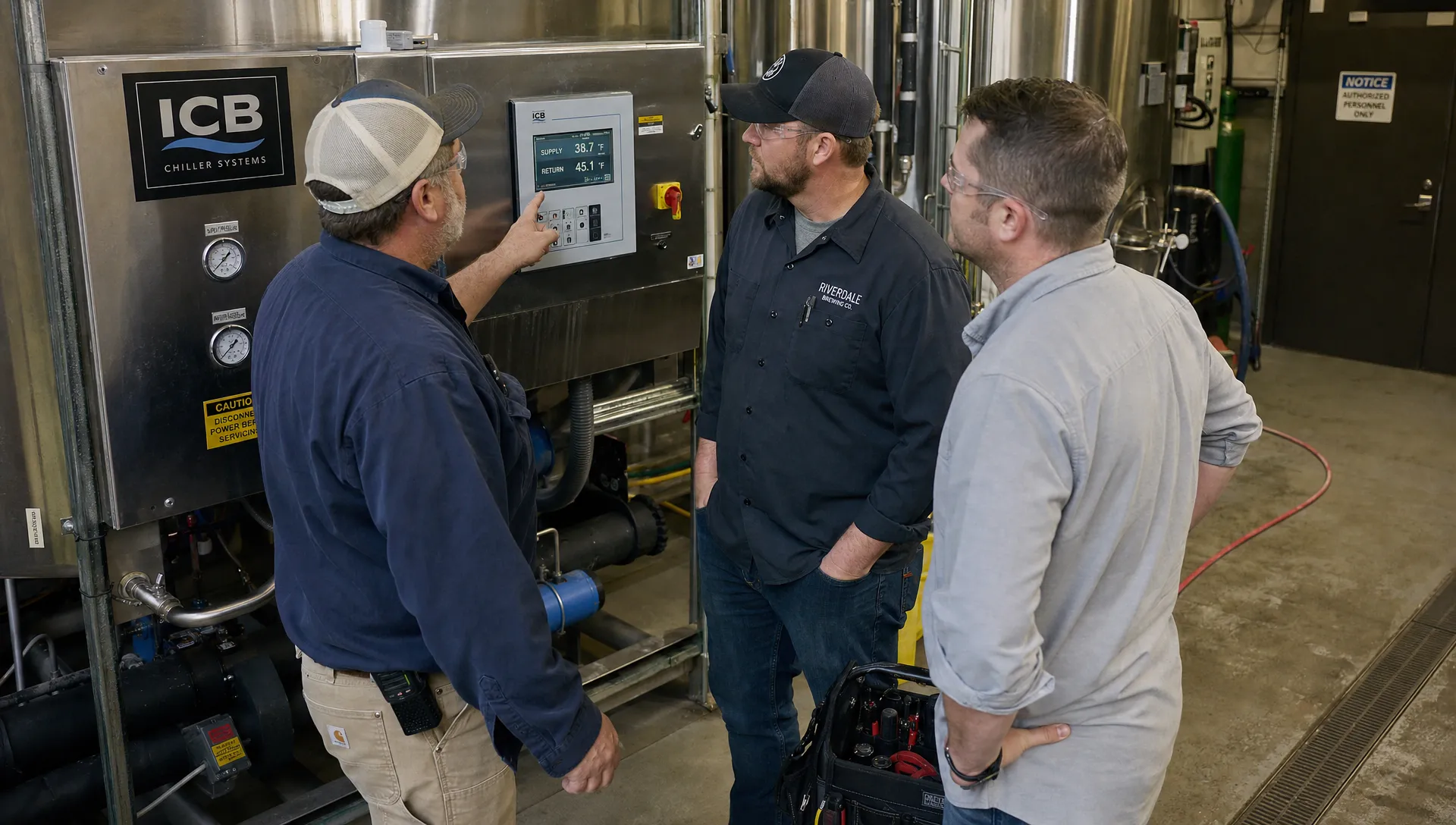
The last question is especially important for restaurants, breweries, commercial kitchens and industrial facilities. If the real issue is not the HVAC unit itself but a power, control or ventilation problem, a narrow residential-style HVAC contractor may not be the right fit.
How to keep your HVAC service call cost under control
The best way to reduce a service call cost is to make the visit more efficient. That does not mean diagnosing the unit yourself or letting staff open electrical panels. It means giving the contractor useful information before dispatch.
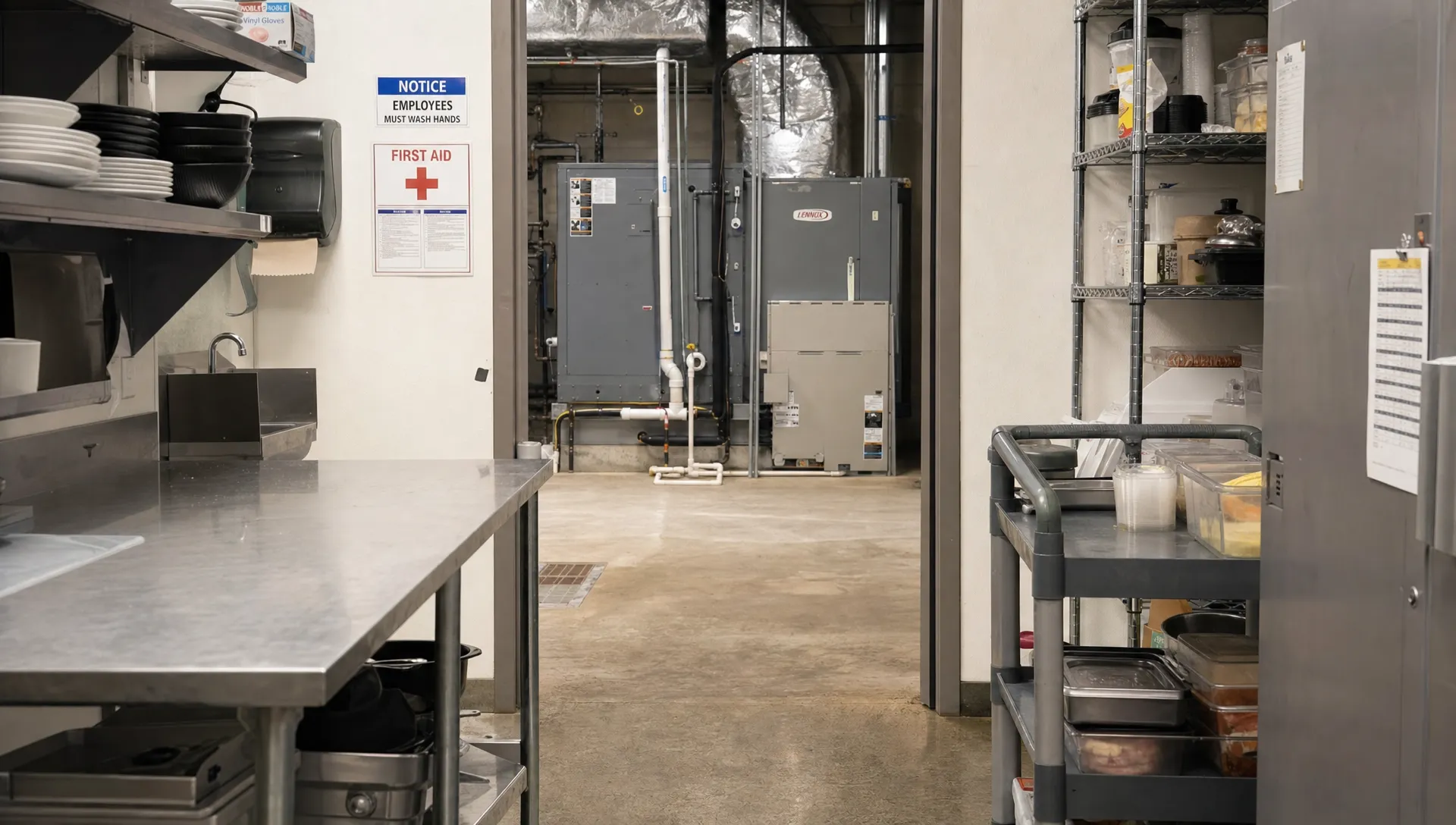
Have the unit location ready, including whether it is on the roof, above a drop ceiling, in a mechanical room or behind locked access. Share the brand, model number and approximate age if available. Describe the symptom clearly: no cooling, weak airflow, tripped breaker, burning smell, water leak, unusual noise, short cycling or thermostat blank.
If the system serves a critical area such as a dining room, kitchen, server room, production area or cold-storage support space, say so when you call. The dispatcher can then understand the urgency and send the right technician with the right likely parts.
For rooftop equipment, make sure ladders, roof hatches and access points are available. For tenant spaces, notify building management if roof or mechanical-room access is controlled. Lost time waiting for access can turn a simple diagnostic call into a longer visit.
When replacement becomes part of the discussion
A service call should not automatically turn into a replacement pitch. Many commercial HVAC failures are repairable. Contactors, capacitors, belts, sensors, motors, ignition components, clogged drains and control issues are routine examples.
Replacement becomes a more reasonable discussion when the system has a major failed component, uses refrigerant that is expensive or difficult to source, has repeated failures, is badly oversized or undersized or no longer supports the business’s operating needs.
The service call is where that decision should begin, not where it should be rushed. A trustworthy contractor should explain what failed, what the repair would cost, how long the repair is likely to last and how that compares with replacement. For business owners, the real question is not only “What is the repair price?” It is “What option gets my building reliable again with the least wasted spending?”
Frequently Asked Questions
What is the average commercial HVAC service call cost in Virginia? A standard business-hours diagnostic visit often falls around $150 to $350 before parts and repairs. Emergency or after-hours visits can cost more. The final invoice depends on the equipment, access, failure type and whether repair work is completed during the visit.
Is the service call the same as the repair cost? No. The service call usually covers dispatch, travel and diagnosis. Parts, refrigerant, labor and specialty repairs are usually separate unless the contractor has a policy that credits or waives the diagnostic fee when repairs are approved.
Why do emergency HVAC calls cost more? Emergency calls require priority scheduling outside normal routes or business hours. The contractor may need to pull a technician away from planned work, dispatch at night or respond during a weekend or holiday.
Can a commercial HVAC service call fee be waived? Yes, depending on the contractor’s policy. VA Commercial Repair Solutions states that there is no service call fee when the failed component or unit is repaired or replaced.
What information should I provide when I call? Share the business type, address, equipment location, brand or model if available, symptoms, how long the issue has been happening and whether the affected area is critical to operations. That helps the technician prepare for the visit.
Need commercial HVAC service in Virginia?
If your commercial HVAC system is down, waiting for a callback can cost more than the service call itself. VA Commercial Repair Solutions serves businesses across Charlottesville, Harrisonburg, Waynesboro, Staunton, Lexington, Fishersville and surrounding Virginia communities.
Call (540) 457-4822 for commercial HVAC service. A live person answers 24/7/365, with no voicemail, so your business can get the next step started as quickly as possible.
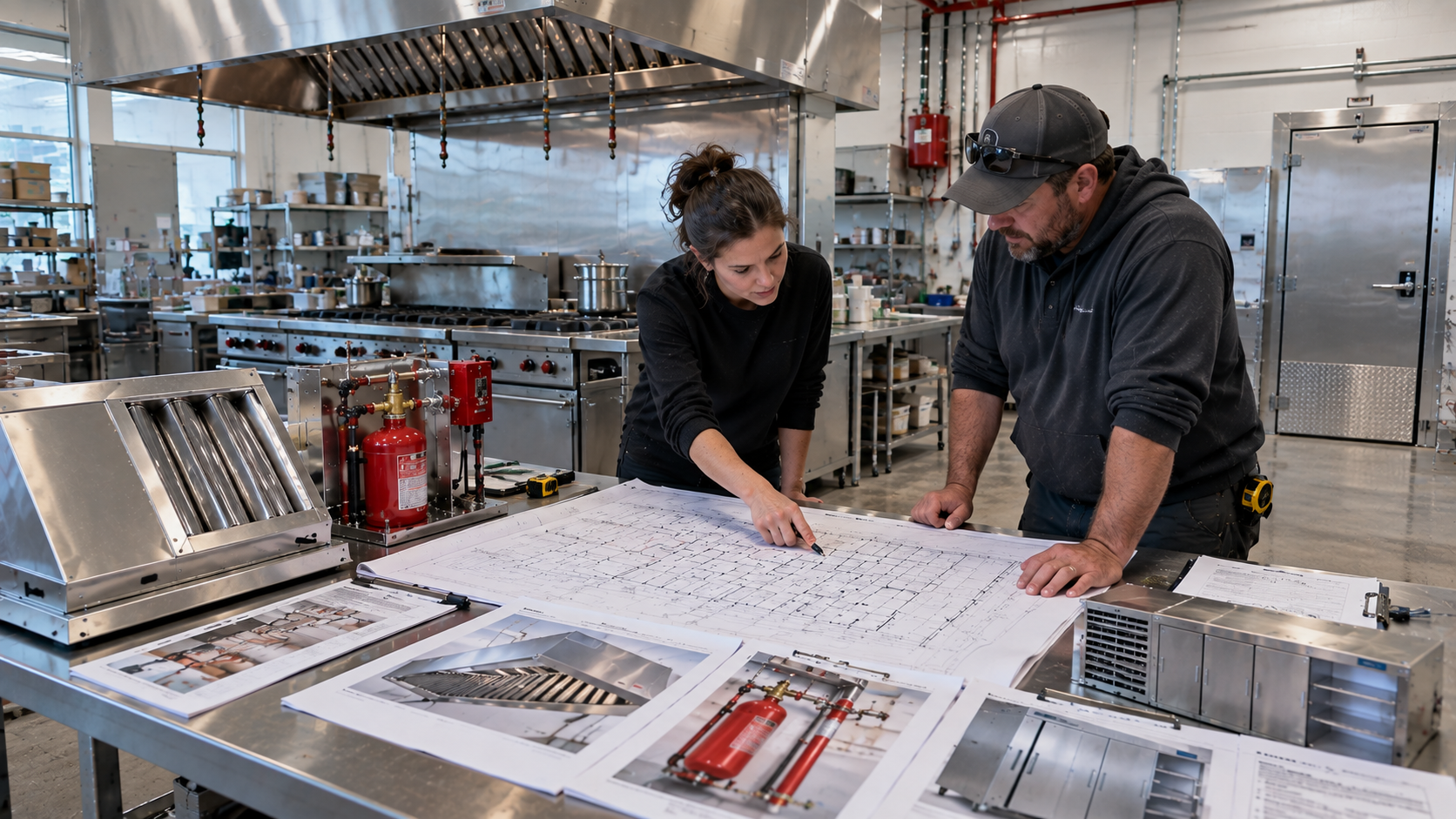
Opening a Restaurant in Virginia: Kitchen Design, Hood, Fire Suppression and Refrigeration Checklist