
Commercial Electrician vs Electrical Contractor vs Mechanical Contractor: Who to Call for Which Problem in Virginia
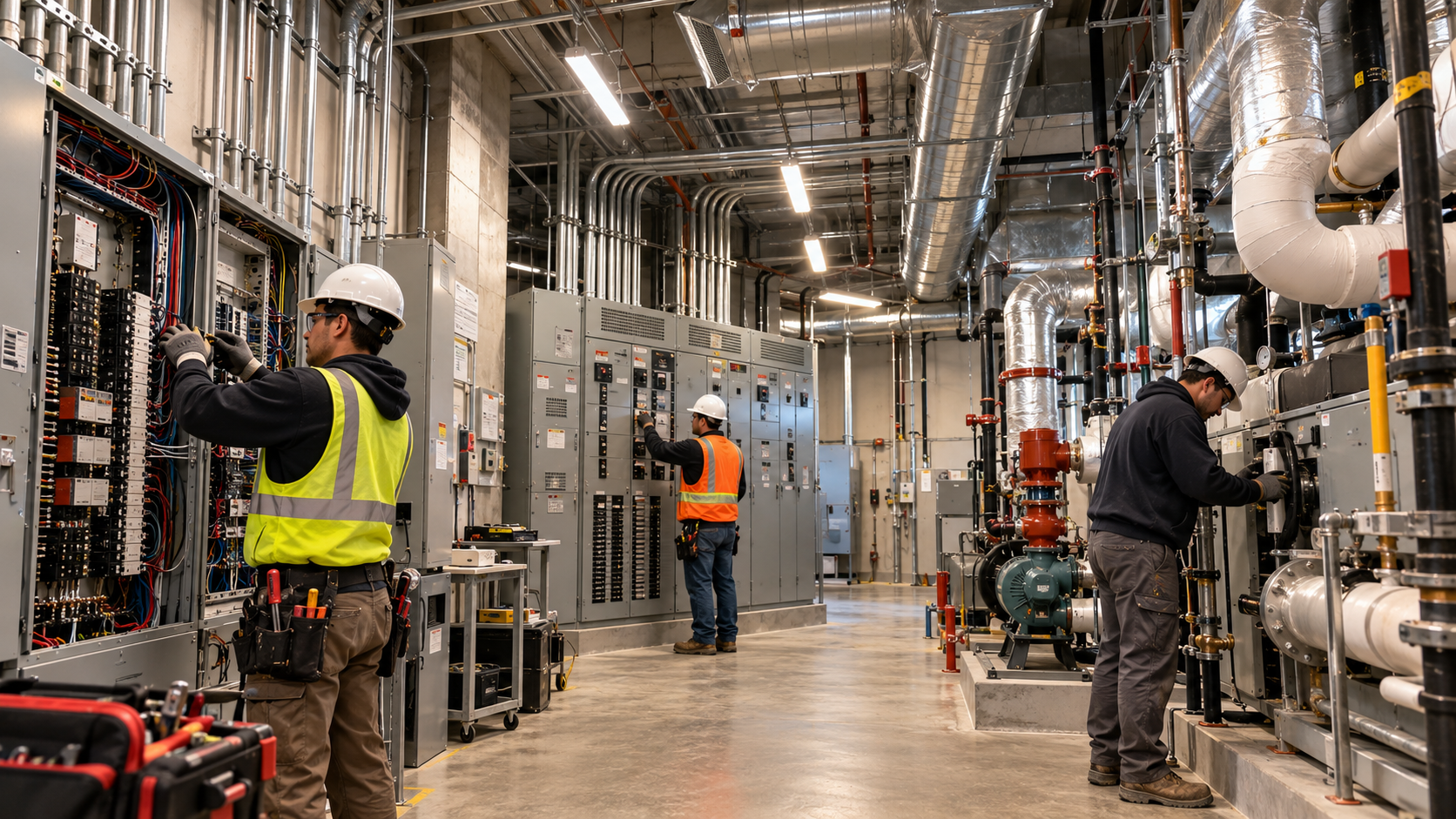
The walk-in cooler is creeping above safe temperatures at 2 a.m. The compressor is silent, and your phone lists three contractors. Which one do you call first?
Commercial buildings blur trade lines. A dead compressor can be a refrigerant problem, a controls problem, or a power problem. Calling the wrong trade costs hours and sometimes spoiled inventory.
This guide explains what a commercial electrician, an electrical contractor, and a mechanical contractor each do in Virginia. It maps common failures to the right first call. It also shows when one multi-trade contractor saves you a handoff.
The short answer: match the trade to the failure
Call an electrical professional when the fault is in power delivery. Call a mechanical contractor when the fault is in equipment that moves air, water, gas, or refrigerant. Call a multi-trade contractor when you can't tell which.
The table below maps common problems to a first call. Treat it as a starting point, not a rule. Overlap is normal in commercial buildings.
| Problem you see | Call first | Why |
|---|---|---|
| Breaker trips repeatedly | Electrical contractor | Overload, short circuit, or ground fault sits in the wiring or panel |
| Burning-plastic smell at a panel or outlet | Electrical contractor (urgent) | Melting insulation is a fire risk |
| Parking lot or high-bay lights out | Electrical contractor | Ballasts, drivers, and underground wiring are electrical |
| Need a larger service or 3-phase power | Electrical contractor | Meter base, service entrance, and panel work |
| Rooftop unit runs but doesn't cool | Mechanical contractor | Refrigerant, coils, and compressors are mechanical |
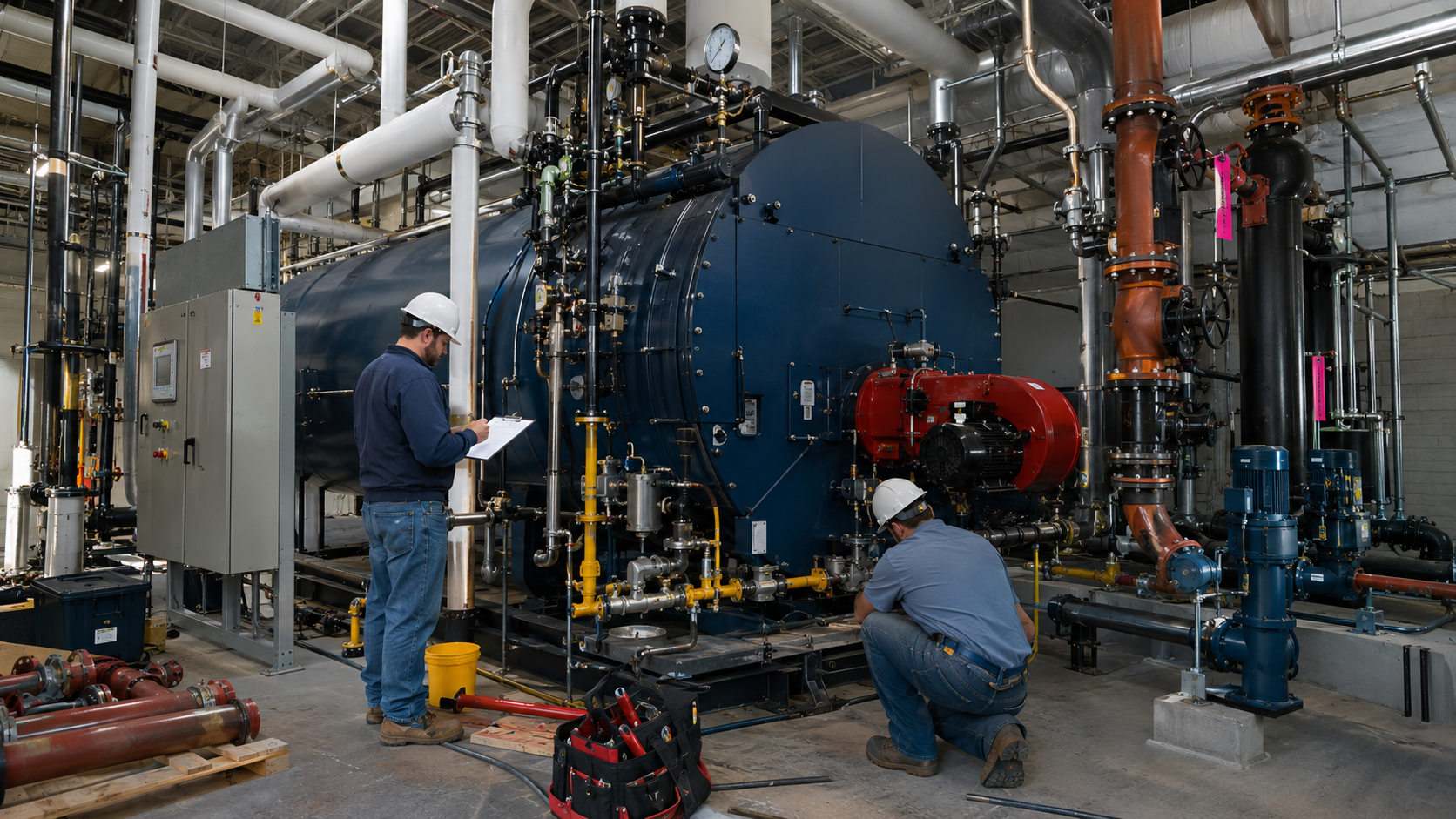
| Boiler lockouts, banging pipes, or soot | Mechanical contractor | Combustion and hydronic faults |
| Walk-in cooler won't hold temperature | Mechanical or multi-trade | Cause may be refrigerant, compressor, controller, or power |
| Kitchen exhaust fan stopped | Mechanical or multi-trade | Motor, belt, make-up air, or wiring |
| Compressor trips its breaker on start-up | Both trades | A failing motor or capacitor can overload the circuit |
| Gas odor | Utility and 911 first | Mechanical contractor after the all-clear |
Three roles that people mix up
The three titles sound interchangeable. They aren't. One names a person, one names a business, and one names a different set of systems.
What a commercial electrician does
A commercial electrician is a trained tradesperson, not a company. The U.S. Bureau of Labor Statistics says electricians install, maintain, and repair power, communications, lighting, and control systems. Their work follows the National Electrical Code.
Training usually runs through a four- or five-year apprenticeship. Most states also require a licensing exam covering the code and local rules.
In Virginia, the individual tradesperson and the contracting business are licensed separately. A journeyman or master electrician holds the personal credential. The business holds the contractor license.
What an electrical contractor does
An electrical contractor is the licensed business. It employs electricians, carries insurance, pulls permits, and answers for the finished job. Larger scopes, such as design-build work, belong here.
Many electrical contractors also offer emergency service, preventive maintenance, and inspections. Ask which of those are included before you need them. A firm that only does new construction may not take your 2 a.m. call.
What a mechanical contractor does
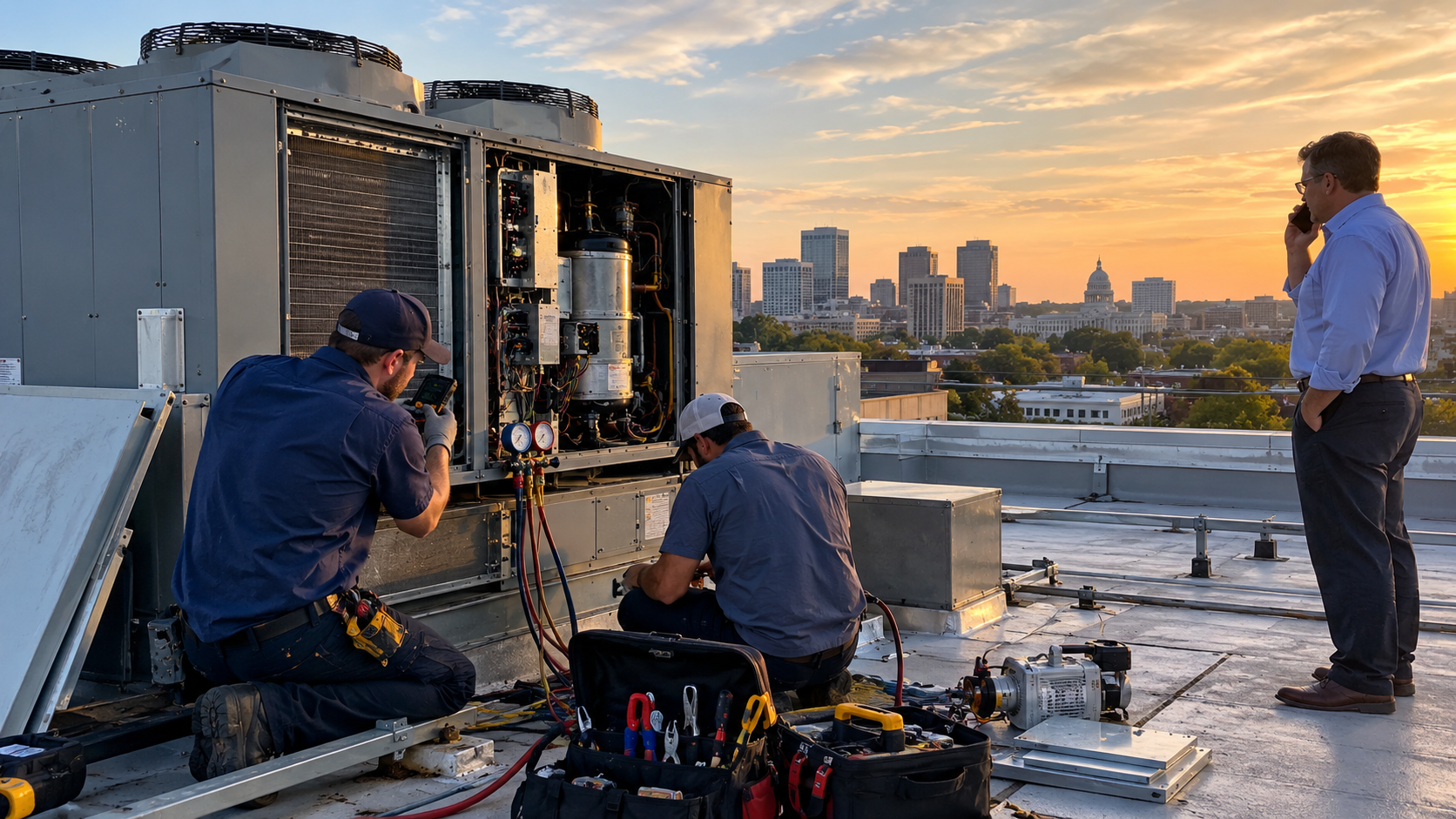
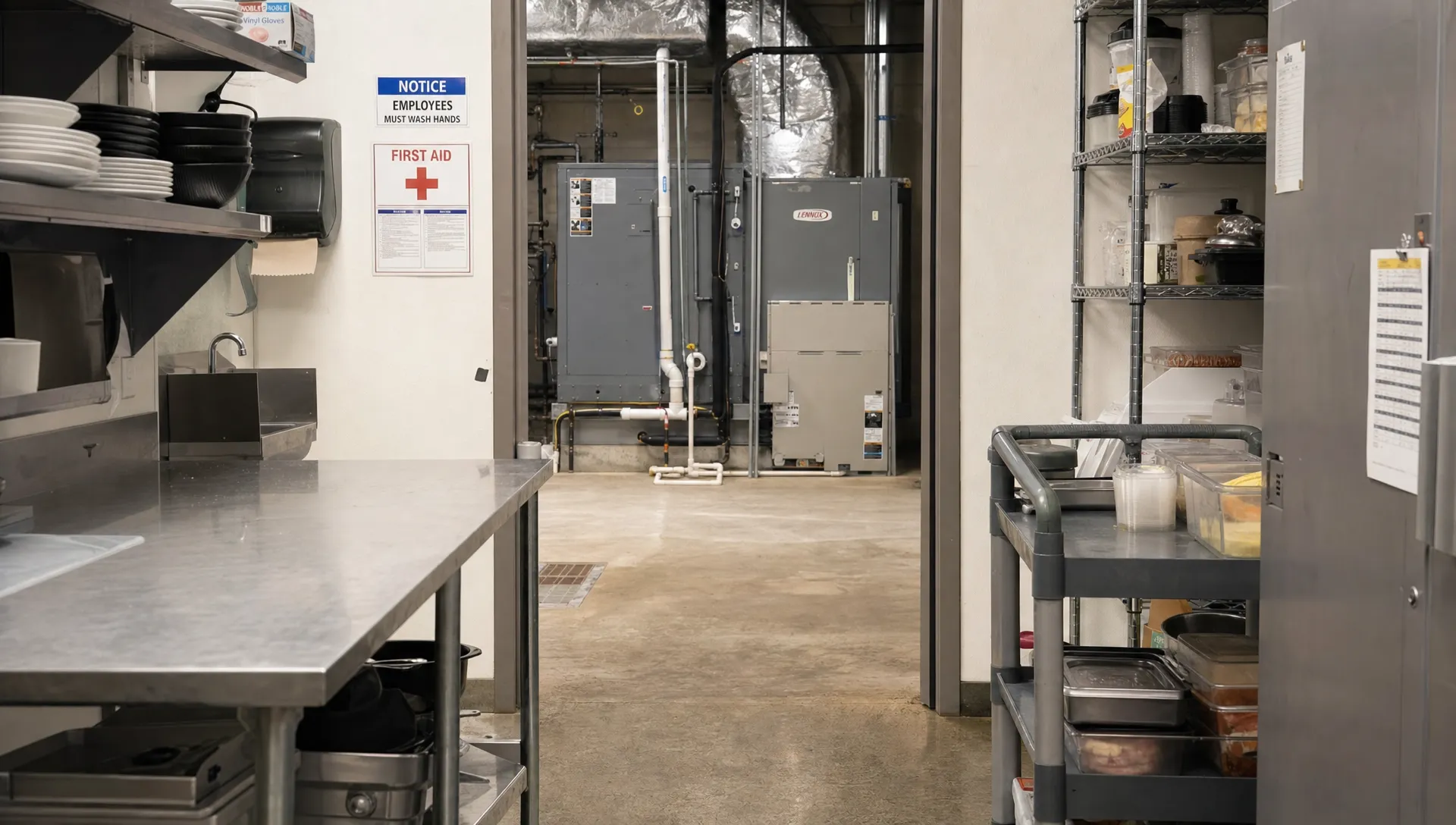
A mechanical contractor covers the systems that move heat, air, water, and gas. That usually means HVAC, refrigeration, boilers, chillers, exhaust, gas piping, and compressed air.
Many also repair motors and drives tied to that equipment. Refrigerant work requires federal EPA certification. A mechanical contractor is not an electrician by default.
Where the titles blur
A company can call itself an electrical contractor and still employ only a few electricians. Another can advertise mechanical services and hold no electrical specialty. Ask what the license actually covers.
Some firms hold both specialties. That matters in the overlap zone, where a single symptom can have a mechanical cause and an electrical cause.
How Virginia licensing sorts contractors
Virginia classifies contractors by project size. Under Virginia Code § 54.1-1100, the classes are A, B, and C. The thresholds are below.
| Class | Single contract or project | Total work in any 12 months |
|---|---|---|
| Class A | $150,000 or more | $1 million or more |
| Class B | $30,000 to under $150,000 | $250,000 to under $1 million |
| Class C | Over $1,000 and under $30,000 | Under $250,000 |
Class A has no stated ceiling. A Class A firm can take a large panel replacement, a full lighting retrofit, or a multi-system build-out.
Class is not the same as trade. Electrical, HVAC, and other specialties are separate classifications on a license. Confirm the specialty, not just the class.
For small repairs, a Class B or C firm may be a fine fit. For anything that could cross $150,000, confirm Class A status first. Verify every license on the state's DPOR lookup before work begins.
Which problem goes to which call
Use these lists when a problem hits and you need a fast decision.
Call an electrical contractor when:
- Breakers trip repeatedly or won't reset. The cause may be a sustained overload, a short circuit, or a ground fault.
- You see charred outlets, flickering lights, or hear buzzing at the panel. A burning-plastic smell is urgent, so shut off power if it is safe and call right away.
- You are adding heavy equipment. A load calculation should come before the new oven or line arrives.
- You need a service upgrade, transformer, surge protection, or 3-phase power. These involve the service entrance and sometimes the utility.
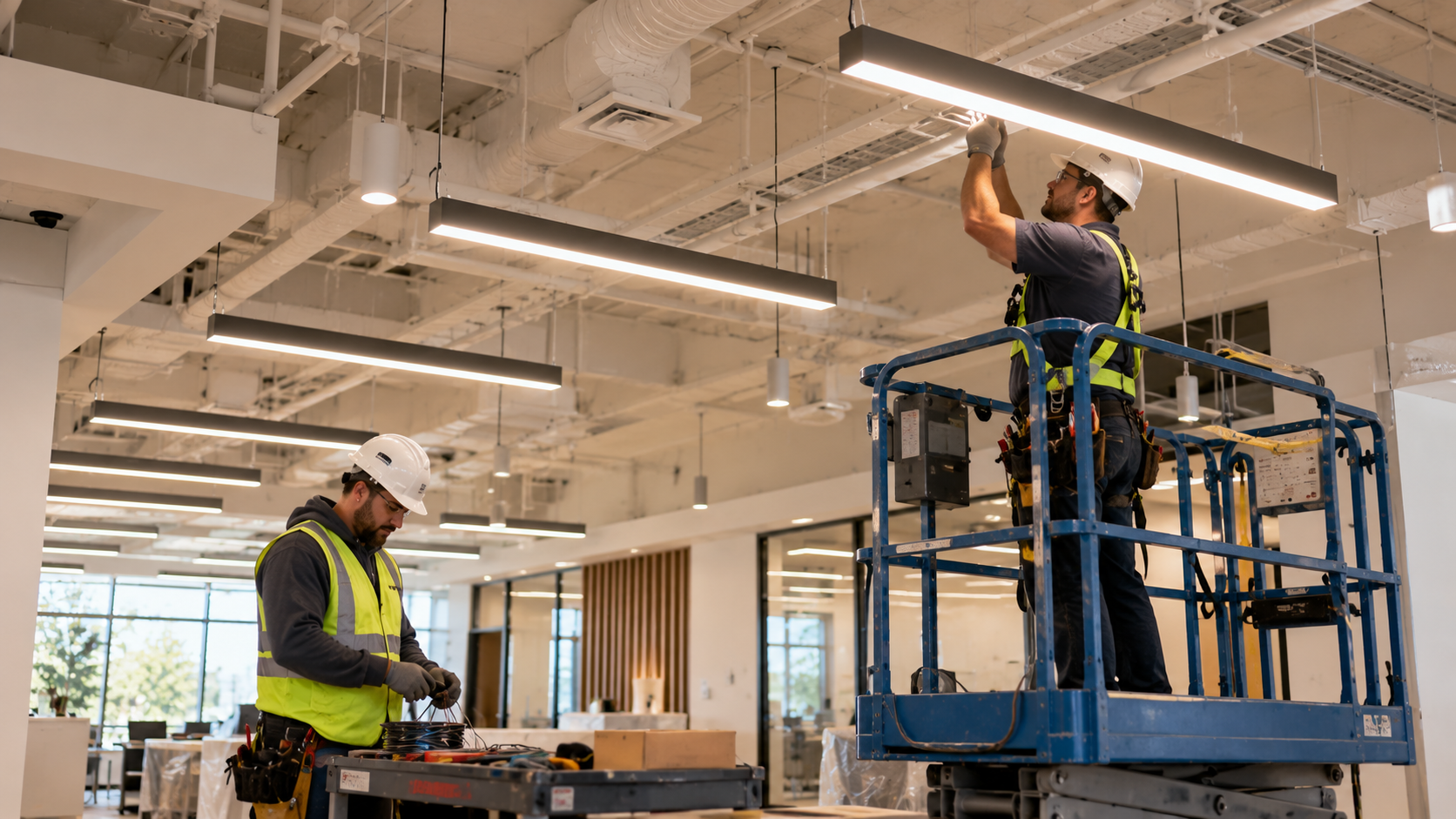
- Parking lot or interior lights fail. Ballasts, drivers, and underground wiring sit on the electrical side.
Call a mechanical contractor when:
- A rooftop unit runs but doesn't cool. Refrigerant, coils, and compressors are mechanical components.
- A boiler locks out repeatedly or pipes bang. Soot or water around the equipment also points here.
- A walk-in cooler or ice machine drifts above temperature. Food-safety rules set cold holding at 41°F or below, so act fast.
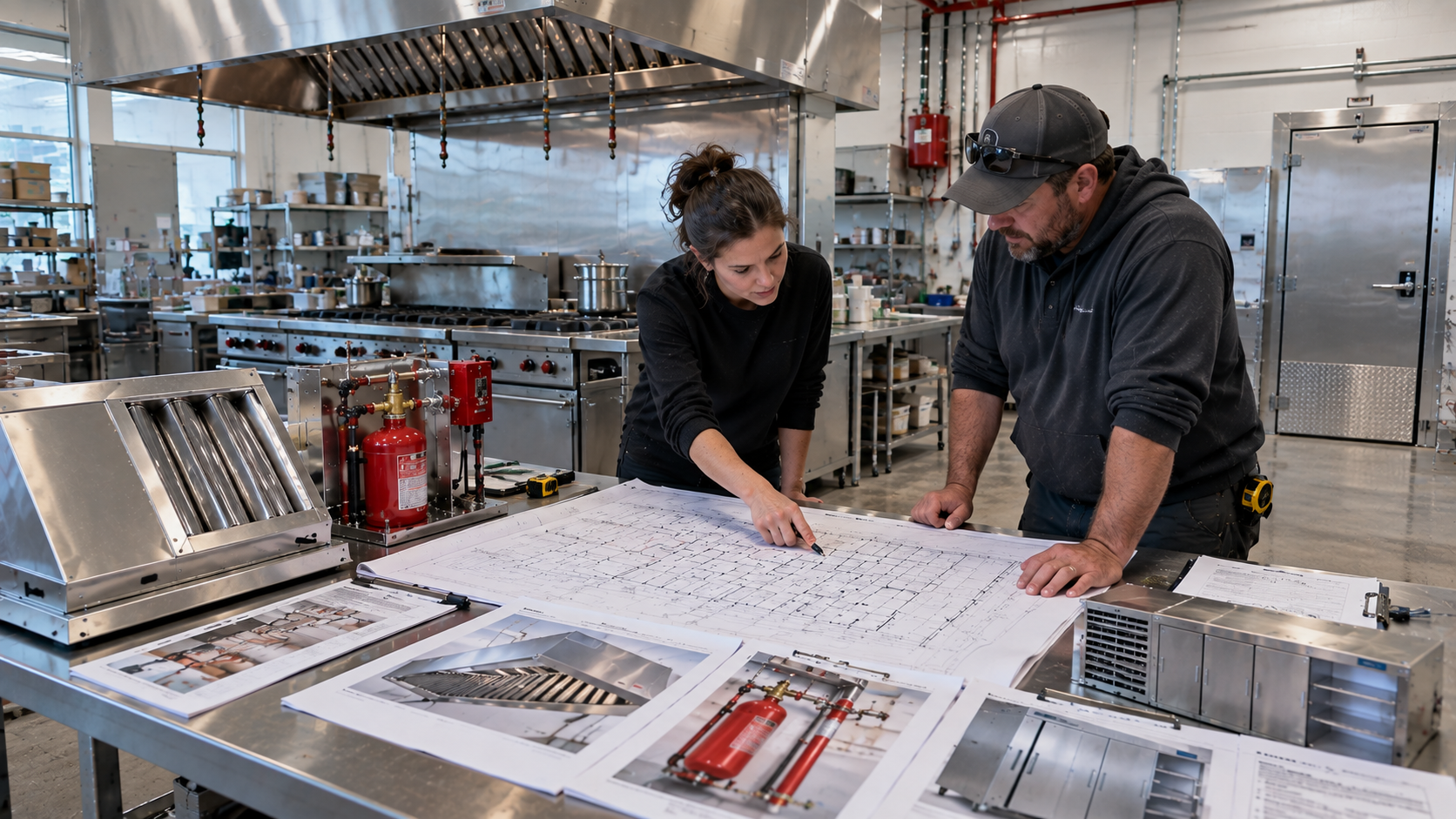
- Kitchen exhaust fails or smoke spills into the cooking line. Fire-code exposure rises quickly.
- Gas piping, compressed air, or industrial machines need work. These sit squarely in mechanical scope.
Call both, or one multi-trade firm, when:
- A compressor or motor trips its breaker at start-up. A failing capacitor can draw extra current until the breaker trips.
- Equipment stops with no obvious cause. The fault could be refrigerant, controls, or power, so diagnosis spans trades.
- You are planning a build-out. Early coordination avoids rework when new equipment changes the electrical plan.
Where electrical and mechanical problems overlap
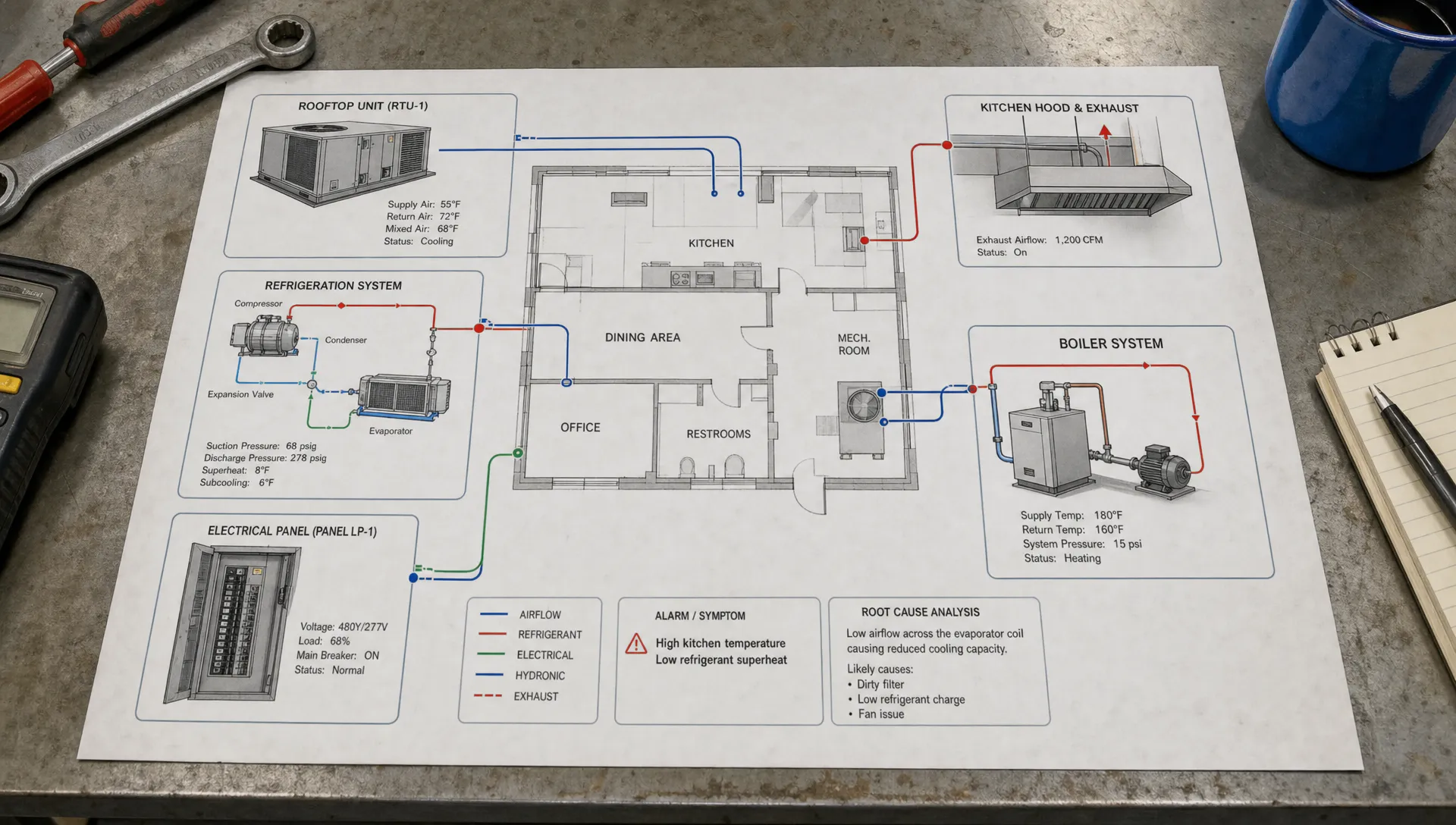
Consider the cooler that stopped holding temperature. The cause might be a refrigerant leak, a failing compressor, a bad controller, or an electrical fault. Each points to a different trade.
A kitchen exhaust fan tells the same story. The fix might be a motor, a belt, a make-up air imbalance, or a wiring fault. One symptom, four possible causes, two trades.
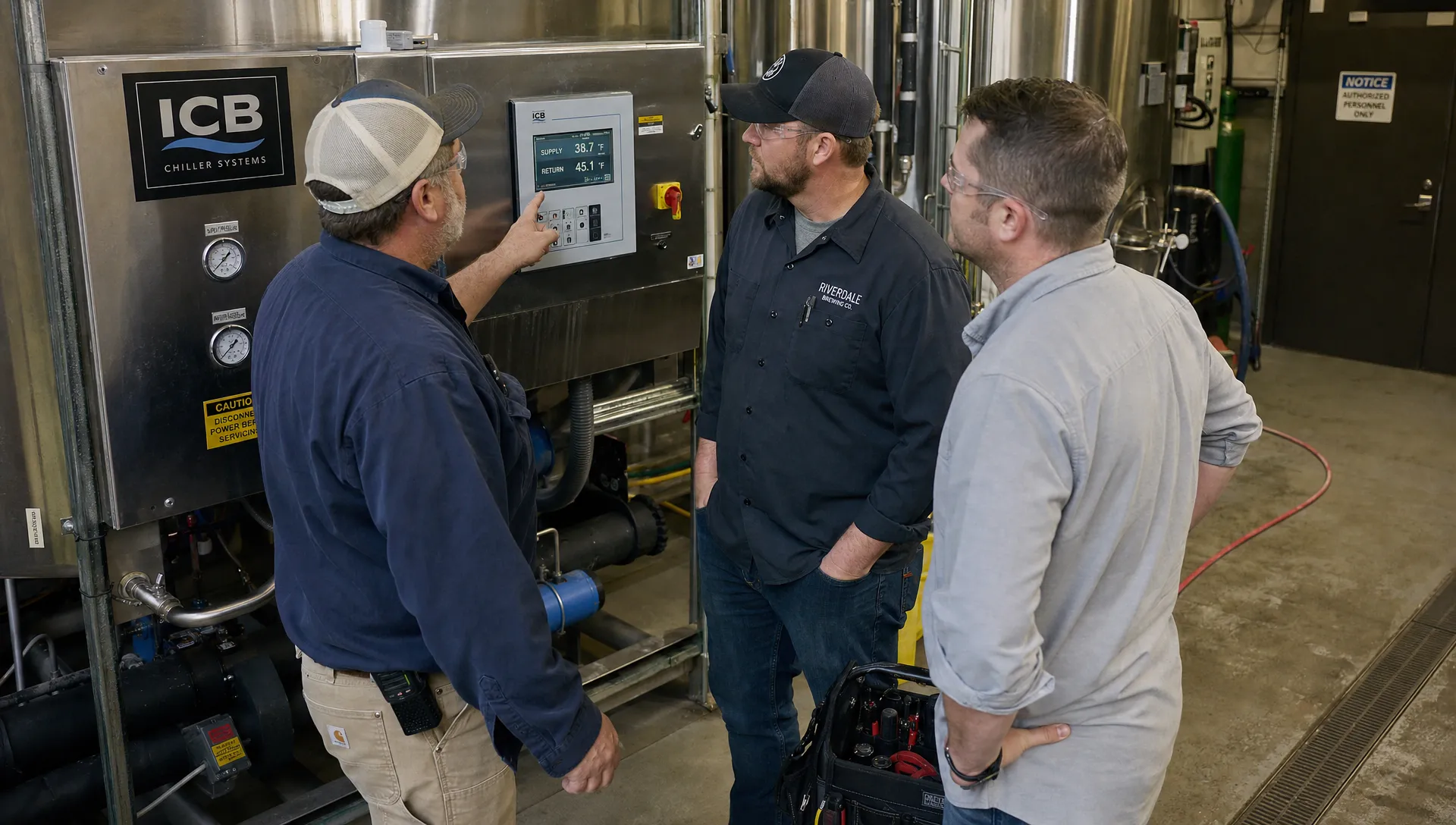
Food and beverage plants raise the stakes. Dairies and breweries run refrigeration, 3-phase power, and compressed air together. A fault in one system shows up in the others.
That is why a multi-trade contractor can avoid the handoff problem, where one vendor sends you to the next. Our overview of what mechanical contractors can handle lists the systems that overlap most often.
Why the multi-trade question matters in the Shenandoah Valley
The Shenandoah Valley is a major agricultural processing region. Poultry plants, dairies and creameries, and cold storage facilities all depend on tightly linked systems. Electrical timing and refrigeration interlocks have to work together.
In those buildings, the first question is often "Is it a tripped breaker or a seized compressor?" Answering it takes both an electrician's meter and a refrigeration technician's gauges. Two vendors can spend hours pointing at each other's side of the line.
A contractor licensed in electrical, HVAC, and refrigeration removes that gap. One diagnostic visit can cover the panel, the motor, and the refrigerant circuit. That shortens downtime when product is at risk.
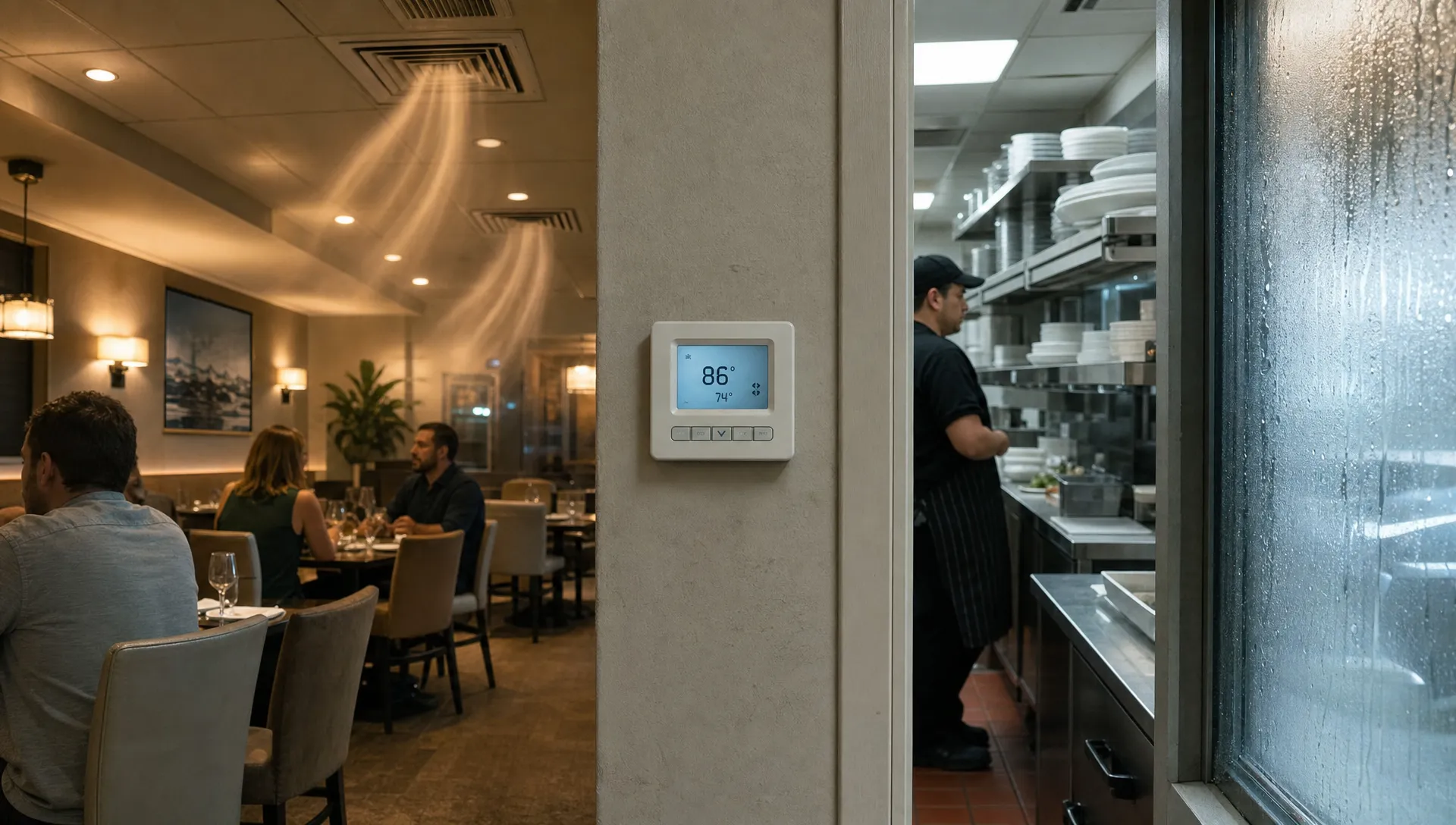
Restaurants and breweries face a smaller version of the same problem. A hood, a walk-in, and a draft system all share one electrical service. A change to one often affects the others.
Smaller facilities don't need a multi-trade firm for every call. Routine panel work or a basic filter change suits a single-trade vendor. Reserve the multi-trade call for faults that cross systems.
Three scenarios, three calls
A warehouse breaker keeps tripping
Start with the electrical side. Three causes dominate: a sustained overload, a short circuit, or a ground fault. Each trips the breaker differently, and each needs a different fix.
An electrical contractor can use thermal imaging to find hot spots. Amp-clamp readings show whether the breaker is failing or the circuit is truly overloaded. If the load is a rooftop unit, bring a mechanical contractor in too.
A restaurant walk-in drifts warm
Start with a mechanical call, and ask the contractor to check power first. A good technician reads voltage and amperage before condemning a compressor. That avoids a costly replacement when a contactor or controller is the real culprit.
Keep doors closed while you wait. Move high-risk food to working cold storage if the drift continues. Document temperatures for your records.
A new kitchen line adds electrical load
Plan with both trades before the equipment arrives. Hoods, make-up air, and refrigeration all add load. Early coordination lets the electrical contractor size the panel and circuits correctly.
Skipping this step is a common source of tripped breakers after opening day. A short planning meeting is cheaper than a second construction phase.
What drives the cost of each type of call
Neither trade has a flat price. Scope, access, and equipment size decide the bill. Knowing the drivers helps you compare quotes fairly.
On the electrical side, four factors dominate panel and service work. A bigger amperage jump needs larger busbars and enclosures. A transformer, such as one stepping 480V down to 208V, adds equipment and labor.
Code compliance matters in older buildings, where rewiring can expand the scope. Switchgear complexity also raises upfront cost. Integrated surge protection and monitoring cost more at first but can cut downtime.
On the mechanical side, equipment capacity and access lead the list. A rooftop unit may need lift equipment or a crane. Refrigerant type, coil material, and parts availability also shape repair-versus-replace math.
Some failures can't be repaired economically. A failed compressor, a leaking aluminum coil, or a cracked boiler combustion chamber often points to replacement. A trustworthy contractor shows you the evidence before recommending it.
Emergency triage: what to do before anyone arrives
Some situations aren't a contractor's first call. A gas odor sends you to the gas utility and emergency services. Leave the building first, then call a mechanical contractor after the all-clear.
A burning smell near a panel is different. If it is safe, shut off power at the main and call an electrical contractor. Don't reset a tripping breaker repeatedly.
Never open a live panel yourself. OSHA's electrical standards exist to protect workers from shock, electrocution, fires, and explosions.
For refrigeration failures, minimize door openings and log temperatures. Share those logs with your technician. Our guide on when to call a mechanical contractor lists more warning signs.
Planning ahead: maintenance, records, and who owns what
Emergency calls cost more than planned maintenance. Both trades play a role in preventing them.
Mechanical maintenance covers filters, coils, belts, refrigerant levels, and combustion checks. Electrical maintenance covers panel inspections, connection checks, thermal imaging, and surge protection. Splitting them works as long as someone owns the schedule.
A single contractor can simplify that ownership. VA Commercial Repair Solutions offers recurring maintenance plans spanning HVAC, refrigeration, and kitchen equipment. It also registers covered equipment warranties on the client's behalf.
Keep records either way. Log amperage readings, refrigerant checks, and temperature trends. A change in pattern, not just a full failure, is often the best time to call.
Good records also support warranty claims, inspections, and capital planning. They show an inspector or insurer that you maintained the system.
Permits, inspections, and documentation
Permits protect you as much as the contractor. Ask who pulls them, who schedules inspections, and who keeps the paperwork.
Electrical work such as panel upgrades, new circuits, and service changes usually triggers an inspection. Mechanical work such as new rooftop units, boilers, and hood systems often does too. Requirements vary by locality, so check with your local building department.
Ask for copies of final approvals and keep them with your equipment records. They matter when you sell the property, change insurers, or file a claim.
Common mistakes that cost time and money
Resetting breakers repeatedly. A breaker trips to protect the wiring. Forcing it back on can turn a diagnosable fault into a fire risk.
Replacing parts without diagnosing. A new compressor won't help if a failed contactor or a power problem is the real cause. Ask for readings before you approve major parts.
Hiring on price alone. A cheap quote from the wrong trade often becomes a second visit from the right one. Compare scopes, not just totals.
Waiting for total failure. Hot and cold zones, short cycling, frost buildup, and slow recovery are early warnings. A call at that stage costs less than an emergency.
Ignoring the load. New equipment adds amperage. If nobody checks the panel, the breaker will do the checking for you.
How to hire the right trade in Virginia
A few questions separate dependable contractors from risky ones. Ask them before you approve a scope.
Start with licensing. Ask for the license number, class, and specialty, then verify it with DPOR. Confirm that the firm carries liability and workers' compensation insurance.
Next, ask who pulls permits. Many localities require permits for both electrical and mechanical alterations. A contractor who handles permitting removes a common source of delay.
Then ask how the contractor proves a diagnosis. Good answers include meter readings, gauge readings, and thermal images. Ask the question directly: "Can you show me why this must be replaced?"
Finally, ask about emergency availability. A live answer at 2 a.m. matters more than a polished website. For central Virginia, VA Commercial Repair Solutions' commercial electrical contractor team answers calls around the clock with a live person.
Frequently asked questions
Is a commercial electrician the same as an electrical contractor?
No. An electrician is a licensed individual, while a contractor is a licensed business. The contractor employs electricians and carries the project responsibility.
Can a mechanical contractor do electrical work in Virginia?
Only within its license. Some firms hold both electrical and mechanical specialties. Verify the specialty on the license before you assume it.
Who should I call when my HVAC unit keeps tripping the breaker?
Start with a contractor who can check both sides. A failing capacitor or motor can pull extra current. Wiring or breaker faults can also be the cause.
Do I need a Class A contractor?
It depends on project size. Class A applies to single projects of $150,000 or more, or $1 million in work over 12 months. Smaller repairs often fit Class B or C.
Who handles commercial refrigeration problems?
A mechanical contractor with refrigeration experience usually leads. Electrical faults can still be the root cause. Ask the technician to check power before replacing major components.
What if I can't tell which trade I need?
Describe the symptoms to a multi-trade contractor. Note when the problem started, what you hear or smell, and what was running. That information often settles the question in one call.
Conclusion: call by cause, not by equipment
The right call depends on where the fault lives. Power problems belong to an electrical contractor. Equipment that moves air, water, gas, or refrigerant belongs to a mechanical contractor.
When symptoms cross both, a multi-trade firm saves time. It diagnoses the whole system instead of the failed part. That matters most for restaurants, food processors, breweries, and warehouses.
Facing an electrical or mechanical failure in central Virginia or the Shenandoah Valley? Call VA Commercial Repair Solutions at (540) 457-4822. A live person answers 24/7, and installation quotes are free.
Opening a Restaurant in Virginia: Kitchen Design, Hood, Fire Suppression and Refrigeration Checklist