
What Commercial Mechanical Contractors Can Handle
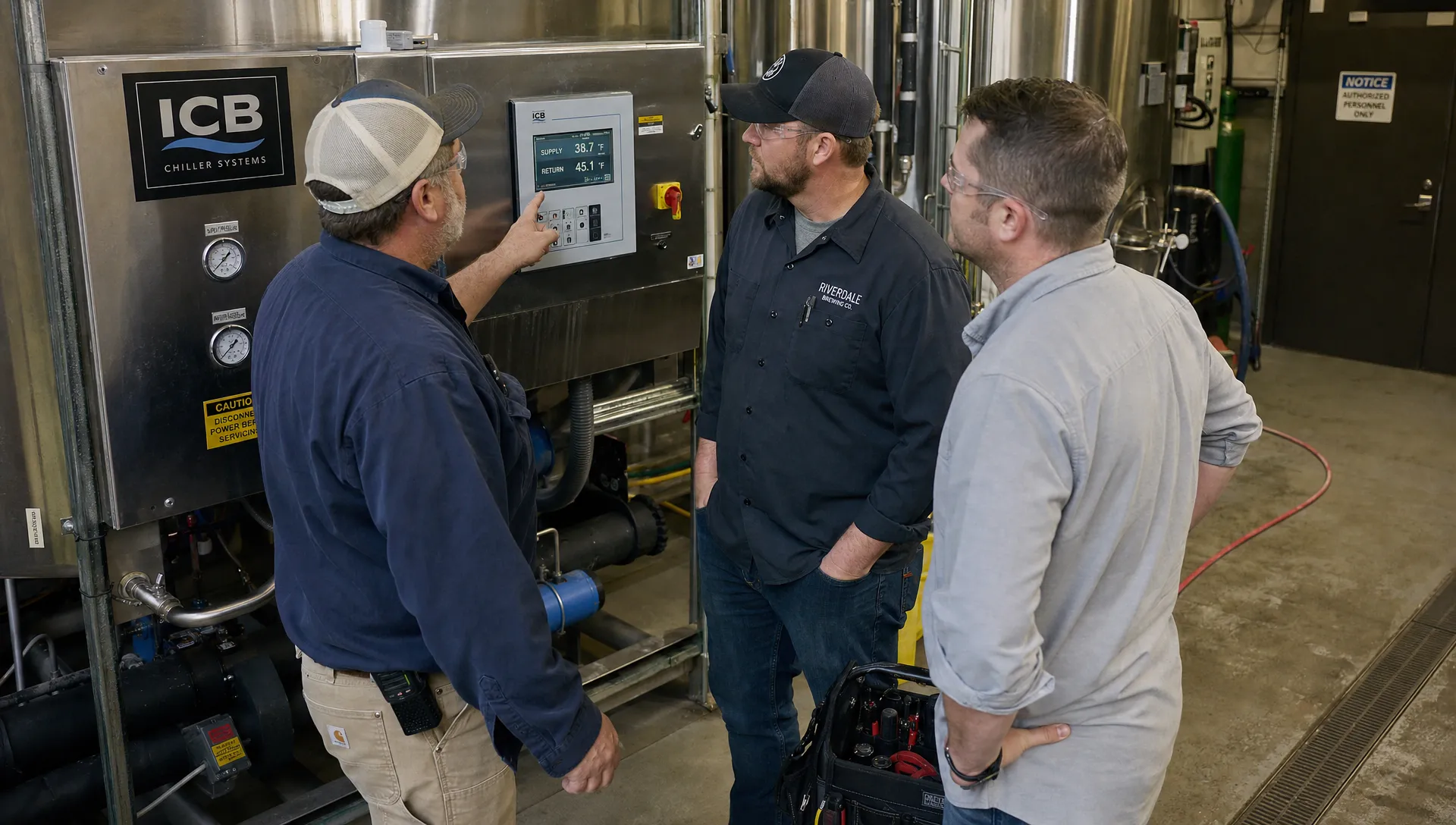
A commercial building is a network of mechanical, electrical and refrigeration systems that all have to work together. When one part fails, the symptoms are not always obvious. A walk-in cooler that will not hold temperature might have a refrigerant leak, a failing compressor, a bad controller or an electrical issue feeding the unit. A restaurant exhaust fan that stops pulling air might be a motor problem, a belt issue, a make-up air imbalance or a wiring fault.
That is why many businesses search for commercial mechanical contractors near me when they need more than a basic service call. A true commercial mechanical contractor can look across connected systems, diagnose the cause and coordinate the repair without forcing the owner or facility manager to call three separate vendors.
For restaurants, breweries, food processing plants, schools, retail buildings and industrial facilities, that multi-trade capability can protect inventory, reduce downtime and help keep operations compliant.
What is a commercial mechanical contractor?
A commercial mechanical contractor installs, repairs and maintains the mechanical systems that keep a commercial facility operating. In practice, that often includes HVAC, refrigeration, boilers, chillers, ventilation, kitchen exhaust, gas piping, compressed air, equipment controls and related electrical work.
The exact scope depends on licensing, training and the contractor’s business model. Some companies focus mainly on HVAC. Others, like VA Commercial Repair Solutions, work across commercial HVAC, restaurant refrigeration, electrical, boilers, chillers, range hoods, fans, ice makers and related facility systems.
The difference matters because commercial buildings rarely fail in neat categories. If a rooftop unit trips a breaker, the problem may not be only electrical. If a kitchen line feels hot and smoky, the issue may involve the hood, exhaust fan, make-up air and fire suppression layout. A mechanical contractor with broader commercial experience can trace those overlaps faster.
Commercial HVAC systems
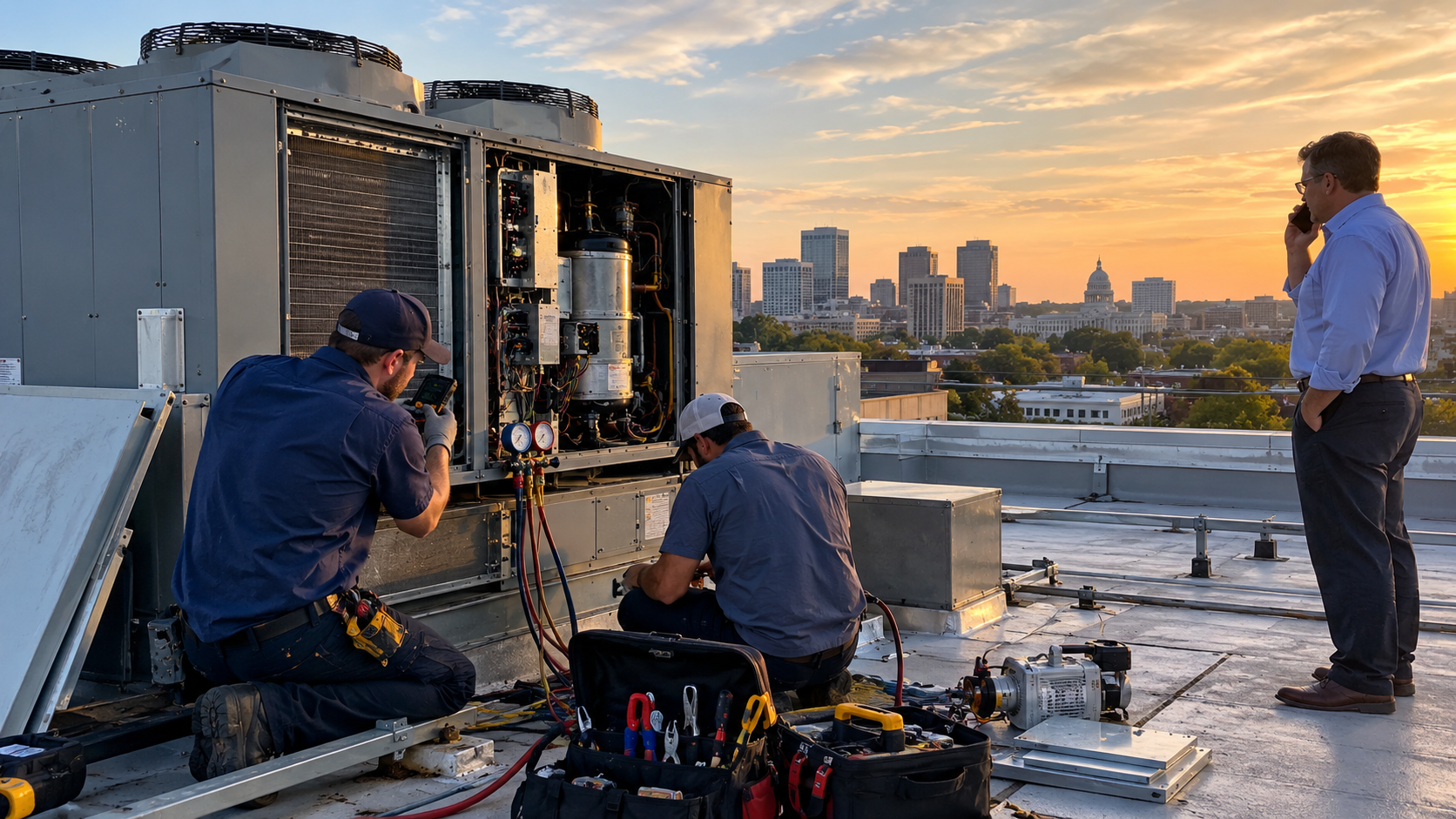
Commercial HVAC is one of the core areas mechanical contractors handle. This can include heating, air conditioning, ventilation, ductwork, controls and rooftop equipment.
Common commercial HVAC work includes:
- Rooftop unit repair and replacement
- Split system and packaged unit service
- Heat pump and furnace repair
- PTAC and mini-split service for hotels, offices or specialty spaces
- Ductwork installation, balancing and repair
- Thermostat and control troubleshooting
- Preventive maintenance programs
- Refrigerant leak diagnosis and conversion support
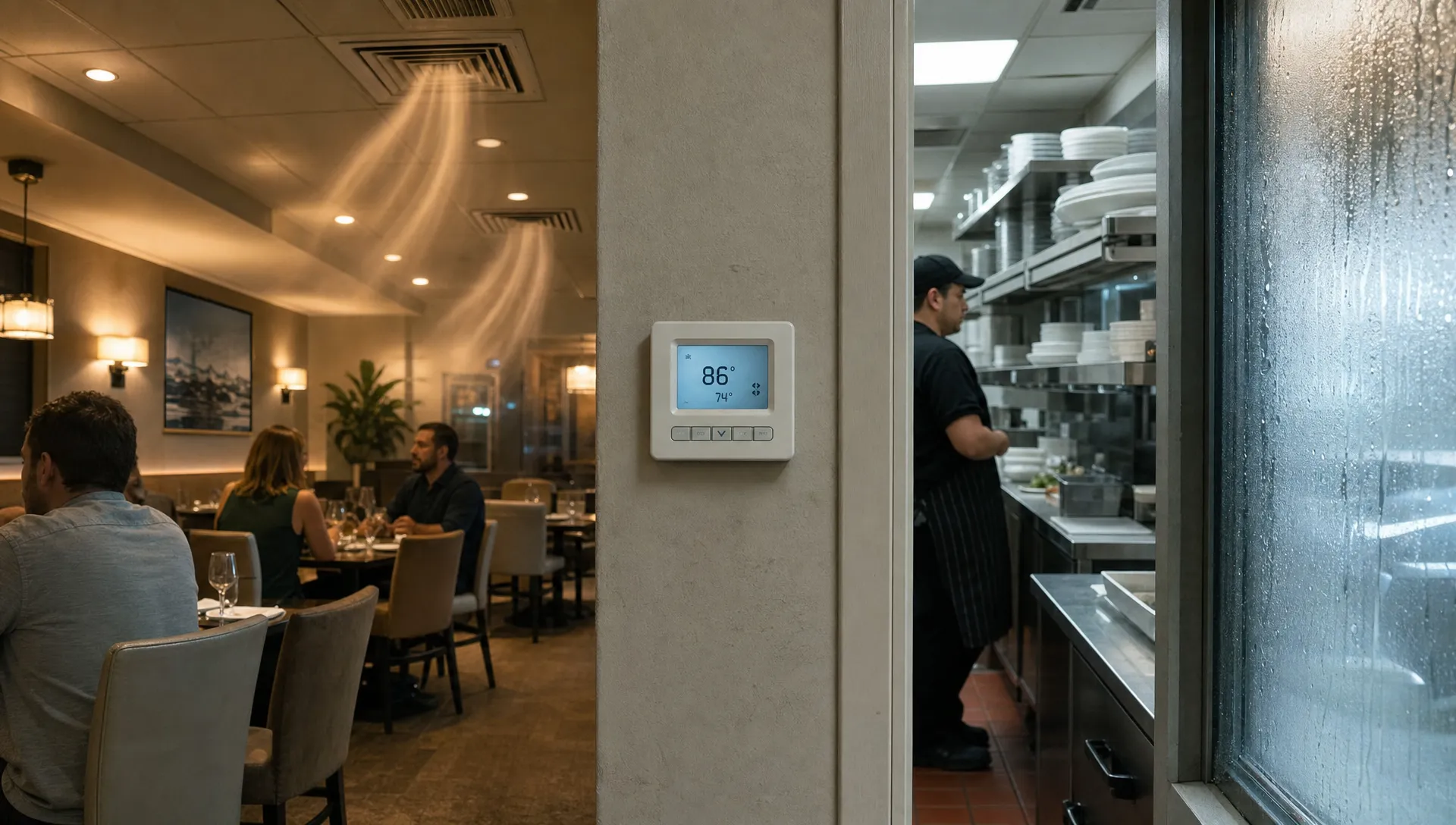
For a business, HVAC work is not just about comfort. Poor cooling can drive customers away, affect employee productivity and create unsafe indoor conditions for kitchens or production spaces. Poor ventilation can create odors, humidity issues and code concerns.
If your current concern is air conditioning performance, this guide to commercial HVAC repair explains what businesses should look for in a qualified repair provider.
Commercial refrigeration and cold storage
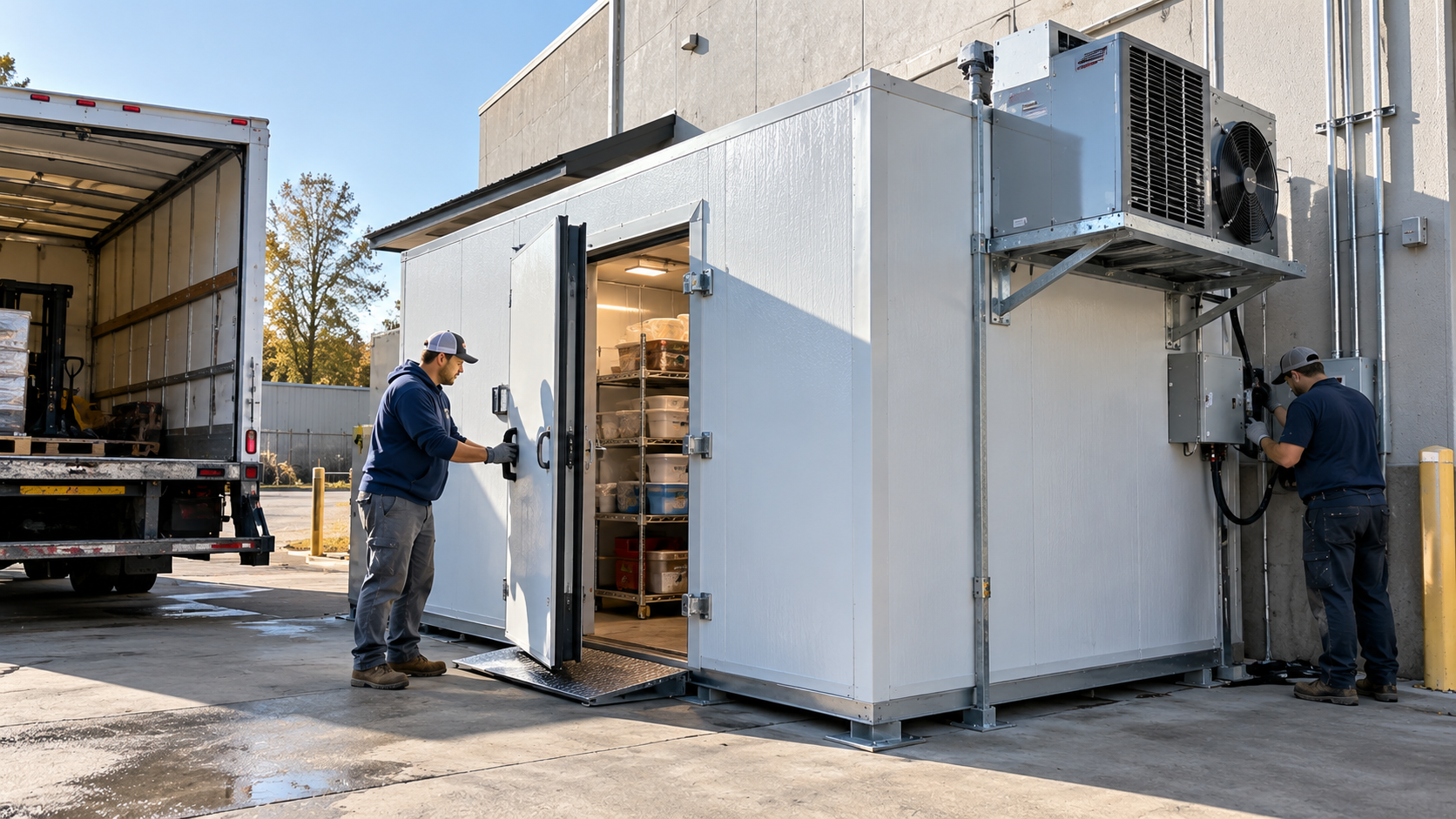
Commercial refrigeration is a separate skill set from standard comfort cooling. It involves tighter temperature requirements, food safety risk and equipment that often runs around the clock.
Mechanical contractors with refrigeration capability can handle walk-in coolers, walk-in freezers, reach-in coolers, prep tables, ice machines, chillers and specialty cold storage. In restaurants and food facilities, even a small temperature drift can become expensive if inventory is lost or health-code compliance is affected.
A refrigeration service call may involve checking evaporator coils, condenser airflow, refrigerant charge, door gaskets, defrost timers, drain lines, fan motors, compressor operation and electrical controls. For cold storage and food processing facilities, refrigeration may also be tied to 3-phase power, alarms, backup systems and production schedules.
This is one reason a commercial mechanical contractor is often a better fit than a residential HVAC provider. The stakes, equipment types and diagnostic process are different.
Restaurant equipment, hoods and exhaust systems
Restaurants, institutional kitchens and food-service operations need specialized mechanical support. A contractor working in these environments may handle cooking equipment, exhaust hoods, exhaust fans, make-up air, stainless fabrication, fire suppression coordination and refrigeration.
Kitchen exhaust systems deserve special attention. Type 1 hoods are used over grease-producing equipment, while Type 2 hoods handle heat or steam. These systems need proper airflow, fire-safety design and ongoing maintenance. The NFPA 96 standard is one of the major references for ventilation control and fire protection in commercial cooking operations.
A hood or exhaust problem can quickly affect an entire kitchen. Smoke, heat, grease vapor and negative air pressure make it hard to operate safely. Sometimes the issue is not the hood itself, but the fan, belts, bearings, make-up air fan, electrical feed or rooftop access. A mechanical contractor can inspect the complete system instead of treating each component in isolation.
Boilers, chillers and hydronic systems
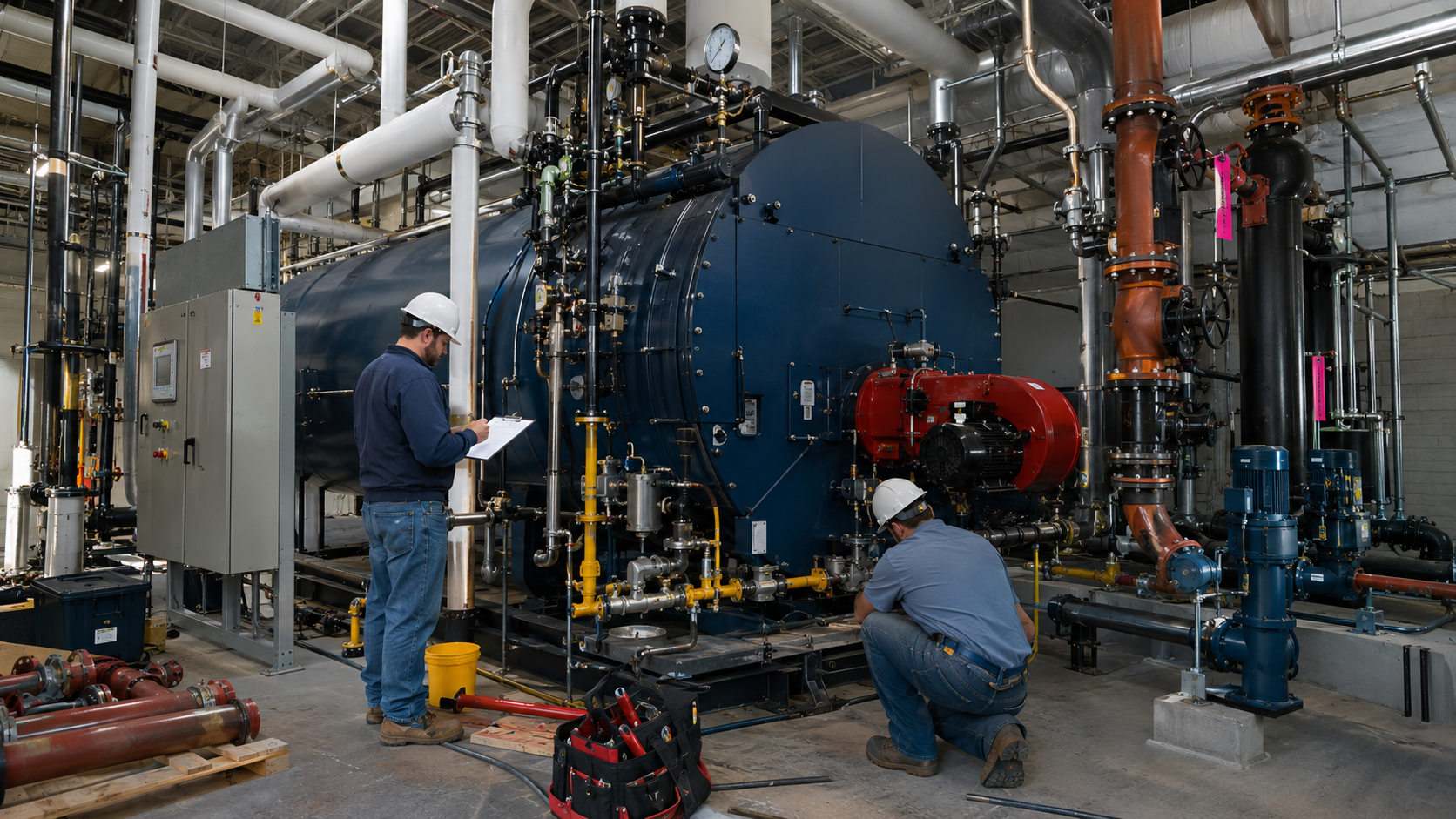
Many commercial buildings use boilers, chillers or hydronic systems for heating, cooling or process loads. These systems are common in schools, industrial plants, larger commercial buildings, breweries and facilities with high heating or cooling demand.
Commercial mechanical contractors may handle:
- Steam boiler and hot water boiler service
- Boiler pump and control troubleshooting
- Chiller repair and replacement
- Hydronic piping repairs
- Heat exchanger inspection
- Combustion and safety checks
- Preventive maintenance before peak heating or cooling season
Boilers and chillers require disciplined diagnostics. A short cycling boiler, unstable chiller pressure or repeated lockout can point to controls, water flow, combustion, heat transfer or electrical issues. Guesswork is expensive, especially when the system supports production or a large occupied building.
Commercial electrical work tied to mechanical systems
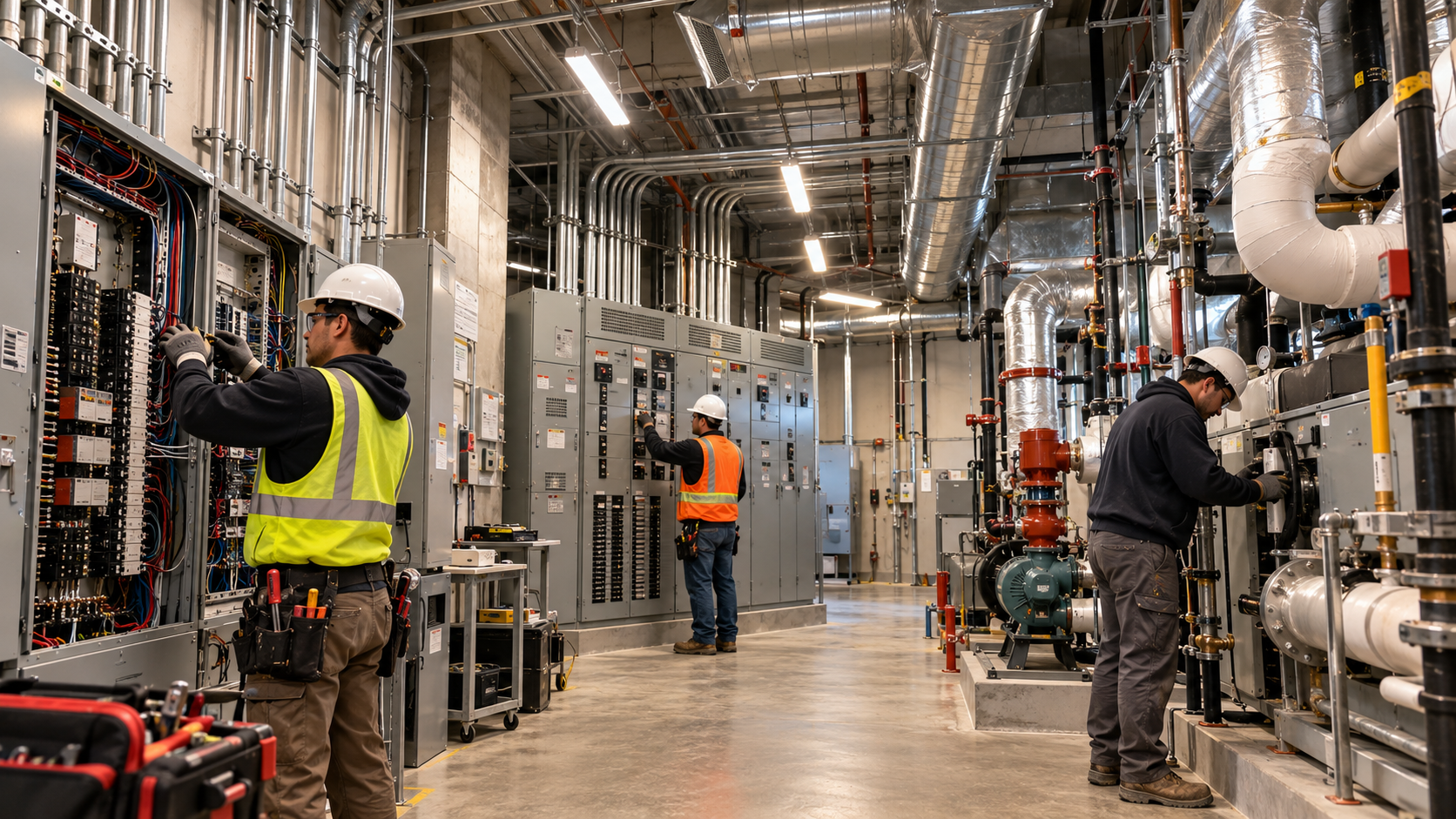
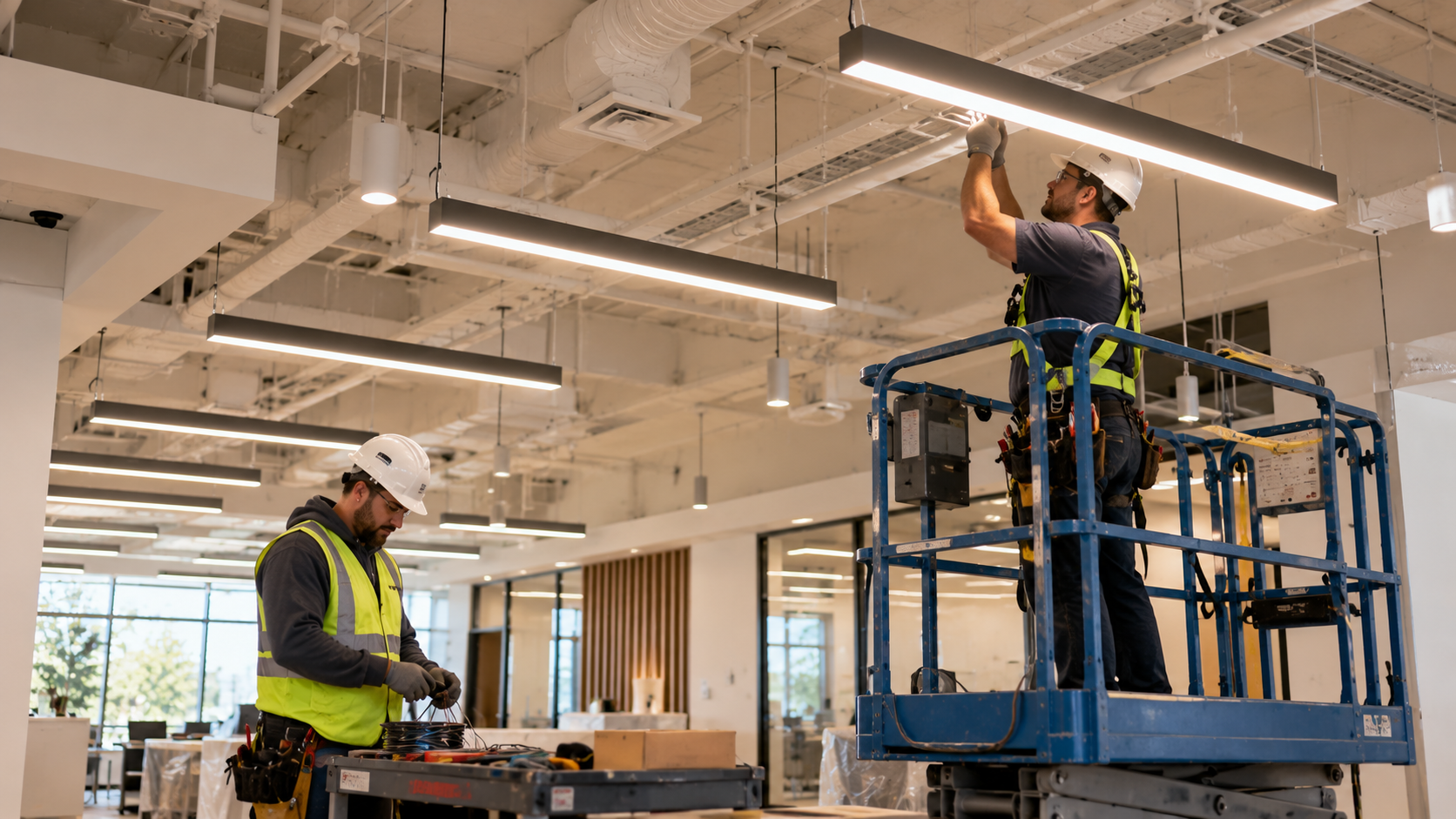
Mechanical equipment depends on safe, reliable electrical infrastructure. Motors, compressors, controls, contactors, transformers, panels and disconnects all affect whether a system runs correctly.
This is where the line between mechanical and electrical work becomes practical rather than theoretical. A walk-in freezer compressor may look like a refrigeration problem, but the root cause could be voltage imbalance. An exhaust fan may fail because of a worn motor, but also because of a starter, overload or wiring issue. A processing line may shut down because a breaker trips under load.
A contractor licensed for both mechanical and electrical work can reduce the handoff problem. Instead of having one company say “call an electrician” and the electrician say “call the HVAC company,” the same team can evaluate the complete equipment circuit.
For businesses comparing electrical support options, this overview of commercial electric repair service covers preventive maintenance, troubleshooting and licensing considerations.
| System issue | Possible mechanical cause | Possible electrical cause | Why multi-trade diagnosis helps |
|---|---|---|---|
| Walk-in cooler not holding temperature | Refrigerant leak, dirty coil, failed fan motor | Faulty control, voltage issue, tripped breaker | Prevents replacing refrigeration parts when power is the real issue |
| Exhaust fan not running | Broken belt, seized bearings, failed motor | Bad starter, wiring fault, disconnect issue | Restores ventilation without multiple vendor visits |
| Rooftop unit short cycling | Low airflow, refrigerant issue, dirty coils | Control fault, sensor issue, contactor failure | Finds the cause before compressor damage occurs |
| Boiler lockout | Combustion issue, water flow problem | Control circuit fault, safety switch issue | Protects heat availability and equipment safety |
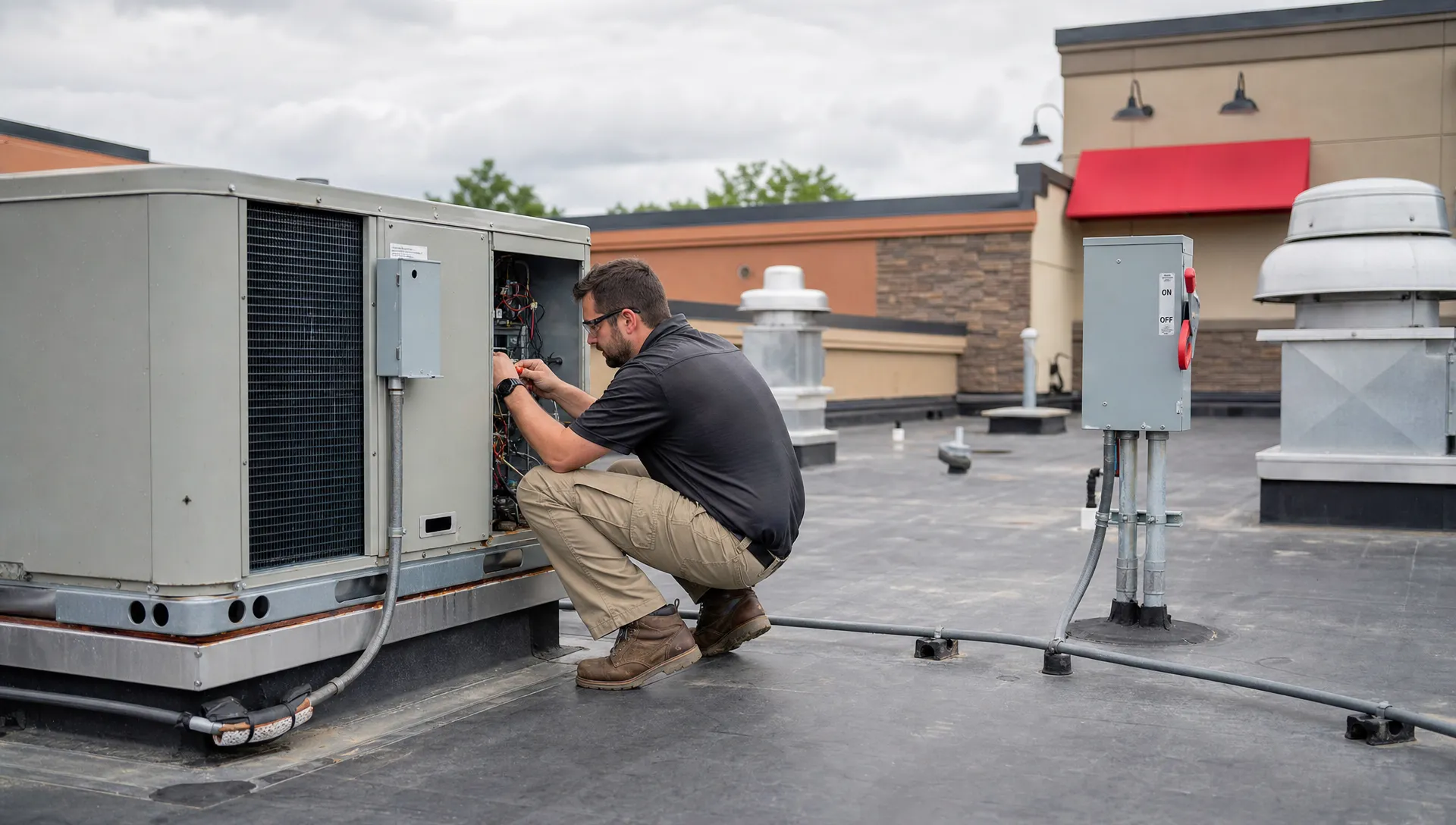
Gas piping, compressed air and industrial support
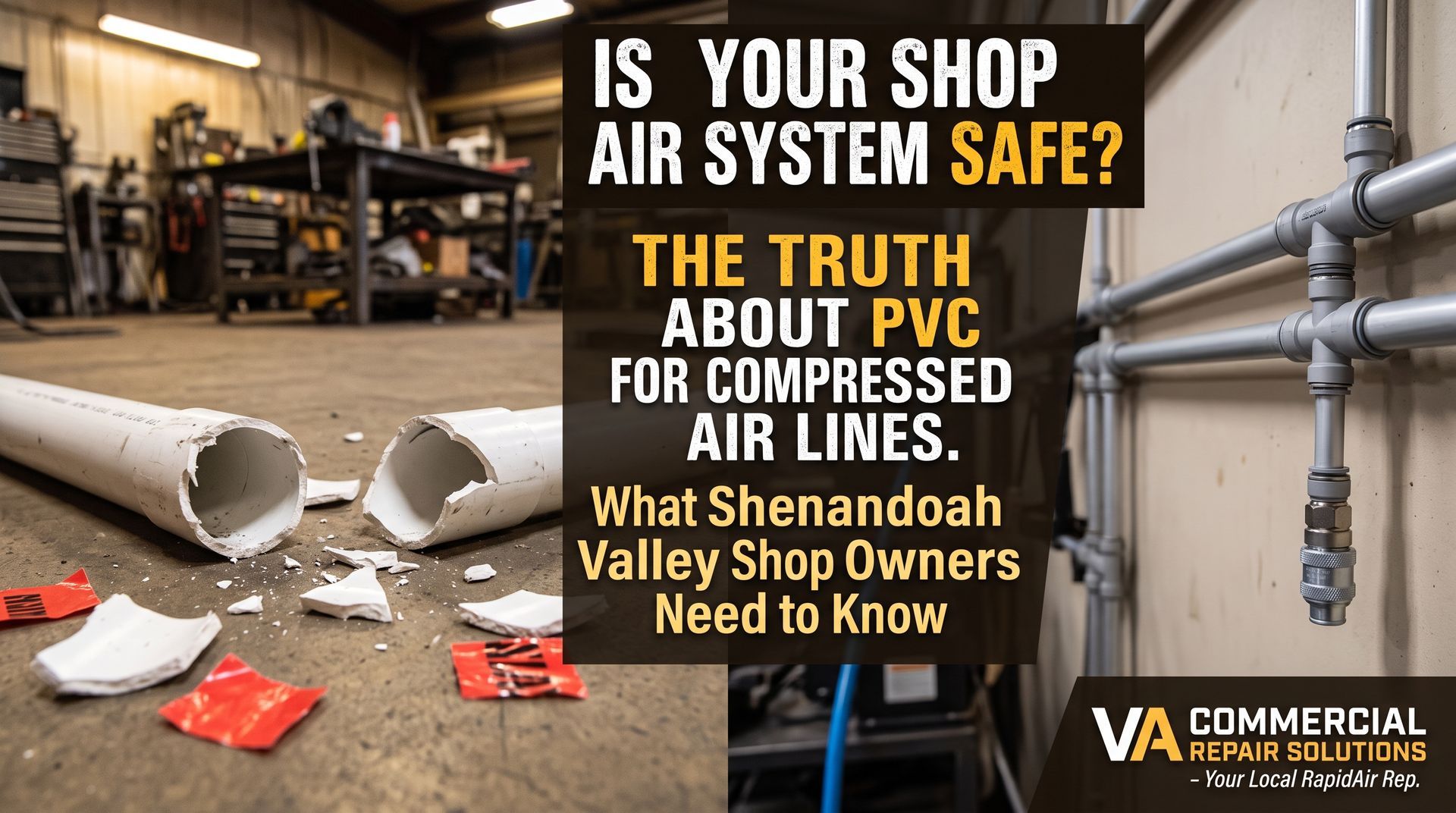
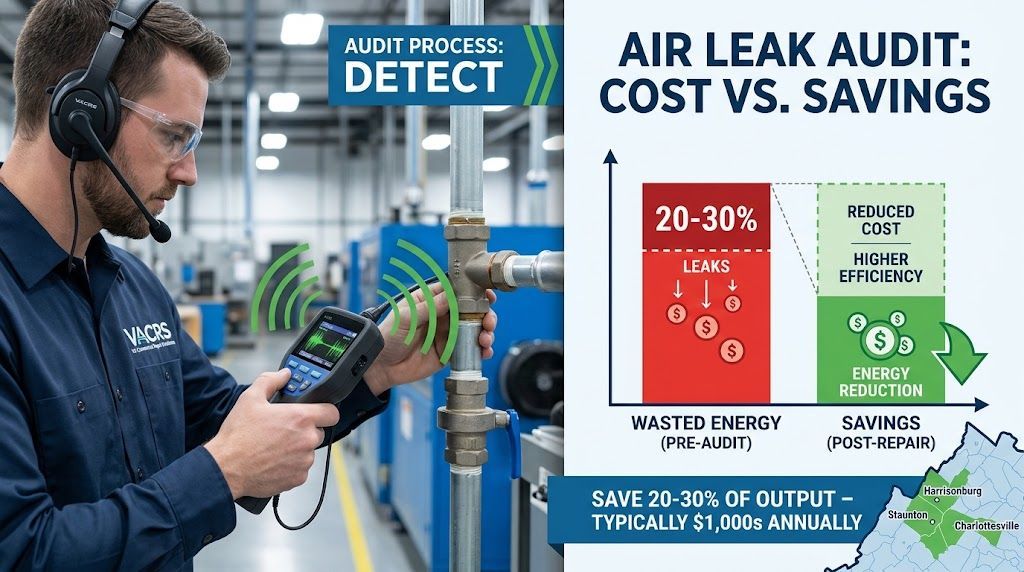
Commercial mechanical work can also include piping and industrial utility systems. Depending on the contractor, this may involve gas pipe installation, compressed air piping, air compressor repair, motor replacement, industrial machine repair and custom metal fabrication.
These services are especially important in manufacturing, agriculture, food processing and beverage production. A dairy, creamery, poultry processing plant or brewery may rely on refrigeration, 3-phase electrical service, pumps, chillers, compressed air and stainless piping in the same production environment. A mechanical failure can stop production, not just make the building uncomfortable.
Virginia businesses in specialty production environments should look for contractors with experience beyond ordinary tenant-space HVAC. For more examples of specialized service needs, this resource on specialty and industrial contractors for microbreweries, vineyards and agricultural facilities in Virginia gives a useful comparison of contractor capabilities.
Preventive maintenance and equipment life extension
Mechanical contractors do more than respond to breakdowns. Preventive maintenance is often where they deliver the most value, especially for commercial equipment that runs every day.
A strong maintenance program can include filter changes, coil cleaning, belt inspection, lubrication, amperage checks, refrigerant readings, drain cleaning, combustion checks, temperature verification, electrical inspection and control testing. For refrigeration, maintenance can help catch failing fans, clogged condensers and icing issues before temperatures rise. For HVAC, it can reduce emergency calls during peak summer or winter demand.
Good contractors also keep records. That matters for warranty support, capital planning, code inspections and long-term equipment decisions. If a compressor fails after repeated high-amp readings, the maintenance history helps explain why. If an older unit is still repairable, records can support a repair-first decision instead of a premature replacement.
Repair, replacement and honest limits
A trustworthy commercial mechanical contractor should not treat every service call as a sales opportunity. Many problems can be repaired if the failed component is accessible, the equipment is otherwise sound and the repair is safe.
At the same time, some failures may make replacement the responsible recommendation. Examples can include a compressor that is shorted to ground, certain aluminum coil leaks, a cracked boiler combustion chamber or a heat exchanger failure that cannot be safely repaired. In those cases, the contractor should show evidence, such as meter readings, pressure readings or visible damage, rather than simply making a claim.
For business owners, this is one of the most important questions to ask: “Can you show me why this must be replaced?” A good contractor will be comfortable explaining the diagnosis in plain language.
When should you call a commercial mechanical contractor?
You should call a commercial mechanical contractor when the problem affects business-critical systems, crosses more than one trade or involves equipment built for commercial use. Residential contractors may be excellent at home comfort systems, but restaurants, industrial facilities and commercial buildings present different risks.
Situations that often call for a commercial mechanical contractor include:
- A walk-in cooler or freezer is above safe temperature
- A restaurant hood, exhaust fan or make-up air system is not working
- A rooftop unit repeatedly trips, locks out or short cycles
- A boiler or chiller is affecting building operation
- A breaker trips when refrigeration or HVAC equipment starts
- A facility needs 3-phase power support for mechanical equipment
- A food-service or production space needs coordinated HVAC, refrigeration and electrical service
- A building owner wants a preventive maintenance plan across multiple equipment categories
If you operate in Charlottesville, Harrisonburg, Waynesboro, Staunton, Lexington, Fishersville or the surrounding Shenandoah Valley and central Virginia region, proximity also matters. Fast response can be the difference between a repair and lost inventory, canceled service or missed production.
How to choose the right commercial mechanical contractor
Not every contractor that says “commercial” has the same capability. Before choosing one, look for proof that the company handles the specific systems in your building.
Strong signs include a commercial-only or commercial-first focus, proper licensing, refrigeration experience, electrical capability, documented emergency response, familiarity with your equipment type and a maintenance program. For restaurants, ask specifically about walk-ins, ice makers, exhaust hoods and make-up air. For industrial or food processing facilities, ask about 3-phase power, controls, cold storage and production equipment.
Also ask how technicians are trained and how recommendations are made. A repair-first approach, clear documentation and non-commissioned technicians can reduce the pressure to replace equipment before it is necessary.
VA Commercial Repair Solutions is a Class A mechanical and electrical contractor based in Fishersville, Virginia, serving commercial and industrial clients across central Virginia and the Shenandoah Valley. The company’s service scope includes HVAC, refrigeration, electrical, boilers, chillers, commercial kitchen equipment, exhaust hoods, fans and ice makers. Calls are answered 24/7 by a live person, not voicemail.
Frequently Asked Questions
What do commercial mechanical contractors do? Commercial mechanical contractors install, repair and maintain business-critical building systems such as HVAC, refrigeration, boilers, chillers, ventilation, exhaust systems, gas piping, compressed air systems and related controls.
Do mechanical contractors handle electrical work? Some do, but not all. Many mechanical problems involve electrical components, so businesses should confirm whether the contractor is licensed and equipped to troubleshoot panels, controls, motors, transformers and 3-phase power.
Is a commercial mechanical contractor different from an HVAC contractor? Yes. HVAC may be one part of mechanical contracting, but a broader commercial mechanical contractor can also handle refrigeration, boilers, chillers, kitchen ventilation, piping, fabrication and industrial equipment support.
When should a restaurant call a mechanical contractor? A restaurant should call when walk-in coolers, ice makers, exhaust hoods, rooftop units, make-up air fans or kitchen equipment affect safe operation. These systems often overlap, so multi-trade diagnosis can reduce downtime.
Why search for commercial mechanical contractors near me instead of a national vendor? Local commercial contractors can often respond faster, understand regional code expectations and maintain equipment history across repeat visits. For urgent refrigeration, HVAC or kitchen ventilation issues, local response matters.
Need help with commercial mechanical systems in Virginia?
If your facility depends on HVAC, refrigeration, kitchen ventilation, boilers, chillers or electrical systems, you need a contractor that understands how those systems work together.
VA Commercial Repair Solutions serves commercial and industrial clients in Charlottesville, Harrisonburg, Waynesboro, Staunton, Lexington, Fishersville and surrounding Virginia communities. For urgent service or preventive maintenance planning, call (540) 457-4822 or visit VA Commercial Repair Solutions.
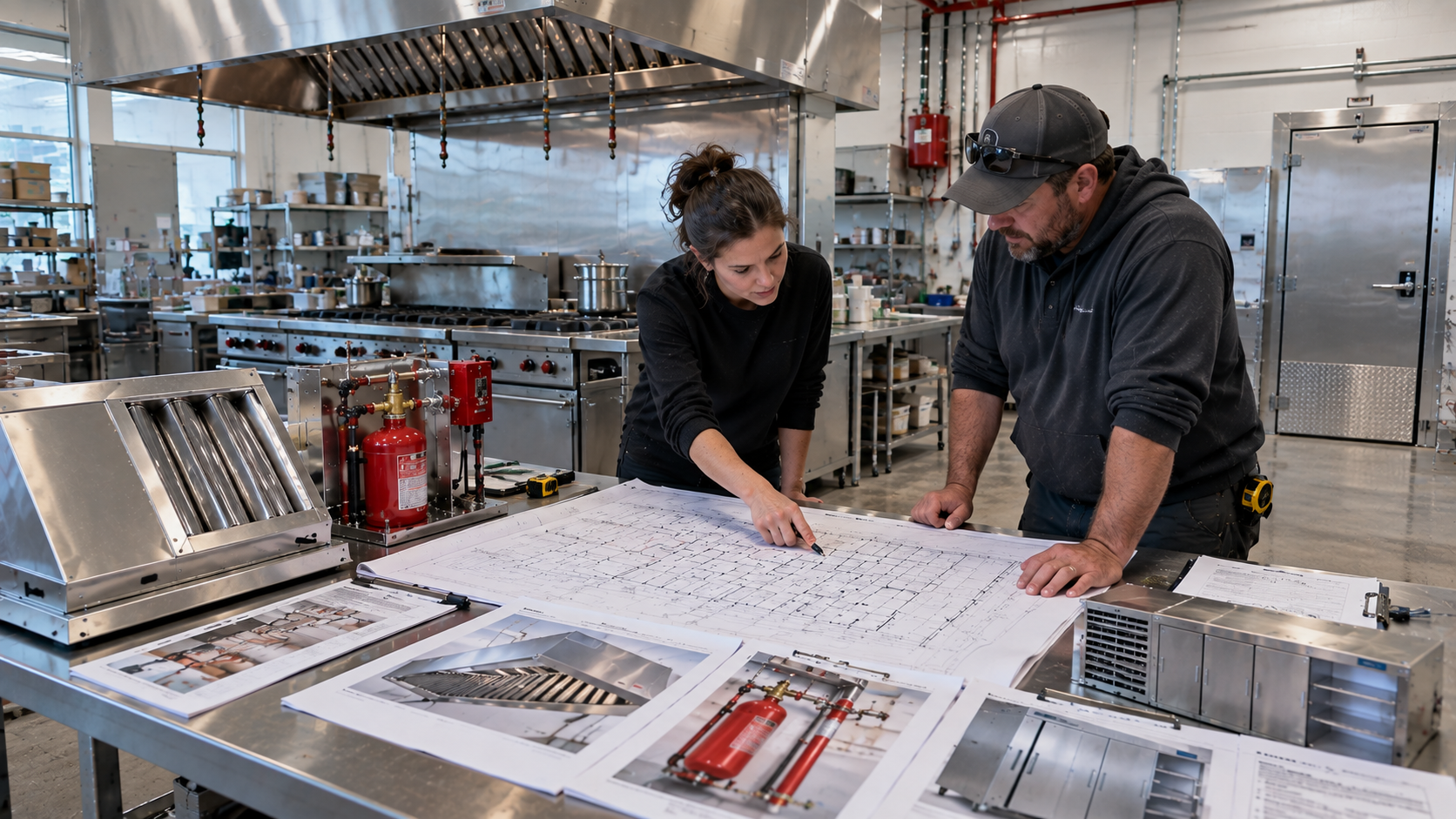
Opening a Restaurant in Virginia: Kitchen Design, Hood, Fire Suppression and Refrigeration Checklist