
Rooftop Safety Access Ladders | Code-Compliant Installs in Virginia
Every year, workers get hurt climbing onto roofs the wrong way. Most of the time, it does not have to happen. A safe, permanent ladder can stop these accidents before they start.
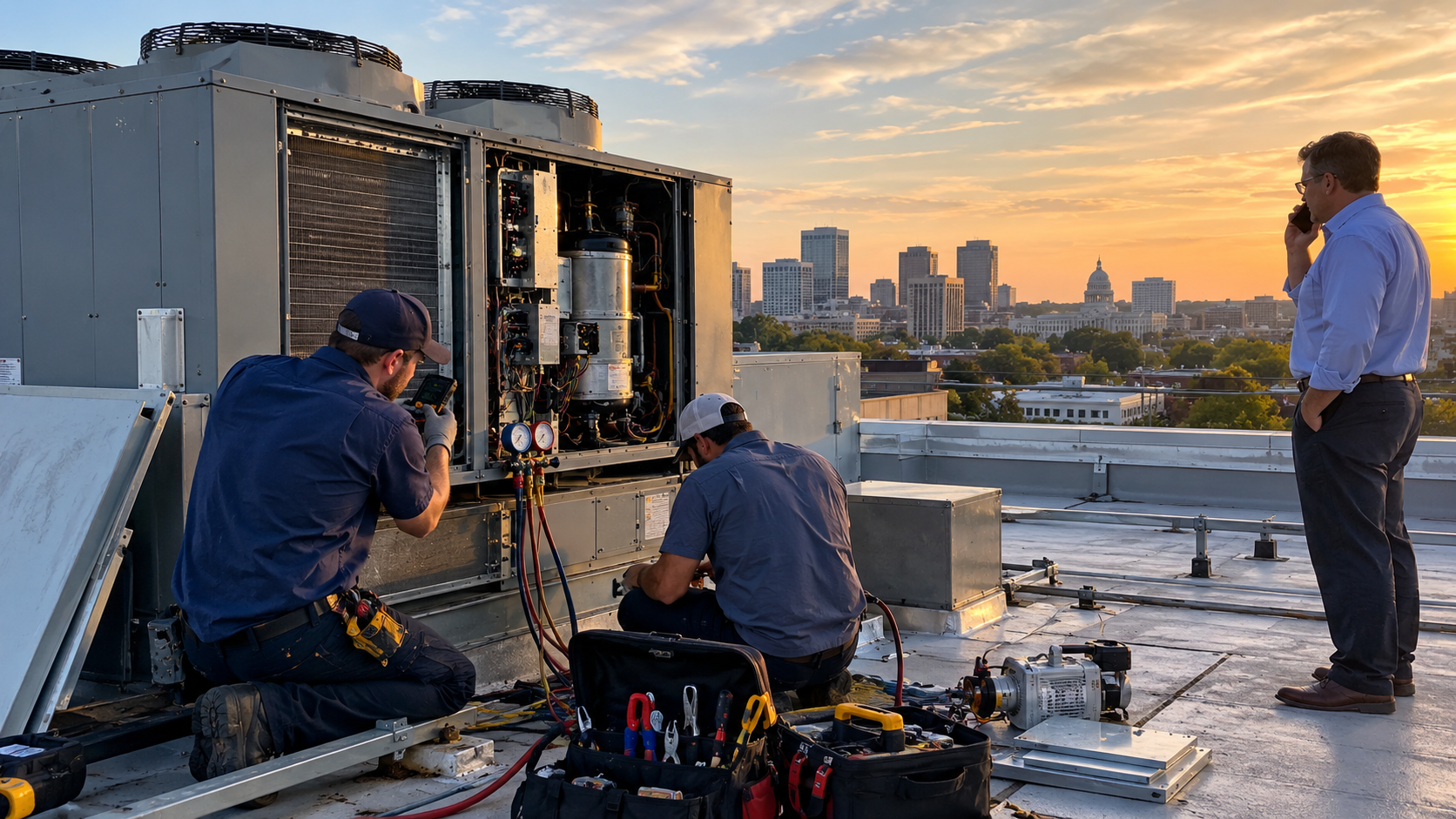
If your building has rooftop HVAC units, exhaust fans, or other equipment, someone has to climb up there to fix and check it. How they get up matters.
This guide explains why rooftop safety access ladders are so important, what the code requires, and how to get one installed correctly.
Quick Answer
A rooftop safety access ladder is a permanent, code-compliant ladder that gives workers a safe way to reach rooftop equipment. It replaces unsafe methods like extension ladders or makeshift access points. Under the 2018 International Mechanical Code (Section 306.5), buildings with rooftop equipment more than 12 feet above grade must have a fixed ladder or approved access with guardrails, proper rung spacing, and safe landing space.
Falls Are the Number One Danger on the Job
Falls are the leading cause of death in the construction industry. In 2024, falls from height caused 389 of the 1,034 construction worker deaths recorded that year in the U.S., according to OSHA and Bureau of Labor Statistics data.
Fall protection has also been the number-one workplace safety violation cited by OSHA for 15 consecutive years, with nearly 6,000 citations issued in fiscal year 2025 alone. That means unsafe roof access is not a rare mistake. It is one of the most common safety problems in the country.
Most of these accidents are preventable. A safe, permanent ladder is one of the simplest ways to lower the risk.
The Problem With Portable Ladders
Many buildings still use extension ladders to reach the roof. This might seem fine, but it creates real risks:
- The ladder can slip or tip, especially on uneven ground.
- Wind makes it worse. Rooftops are windy, and a tall ladder catches wind like a sail.
- Workers often carry tools or parts while climbing, which throws off their balance.
- There is no guardrail at the top, so one wrong step near the edge can be dangerous.
- The angle is rarely perfect, which adds strain and risk with every trip up and down.
A permanent ladder solves all of these problems. It is bolted in place, built to code, and does not move.
What the Code Requires
The 2018 International Mechanical Code, Section 306.5, sets the rules for rooftop equipment access. In plain language, here is what it generally calls for once equipment is more than 12 feet above the ground:
- A permanent ladder or stairway — not a portable one.
- Guardrails that rise above the roof edge, so workers have something to hold as they step off.
- Evenly spaced rungs built to hold real weight.
- A clear landing area at the top with enough room to step off safely.
- Rust-resistant materials, since the ladder sits outside in all weather.
- A safe stopping point (landing) for very tall ladders, so workers can rest partway up.
Local inspectors check for these details. A building that skips them can fail inspection, and worse, put workers at real risk.
Why This Matters for Building Owners
A code-compliant rooftop ladder is not just about passing inspection. It protects your business in several ways:
- It lowers your liability. If a worker is injured while using unsafe access on your property, your business can be held responsible.
- It can lower insurance costs. Insurers pay attention to fall risks. A documented, code-built ladder shows you take safety seriously.
- It keeps good contractors coming back. Skilled HVAC techs and maintenance crews prefer working on buildings with safe access. Some contractors will flag or refuse unsafe roof access altogether.
- It avoids costly delays. An injury or failed inspection can shut down maintenance work and cost more in the long run than the ladder itself.

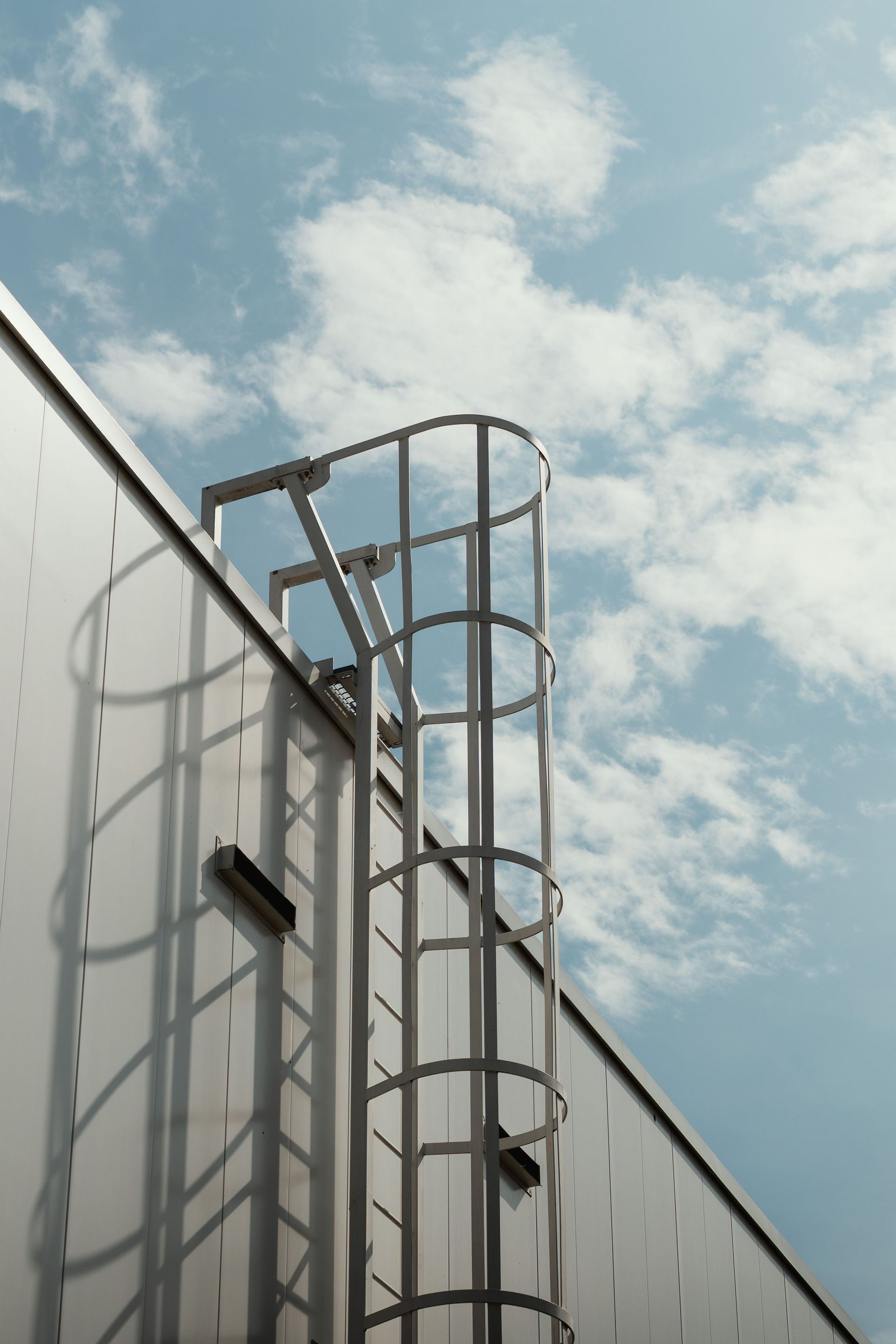
What a Good Rooftop Ladder Looks Like
Not every ladder installed on a roof is built the same way. A properly installed rooftop safety ladder should have:
- Side rails that extend well above the roof edge for a solid handhold
- Rungs spaced evenly and rated for real workloads
- Strong mounting into the building structure, not just surface bolts
- Weather-resistant metal that will not rust or weaken over time
- A clear, flat landing area free of vents, pipes, or clutter
Getting these details right takes experience. This is not a job for guesswork or a generic, off-the-shelf ladder.
Why Work With a Specialist
Every roof is shaped differently. Equipment sits in different spots, and roof edges are not all the same height. A rooftop ladder must be custom-fit to your building and built to meet code requirements exactly.
VA Commercial Repair Solutions is a Class A licensed mechanical contractor and SWaM-certified business serving Charlottesville, Harrisonburg, Staunton, Waynesboro, Fishersville, and Lexington, Virginia. Their team designs and installs rooftop safety access ladders tailored to your building and compliant with current code requirements. They also handle broader rooftop fall-protection and facility maintenance needs, so your building stays safe and compliant from the ground up — literally.
Frequently Asked Questions
Is a rooftop access ladder required by law?
Yes, in most cases. If rooftop equipment sits more than 12 feet above grade, the International Mechanical Code requires permanent, guarded access — not a portable ladder.
How tall does a roof need to be before a permanent ladder is required?
Generally, once the equipment access point is more than 12 feet above the ground, code requires a fixed ladder or stairway with guardrails.
Can I use an extension ladder instead?
You can, but it is not code-compliant for regular equipment access and carries much higher fall risk. Portable ladders lack guardrails, can shift or slip, and are harder to use safely in wind or while carrying tools.
What happens if my building does not have a compliant ladder?
Failing to provide a code-compliant ladder can result in failed building inspections, costly OSHA fines, and severe legal liability if a worker is injured. Additionally, many licensed HVAC and roofing contractors will refuse to service your equipment if they lack safe, permanent access to the roof.
How much does a rooftop safety ladder installation cost?
The total cost for a professional, code-compliant commercial rooftop ladder installation typically ranges from $1,500 to $6,000+, depending on the building's height and structural requirements. A standard system for a 12- to 15-foot roof generally averages between $2,500 and $4,500, covering both heavy-duty, weather-resistant materials and secure structural mounting.
Get a Free Rooftop Safety Assessment
If your building's rooftop equipment is accessed by a portable ladder, now is a good time to fix that. Reach out to VA Commercial Repair Solutions for a free assessment and quote on a custom, code-compliant rooftop safety access ladder.
Sources: U.S. Occupational Safety and Health Administration (OSHA), National Safety Council, and 2018 International Mechanical Code Section 306.5. Verify current OSHA statistics and local code amendments before publishing.
Opening a Restaurant in Virginia: Kitchen Design, Hood, Fire Suppression and Refrigeration Checklist