
Best Practices for Maintaining Commercial Refrigeration Equipment in 2026
Whether you operate a busy restaurant in Charlottesville, a grocery store in Harrisonburg, or a commercial kitchen anywhere across Central Virginia, your refrigeration equipment is the backbone of your operation. A single unexpected breakdown can mean thousands of dollars in lost inventory, failed health inspections, and frustrated customers. The good news: many commercial refrigeration failures are preventable.
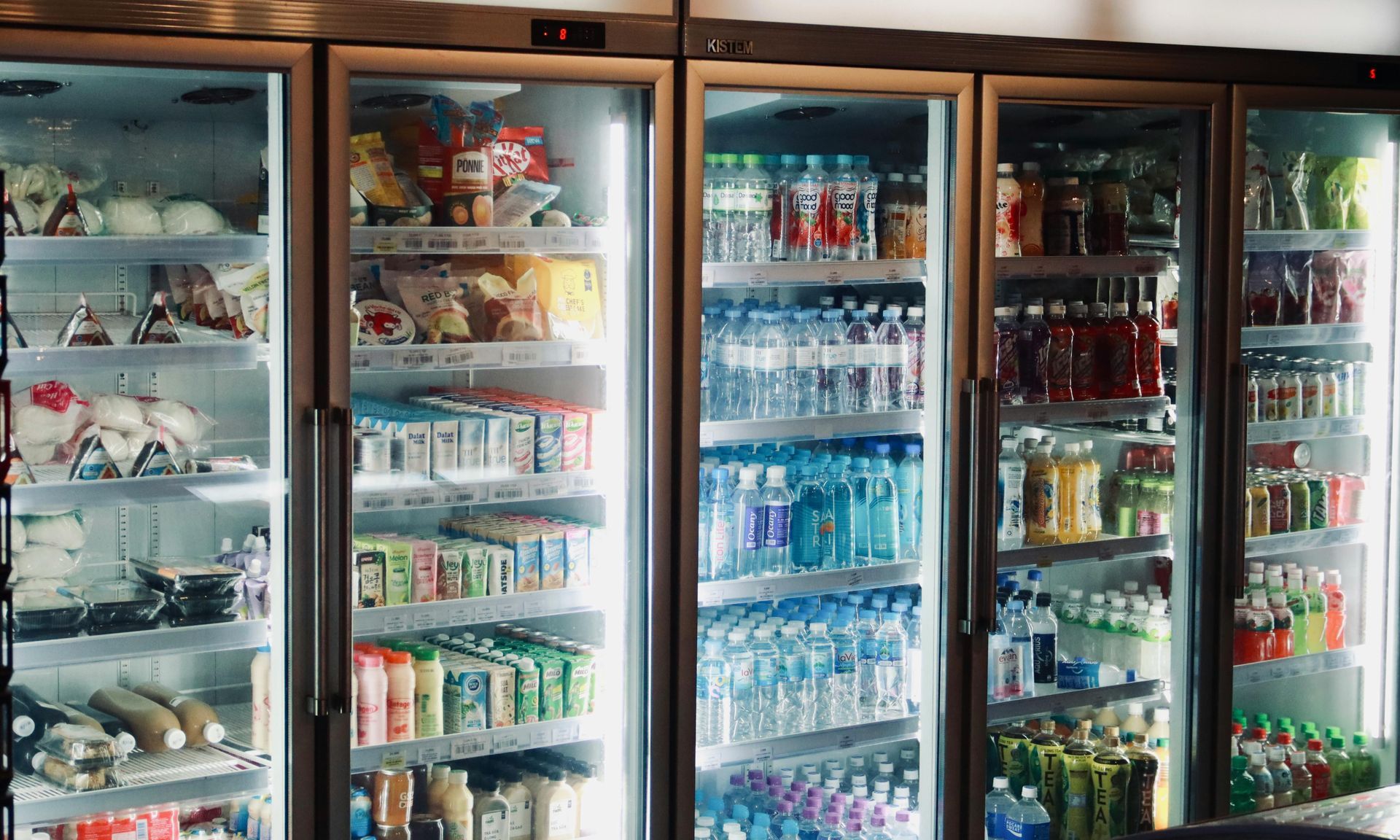
The best practices for maintaining commercial refrigeration equipment have evolved significantly in recent years, driven by tighter EPA refrigerant regulations, smarter monitoring technology, and a growing emphasis on energy efficiency. This comprehensive guide brings together current industry standards, technician expertise, and the 2026 regulatory landscape to give business owners, facility managers, and kitchen operators a definitive maintenance roadmap.
Why Preventive Maintenance Is the #1 Best Practice for Commercial Refrigeration
No maintenance strategy matters more than simply having one. Reactive maintenance — waiting for equipment to break before calling a technician — costs two to three times more than proactive preventive maintenance, according to industry data. Commercial refrigerators and freezers, walk-in coolers, display cases, and ice makers are engineered to run continuously under heavy workloads. That demands regular, scheduled attention.
The core benefits of a disciplined preventive maintenance program for commercial refrigeration include:
- Extended equipment lifespan — Properly maintained units routinely last 15–20 years; neglected ones often fail before 10.
- Lower energy bills — A refrigeration system running with dirty coils or low refrigerant can consume 20–30% more electricity than a well-maintained unit.
- Food safety compliance — Health departments and FDA food code requirements mandate that refrigerated storage hold food at 41°F or below. Equipment failures put your license at risk.
- Reduced emergency repair costs — A compressor replacement costs $1,500–$4,000 or more. A routine maintenance visit costs a fraction of that.
- Warranty protection — Most manufacturers require documented preventive maintenance to honor equipment warranties.
At VA Commercial Repair Solutions, we recommend scheduling professional commercial refrigeration maintenance at least twice per year — once before summer heat peaks and once entering the fall season. High-volume operations such as restaurants, cafeterias, and grocery stores should consider quarterly visits.
Condenser Coil Cleaning: The Most Critical Maintenance Task for Commercial Refrigerators
If there is one maintenance task that delivers more return on investment than any other, it is cleaning the condenser coils. Condenser coils reject heat from the refrigerant to the surrounding air. When they become clogged with grease, dust, and debris — as they inevitably do in commercial kitchen environments — the compressor must work harder, temperatures rise, and the system runs inefficiently or fails entirely.
How Often Should Condenser Coils Be Cleaned?
- Restaurant walk-in coolers and reach-ins: Every 30–90 days, depending on kitchen grease levels.
- Grocery store display cases: Every 60–90 days.
- Low-traffic office or break room refrigeration: Every 6 months.
- Ice makers: Every 6 months, minimum — more often in dusty or greasy environments.
Condenser Coil Cleaning Best Practices
- Power down the unit before cleaning.
- Use a soft-bristle brush or commercial coil cleaning brush to remove loose debris.
- Apply an approved no-rinse coil cleaner for grease-laden environments.
- Flush with low-pressure water if the unit design allows, or vacuum dry debris from air-cooled units.
- Inspect fan blades and motors for damage while the panel is open.
- Document the cleaning date and condition for your maintenance log.
Important: In commercial kitchen settings, condenser coils frequently accumulate grease — not just dust. This grease acts as an insulating layer and dramatically reduces heat transfer efficiency. A trained refrigeration technician will use appropriate degreasing agents and inspect for any damage caused by grease accumulation.
Evaporator Coil Inspection and Defrost System Maintenance
While condenser coils handle heat rejection, evaporator coils absorb heat from inside the refrigerated space. Ice buildup on evaporator coils is one of the most common — and most misunderstood — commercial refrigeration problems. Some frost is normal; heavy ice accumulation is a symptom of a problem.
Common Causes of Evaporator Coil Ice Buildup
- Faulty defrost timer, heater, or thermostat
- Defrost drain line clog (standing water freezes and backs up)
- Door gasket failure allowing warm, humid air to enter
- Low refrigerant charge causing coils to run below design temperature
- Fan motor failure reducing airflow across the coil
Defrost System Maintenance Best Practices
- Test the automatic defrost cycle at every maintenance visit — verify it initiates and terminates correctly.
- Inspect and clear the defrost drain line; flush with warm water and check the drain pan for mold or algae growth.
- Inspect the defrost heater element for continuity and signs of burning or corrosion.
- Check defrost termination thermostats for calibration drift.
- Verify fan delay operation — fans should not restart until the coil temperature rises above freezing after a defrost cycle.
Neglected defrost systems are among the leading causes of walk-in freezer and refrigerator breakdowns. When drain lines clog, overflow water can damage floors, create slip hazards, and freeze into large ice masses that restrict airflow and damage coil fins.
Refrigerant Leak Detection and 2026 EPA Compliance Requirements
Refrigerant management has become one of the most legally and operationally significant aspects of maintaining commercial refrigeration equipment. As of 2026, the EPA's Section 608 regulations under the Clean Air Act impose strict requirements on leak detection, repair timelines, and record-keeping for systems containing regulated refrigerants — particularly HFCs (hydrofluorocarbons) such as R-404A, R-410A, and R-134a, which are subject to phasedown under the AIM Act.
2026 Refrigerant Regulations: What Commercial Operators Need to Know
- Leak inspection thresholds: Commercial refrigeration systems with a charge of 50 lbs or more of regulated refrigerants must be inspected for leaks at least annually, and within 30 days if the annual leak rate exceeds applicable threshold percentages.
- Repair timelines: Once a leak is identified, repairs must be completed within 30 days (with possible extensions for equipment retrofit/retirement decisions).
- Record-keeping: Operators must maintain refrigerant purchase records, leak inspection logs, and repair documentation for a minimum of 3 years.
- Technician certification: Only EPA Section 608-certified technicians may purchase, handle, and recover regulated refrigerants. Always verify your service provider's credentials.
Signs of a Refrigerant Leak
- Unit runs continuously without reaching set temperature
- Ice formation on suction line or evaporator coil in abnormal patterns
- Oily residue near refrigerant line fittings or the compressor
- Elevated utility bills with no other explanation
- Electronic leak detector alarm (recommended for all commercial operations)
VA Commercial Repair Solutions technicians are fully EPA Section 608 certified and carry electronic leak detection equipment on every service van. We also assist clients in setting up compliant leak inspection logs and refrigerant purchase records.
Door Gasket and Door Closer Maintenance for Walk-In Coolers and Freezers
Door gaskets are inexpensive. The energy waste and food safety risks from a failed gasket are not. A faulty door gasket on a walk-in cooler or freezer allows warm, humid air to continuously infiltrate the refrigerated space, forcing the compressor to run longer cycles, driving up energy costs, and increasing the risk of temperature excursions that can compromise food safety.
How to Inspect Commercial Refrigeration Door Gaskets
The classic test: close the walk-in door on a piece of paper or a dollar bill. If you can pull it out easily, the gasket is not sealing properly. Perform this test around the entire perimeter of the door — pay special attention to corners, where gaskets tend to crack and separate first.
Visually inspect gaskets for:
- Cracks, tears, or brittleness
- Mold or mildew growth in folds
- Sections pulling away from the door frame
- Compression set (gasket no longer springs back when released)
Door Closer and Hinge Best Practices
- Test door closer tension — doors should close fully and latch automatically without manual assistance.
- Lubricate door hinges with food-safe lubricant every 6 months.
- Inspect door alignment — a sagging walk-in door indicates hinge wear or structural issues that compound gasket problems.
- Check safety release hardware inside walk-in coolers and freezers — this is a life-safety item that must be functional at all times.
- Install strip curtains or air curtains at high-traffic walk-in openings to reduce infiltration during busy service periods.
Commercial Compressor Maintenance: Protecting the Heart of Your Refrigeration System
The compressor is the most expensive component in any commercial refrigeration system. Compressor failure typically means a repair bill in the range of $1,500–$5,000 or more, depending on the system size. Most compressor failures are preceded by warning signs that a trained technician will detect during routine maintenance — long before catastrophic failure occurs.
Key Compressor Health Indicators
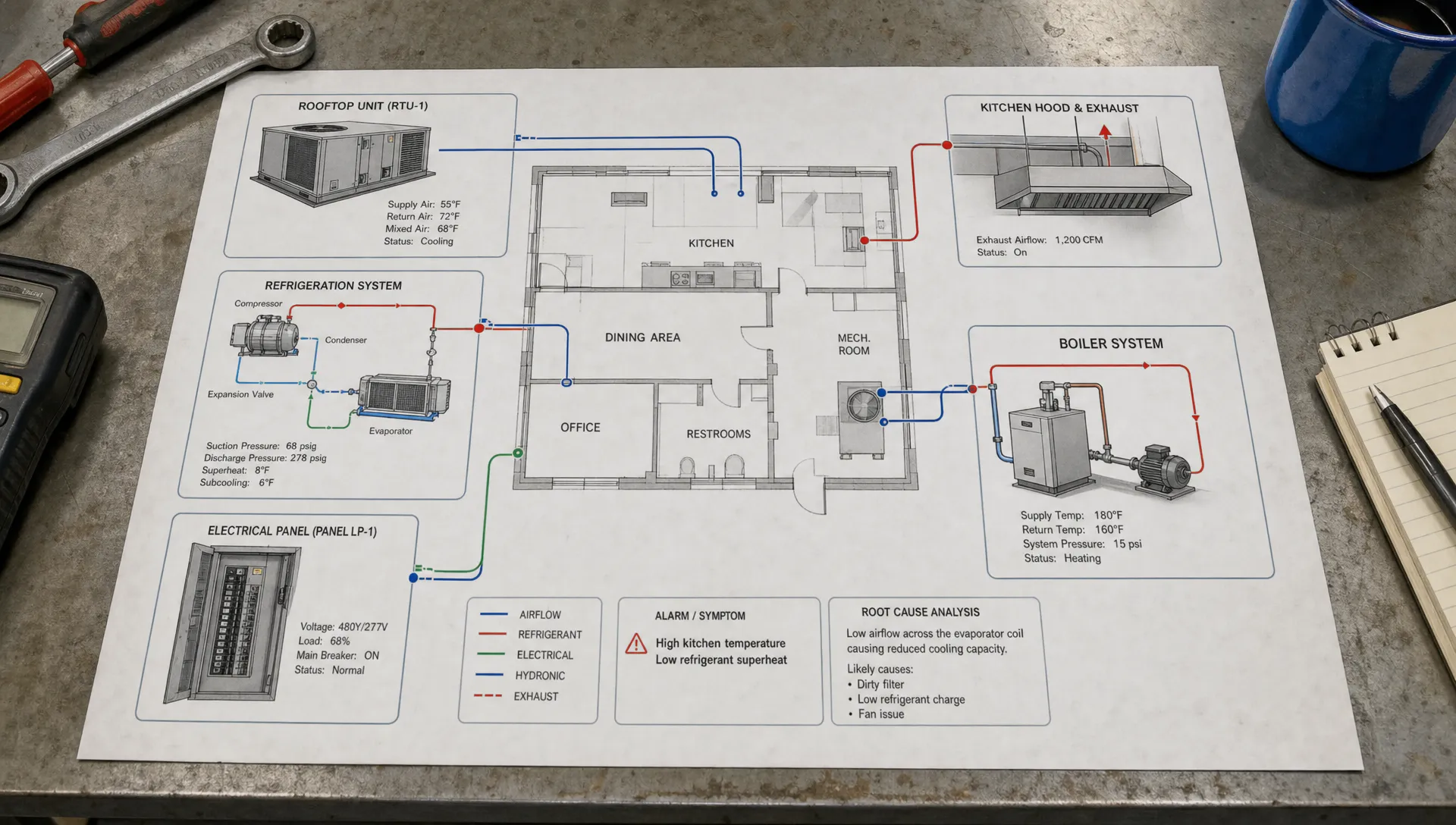
- Amp draw: A technician will measure running amperage against the compressor nameplate. Elevated amps indicate excessive load — often from dirty coils, refrigerant overcharge, or mechanical wear.
- Suction and discharge pressures: Comparing actual operating pressures against design specifications reveals refrigerant charge issues, metering device problems, or compressor efficiency loss.
- Superheat and subcooling: These measurements confirm that refrigerant is reaching the compressor in the correct state and that the system is operating at peak efficiency.
- Oil level and condition (in semi-hermetic compressors): Dark, sludgy oil indicates moisture contamination or overheating.
- Vibration and noise: Abnormal sounds — rattling, grinding, or hissing — warrant immediate investigation.
VA Commercial Repair Solutions carries Copeland, Embraco, and other OEM compressor lines and has the diagnostic equipment to assess compressor health precisely. We always advocate for repair before replacement — but when a compressor is genuinely at end of life, we will tell you honestly and provide transparent pricing.
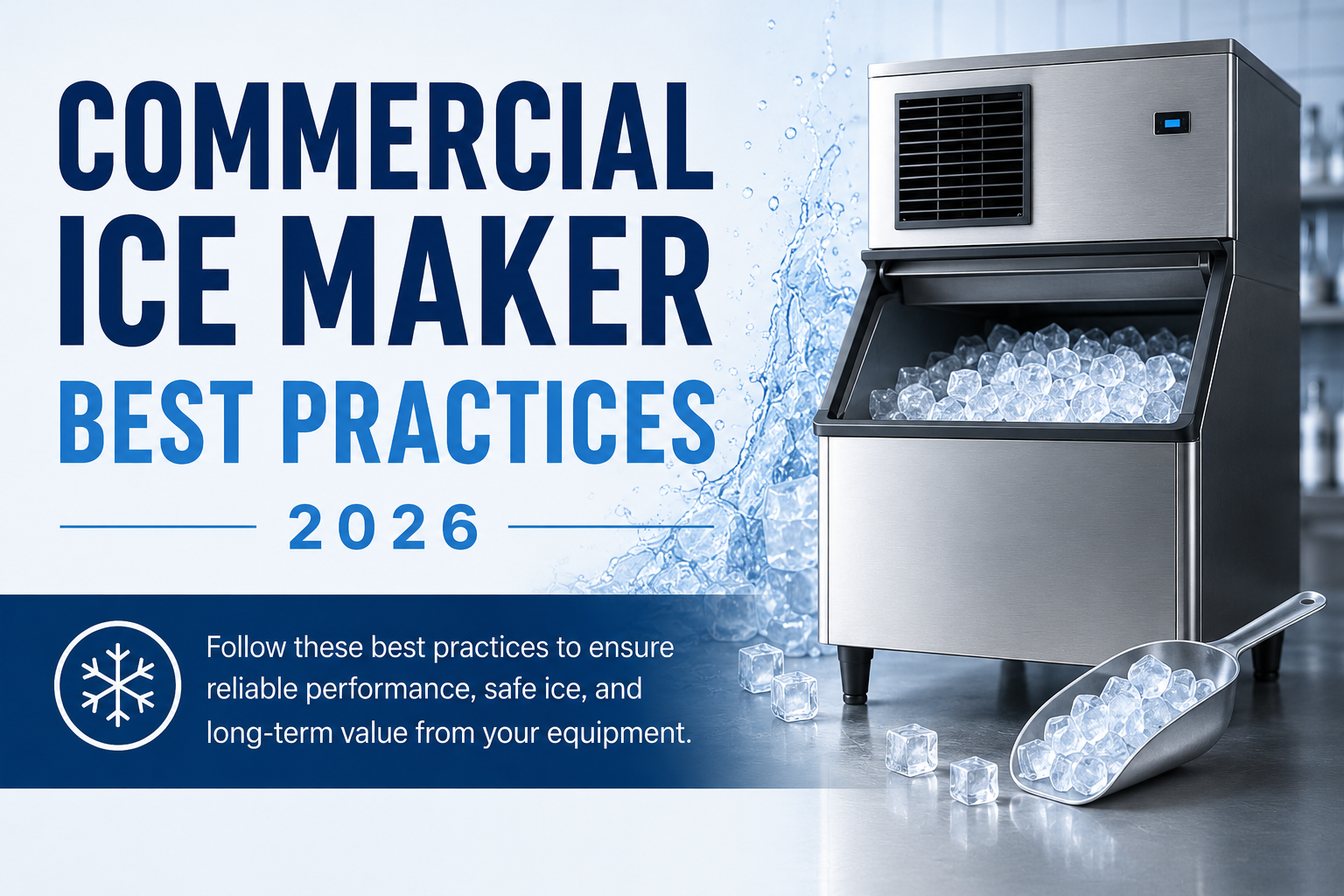
Commercial Ice Maker Maintenance Best Practices in 2026
Ice makers are among the most maintenance-intensive pieces of commercial refrigeration equipment — and among the most neglected. Scale buildup from hard water, mold and slime growth in the ice-making system, and clogged water filters combine to reduce ice production, create health hazards, and shorten machine life.
Commercial Ice Maker Cleaning Schedule
- Every 6 months (minimum): Full descaling and sanitizing of the ice-making system, water distribution system, and storage bin. In hard water areas or high-humidity environments, clean every 3 months.
- Monthly: Clean the air filter (on air-cooled units) and inspect the water filter.
- Annually: Replace the water filter cartridge; inspect the condenser coil; check refrigerant pressures and water valve operation; inspect the harvest cycle.
Warning Signs Your Commercial Ice Maker Needs Service
- Ice cubes are smaller than normal or have irregular shapes
- Ice has an off taste or odor
- Ice production volume has dropped noticeably
- Machine runs longer harvest cycles than usual
- Visible pink, orange, or black slime in the storage bin
- Water leaking from the unit base
VA Commercial Repair Solutions is a preferred service technician for Hoshizaki and Manitowoc ice makers — two of the most widely used commercial ice machine brands. We offer dedicated Commercial Ice Maker Maintenance Plans tailored to the demands of restaurants, hotels, and healthcare facilities throughout Virginia.
Temperature Monitoring and Digital Logging: A 2026 Best Practice for Food Safety
Manual temperature checks — someone recording the walk-in temperature on a clipboard twice a day — are no longer sufficient for businesses serious about food safety, regulatory compliance, and insurance documentation. In 2026, wireless temperature monitoring systems have become an affordable and essential layer of protection for any commercial refrigeration operation.
Benefits of Continuous Digital Temperature Monitoring
- 24/7 alerts: Receive an instant text or email alert if any refrigerated unit drifts above safe temperature thresholds — including nights, weekends, and holidays when no staff are present.
- Tamper-proof records: Digital logs create an auditable chain of temperature custody for health department inspections, HACCP compliance, and insurance claims.
- Early failure detection: Gradual temperature drift — a sign of declining compressor performance or refrigerant loss — is detected before it becomes a full failure.
- Remote monitoring: Multi-location operators can monitor all facilities from a single dashboard.
Most wireless temperature monitoring systems integrate with smartphones via a dedicated app and require no hard wiring. Sensors are placed inside refrigerated spaces, and data is transmitted via Wi-Fi or cellular. Installation typically takes less than an hour per unit.
Electrical and Controls Maintenance for Commercial Refrigeration Systems
Commercial refrigeration equipment relies on a complex web of electrical controls — thermostats, pressure controls, defrost timers, contactors, capacitors, and wiring — all of which degrade over time in the hot, humid, vibration-rich environment of commercial kitchen and mechanical room settings.
Electrical Maintenance Best Practices
- Inspect wiring and connections: Look for signs of heat damage, rodent chewing, corrosion, or loose terminals. A loose electrical connection is a fire hazard and a common cause of intermittent equipment faults.
- Test capacitors: Start and run capacitors on compressor and fan motors degrade with age. A weak capacitor causes hard starts that damage compressor windings over time.
- Verify contactor condition: Burned or pitted contactor points cause voltage drop that damages motors. Replace contactors showing visible wear.
- Calibrate controls: Thermostat and pressure control setpoints drift over time. Verify that cut-in and cut-out settings match manufacturer specifications.
- Check power quality: Voltage fluctuations and power surges are a leading cause of commercial refrigeration control board failure. Consider surge protection for high-value refrigeration equipment.
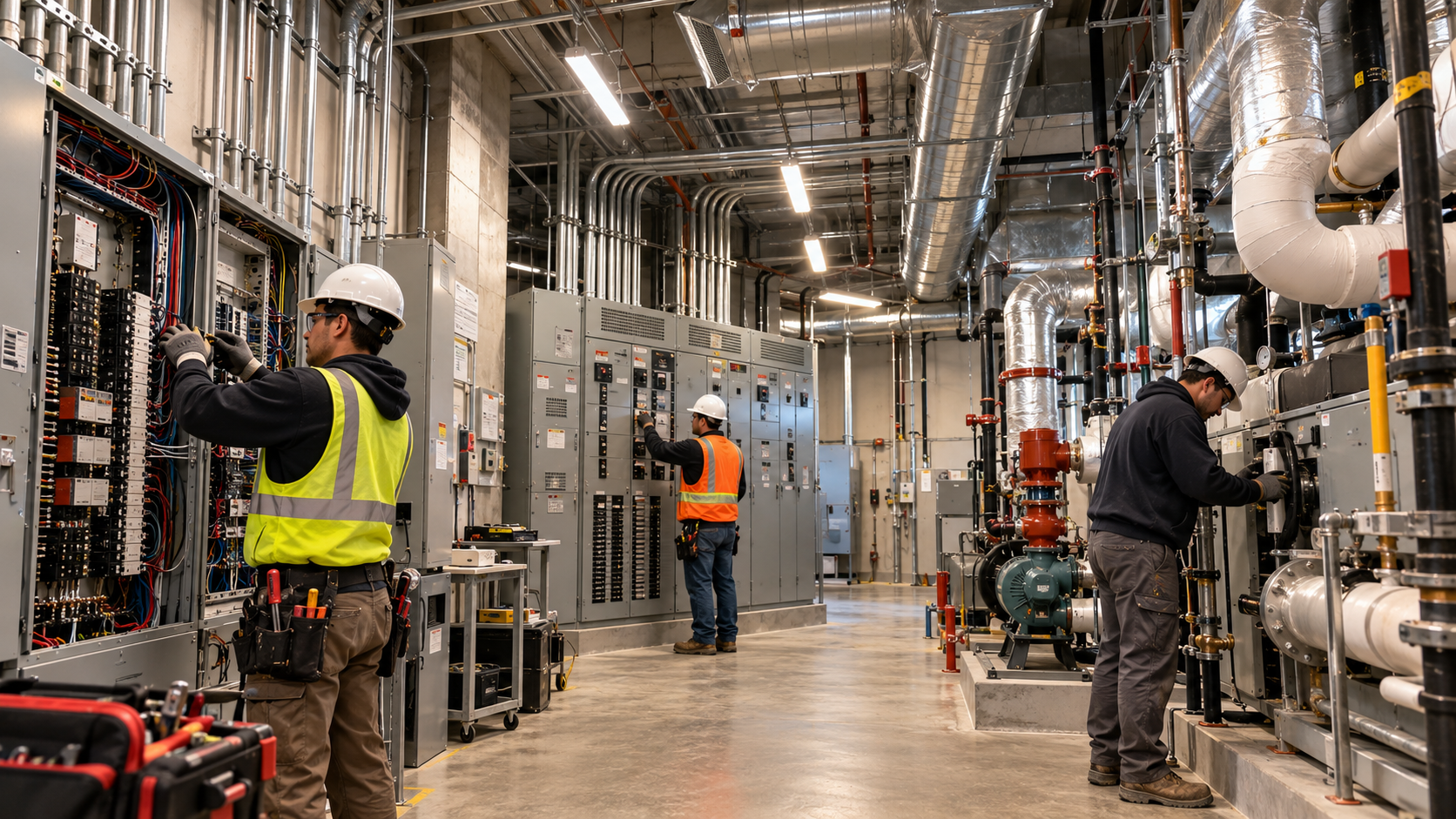
VA Commercial Repair Solutions is a full-service commercial electrical contractor as well as a refrigeration contractor — meaning we can address both the mechanical and electrical components of your refrigeration system with a single service provider and a single call.
Building a Commercial Refrigeration Maintenance Schedule: Daily, Monthly, and Annual Tasks
The most effective maintenance programs assign specific tasks to specific intervals. Here is a practical framework any commercial operation can implement:
Daily (Operator-Performed)
- Record temperature readings for all refrigerated units (or verify monitoring system data)
- Visually inspect door gaskets for visible damage
- Confirm doors close and latch fully
- Listen for unusual equipment sounds
- Clean walk-in cooler and freezer floors of debris that can block drain pans
Weekly (Operator-Performed)
- Clean condenser coil grills on reach-in refrigerators (wipe external grilles)
- Check ice maker bin for slime or off odors
- Inspect display case lighting and shelving for damage
- Verify ice maker water filter indicator
Monthly (Operator or Technician)
- Clean ice maker air filter
- Inspect walk-in door hinges and closers
- Wipe down evaporator coil area access panels
- Check and clear drain lines on reach-in coolers
Semi-Annual (Certified Technician)
- Full condenser coil cleaning (all units)
- Refrigerant pressure and charge check
- Electronic leak detection
- Electrical connections inspection and tightening
- Capacitor and contactor testing
- Defrost system testing and timer verification
- Door gasket replacement as needed
- Compressor amp draw and operating pressure measurement
- Full ice maker cleaning and sanitizing
- Temperature monitoring calibration verification
Annual (Certified Technician)
- Water filter replacement (ice makers and water-cooled condensers)
- Evaporator coil cleaning and inspection
- EPA refrigerant leak inspection documentation (50+ lb systems)
- Drive belt inspection and replacement (on belt-driven fans)
- Fan motor lubrication (on applicable motor types)
- Full system performance benchmarking against original design specifications
- Walk-in panel, floor, and ceiling inspection for insulation integrity
When to Repair vs. Replace Commercial Refrigeration Equipment
One of the most consequential decisions a commercial operator faces is whether to repair aging refrigeration equipment or invest in replacement. At VA Commercial Repair Solutions, our philosophy is clear: we always advocate for repair before replacement. We are paid hourly, not on commission, which means we have no financial incentive to push you toward unnecessary replacement.
That said, there are situations where replacement is the responsible recommendation:
- Compressor failure on a unit over 12–15 years old, where replacement parts are scarce
- Refrigerant leaks in systems using phased-out refrigerants (R-22, for example) where recharge costs exceed replacement value
- Structural failure of walk-in cooler panels or floors that undermines insulation integrity
- Cumulative repair costs approaching or exceeding 50% of replacement cost within a 12-month period
- Energy audits showing that an aging unit is consuming significantly more power than modern equivalents — the efficiency savings often justify replacement economics
If we cannot repair your equipment, we will pay you $50 and credit $500 toward a replacement unit. That's a commitment we make because we stand behind our diagnostic work.
Frequently Asked Questions About the Best Practices for Maintaining Commercial Refrigeration Equipment
How often should commercial refrigeration equipment be professionally serviced?
Commercial refrigeration equipment should receive a professional preventive maintenance inspection at least twice per year — once before the summer cooling season and once entering fall. High-use operations (restaurants, grocery stores, healthcare facilities) benefit from quarterly professional visits, supplemented by daily and weekly checks performed by in-house staff.
What is the most important maintenance task for a commercial refrigerator?
Cleaning the condenser coils is the single most impactful maintenance task. Dirty condenser coils force the compressor to work harder, increase energy consumption by 20–30%, raise operating temperatures, and dramatically accelerate compressor wear. In restaurant environments, coils may require cleaning every 30–60 days due to grease accumulation.
How do I know if my commercial refrigeration system is leaking refrigerant?
Signs of a refrigerant leak include: the unit running continuously without reaching its setpoint temperature, unusual ice formation on the suction line, oily residue near refrigerant fittings, rising energy bills with no operational changes, and audible hissing near the compressor or line set. Electronic refrigerant leak detectors will provide a definitive reading. Under EPA regulations, systems with 50+ lbs of refrigerant charge must be inspected annually for leaks.
What temperature should a commercial walk-in cooler maintain?
FDA Food Code and most state health department regulations require commercial walk-in coolers to maintain food temperatures at or below 41°F (5°C). Walk-in freezers should maintain 0°F (-18°C) or below. Many operators set units 2–4 degrees below these thresholds to provide a safety buffer for heavy loading periods, high ambient temperatures, or brief door-open events.
How long does commercial refrigeration equipment last?
Well-maintained commercial refrigeration equipment typically lasts 15–20 years. Reach-in refrigerators and freezers average 10–15 years; walk-in coolers and freezers 15–20 years; commercial ice makers 10–15 years with proper cleaning and descaling. Neglected equipment often fails within 7–10 years. A consistent preventive maintenance program is the single greatest factor in achieving maximum equipment lifespan.
Can I perform commercial refrigeration maintenance myself?
Some maintenance tasks — cleaning external condenser grilles, recording temperatures, inspecting door gaskets, and cleaning ice maker storage bins — are appropriate for trained kitchen or facilities staff. However, tasks involving refrigerant (checking charge, leak detection, adding refrigerant) must be performed by an EPA Section 608-certified technician. Electrical component inspection, compressor diagnostics, and refrigerant system work require professional certification and specialized tools.

Schedule Commercial Refrigeration Maintenance in Charlottesville, Harrisonburg, Staunton, and Throughout Central Virginia
VA Commercial Repair Solutions is Central Virginia's trusted commercial refrigeration contractor — serving restaurants, grocery stores, hospitality operations, healthcare facilities, and industrial clients throughout Charlottesville, Harrisonburg, Waynesboro, Staunton, Lexington, Fishersville, and the surrounding communities.
Our technicians are EPA Section 608 certified, background-checked, and drug-tested. We carry fully stocked service vans, offer 24/7 emergency response, and answer every call live — no voicemail, no automated systems. We are a preferred service provider for Hoshizaki, Manitowoc, Bohn by Heatcraft, True Refrigeration, and Copeland — and we service all brands.
Call us today at (540) 457-HVAC (4822) or toll-free at 1-866-729-2215 to schedule a commercial refrigeration maintenance visit or request a free installation quote.
Learn more about our Commercial Refrigeration Services Ice Maker Maintenance Plans Facility Maintenance Programs
Opening a Restaurant in Virginia: Kitchen Design, Hood, Fire Suppression and Refrigeration Checklist