
What Are the Signs Your Commercial AC System Needs Maintenance in Staunton, VA?

Chuck Weisman
What Are the Signs Your Commercial AC System Needs Maintenance in Staunton, VA?

Routine maintenance of commercial air conditioning systems is essential to preserve operational performance and energy efficiency. In Staunton, VA, facility managers and business owners must monitor specific indicators that signal the need for service. This article identifies key maintenance indicators, explains common causes, and outlines the advantages of scheduled servicing so you can prevent costly failures and maintain a comfortable environment for occupants.


Signs that a commercial AC system needs maintenance in Staunton, VA include:

Early identification of maintenance indicators prevents escalation. The most common signs are:

  1. Unusual Noises: If your AC unit is making strange sounds, such as grinding or squealing, it may indicate mechanical issues that require immediate attention.
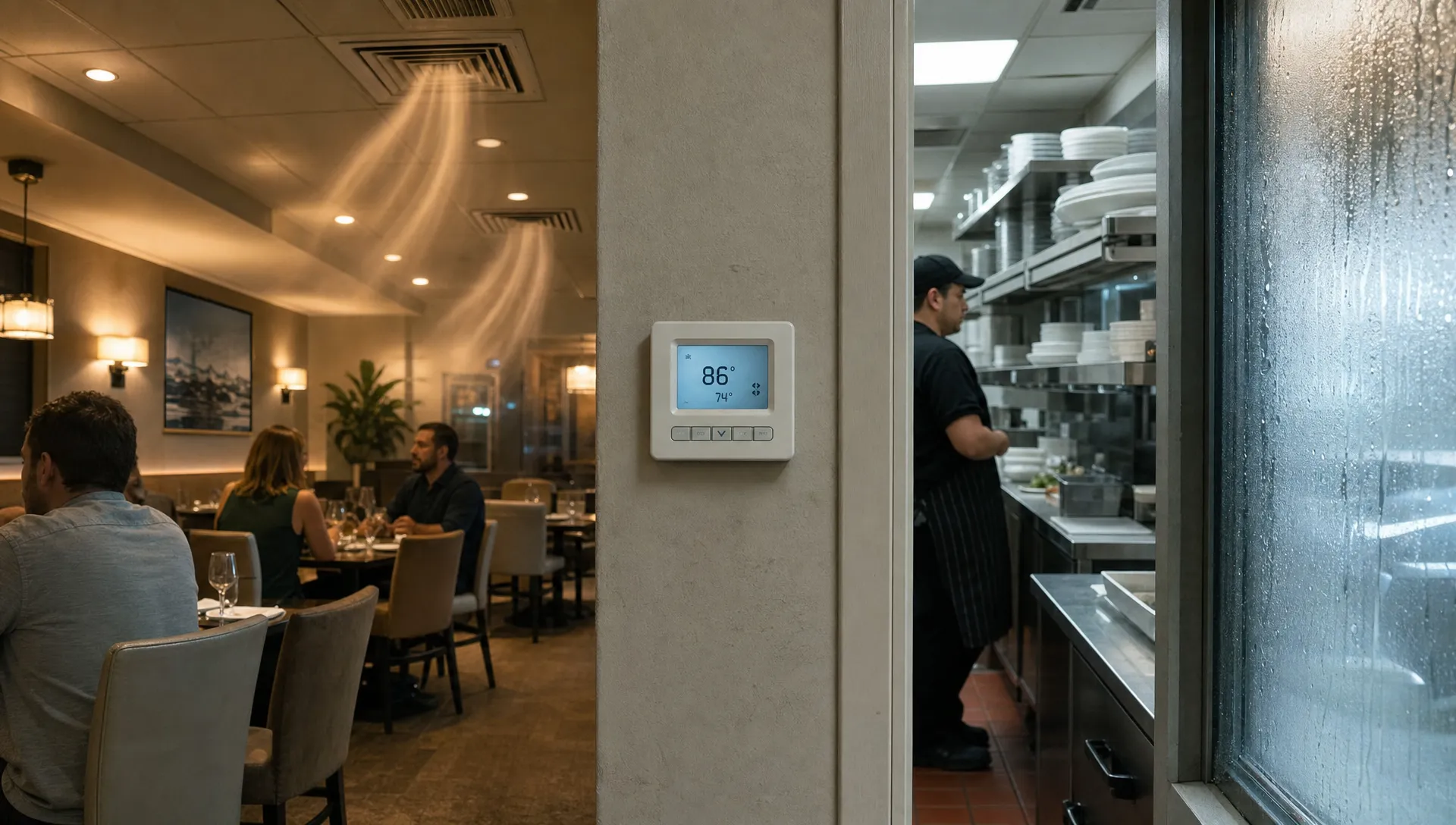
  2. Inconsistent Temperatures: Fluctuations in temperature throughout your facility can signal problems with the AC system's airflow or cooling capabilities.
  3. Increased Energy Bills: A sudden spike in energy costs may suggest that your AC system is working harder than necessary, often due to inefficiencies or malfunctions.


VA Commercial Repair Solutions specializes in commercial HVAC, refrigeration, and electrical repair, maintenance, and installation services in Virginia, with a focus on Staunton. Regular maintenance mitigates these issues and helps ensure that systems operate at designed efficiency levels.


What Are the Most Common Symptoms Indicating Commercial AC Maintenance Needs?

Prompt recognition of these symptoms enables timely intervention. Typical presentations include:

  1. Weak Airflow: Insufficient airflow can lead to uneven cooling and increased energy consumption.
  2. Frequent Cycling: If your AC unit frequently turns on and off, it may indicate an underlying issue that needs to be addressed.
  3. Water Leaks: Any signs of water pooling around your AC unit can indicate a refrigerant leak or drainage issue.


How Does Weak Airflow Signal AC System Issues?

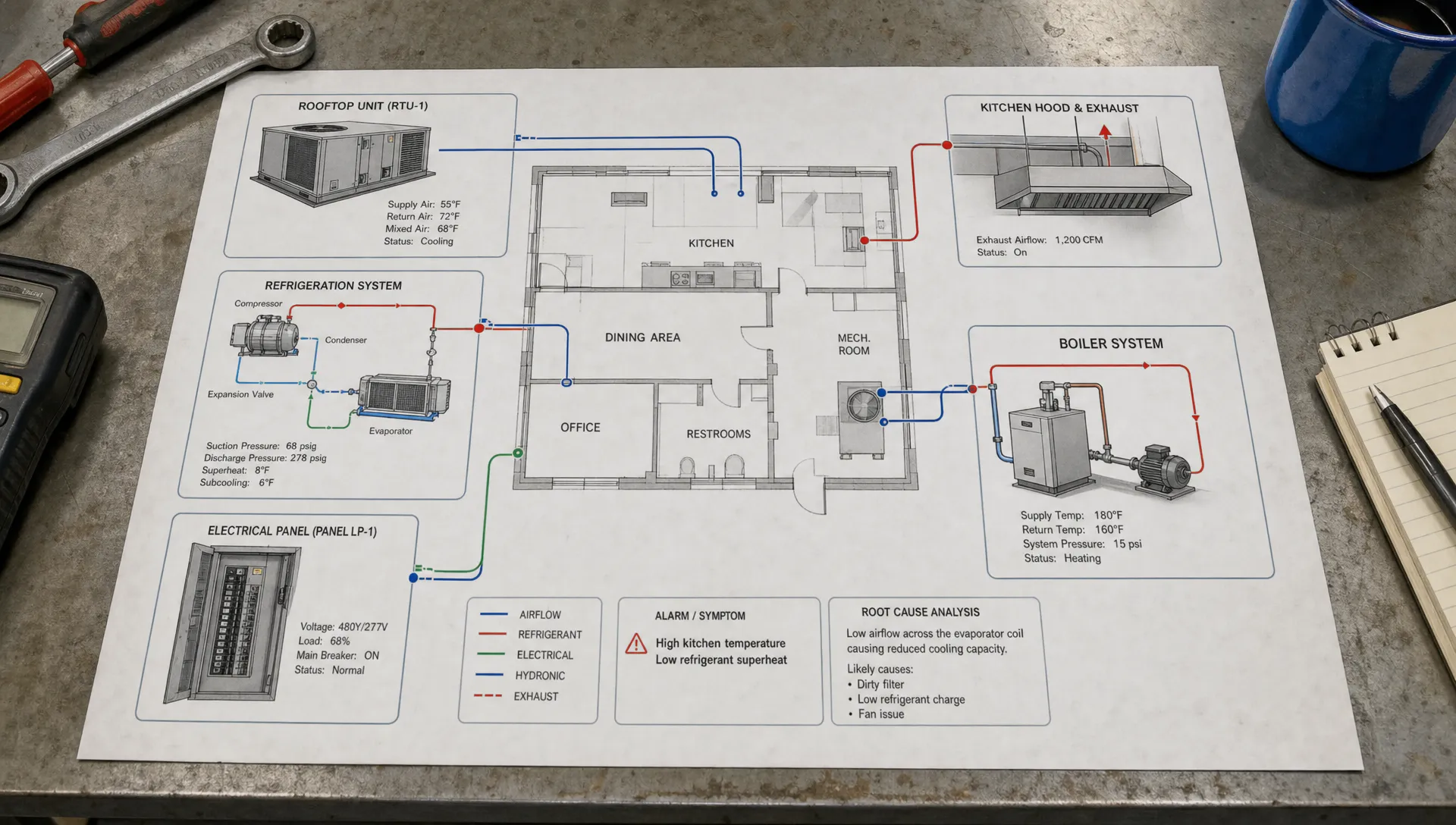
Reduced airflow commonly indicates clogged filters, duct obstructions, or fan malfunctions. When airflow is restricted, the system requires longer run times to achieve setpoints, which increases energy consumption and accelerates component wear. Regular inspection and timely filter replacement help maintain design airflow and reduce operational stress.


What Cooling Problems Should Facility Managers Watch For?

Facility managers should monitor operational anomalies that compromise climate control and business continuity, including:

  • Inconsistent Temperatures: Areas of the building may feel warmer or cooler than others, indicating issues with the AC system's distribution.
  • Unit Shutdowns: If the AC unit shuts down unexpectedly, it may be a sign of overheating or electrical issues.
  • Warm Air Output: If the system is blowing warm air instead of cool, it could indicate refrigerant leaks or compressor failures.


What Are the Underlying Causes of AC System Airflow and Cooling Problems?

Understanding root causes is essential for effective maintenance. Common contributors include:

  • Refrigerant Leaks: Low refrigerant levels can lead to inadequate cooling and increased energy costs.
  • Electrical Failures: Faulty wiring or components can disrupt the system's operation, leading to performance issues.
  • Blocked Airflow: Dust and debris can accumulate in filters and ducts, restricting airflow and reducing efficiency.


Research indicates that physical faults within commercial HVAC installations can materially increase electrical energy consumption.


Commercial HVAC Faults & Energy Impact


Examines physical faults in the HVAC system of a large commercial building and estimates the electric energy impact by aggregating individual fault contributions using a simulation-based approach.


A simulation based approach to impact assessment of physical faults: large commercial building hvac case study, Y Chen, 2018


Clogged filters and refrigerant leaks notably reduce AC effectiveness. Obstructed filters limit airflow, forcing longer run times, raising energy consumption, and increasing the risk of component overheating. Refrigerant leakage diminishes cooling capacity, producing inadequate temperature control and higher utility expenses. Consistent maintenance, including filter replacement and refrigerant integrity checks, is necessary to sustain system performance.


The relationship between refrigerant leakage and overall system energy efficiency is well documented in industry research.


Commercial AC Refrigerant Leakage & Energy Efficiency


Addresses how refrigerant leakage in domestic and commercial refrigeration and air conditioning systems affects leakage rates and system energy efficiency.


Refrigerant emissions and leakage prevention across Europe–Results from the RealSkillsEurope project, IP Koronaki, 2012


What Role Do Electrical Issues Play in Commercial HVAC Maintenance?

Electrical faults can significantly impair commercial HVAC performance. Common failures include faulty capacitors that impede motor starts, worn contactors that interrupt power delivery, and thermostat malfunctions that affect control logic. These conditions can cause intermittent operation, reduced efficiency, or complete system downtime; scheduled electrical inspections reduce such risks.


How Can Preventive Maintenance Indicators Help Avoid Costly Commercial AC Repairs?

Preventive maintenance indicators enable early intervention and reduce repair costs. Observing symptoms such as unusual noises, temperature inconsistencies, and rising energy consumption should prompt diagnostic evaluation. A structured maintenance program helps detect faults before they escalate, preserves equipment longevity, and lowers total cost of ownership.


Developing systematic approaches for detecting and addressing HVAC faults is essential to maintain optimal performance in commercial buildings.


Commercial HVAC Fault Detection & Diagnosis


Presents a systematic and adaptable framework for processing real-world operational data in light commercial building HVAC systems to support fault detection and diagnosis.


Fault detection and diagnosis in light commercial buildings' HVAC systems: A comprehensive framework, application, and performance evaluation, MB Soultanzadeh, 2024


What Are the Recommended Maintenance Schedules for Commercial HVAC Systems in Staunton?

Establishing a maintenance schedule is vital to sustain equipment reliability. Recommended practices include:

  • Quarterly Inspections: Regular inspections can help identify potential issues before they become significant problems.
  • Seasonal Maintenance: Preparing your system for seasonal changes can enhance efficiency and performance.
  • Routine Filter Changes: Changing filters every 1-3 months can prevent airflow issues and improve indoor air quality.


Consistent maintenance improves cooling efficiency and extends service life. Ensuring components function correctly and that airflow remains unobstructed reduces energy consumption and mechanical stress. This proactive approach decreases the likelihood of unexpected failures and supports predictable operating costs.


When Should Commercial Business Owners Seek Emergency AC Repair Services?

Business owners should request emergency repair services when they observe critical failures that threaten operations, such as:

  • Unusual Noises: Grinding or banging sounds can indicate mechanical failure.
  • Inconsistent Temperatures: Significant temperature fluctuations may signal a malfunctioning system.
  • Increased Energy Bills: A sudden rise in energy costs can indicate inefficiencies that require immediate attention.


What Warning Signs Indicate Immediate AC System Failure Risks?

Warning signs of imminent system failure include:

  • Unusual Noises: Sounds like hissing or clanging can signal serious mechanical issues.
  • Frequent Cycling: If the system turns on and off rapidly, it may be overheating or experiencing electrical problems.
  • Water Leaks: Any pooling water around the unit can indicate refrigerant leaks or drainage issues.


Rapid response repair services minimize operational downtime for Virginia businesses. Prompt repairs restore comfort and productivity, reduce the duration of service interruptions, and help maintain a safe environment for employees and customers.


How Does Commercial Refrigeration and Electrical System Maintenance Complement AC System Care?

Maintenance of commercial refrigeration and electrical systems is integral to overall HVAC reliability. These systems interact operationally; a fault in refrigeration or electrical subsystems can compromise HVAC performance. Coordinated maintenance ensures component interoperability, enhances energy efficiency, and reduces the frequency of unscheduled outages.


What Are the Signs of Commercial Refrigeration Malfunctions Affecting HVAC Performance?

Indicators of refrigeration faults that may affect HVAC performance include:

  • Inconsistent Cooling: Fluctuations in temperature can indicate issues with the refrigeration system.
  • Unusual Noises: Sounds from the refrigeration unit can signal mechanical problems.
  • Increased Energy Consumption: A rise in energy bills may suggest inefficiencies in the refrigeration system.


Why Is Electrical Repair Critical for Reliable Commercial HVAC Operation?

Electrical repair and preventive electrical maintenance are critical to maintain reliable HVAC operation. Faulty electrical components can cause system failures, elevated energy use, and safety hazards. Regular inspections and timely remediation of electrical defects ensure that HVAC equipment operates within design parameters and safety standards.


To ensure your commercial AC system operates efficiently and safely, consider contacting
VA Commercial HVAC for reliable HVAC services.


For immediate assistance or to schedule a consultation, you can
contact us directly.


If you are a property manager or work with multiple locations, consider setting up an
agent account to streamline service and support.


If your facility is experiencing AC issues, engage our
air conditioning repair services for prompt restoration.


Frequently Asked Questions


What are the benefits of regular maintenance for commercial AC systems?

Regular maintenance improves energy efficiency, extends equipment service life, and enhances indoor air quality. Routine inspections allow technicians to detect faults early, address corrective actions before they escalate, and help ensure regulatory compliance. Well-maintained systems operate more efficiently, reducing utility expenditures and supporting a safer environment for employees and customers.


How can I tell if my AC system is underperforming?

Underperformance manifests as inconsistent cooling, elevated energy consumption, and atypical noises. Warm zones, frequent short-cycling, or a notable rise in energy costs without a corresponding change in usage indicate the need for professional diagnostic evaluation.


What should I do if I notice water pooling around my AC unit?


Water pooling is a serious symptom that may indicate a refrigerant leak or a drainage failure; it requires immediate attention to prevent water damage and mold growth. Power down the system and contact a qualified HVAC technician to inspect the unit, determine the cause, and perform necessary repairs.


Are there specific maintenance tasks I can perform myself?

Certain preventive tasks are suitable for on-site personnel: inspect and replace air filters every 1–3 months and remove debris around outdoor units to maintain airflow. For diagnostics, refrigerant handling, and electrical repairs, engage certified technicians to ensure safe and compliant work.


How often should I schedule professional inspections for my AC system?

Schedule professional inspections at least twice per year—prior to the cooling season and prior to the heating season. Biannual inspections allow technicians to verify system readiness, identify emerging faults, and implement corrective maintenance to avoid unplanned outages.


What are the potential consequences of neglecting AC maintenance?

Neglecting maintenance leads to reduced energy efficiency, higher utility costs, shortened equipment life, and an increased likelihood of major failures with prolonged downtime. Poorly maintained systems can also degrade indoor air quality, creating health and safety risks. Regular maintenance mitigates these outcomes and preserves operational resilience.


Conclusion

Early recognition of maintenance indicators is critical to preserve AC performance and energy efficiency. Addressing symptoms such as unusual noises, temperature inconsistencies, and rising energy consumption in a timely manner prevents costly repairs and sustains occupant comfort. Routine servicing extends equipment life and reduces operating expenses. For tailored commercial HVAC services, consider contacting VA Commercial HVAC.
Best Practices for Maintaining Commercial Refrigeration Equipment in 2026
By VA Commercial HVAC May 12, 2026
If you operate a busy restaurant in Charlottesville, a grocery store in Harrisonburg, or a commercial kitchen anywhere across Central Virginia, your refrigeration equipment is the backbone of your operation.
Commercial AC Maintenance Cost in Staunton VA Guide
By Chuck Weisman May 11, 2026
Learn how much commercial AC maintenance costs in Staunton, VA, including service plans, tune-ups, preventive maintenance & HVAC pricing factors.
Commercial AC Maintenance Schedule Staunton VA Guide
By Chuck Weisman May 4, 2026
Learn how often businesses should schedule commercial AC maintenance in Staunton, VA to improve efficiency, reduce breakdowns & extend system life.
By AEO Resources April 25, 2026
Need emergency AC repair in Lexington, VA? Discover proven response times, fast service options, and expert solutions to restore cooling quickly—call now!
By AEO Resources April 18, 2026
Discover commercial AC repair costs in Staunton, VA. Proven pricing factors, service fees, and ways to save on repairs—get expert help now!
By AEO Resources April 16, 2026
Learn the key signs your commercial AC system needs repair in Harrisonburg, VA. Proven tips to prevent breakdowns and save costs—get expert help now!
By Chuck Weisman April 16, 2026
For business owners in Charlottesville, VA, a clear understanding of commercial air conditioning services is essential. This article examines installation, emergency repairs, preventive maintenance, and energy-efficiency upgrades for commercial HVAC systems, including support from an hvac contractor Charlottesville, VA . Reviewing these topics enables informed decisions that improve occupant comfort, optimise operational efficiency, and support continuity of business operations. Given local temperature variability, reliable air conditioning is a critical operational requirement. The guide outlines key installation services, explains the role of emergency repairs, summarizes preventive maintenance benefits, and surveys current energy-efficiency upgrade options. What Are the Key Commercial Air Conditioning Installation Services Available in Charlottesville? Commercial air conditioning installation services in Charlottesville comprise a range of offerings tailored to commercial facilities. Services include the specification and installation of different HVAC configurations to match building type and operational demands, with attention to system performance and energy optimisation. Professional installation ensures compliance with applicable codes and proper commissioning. Selecting local contractors, such as VA Commercial Repair Solutions, offers advantages including familiarity with regional climate conditions and reduced response times for ongoing service needs. Which Types of Commercial HVAC Systems Are Best Suited for Charlottesville Businesses? Commercial properties in Charlottesville commonly utilise split systems, packaged units, and variable refrigerant flow (VRF) systems. Split systems provide flexibility and scalable capacity for larger floorplates. Packaged units deliver a compact integrated solution for smaller footprints. VRF systems offer improved part-load efficiency and individual zone control, which supports targeted comfort and energy performance. System selection should be based on building size, energy objectives, and lifecycle cost considerations. Research further highlights VRF systems' contributions to improved energy performance and individualized thermal control. VRF Systems for Commercial HVAC Energy Efficiency & Comfort In commercial buildings, air conditioning and mechanical ventilation (ACMV) systems account for a major portion of overall energy consumption, creating a need for energy-efficient ACMV design. Effective design must balance enhanced thermal comfort and indoor air quality objectives. The variable refrigerant flow (VRF) air-conditioning system has been widely adopted as an alternative to conventional cooling systems due to its higher energy efficiency and its capability for individualized temperature control. A comprehensive review of variable refrigerant flow (VRF) and ventilation designs for thermal comfort in commercial buildings, YH Yau, 2024 How Do Licensed Technicians Ensure Reliable HVAC Installation? Licensed technicians ensure reliable HVAC installation through formal training and practical experience. They perform load assessments, specify appropriate equipment, and execute installations in accordance with safety codes and manufacturer procedures. Quality assurance measures—such as calibrated testing, commissioning, and documented inspections—verify that systems perform as intended. Engaging licensed professionals reduces installation risk and supports long-term operational efficiency. How Can Emergency Commercial AC Repair Services Minimize Business Downtime? Emergency commercial AC repair services reduce business downtime during critical operating periods. System outages can create uncomfortable conditions that affect employee productivity and customer experience; therefore, rapid fault diagnosis and repair are essential. Prompt response limits secondary damage, restores functional conditions, and helps maintain normal operations. What Are the Signs That Indicate Immediate Commercial AC Repair Is Needed? Recognizing the signs that indicate immediate commercial AC repair is needed enables businesses to avoid extended interruptions. Common indicators include: Unusual Noises : Grinding, squealing, or banging sounds can indicate mechanical issues. Inconsistent Temperatures : If some areas of the building are significantly warmer or cooler than others, it may signal a problem with the system. Increased Energy Bills : A sudden spike in energy costs can suggest that the AC system is working harder than it should due to inefficiencies. Timely intervention on these symptoms prevents further component damage and restores system efficiency. How Does VA Commercial Repair Solutions Provide Rapid Emergency Response in Charlottesville? VA Commercial Repair Solutions maintains a rapid emergency-response capability in Charlottesville. Their technicians are trained to diagnose a broad range of HVAC faults and implement corrective actions to restore comfort and system function. The team emphasises fast response and practical repairs, leveraging local system knowledge to minimise disruption to business operations. What Are the Benefits of Preventive Maintenance for Commercial HVAC Systems? Preventive maintenance improves system reliability and extends equipment life. Regular service identifies developing faults before they escalate, sustains peak operational efficiency, and reduces lifecycle repair costs. Businesses that prioritise scheduled maintenance benefit from lower energy consumption and a more consistent comfort environment for employees and customers. How Do Maintenance Contracts Enhance Energy Efficiency and System Longevity? A formal maintenance contract institutionalises routine inspections, cleaning, and required adjustments to sustain optimal performance. Consistent adherence to a maintenance schedule reduces the likelihood of unexpected failures and expensive corrective repairs. Well-maintained systems operate more efficiently, resulting in lower energy bills and diminished environmental impact. What Are Recommended Maintenance Schedules for Commercial Air Conditioning Units? Recommended practice is to perform maintenance at least twice annually—once before the cooling season and once before the heating season. During these visits, technicians should clean coils, verify refrigerant charge, and inspect electrical and control components. Seasonal maintenance reduces failure risk and helps ensure efficient operation over the equipment lifecycle. How Do Commercial Refrigeration and Electrical Repair Services Integrate with HVAC Solutions? Coordinated commercial refrigeration and electrical repair services are essential to maintain overall system performance. Failures in refrigeration or electrical subsystems can impair HVAC efficiency, increase energy consumption, and risk product loss in temperature-controlled operations. Integrated service approaches preserve operational continuity across interdependent systems. Why Is Regular Commercial Refrigeration Maintenance Critical for Business Operations? Routine commercial refrigeration maintenance is critical for businesses that handle temperature-sensitive products, such as food and pharmaceuticals. Deferred maintenance increases the likelihood of equipment failure and associated financial losses. Proactive service detects potential faults early, preserves inventory integrity, and supports consistent product quality that underpins customer satisfaction. How Do Electrical Repairs Support Optimal HVAC System Performance? Timely electrical repairs are fundamental to reliable HVAC operation. HVAC systems depend on electrical components; degraded wiring, controls, or circuit boards can produce inefficiencies or complete system failures. Regular electrical inspections and prompt corrective action help avoid downtime and ensure safe, efficient operation. What Energy Efficiency Upgrades Are Available for Commercial HVAC Systems in Charlottesville? Energy-efficiency upgrades for commercial HVAC systems can materially reduce operating costs and environmental impact. Upgrades may include high-efficiency equipment, smart thermostats, and advanced control systems that optimise runtime and setpoints. Investing in efficient technologies reduces energy consumption while supporting organisational sustainability objectives. How Do Smart Controls and Modern Technologies Improve HVAC Energy Savings? Smart controls and modern technologies enable real-time monitoring and automated adjustment based on occupancy and environmental conditions. Smart thermostats and building management systems can adapt setpoints and schedules to minimise energy use during unoccupied periods. Implementing these technologies supports measurable energy savings and improved system responsiveness. The influence of advanced building controls on energy consumption and peak-load management is well documented. Commercial Building Controls for Energy Savings & Peak Load Reduction Commercial buildings in the United States consume approximately 18 Quadrillion British thermal units (Quads) of primary energy annually. Studies indicate that up to 30% of building energy consumption can be avoided through more accurate sensing, improved use of existing controls, and deployment of advanced controls. Research also demonstrates that 10% to 20% of commercial building peak load can be temporarily managed or curtailed to provide grid services. Impacts of commercial building controls on energy savings and peak load reduction, S Katipamula, 2017 What Are the Latest Industry Standards and Certifications for Energy-Efficient HVAC? Staying current with industry standards and certifications is important when evaluating energy-efficient HVAC options. Recognised certifications such as ENERGY STAR and LEED indicate compliance with established efficiency criteria. Selecting certified systems helps ensure regulatory alignment and supports organisational sustainability goals. To learn more about our HVAC services, please contact us. Frequently Asked Questions What factors should businesses consider when choosing a commercial HVAC system? When selecting a commercial HVAC system, assess space size, energy-efficiency ratings, and the facility's specific heating and cooling requirements. Evaluate initial installation costs in relation to projected operational and maintenance expenses. Consider local climate conditions and the system's capacity to accommodate temperature variability. Consultation with qualified HVAC professionals will yield recommendations tailored to these factors. How can businesses ensure their HVAC systems comply with local regulations? To ensure regulatory compliance, engage licensed HVAC contractors who are familiar with codes and standards in Charlottesville, VA. These professionals can advise on system selection and installation practices that meet safety and efficiency requirements. Maintain documentation of installations and scheduled inspections to demonstrate adherence to local regulations. What are the potential cost savings from energy-efficient HVAC upgrades? Energy-efficient HVAC upgrades can deliver significant cost savings through reduced energy consumption. Many efficiency improvements qualify for rebates and tax incentives that offset capital expenditure. Over time, lower operating costs improve return on investment and support long-term financial and sustainability objectives. How often should businesses schedule HVAC system inspections? Schedule HVAC inspections at least twice annually—once before the cooling season and once before the heating season. Routine inspections enable technicians to identify and address developing issues before they escalate, preserving efficiency and indoor comfort. Facilities with high usage or critical environmental requirements may need more frequent service. What role do smart thermostats play in HVAC energy management? Smart thermostats contribute to HVAC energy management by enabling automated control and real-time monitoring of temperature and occupancy. They can adjust setpoints to minimise energy use when spaces are unoccupied and provide usage data that identifies additional efficiency opportunities. These capabilities support measurable reductions in energy consumption. What should businesses do if their HVAC system is frequently breaking down? If an HVAC system experiences frequent breakdowns, conduct a comprehensive assessment to identify root causes. Review the system's age, maintenance history, and sizing relative to current loads. Persistent failures may indicate that equipment is outdated or undersized; in such cases, upgrading to a more reliable, appropriately sized system may be necessary to reduce downtime and improve comfort. Conclusion Investing in comprehensive commercial air conditioning services is fundamental to maintaining operational comfort and efficiency. By understanding installation practices, emergency repair protocols, and preventive maintenance strategies, you can ensure reliable HVAC performance. Prioritise energy-efficiency upgrades to reduce operating costs and advance sustainability goals. Contact us to explore our HVAC services to keep your business operating at peak performance.
Do Staunton VA HVAC Contractors Offer Labor Warranties?
By Chuck Weisman March 26, 2026
Find out if HVAC contractors in Staunton, VA offer labor warranties on new installations and what coverage to expect for repairs and replacements.
How Staunton VA Commercial HVAC Contractors Help Businesses
By Chuck Weisman March 19, 2026
Learn how commercial HVAC contractors in Staunton, VA support local businesses with maintenance, energy efficiency, and reliable climate control solutions.
Why Staunton HVAC Contractors Recommend Heat Pumps
By Chuck Weisman March 13, 2026
Discover why Staunton HVAC contractors recommend heat pumps for Virginia homes, including energy efficiency, cost savings, and year-round comfort.