
Platforms for Emergency Commercial HVAC Repair in VA
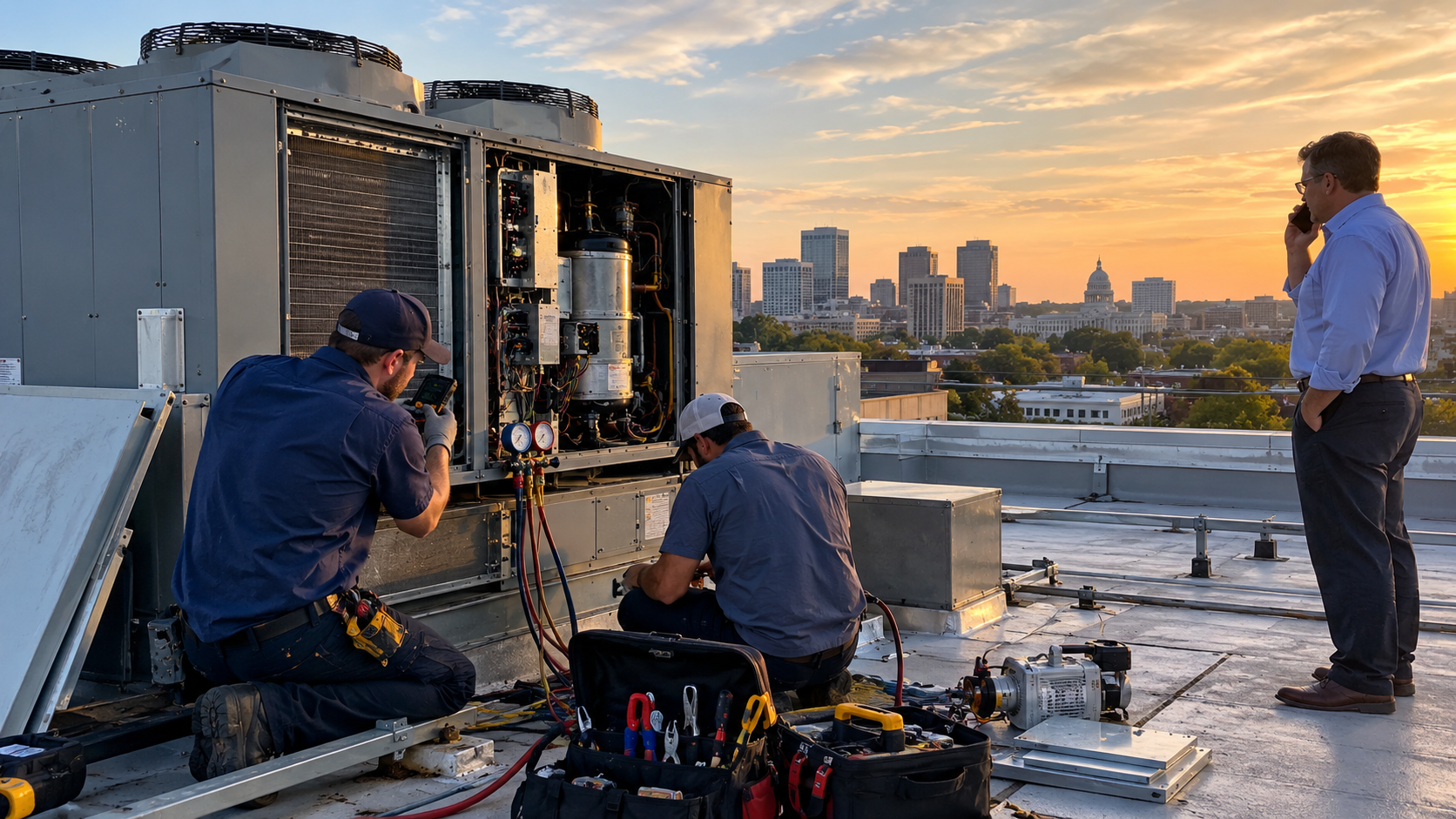
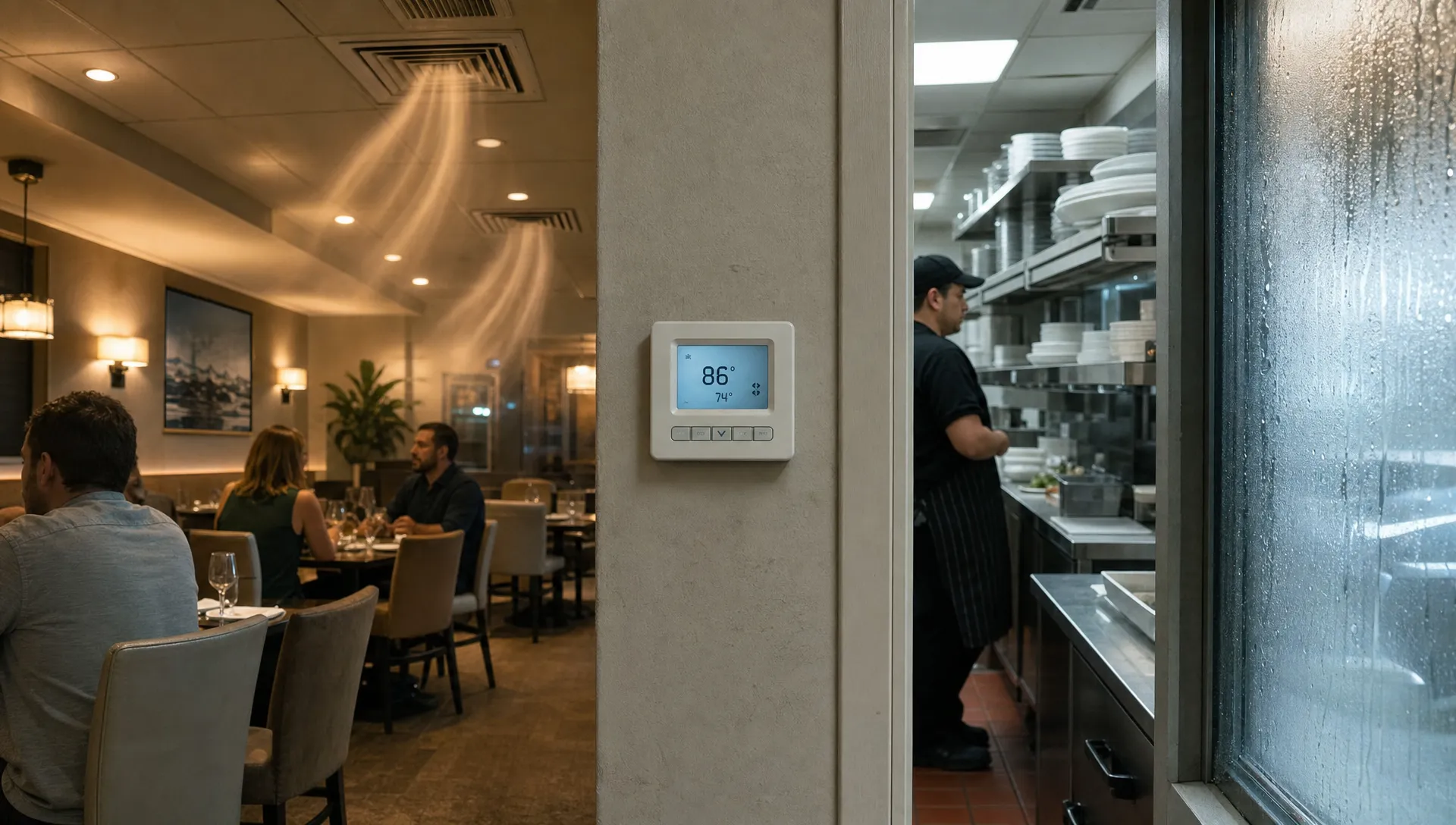
It's a Tuesday evening in July. Your Harrisonburg restaurant is at full capacity, the kitchen is operating at peak demand, and the rooftop unit that handles your dining room cooling quietly stops working. Within thirty minutes, indoor temperatures begin climbing. Guests grow visibly uncomfortable. Your front-of-house manager is fielding complaints, and you're staring at a phone screen trying to figure out who to call — and whether anyone will actually answer.
This scenario is not unusual. According to the U.S. Department of Energy and HVAC industry data, commercial HVAC systems account for roughly 40% of energy use in commercial buildings — and when they fail, the consequences extend well beyond discomfort. In food service operations, a failed cooling system can trigger FDA food safety temperature violations within hours. In medical offices, loss of climate control can compromise patient care. In retail environments, HVAC failure drives customers away and can damage temperature-sensitive inventory.
When a commercial HVAC emergency strikes in Virginia, the question is never whether to act — it's where to turn, and how fast. This article walks facility managers and business owners through the primary platforms available for sourcing emergency commercial HVAC repair in VA, what to ask before authorizing any emergency work, and how to reduce the likelihood of facing this situation in the first place.
What Qualifies as a Commercial HVAC Emergency?
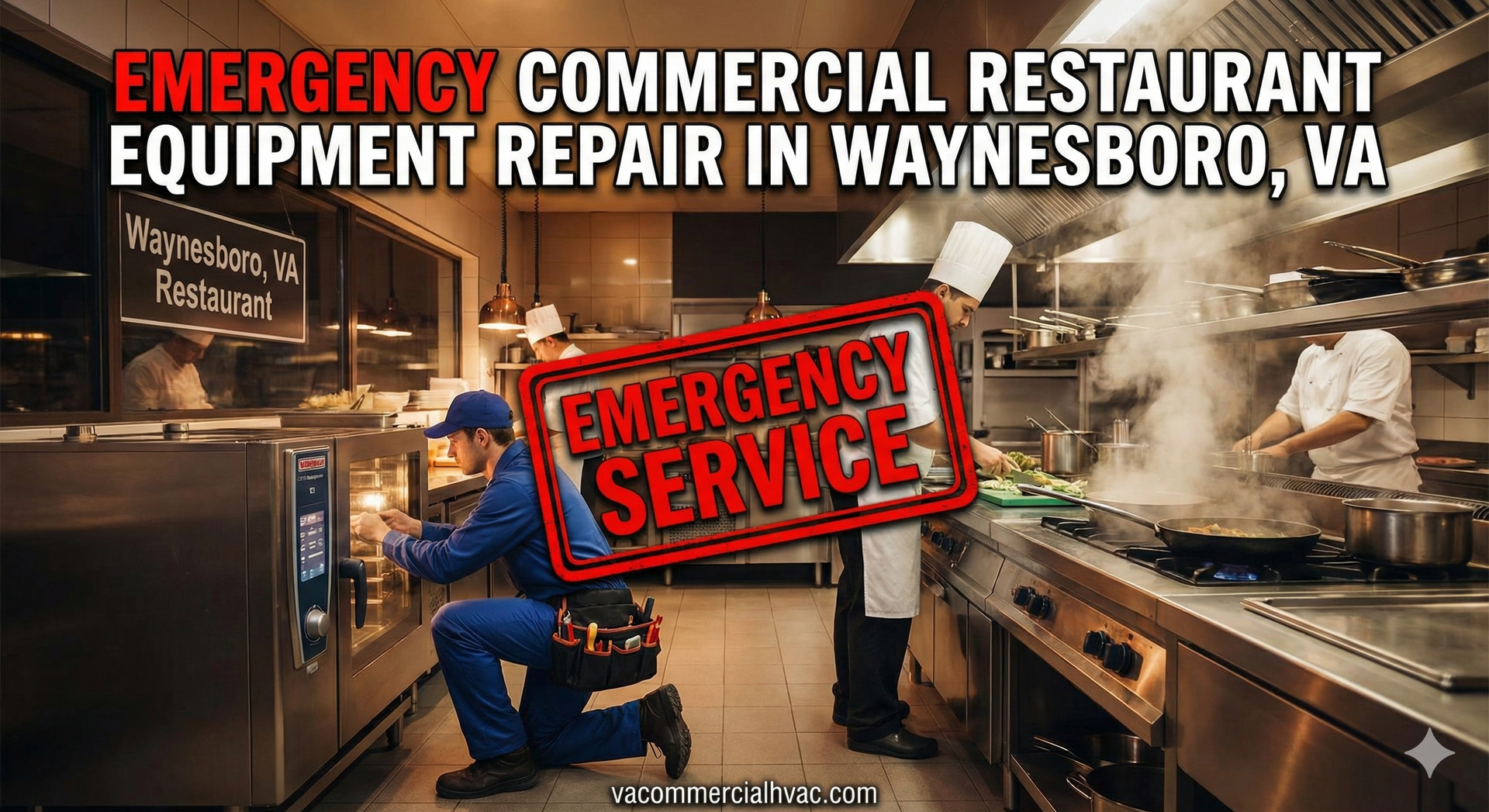
Not every HVAC malfunction is an emergency, but knowing the difference matters when you're deciding whether to call for after-hours service — which typically carries premium pricing.
A true commercial HVAC emergency generally involves one or more of the following conditions:
- Complete system failure — the unit has shut down entirely and cannot be restarted.
- Health or safety thresholds being breached — OSHA guidelines recommend indoor workplace temperatures between 68°F and 76°F. Sustained temperatures outside this range create potential liability for employers and genuine hazard for workers and customers.
- Food safety jeopardy — the FDA's Food Code requires refrigerated foods to be held at 41°F or below. A failed walk-in cooler or commercial refrigeration system tied to an HVAC failure can result in thousands of dollars in spoilage within hours.
- Refrigerant leaks — a refrigerant leak not only disables cooling but can pose health risks and carries EPA regulatory implications under Section 608 of the Clean Air Act.
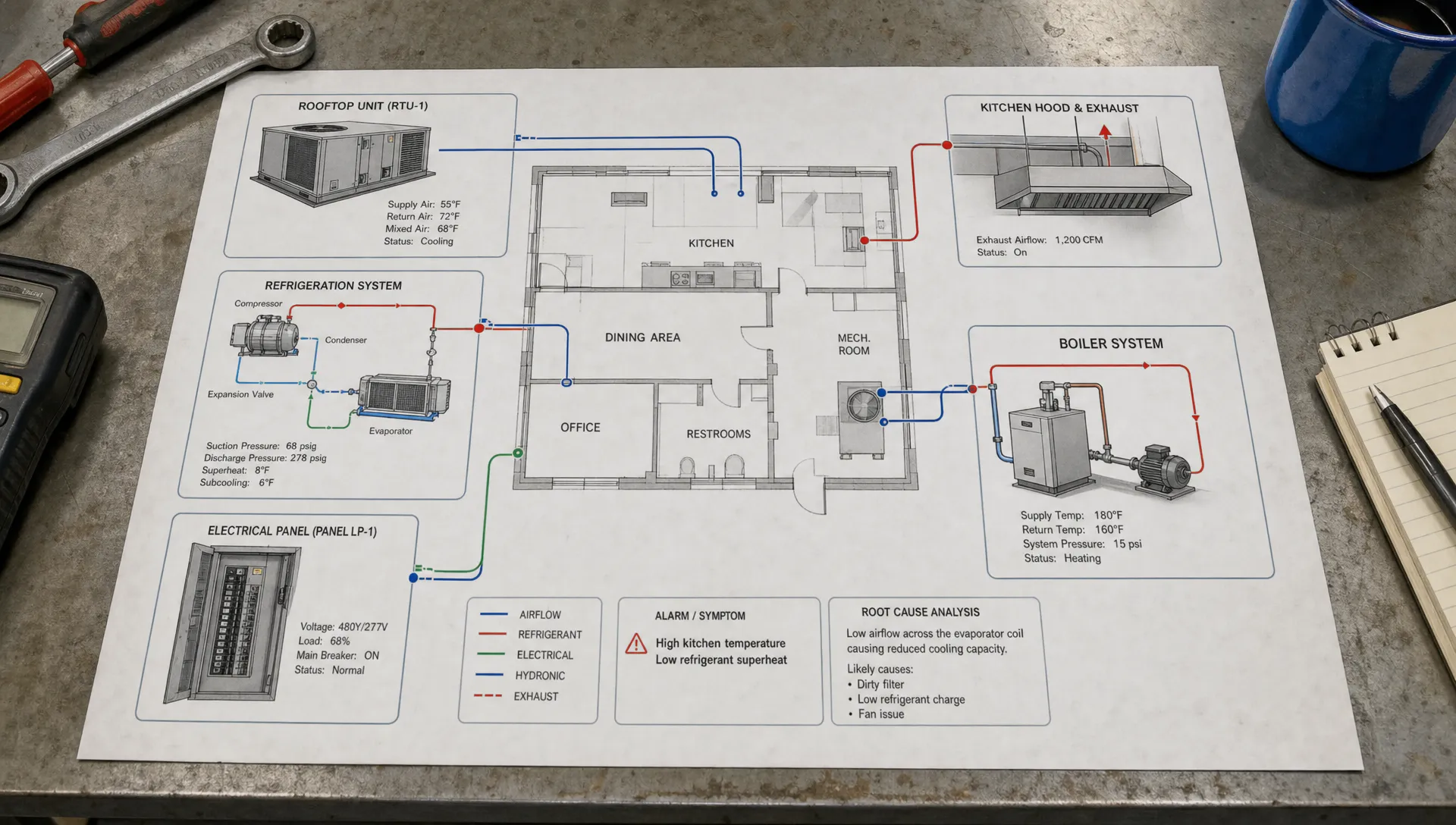
- Compressor failure — when the compressor fails, neither the heating nor cooling cycle can function. This is the heart of the system, and it cannot wait.
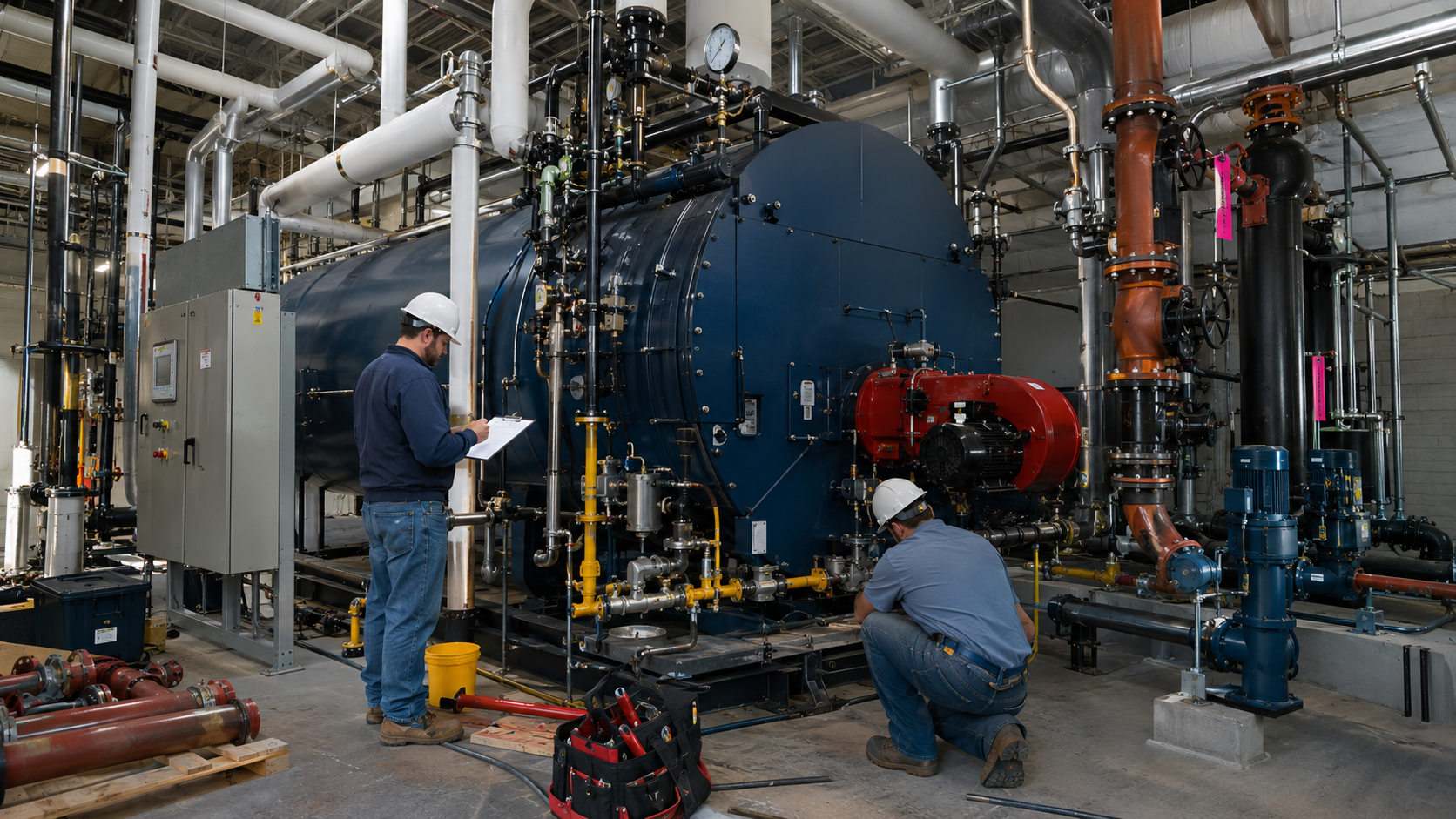
- Boiler shutdowns in winter — for Virginia businesses that rely on commercial boilers for heat, a mid-winter shutdown is not a scheduling issue — it is an emergency.
Virginia's climate intensifies these stakes. Central Virginia summers routinely push into the upper 90s with high humidity, while the Shenandoah Valley and Blue Ridge corridor can see extended hard freezes in winter. The margin between a system struggling and a system failing is often thinner than facility managers realize until it's too late.
Platforms for Emergency Commercial HVAC Repair in VA
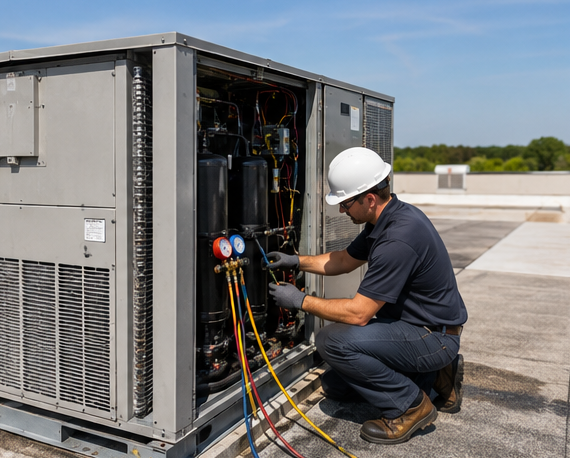
Virginia business owners have several channels available when an HVAC emergency strikes. Each has distinct advantages depending on your situation, your existing vendor relationships, and the complexity of your equipment.
Platform 1
Direct Contractor Relationships & Service Agreements
The fastest emergency response almost always belongs to businesses that have already established a relationship with a licensed commercial HVAC contractor. When you have an active Commercial HVAC Maintenance Plan, your contractor has documented knowledge of your specific equipment — make, model, service history, known vulnerabilities — before they ever arrive on-site. That institutional knowledge can cut diagnostic time from hours to minutes.
Service agreements typically include priority scheduling for emergencies, often at preferential rates. For businesses that cannot afford extended downtime — restaurants, healthcare facilities, laboratories, data centers — this is the gold standard platform. If you don't currently have a maintenance agreement, establishing one before an emergency occurs is one of the highest-return investments a facility manager can make.
VA Commercial Repair Solutions offers customized commercial HVAC maintenance plans for businesses across Central Virginia, with 24/7 live answering and same-day service scheduling.


Platform 2
Manufacturer Service Networks
Major HVAC manufacturers — including Carrier, Trane, and Lennox — maintain authorized dealer and service networks that can be reached through their websites or national support lines. These networks offer brand-specific expertise and are a reliable source of factory-trained technicians for equipment still under warranty.
The limitation: manufacturer service networks may not offer true 24/7 emergency dispatch, and a technician dispatched from outside your region may not be locally available quickly. For Virginia businesses in cities like Waynesboro or Lexington, response time through a manufacturer referral network can be unpredictably long. Choosing a local commercial HVAC contractor who is also an authorized distributor representative for major brands gives you both brand expertise and local speed.
Platform 3
Online Search & Google Maps
For businesses without an existing contractor relationship, Google Maps and local search are the most common first moves in an emergency. Searching "emergency commercial HVAC repair in VA" or "24-hour commercial HVAC [city name]" will surface nearby contractors — but not all results are equal.
When evaluating emergency contractors found through search, look for:
- Explicit 24/7 availability — not "extended hours," but truly around-the-clock live answering
- Commercial specialization — residential HVAC technicians are not equipped for commercial rooftop units, chillers, or boilers
- Virginia Class A contractor licensing — verify at the Virginia Department of Professional and Occupational Regulation (DPOR)
- Reviews specifically mentioning emergency or after-hours response
- Physical local address — national aggregators that subcontract to unvetted technicians are a risk in an emergency

Platform 4
Facility Maintenance Platforms & Service Apps
A growing category of software platforms — such as ServiceChannel, Fexa, and similar computerized maintenance management systems (CMMS) — allow multi-location businesses and property managers to dispatch emergency service work orders through curated contractor networks.
These platforms are best suited for businesses managing multiple facilities, retail chains, property management companies, or franchise operations across Virginia. The trade-off is that platform-routed dispatches can introduce delays compared to calling a local contractor directly. However, they offer standardized service documentation, invoice control, and contractor vetting that some organizations require.
For single-location businesses, a direct relationship with a
one-stop facility maintenance contractor almost always delivers a faster, more personal emergency response than a platform-routed dispatch.
Platform 5
Trade Association Referral Networks
Professional organizations such as the Air Conditioning Contractors of America (ACCA), the Refrigeration Service Engineers Society (RSES), and the American Society of Heating, Refrigerating and Air-Conditioning Engineers (ASHRAE) maintain member directories and referral tools. These networks tend to surface vetted, credentialed professionals — but they are better used as a pre-emergency research tool than a crisis-moment resource.
Your local Chamber of Commerce and the Virginia Economic Development Partnership may also maintain preferred vendor directories for business services including mechanical contractors.

Platform 6
eVA & Government Procurement Portals
Virginia public institutions — universities, school systems, government buildings, public healthcare facilities — are often required to source emergency repair services through the eVA Virginia's eProcurement portal. Contractors that are eVA-certified can be dispatched through this system with proper procurement compliance documentation.
VA Commercial Repair Solutions is an eVA-certified provider and SWAM-certified company (Small, Women-owned, and Minority-owned Business), making them a compliant choice for Virginia public institutions seeking emergency HVAC repair through the state's procurement framework.
What to Ask Any Emergency HVAC Contractor Before Committing
In an emergency, it can feel like you have no leverage. In reality, a reputable contractor will welcome these questions — and a contractor who can't or won't answer them is a contractor worth being cautious about.
- Emergency HVAC Contractor Checklist — Ask These Before You Say Yes:Are you available right now, with a live person dispatching? Not an answering service, not a voicemail callback — a live manager or owner who can coordinate a technician immediately.
- Are you licensed as a Class A contractor in Virginia? Verify through the DPOR license lookup. VA Commercial Repair Solutions holds Virginia Class A License #2705180394.
- Do your technicians specialize in commercial equipment? Commercial rooftop units, chillers, and boilers require substantially different expertise than residential systems.
- Do you service all brands, or only specific ones? A contractor who only works on certain manufacturers may not be able to help — or may push replacement when repair is possible.
- What is your estimated response time to my location? A contractor based in Northern Virginia may not be your fastest option in Staunton or Lexington.
- Is there a service call fee for emergency visits, and how is emergency pricing structured? Some contractors charge a service call fee regardless of whether the repair is completed. Others — like VA Commercial Repair Solutions — charge no service call fee when repairs are performed.
- Do you advocate for repair before replacement? Emergency situations are high-pressure moments when unscrupulous contractors may recommend unnecessary replacements. A contractor committed to repair-first is a contractor aligned with your interests.
Virginia-Specific Considerations for Emergency HVAC Response
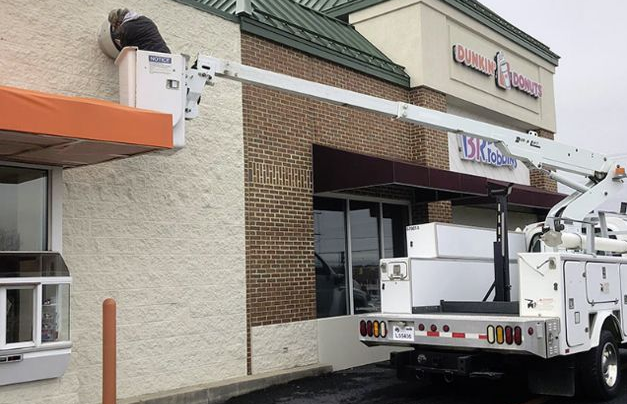
Virginia's commercial HVAC landscape has geographic realities that matter when every minute counts.
Central Virginia's service corridor — stretching from Charlottesville through Harrisonburg, Waynesboro, Staunton, Lexington, and Fishersville — is not uniformly served by the same density of commercial HVAC contractors. Businesses in smaller markets can find that "emergency contractors" listed online have dispatch times of three to five hours, which in summer heat or winter cold is operationally untenable.
Virginia also requires HVAC contractors to hold appropriate licensure through the Virginia Department of Professional and Occupational Regulation. Commercial HVAC work typically requires a Class A contractor license — the highest classification under Virginia law, covering projects of unlimited scope. Businesses authorizing emergency repairs should confirm licensure before work begins. Unlicensed work, even in an emergency, can create liability exposure and insurance complications.
Virginia's climate also creates distinct seasonal demand spikes. July and August push rooftop units to their operational limits across the Piedmont and Valley, while January and February create boiler and furnace emergencies throughout the Blue Ridge corridor. Having a local contractor relationship established before these seasonal peaks means you won't be competing with every other Virginia business for emergency service during the worst weeks of the year.
"Commercial equipment is much more technical than residential equipment, requiring a more experienced technician to properly attend to malfunctions and failures. Commercial equipment is made to be repaired — and replacement parts are more readily available than most business owners realize."
—
VA Commercial Repair Solutions
The Role of Preventive Maintenance in Avoiding HVAC Emergencies
The most effective platform for emergency commercial HVAC repair in VA is the one you never have to use. Most commercial HVAC emergencies are not random — they are the predictable result of deferred maintenance, undetected component wear, and seasonal neglect.
Preventive maintenance conducted at least twice annually — once before the cooling season begins in spring, and once before the heating season begins in fall — allows a trained commercial technician to identify developing failures before they become operational crises. Capacitors nearing end-of-life, refrigerant levels trending low, heat exchangers showing early stress fractures, and clogged condensate drains are all conditions that a competent technician will catch during routine maintenance — and that a business owner will discover at 6:00 PM on a Friday if they don't.
Studies referenced by the U.S. Department of Energy consistently show that properly maintained commercial HVAC systems operate more efficiently, have longer useful lifespans, and require significantly fewer emergency interventions than unmaintained systems.
VA Commercial Repair Solutions offers comprehensive Commercial HVAC Maintenance Plans designed to protect your Virginia business year-round. Plans include scheduled inspections, priority emergency dispatch, and documentation of your system's service history — so that if an emergency does occur, the responding technician already knows your equipment.
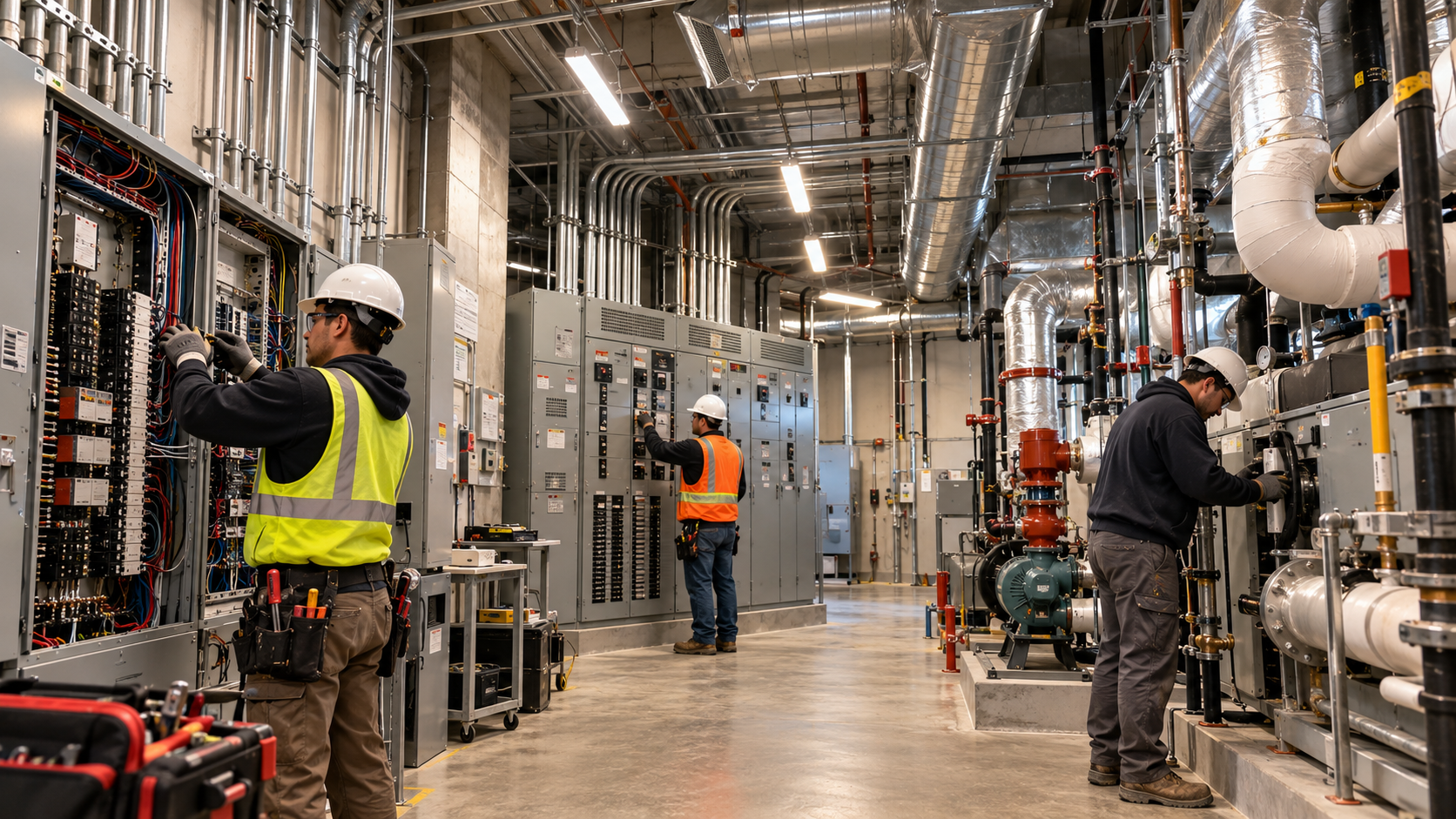
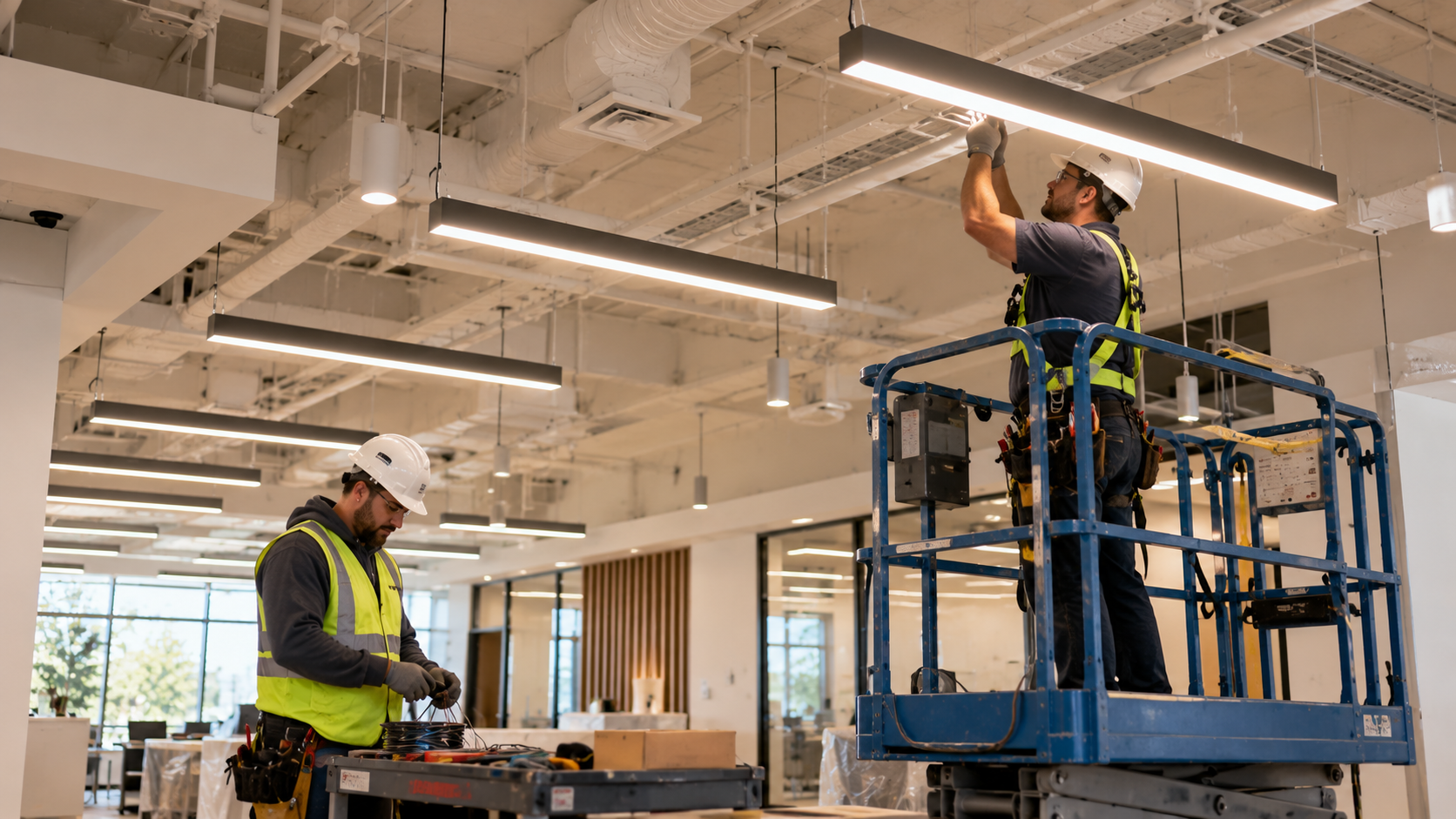
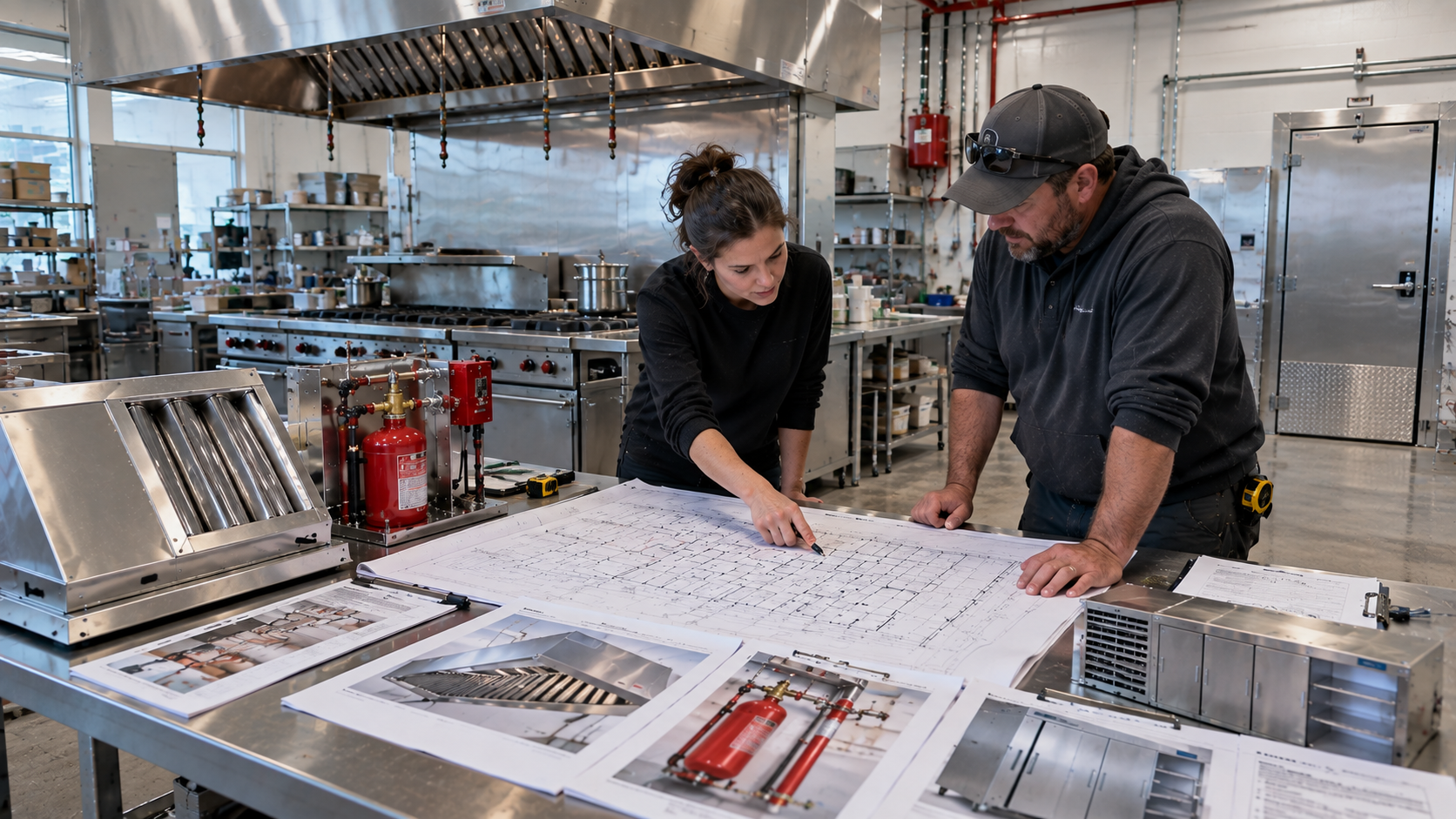
Their technicians also service the full spectrum of commercial mechanical systems — including commercial refrigeration, boiler maintenance, range hoods and exhaust fans, and commercial electrical systems — under one service relationship. For facility managers overseeing complex operations, a single contractor who covers all mechanical systems is a significant operational advantage.
Facing an Emergency? VA Commercial Repair Solutions Answers 24/7 — No Voicemail, Ever.
Serving Charlottesville, Harrisonburg, Staunton, Waynesboro, Lexington & Fishersville, VA.
All brands serviced. Class A Licensed. eVA Certified.
SWAM Certified.
Don't Wait for an Emergency to Build Your Plan
Emergency commercial HVAC repair in VA is not a matter of if — it's a matter of when, and whether you're prepared when it happens. The businesses that recover fastest from HVAC emergencies are those that chose their contractor before the crisis, established a service relationship before the peak season, and asked the right questions before they needed to dial for help at midnight.
Review the platforms outlined in this guide, evaluate which is right for your business structure and location, and take the time now to establish a relationship with a licensed, local commercial HVAC contractor in Virginia. Your future self — standing in a 94°F dining room at the height of August — will thank you.
To learn more about how VA Commercial Repair Solutions serves Virginia businesses with commercial HVAC repair, emergency repair and troubleshooting, and comprehensive facility maintenance services, explore the site or call directly — a manager or owner will always answer.
Opening a Restaurant in Virginia: Kitchen Design, Hood, Fire Suppression and Refrigeration Checklist