

What a Rooftop Safety Ladder Failure Really Costs | VA Commercial HVAC Services
A rooftop ladder seems like a small thing. It is bolted to a wall. It gets used once in a while. It is easy to put off installing one, or to assume the one you have is good enough.
But when a rooftop safety ladder is missing, unsafe, or poorly built, the cost is almost never small. And as the case below shows, even an existing ladder can become a liability if it was not installed correctly by a qualified professional.
This article walks through what that cost can really look like, including a real court case that shows exactly how it plays out.
Quick Answer
Skipping a safe rooftop ladder, or having one installed incorrectly, can cost a business far more than hiring a professional to do it right.
Costs can include OSHA fines, higher insurance premiums, lawsuit payouts, lost work time, and trouble finding contractors willing to do the job. In one real case, a roof-access ladder installed by a contractor without required safety coatings led to a $5.26 million jury verdict against a construction company and its ladder installer.
The Real Case: A $5.26 Million Verdict Over a Bad Ladder
In 2011, an electrician named Joanne Turner was working on the roof of a building under construction at Yuba Community College in California. To get down from the roof, she used a fixed 20-foot ladder installed by a contractor hired for the job.
While climbing down, she fell from the rooftop, about 15 feet to the concrete floor below.
Her lawsuit claimed the ladder steps lacked the required non-slip coating and that drywall dust had not been cleaned off them, making them slippery. The companies involved, Sundt Construction and Capitol Iron Works, admitted responsibility before the trial even started. The only question left for the jury was how much Turner should be paid for her injuries.
She had broken her back, her leg, and her foot, and injured both knees. The jury awarded her $5.26 million.
(Source: Joanne Turner v. Sundt Construction Inc., et al., Yuba County Superior Court, Case No. YCSCCVPO12-0000556, verdict July 1, 2016.)
Why This Case Matters
This was not a case about missing a ladder entirely. A ladder was there. It just was not properly built, coated, or kept clean by the contractor who installed it. That is the real lesson: a ladder is only as safe as the installation behind it.
Hiring a qualified, experienced professional to design and install a rooftop ladder is not an extra step. It is the step that prevents cases like this one. An installer who understands code requirements, proper materials, and finish work, such as non-slip coatings, is the difference between a safe ladder and a lawsuit waiting to happen.
Falls Are Not a Small Risk
This case is not rare. Falls remain the leading cause of death in the construction industry. In 2024 alone, falls from height caused 389 of the 1,034 construction worker deaths recorded that year in the United States, according to OSHA data.
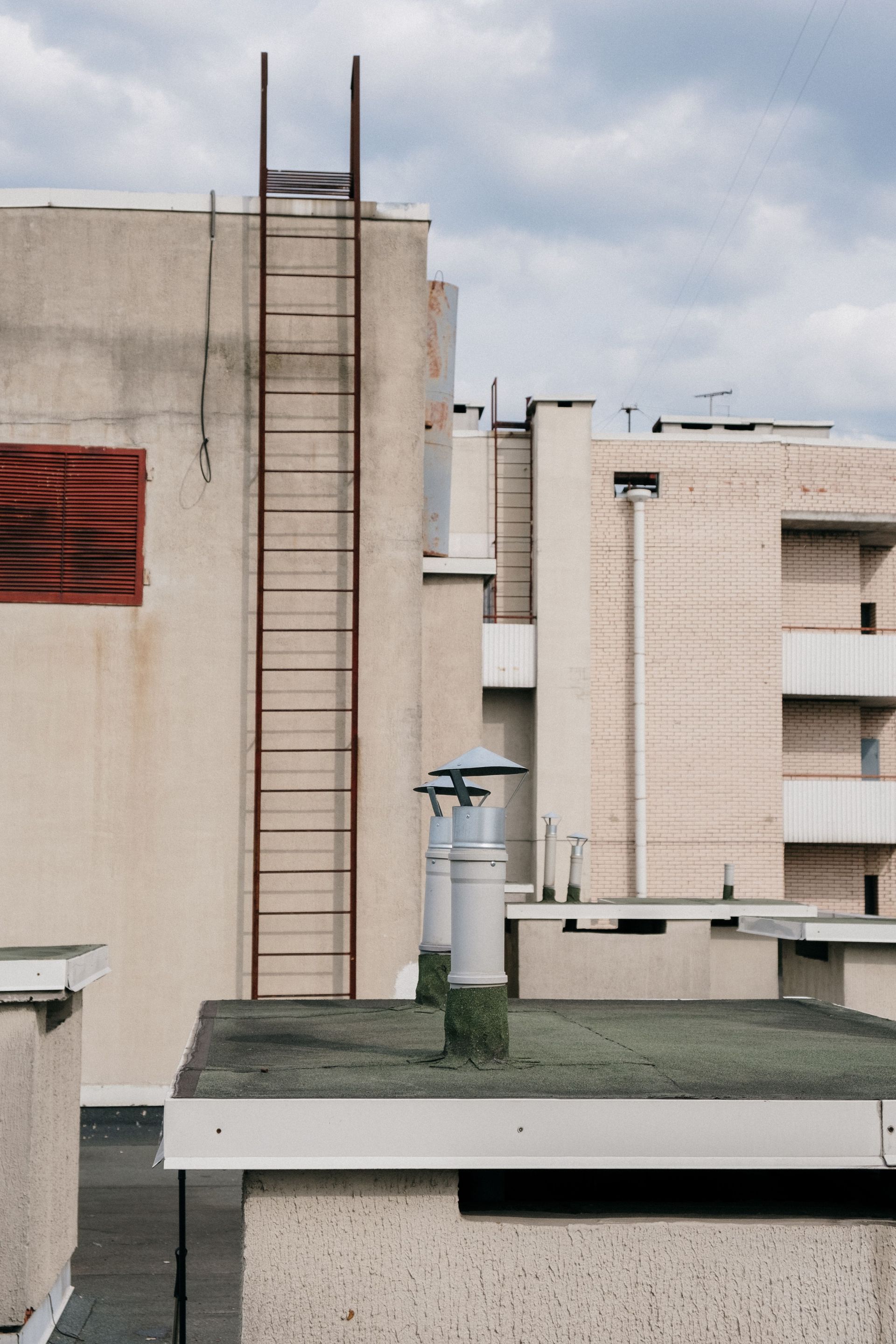
Fall protection has also been the single most cited safety violation by OSHA for 15 years running, with nearly 6,000 citations issued in fiscal year 2025 alone. Rooftop access is one of the most common places where these falls occur, because workers constantly climb up and down to reach HVAC units, vents, and other rooftop equipment.
Cost #1: OSHA Fines
If an inspector finds an unsafe or non-compliant rooftop ladder, your business can be fined. Fines are higher for repeat or willful violations, and they add up fast if more than one issue is found during the same inspection. A failed inspection can also delay other work, since some permits and re-inspections depend on passing fall-protection checks first.
Cost #2: Insurance and Workers' Comp
Insurance companies closely assess fall risk when setting prices for commercial property and liability coverage. A documented, code-built ladder can help keep premiums steady. A history of citations, injuries, or claims tends to push them up. A workers' comp claim tied to a fall injury can also raise future costs for years afterward.
Cost #3: Lawsuits Like the One Above
As the Turner case shows, a poorly built or poorly maintained rooftop ladder can lead directly to a lawsuit, even when no one intended harm. Property owners and contractors have a legal duty to keep roof access safe. When that duty is not met, and someone gets hurt, the resulting payout can run into the millions.
This is not legal advice, and every case is different, but the pattern is clear: rooftop ladder safety is not just a maintenance item. It is a legal responsibility.
Cost #4: Downtime and Lost Work
An injury on your roof affects more than just the person hurt. It can pause HVAC repairs, delay maintenance schedules, and trigger a safety investigation that halts other site work until it is resolved. None of that is cheap, even before any fines or settlements are added.
Cost #5: Fewer Contractors Willing to Do the Job
Many HVAC and maintenance companies now check rooftop access before agreeing to a job. If the access is unsafe, some will refuse the work outright. Others may charge more to cover their own risk. Either way, unsafe access can mean fewer bids and higher prices for routine maintenance.
Weighing the Real Numbers
A custom, code-compliant rooftop ladder is a one-time installation cost. A single lawsuit like the Turner case, a string of OSHA fines, or a spike in insurance premiums can cost many times more than that. The comparison is not close.
Why Professional Installation Matters Most
The Turner case is a reminder that installing a ladder is not the finish line, and it is not a job for just any crew. Every detail matters: the angle, the rung spacing, the guardrail height, the mounting strength, the coating on the steps. Miss one of these, and a ladder that looks fine can still fail.
A professional installer brings a few things a general handyman or unqualified crew cannot:
- Knowledge of current code requirements, including guardrail height, rung spacing, and landing space
- Correct materials and finishes, like non-slip coatings, so the ladder stays safe in rain, dust, or wear over time
- Proper mounting into the building structure, not just surface-level bolts
- Documentation, so you have proof of a code-compliant install if you are ever inspected or questioned after an incident
In short, hiring a professional is not just about getting the ladder up. It is about getting it right the first time so it holds up under real-world use for years.
VA Commercial HVAC Services designs and installs custom rooftop safety access ladders built to meet current code requirements, serving building owners across Virginia. Their team handles every detail, from structural mounting to surface coatings, so your rooftop access holds up in real use and in an inspection. Getting it installed by a qualified professional the first time is the simplest way to avoid becoming the next case study.
Frequently Asked Questions
Can a building owner really be sued over a rooftop ladder?
Yes, a building owner can absolutely be sued over a rooftop ladder.
Property owners and contractors have a strict legal duty to maintain safe roof access. If a rooftop ladder is missing, non-compliant, or poorly maintained and someone gets hurt, the owner can be held liable. As shown in the real-world Joanne Turner v. Sundt Construction Inc. case highlighted in the article, failing to provide a safe, properly coated ladder resulted in a $5.26 million jury verdict.
What made the ladder in that case unsafe?
The ladder steps lacked the legally required non-slip safety coating, and the installation contractors failed to clean off accumulated drywall dust. This combination made the rungs incredibly slippery, leading directly to the worker's 15-foot fall.
How much did the case settle for?
The case didn't settle out of court; it went to a jury trial after the defendants admitted liability. The jury ultimately awarded the plaintiff $5.26 million for her injuries, which included a broken back, leg, and foot, as well as severe injuries to both knees.
Does a compliant ladder actually lower insurance costs?
Yes. Commercial property and liability insurers closely assess fall risks when determining policy pricing. A documented, code-compliant permanent ladder helps keep premiums steady, whereas a history of safety citations, injuries, or open liabilities tends to push insurance and workers' comp costs significantly higher.
How do I know if my building's rooftop ladder is safe?
The most reliable way is to have a licensed professional contractor perform a safety assessment. They will evaluate your roof access against current building codes and OSHA standards, checking critical details like structural mounting strength, proper rung spacing, clearance depth, and the presence of non-slip finishes or required guardrails.
Why does it matter who installs the ladder?
As the Turner case demonstrates, a ladder is only as safe as its installation. A qualified professional understands specific structural codes, correct weather-resistant materials, exact mounting requirements, and safe finish work (like non-slip coatings). Handing the job to a general handyman or an unqualified crew risks overlooking tiny technical details that can turn a ladder into a multi-million-dollar liability.
Get a Free Rooftop Safety Assessment
If you are not sure whether your building's rooftop access would hold up to a code inspection or to the kind of scrutiny seen in the case above, now is a good time to check.
Contact VA Commercial HVAC Services for a free assessment and a professional installation quote.
Sources: Joanne Turner v. Sundt Construction Inc., et al., Yuba County Superior Court, Case No. YCSCCVPO12-0000556 (verdict July 1, 2016), as reported by Shouse Law Group, Jury Verdict Alert, and Victims Lawyer legal case summaries. OSHA and U.S. Bureau of Labor Statistics fall injury data, 2024–2025. Verify current OSHA penalty figures and local code amendments before publishing.

Opening a Restaurant in Virginia: Kitchen Design, Hood, Fire Suppression and Refrigeration Checklist