
How to Choose a Commercial HVAC Contractor for Your Facility
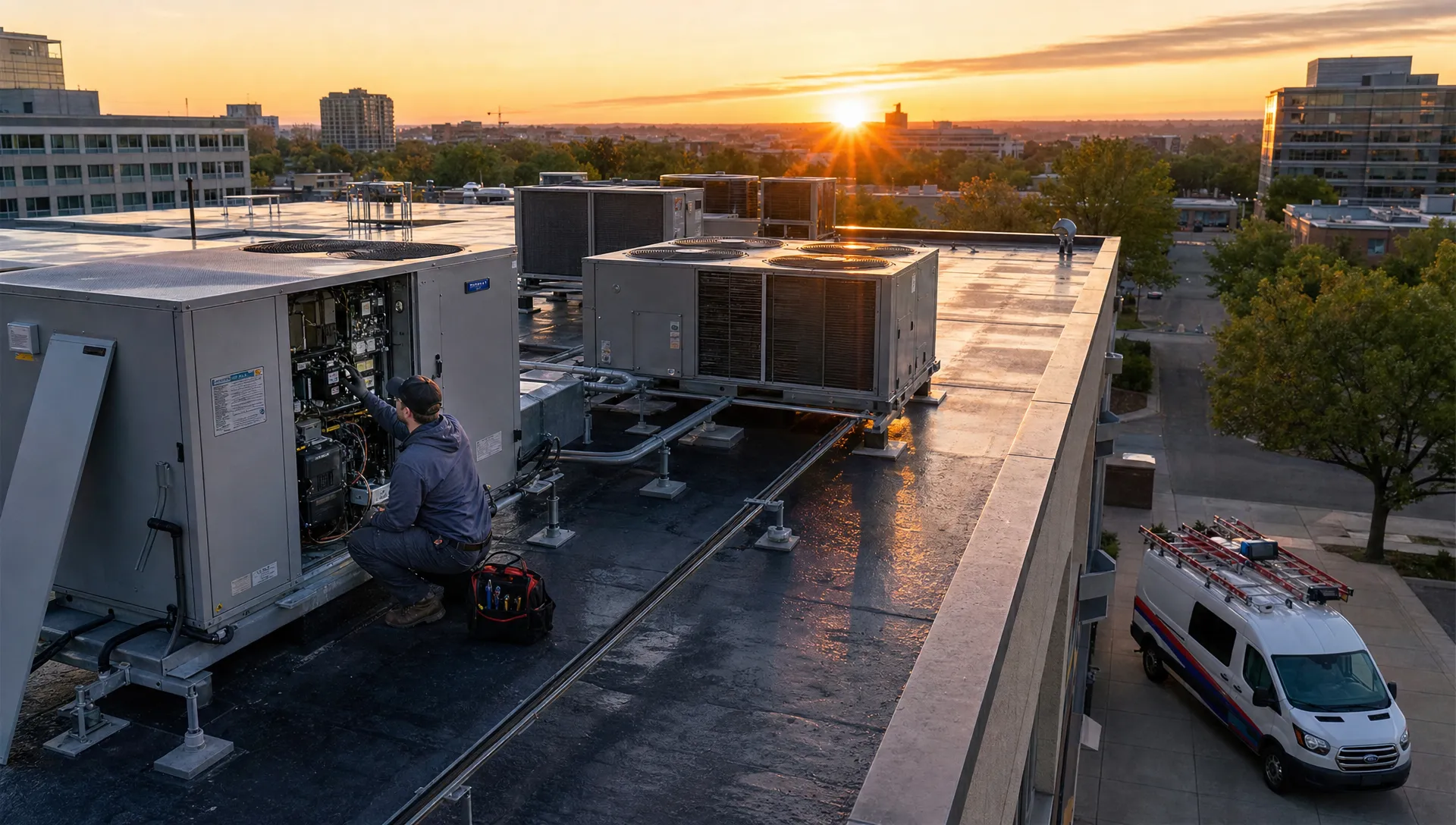
Choosing a commercial HVAC contractor is not just a purchasing decision. It affects employee comfort, tenant satisfaction, customer experience, production uptime, food safety, energy costs, and how quickly your facility recovers when equipment fails.
For facility managers, restaurant owners, property managers, and industrial operators, the best contractor is rarely the cheapest name on the first proposal. A strong partner understands commercial systems, responds when the building is under stress, documents their work, and helps you prevent repeat failures instead of only reacting to emergencies.
Use this guide to compare commercial HVAC contractors with a practical, facility-focused lens before you sign a service agreement or authorize a major repair.
Start With Your Facility’s Actual HVAC Risk
Before calling contractors, define what failure really costs your operation. A retail store may be able to tolerate a short comfort issue during mild weather. A restaurant, medical office, server room, production area, brewery, or multi-tenant property may not.
Write down the basics of your facility before requesting quotes:
- Equipment types, including rooftop units, split systems, boilers, chillers, heat pumps, exhaust fans, make-up air units, and controls
- Business hours, after-hours needs, and peak occupancy periods
- Areas that are mission-critical, such as kitchens, cold storage, computer rooms, production spaces, or customer-facing zones
- Known recurring problems, including short cycling, poor airflow, frozen coils, hot and cold spots, nuisance alarms, or high utility bills
- Access considerations, such as roof access, locked mechanical rooms, tenant coordination, or restricted work hours
- Documentation you already have, including maintenance logs, model numbers, warranties, and past service invoices
This information helps you evaluate whether a contractor is asking the right questions. A serious commercial HVAC contractor will want to understand your building, not just quote a generic hourly rate.
Confirm True Commercial HVAC Experience
Residential HVAC experience does not automatically translate to commercial facility work. Commercial systems are often larger, more complex, more tightly connected to business operations, and subject to different code, access, safety, and scheduling requirements.
Ask whether the contractor regularly works on facilities similar to yours. A restaurant has different needs than a warehouse. A medical office has different priorities than a vineyard, retail center, apartment community, or manufacturing space.
If a contractor cannot explain their commercial process clearly, that is a warning sign. You do not need a long technical lecture, but you should hear a structured approach to diagnosis, safety, communication, and follow-up.
Verify Licensing, Insurance, Refrigerant Credentials, and Safety Practices
Commercial HVAC work can involve electrical circuits, refrigerants, combustion equipment, roof work, heavy components, confined mechanical spaces, and active business environments. Before hiring anyone, ask for proof of current Virginia contractor licensing appropriate to the scope, general liability insurance, and workers’ compensation coverage.
If the work involves refrigerants, technicians should also follow federal refrigerant handling requirements. The EPA requires technicians who maintain, service, repair, or dispose of equipment that could release regulated refrigerants to be certified under Section 608. This matters for legal compliance, environmental responsibility, and proper system service.
Safety practices also matter. Ask how the contractor handles lockout procedures, roof access, lift work, occupied spaces, hot work, and communication with staff or tenants. A contractor who treats safety as paperwork after the fact is not the right fit for a facility where employees, customers, and equipment are all on site.
Evaluate the Response Model, Not Just the Rate
When equipment fails during a heat wave, dinner rush, weekend event, production run, or tenant move-in, response time becomes more important than a low hourly rate. Ask how the contractor handles live calls, dispatch, after-hours support, and emergency triage.
A strong response model is especially important if you manage multiple buildings or operate outside standard business hours. Look for clarity rather than vague promises.
For facilities in Central Virginia, geography matters. A contractor who already serves Charlottesville, Harrisonburg, Waynesboro, Staunton, Lexington, and nearby communities may be better positioned to respond than a company traveling from far outside the region.
Look for Diagnostic Discipline and a Repair-First Mindset
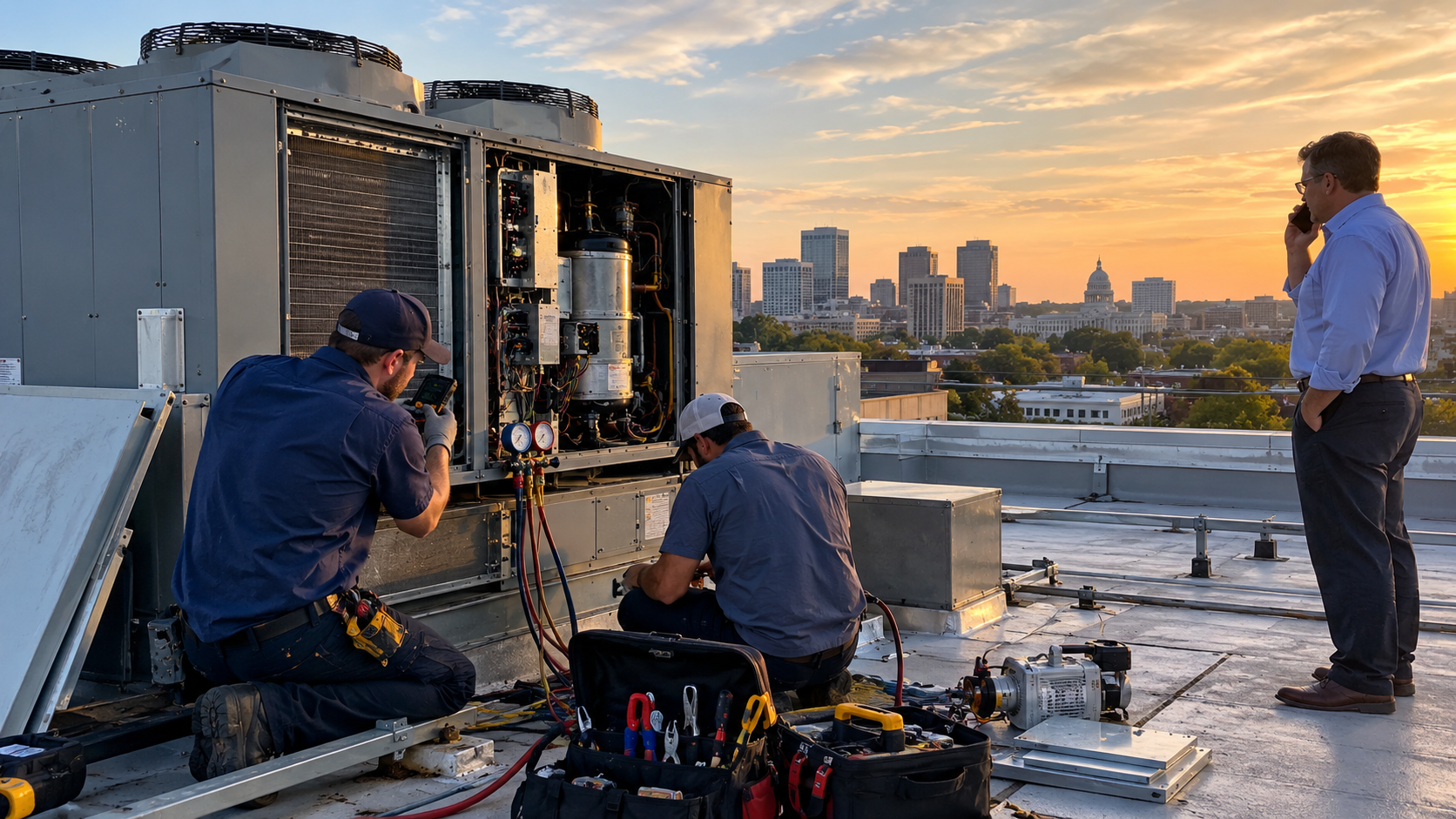
The most valuable commercial HVAC contractors do not guess. They test, measure, document, and explain. That includes checking airflow, electrical values, refrigerant conditions, drainage, controls, belts, filters, coils, economizers, dampers, and operating conditions before recommending a major repair or replacement.
A repair-first mindset does not mean repairing everything forever. It means the contractor should identify the root problem and explain your options. Sometimes the best decision is a targeted repair. Sometimes a system is so inefficient, unreliable, obsolete, or expensive to repair that replacement deserves consideration.
When reviewing a contractor’s approach to commercial HVAC repair, pay attention to how they communicate tradeoffs. A good recommendation should answer four questions: what failed, why it likely failed, what it will take to correct it, and what risk remains if you delay the work.
Compare Preventive Maintenance Plans Carefully
Preventive maintenance is one of the clearest differences between a one-time repair vendor and a long-term facility partner. The goal is not simply to check a box twice a year. A good maintenance plan should reduce breakdown risk, improve operating performance, support warranty documentation, and give you better budget visibility.
ENERGY STAR commercial building guidance emphasizes the importance of efficient operations and ongoing attention to building energy performance. In practical terms, dirty coils, clogged filters, worn belts, poor airflow, low refrigerant charge, failed sensors, and neglected drains can all increase operating costs or shorten equipment life.
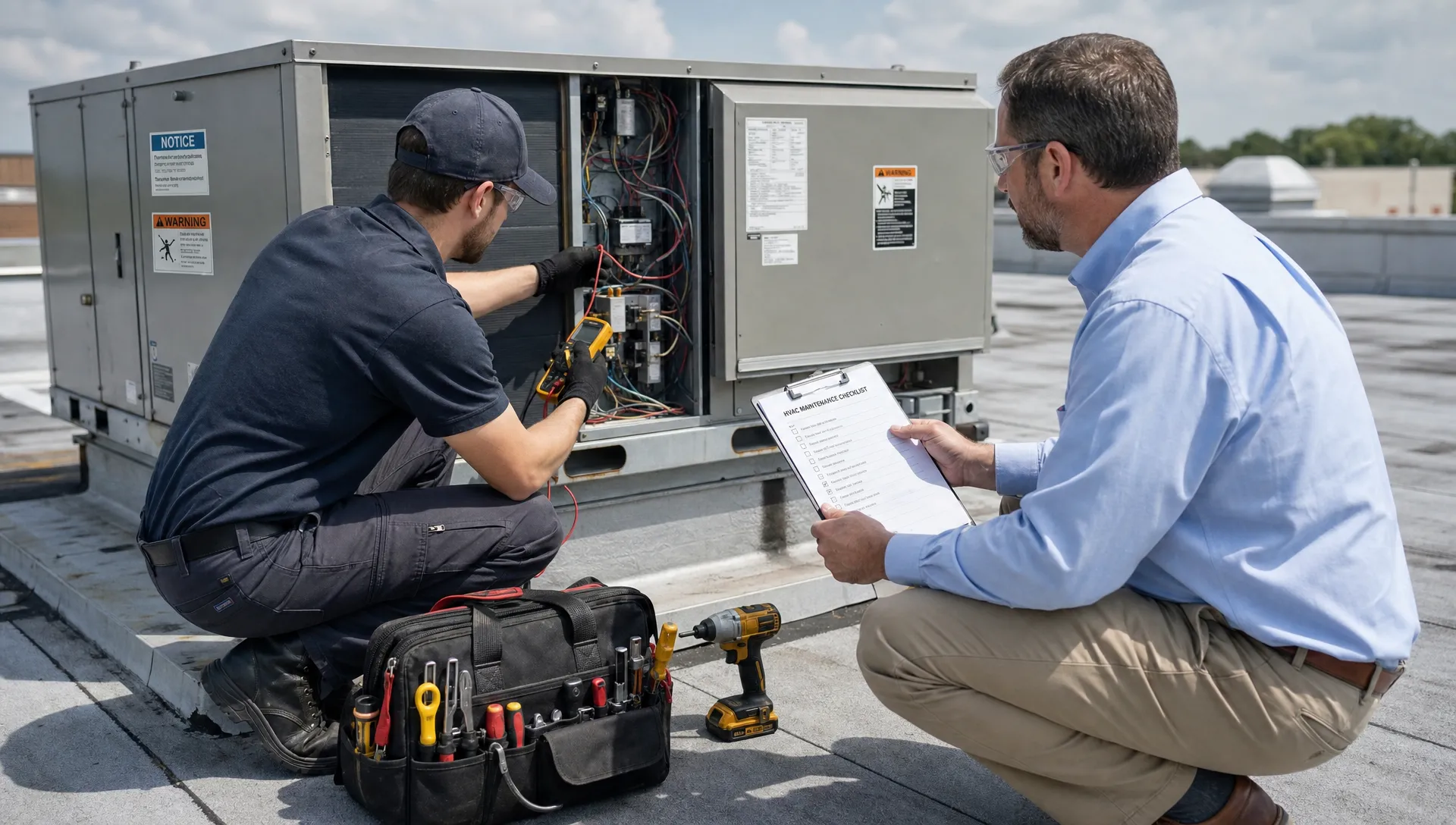
Ask what is actually included in the maintenance plan. The visit frequency, inspection checklist, reporting, filter strategy, coil cleaning approach, belt checks, electrical testing, thermostat review, drain inspection, and priority service terms should be clear. If your facility has multiple units, the contractor should also help you track assets over time.
If you want a structured approach, review what a commercial HVAC preventive maintenance plan can include and compare that scope against other proposals.
Understand Total Cost, Not Only the Hourly Price
The lowest hourly rate is not always the lowest total cost. A contractor who diagnoses accurately, arrives prepared, communicates clearly, and prevents repeat failures can save more than a cheaper provider who needs multiple visits to reach the same answer.
When comparing proposals, look beyond labor rate and trip charge. Consider response time, technician skill, parts availability, documentation quality, warranty terms, emergency coverage, and whether the contractor can support your full equipment mix.
For larger repairs or replacements, the proposal should clearly define the scope of work, equipment, exclusions, schedule assumptions, permit responsibilities, disposal, startup procedures, and warranty information. If a proposal is unusually vague, ask for clarification before approving it.
Assess Communication and Documentation
Facility managers need records. Owners need budget clarity. Staff need to know what areas are affected. Tenants and customers need minimal disruption. That makes communication a major part of contractor selection.
A reliable contractor should be able to provide clear service notes, photos when useful, equipment model and serial information, recommendations, and urgency levels. They should also distinguish between immediate safety or operational concerns and improvements that can be planned later.
Good documentation helps you answer practical questions: Which units are aging fastest? Which repairs are repeating? What should be budgeted next quarter? Which equipment is causing comfort complaints? Which issues are maintenance-related, and which are signs of a deeper failure?
Consider Multi-Trade Facility Support
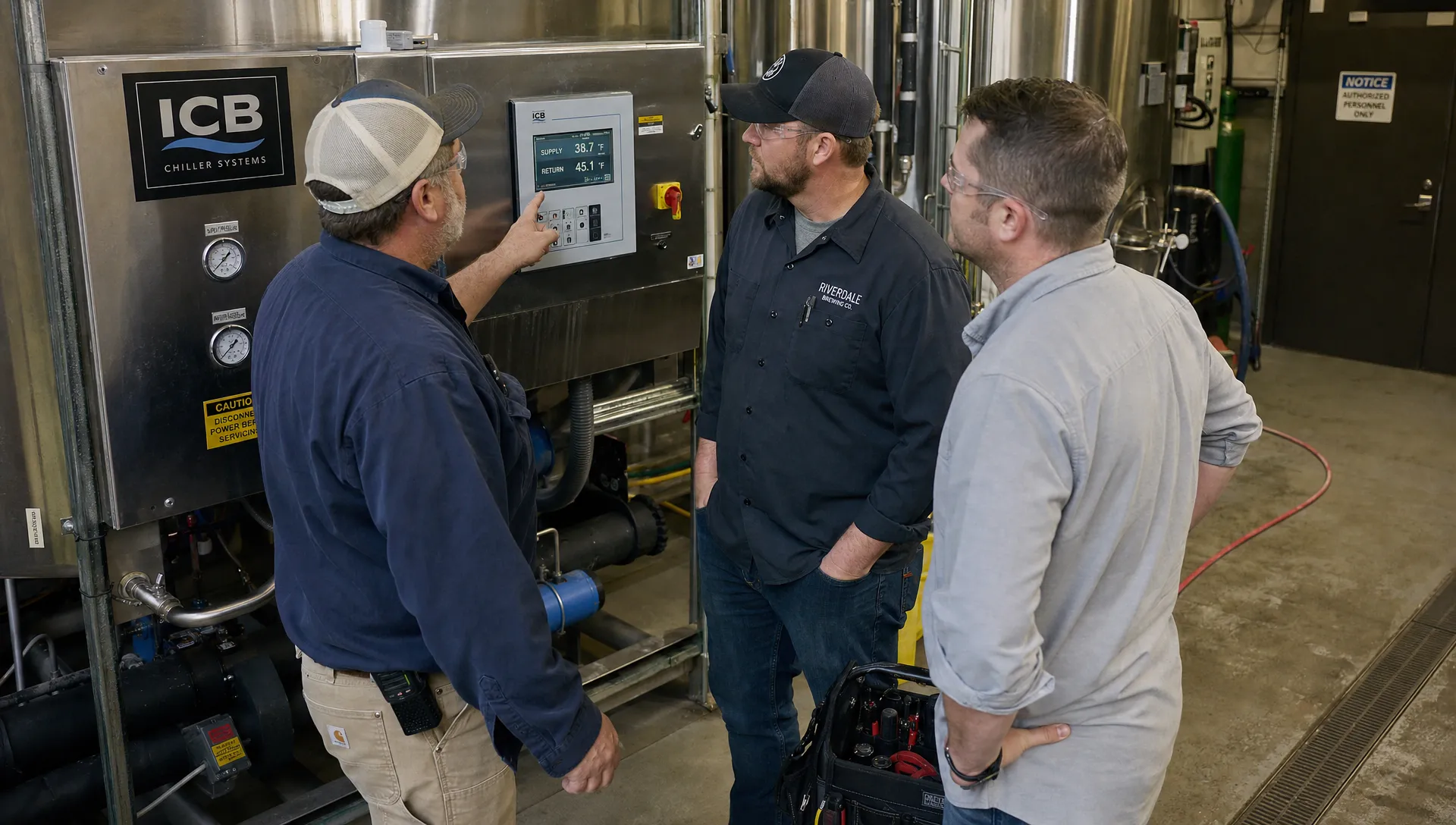
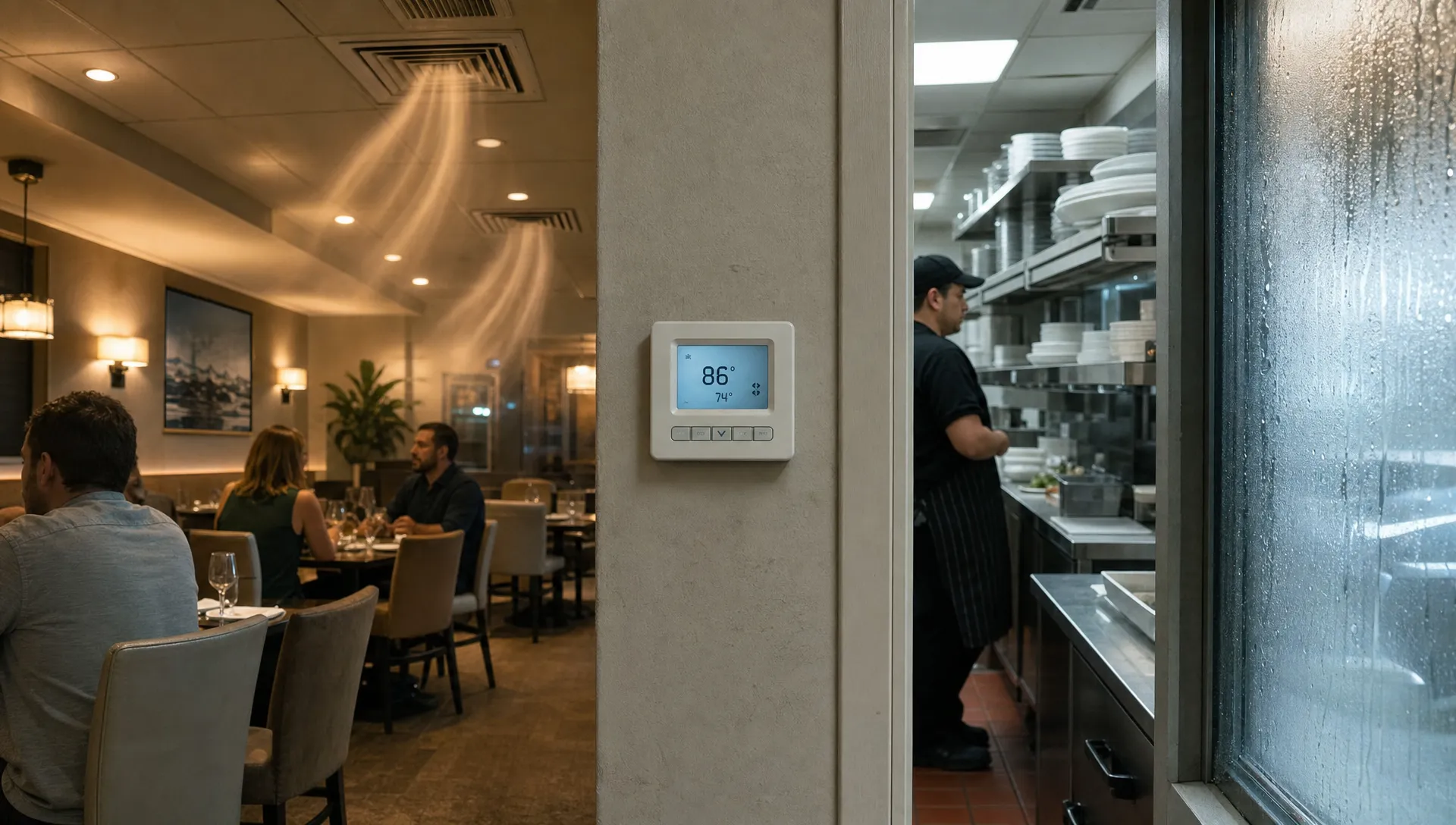
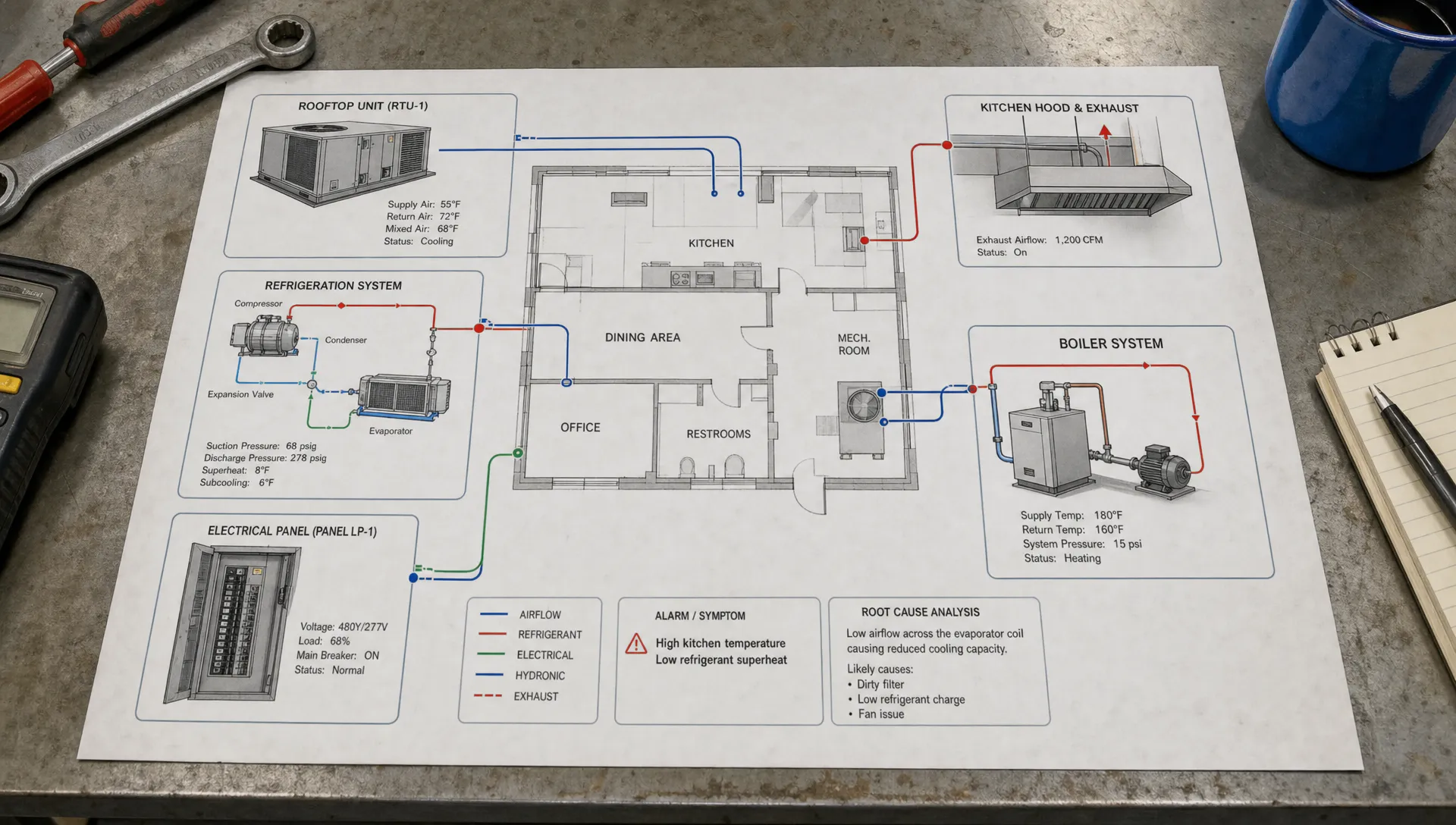
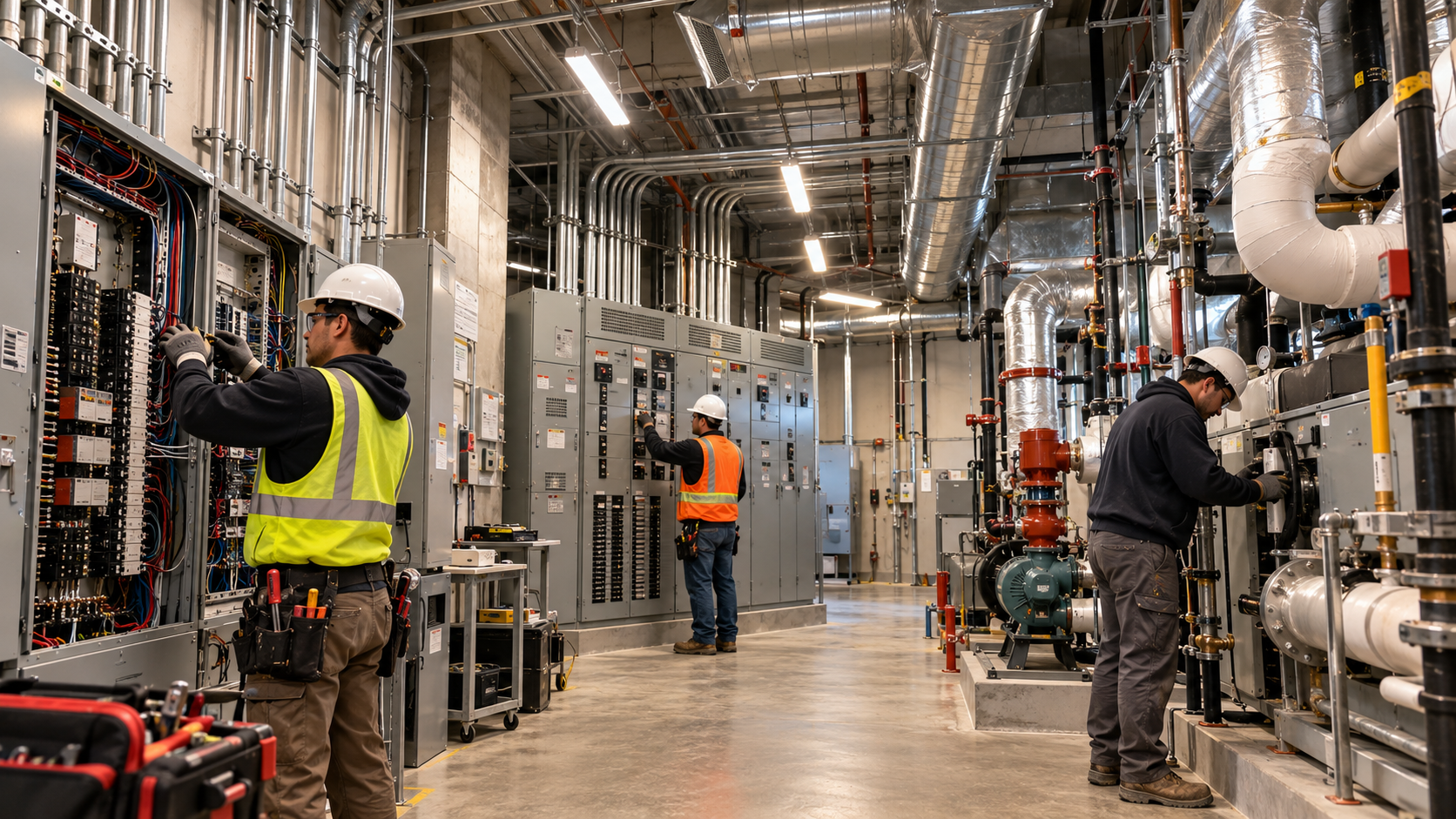
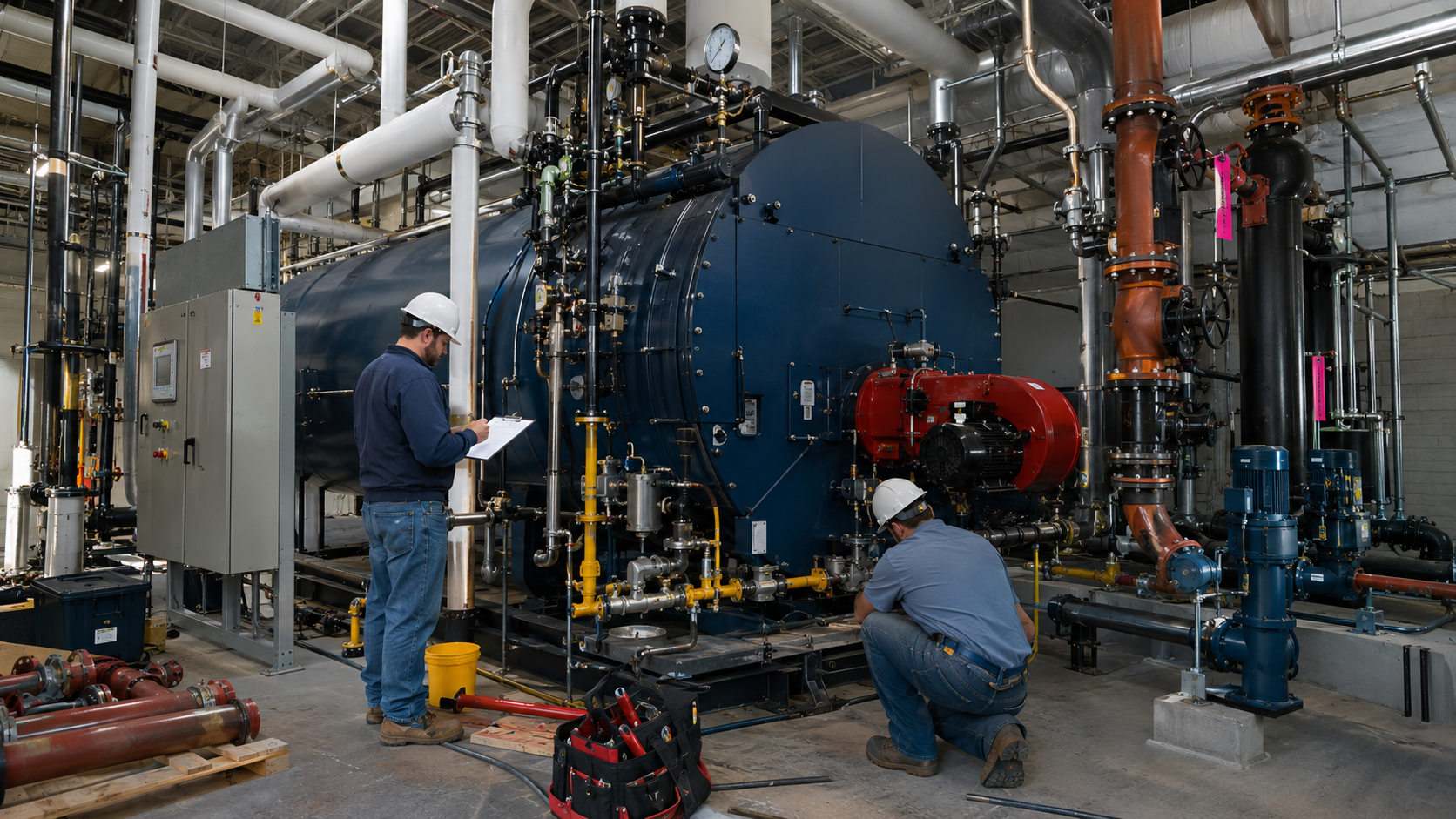
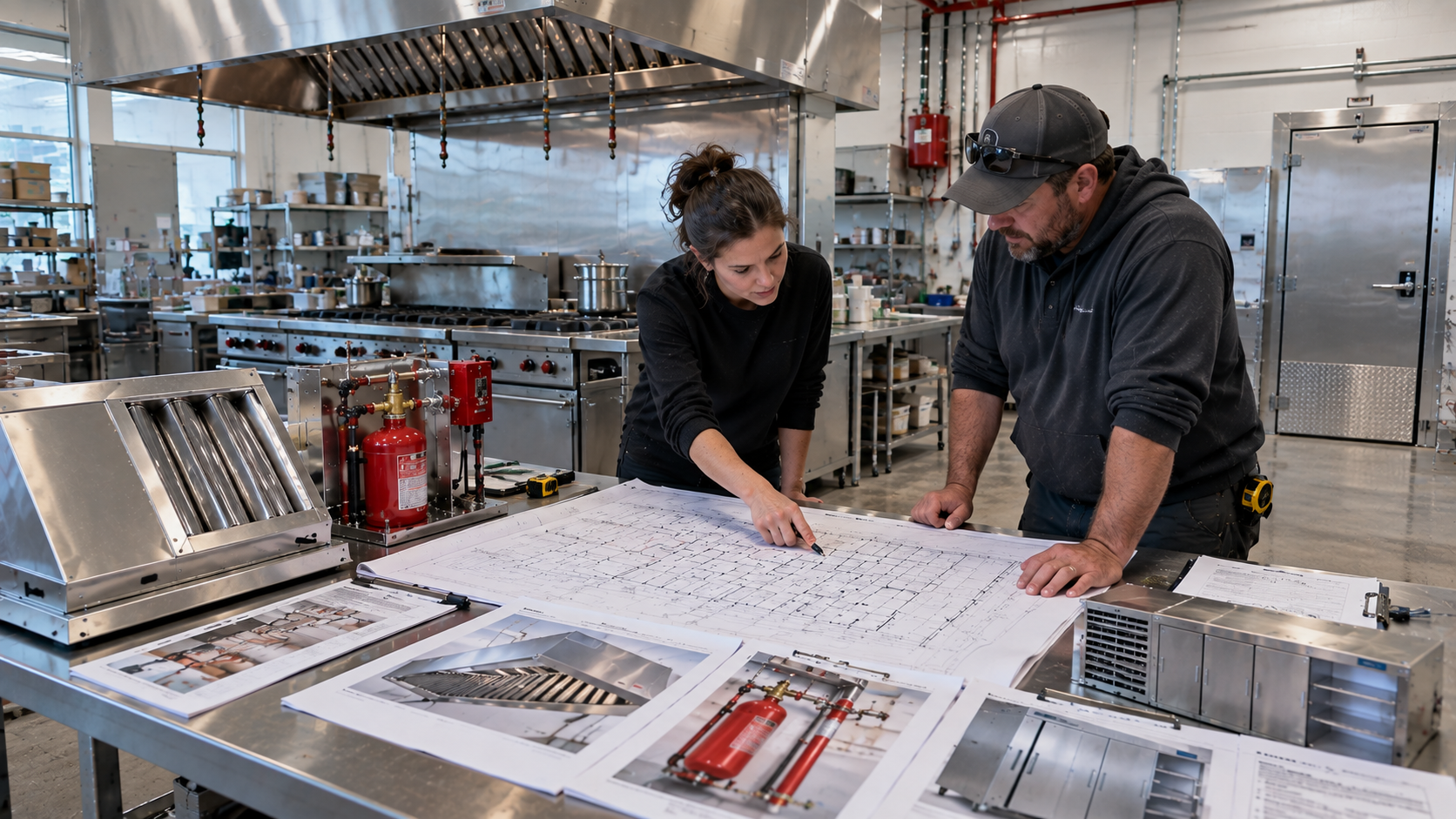
Many HVAC problems overlap with other systems. A rooftop unit may have an electrical issue. A kitchen comfort complaint may involve exhaust, make-up air, refrigeration load, or range hood performance. A boiler problem may affect process needs or building heat. A facility with ice makers, refrigeration, kitchen equipment, and HVAC may lose time if every issue requires a different vendor.
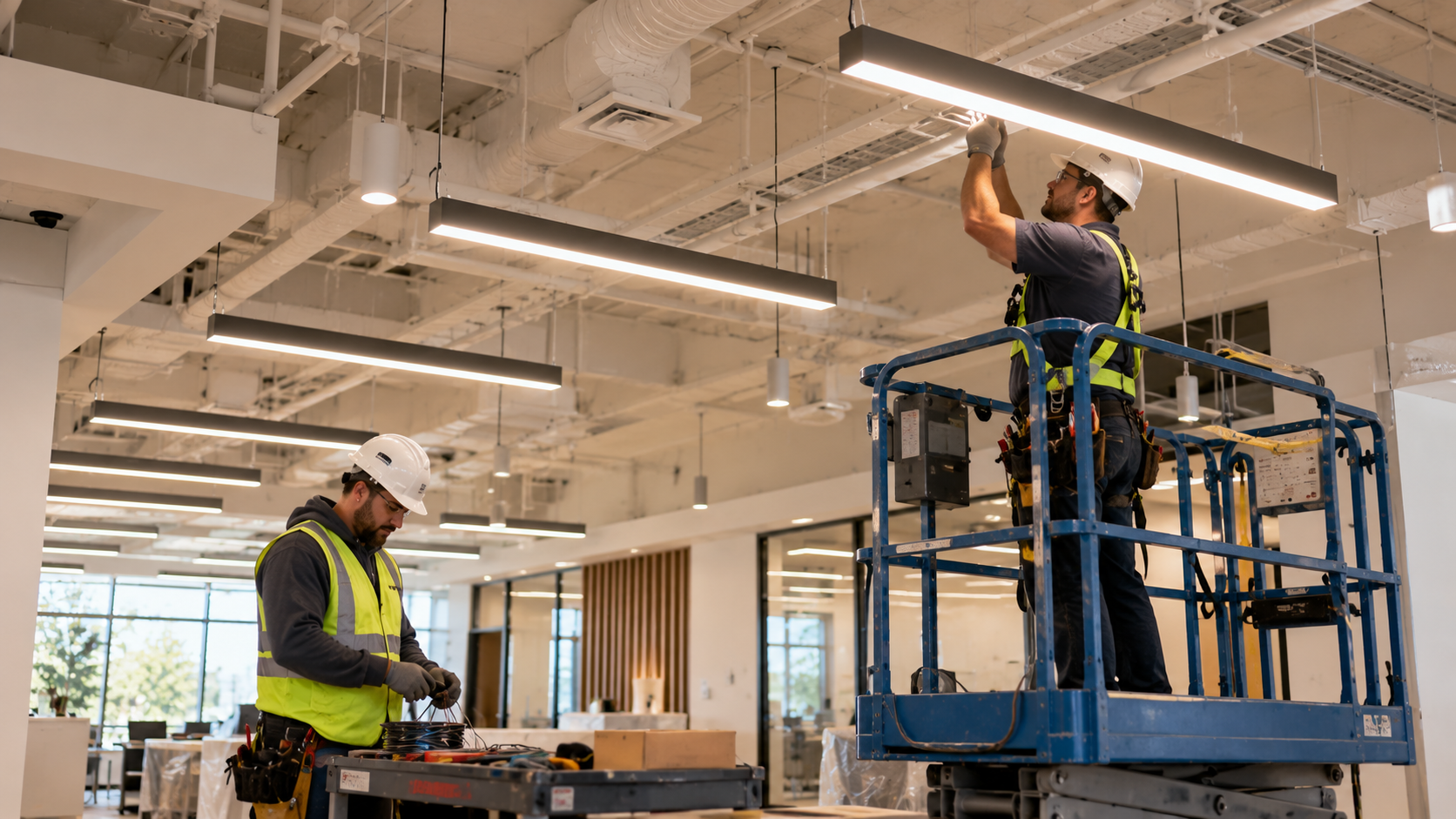
For restaurants, industrial sites, and commercial properties, a contractor with broader facility maintenance capabilities can simplify coordination. You still need qualified technicians for each discipline, but having one responsive partner for HVAC, refrigeration, electrical, boilers, chillers, restaurant equipment, and related troubleshooting can reduce finger-pointing and downtime.
This is especially valuable during emergencies. When the first symptom is no cooling, tripped breakers, poor kitchen ventilation, or rising cooler temperatures, the root cause may not be obvious at the first phone call.
Watch for Red Flags Before You Sign
Some warning signs are easy to overlook when you need service quickly. Slow communication during the sales process often becomes slow communication during emergencies. Vague proposals often become change orders. High-pressure replacement recommendations without measurements should make you pause.
Be cautious if you notice any of the following:
- No proof of licensing, insurance, or refrigerant credentials when requested
- Little or no commercial experience with your type of facility
- Reluctance to provide written findings or a clear scope of work
- Replacement recommendations without explaining repair options
- No defined emergency process for after-hours issues
- Unclear warranty terms or exclusions
- Poor questions during intake, especially for critical facilities
- No plan for preventive maintenance or long-term asset tracking
A trustworthy contractor will not be offended by reasonable due diligence. Professional operators expect it.
Use a Simple Contractor Scorecard
If you are comparing several commercial HVAC contractors, a scorecard can keep the decision objective. Weight the categories based on your facility’s risk. For example, a restaurant or production facility may weight emergency response more heavily than an office with flexible occupancy.
| Category | Suggested Weight | What to Look For |
|---|---|---|
| Commercial experience | High | Similar facilities, similar systems, practical diagnostic process |
| Response capability | High | Live support, emergency coverage, realistic dispatch expectations |
| Technical qualifications | High | Licensing, insurance, refrigerant credentials, safety practices |
| Maintenance approach | Medium to high | Clear checklist, reporting, asset tracking, priority planning |
| Communication | Medium | Written reports, photos, clear recommendations, professional follow-up |
| Total value | Medium | Fair pricing, fewer repeat visits, repair-first thinking, clear proposals |
The best choice should be the contractor who reduces operational risk, not simply the one with the shortest estimate.
Frequently Asked Questions
What should I ask before hiring a commercial HVAC contractor? Ask about commercial experience, emergency availability, licensing, insurance, refrigerant credentials, service area, maintenance plans, documentation, and how the contractor decides between repair and replacement.
Is the lowest HVAC bid usually the best choice? Not always. A low bid can become expensive if the diagnosis is incomplete, the scope is vague, response time is slow, or the same problem requires multiple return visits.
How often should a commercial HVAC system be maintained? Many commercial systems benefit from scheduled maintenance at least twice a year, typically before cooling and heating seasons. Facilities with heavy use, kitchens, process loads, or critical operations may need more frequent attention.
When should a facility replace instead of repair HVAC equipment? Replacement may make sense when repair costs are high, failures are recurring, parts are difficult to source, efficiency is poor, or downtime risk is no longer acceptable. A qualified contractor should explain both repair and replacement options.
Why does local service coverage matter for commercial HVAC? Local coverage affects response time, travel cost, regional familiarity, parts logistics, and emergency availability. For critical facilities, proximity can make a major difference during peak weather or after-hours failures.
Need a Commercial HVAC Contractor in Central Virginia?
If your facility needs commercial HVAC repair, preventive maintenance, emergency troubleshooting, or broader facility support, choose a partner built for business operations, not just basic comfort calls.
VA Commercial Repair Solutions provides 24/7 live phone support and commercial HVAC, refrigeration, electrical, boiler, chiller, restaurant equipment, and facility maintenance services across Central Virginia, including Charlottesville, Harrisonburg, Waynesboro, Staunton, and Lexington. If uptime matters, start with a contractor who understands how your facility works.
Opening a Restaurant in Virginia: Kitchen Design, Hood, Fire Suppression and Refrigeration Checklist