
Emergency Restaurant Equipment Repair in Waynesboro, VA

Chuck Weisman

Don't let a breakdown ruin your dinner rush: Fast, reliable repairs for refrigeration and cooking equipment.
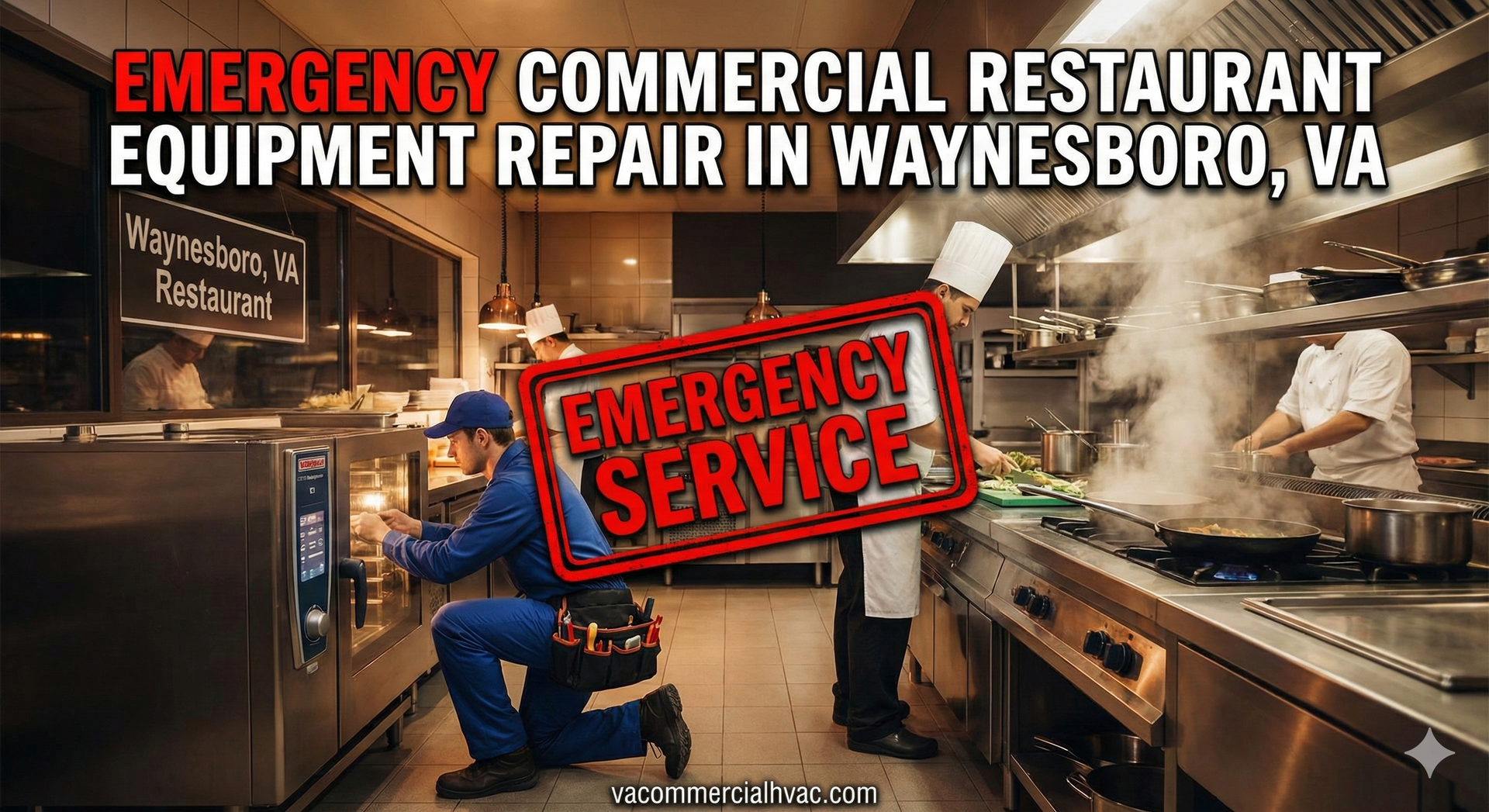
"Did you know that nearly 60% of restaurant breakdowns in Waynesboro happen during the busiest hour of service? When your hot-side equipment fails, every minute means lost revenue

If your oven goes cold during a Friday-night rush, every chef in Waynesboro feels the pressure. Kitchens can't afford a minute of downtime—especially in a tight-knit business community where word of mouth and reliability matter just as much as your last meal. Fast, reliable emergency commercial restaurant equipment repair Waynesboro VA isn’t a luxury—it's survival. Whether it’s a sputtering fryer, a dead range, or a refrigerator threatening every tray of produce, we’re the team that local restaurant owners trust to keep their kitchen’s heart beating. Unlike national dispatch centers, we’re right down the road, with the expertise and urgency Waynesboro’s culinary scene demands.


What You'll Learn About Emergency Restaurant Equipment Repair in Waynesboro VA


  • Why emergency commercial restaurant equipment repair is mission-critical
  • How to spot problems before the rush
  • Our full-scope commercial repair services in Waynesboro, VA
  • Benefits of rapid, local response versus national dispatch centers


More Than Just HVAC – We Fix the Commercial Hot Side in Waynesboro, VA


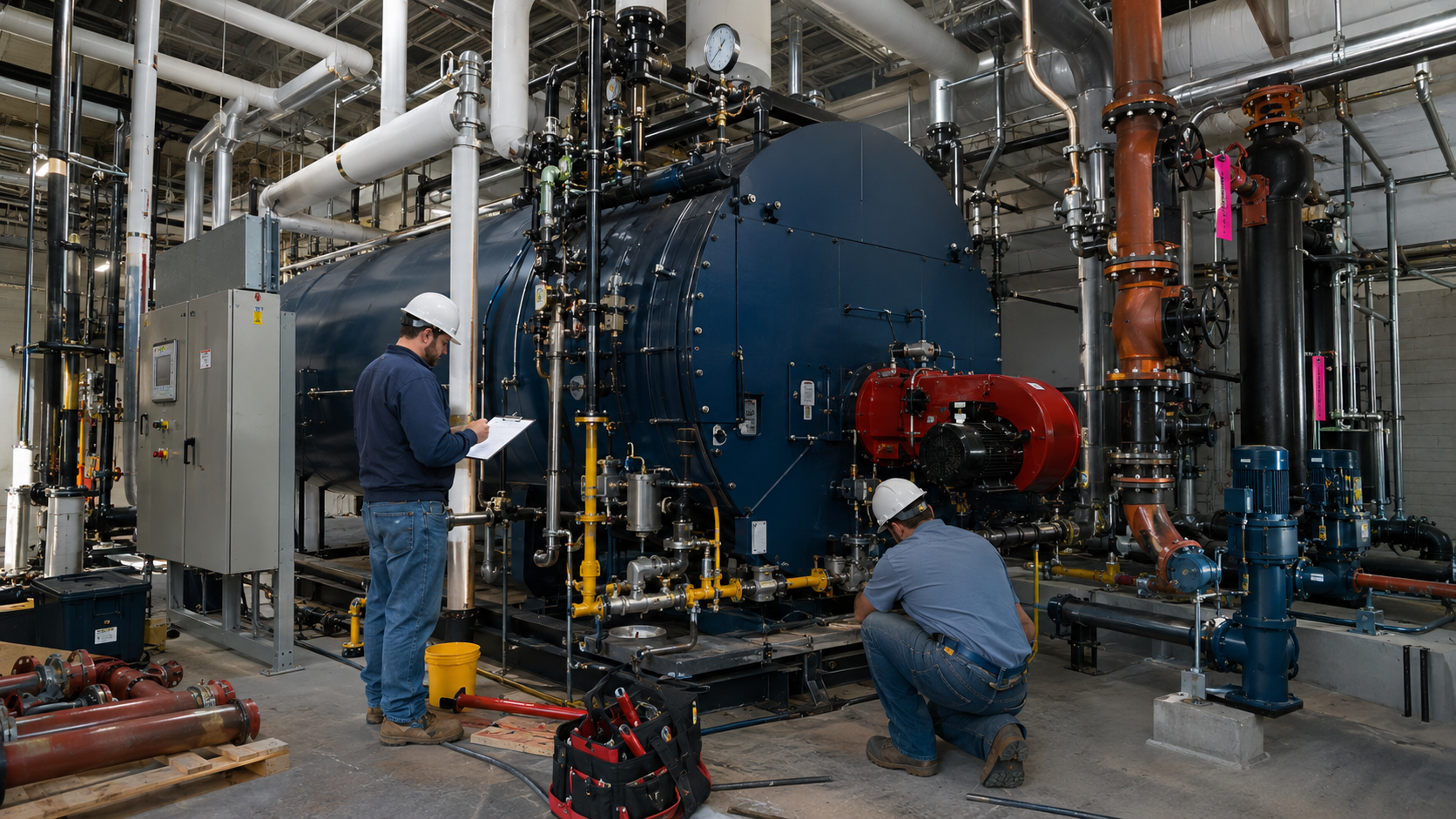
When the “hot side” of your kitchen goes cold, it isn’t just an inconvenience—it’s a full-blown emergency. While many know us for our commercial refrigeration expertise, our certified local technicians are fully equipped for commercial oven repair services, fryers, steamers, and every piece of hot-side equipment. Whether you’re troubleshooting a stubborn range hood or need an immediate fryer fix, we bring deep experience in industrial kitchen equipment troubleshooting to every job in Waynesboro. We’re as comfortable with Vulcan, Southbend, or Blodgett as we are with your HVAC. Your kitchen stays ready for the lunch crowd—and whatever surprises service throws your way.

For restaurant owners who want to keep their kitchens running smoothly all year, it's also important to consider seasonal maintenance for your heating systems. Discover practical steps for winterizing your business with this comprehensive commercial furnace maintenance checklist for local businesses.


Commercial Oven Repair Services and Industrial Kitchen Equipment Troubleshooting


  • Vulcan, Southbend, Blodgett, and other major manufacturers
  • Convection ovens, steamers, fryers, and ranges
  • Industrial kitchen equipment troubleshooting—diagnosis and repair solutions


Appliance Type         Common Brands             Typical Repair Needs

Oven/Range  Vulcan, Southben                Ignition, controls, thermostat

Fryer                          Frymaster, Pitco                  Recovery time, sensors

Steamers                  Cleveland, Groen                Control boards, heating

Grill                            Wolf, Star                              Temperature, grease traps


Commercial Refrigeration and Restaurant Equipment Repair Service Backed by Local Technicians

Waynesboro’s best kitchens rely on equipment that’s both hot and cold. Our restaurant equipment repair service extends well beyond cooking lines to refrigerated prep tables, ice machines, walk-in coolers, and more. Commercial refrigeration failures can compromise safety and inventory in minutes. That’s why our local technicians arrive fast—armed with the right parts and solutions to fix appliance repair issues before product is lost. Whether it’s a failing compressor or a cracked range hood, our rapid response keeps your cooler chilled, your fryer hot, and your kitchen earning.


Local Challenges: Commercial Restaurant Equipment Repair in Waynesboro, VA

"In Waynesboro, local restaurants rely on each other—and their service providers. When your hot line is cold, you can't afford a service delay from out-of-town techs."

  • Tight-knit business community trusts local expertise
  • Rapid response for emergency commercial repair and commercial repair solutions
  • Waynesboro's signature service for restaurant equipment breakdowns

Here in Waynesboro, restaurant owners and managers know each other’s faces—and they know who shows up when it matters. Unlike big-city repair vendors, our team is rooted in the Shenandoah Valley business scene. We’re just down the road, not hours away. That means our repair service is measured in minutes, not radical delays. When a fryer’s recovery time falters or a range hood fan quits, we’re on-site fast, delivering commercial repair solutions trusted by the community. Because when the rush is on, your kitchen can’t afford silence on the hot line.


Common Issues We Solve With Emergency Commercial Restaurant Equipment Repair Waynesboro VA


Typical Commercial Restaurant and Kitchen Equipment Failures

  1. Pilot lights and ignition failures
  2. Thermostat, sensor, control failure
  3. Out-of-tolerance fryer recovery times
  4. Steam generator and range hood malfunctions
  5. Exhaust vent and exhaust fan issues, smoke/odor complaints


Breakdowns rarely wait for a quiet moment. In Waynesboro, we routinely see commercial fryers stuck in limp mode, pilot lights that won’t cooperate, and thermostat failures that leave convection ovens guessing. When a hood vent clogs with grease or an exhaust fan goes silent, your team faces both safety hazards and smoke complaints. Our appliance repair knowledge covers everything from intricate range hood diagnostics to entire exhaust vent rebuilds. Every service call is backed by a ready supply of restaurant equipment parts replacement—the difference between a fix today and lost sales tomorrow.


Restaurant Equipment Parts Replacement and Food Service Equipment Servicing

  • Access to fast-moving parts supply chain
  • Stocked truck for repairs—minimal wait time
  • Commercial appliance replacement and installation


Need an urgent commercial appliance replacement? Our scope covers everything from kitchen equipment installation and repair to full system swaps, so your entire line is restored—not just patched


Turnkey Commercial Repair Solutions – Diagnosis, Parts, and Quick Fix


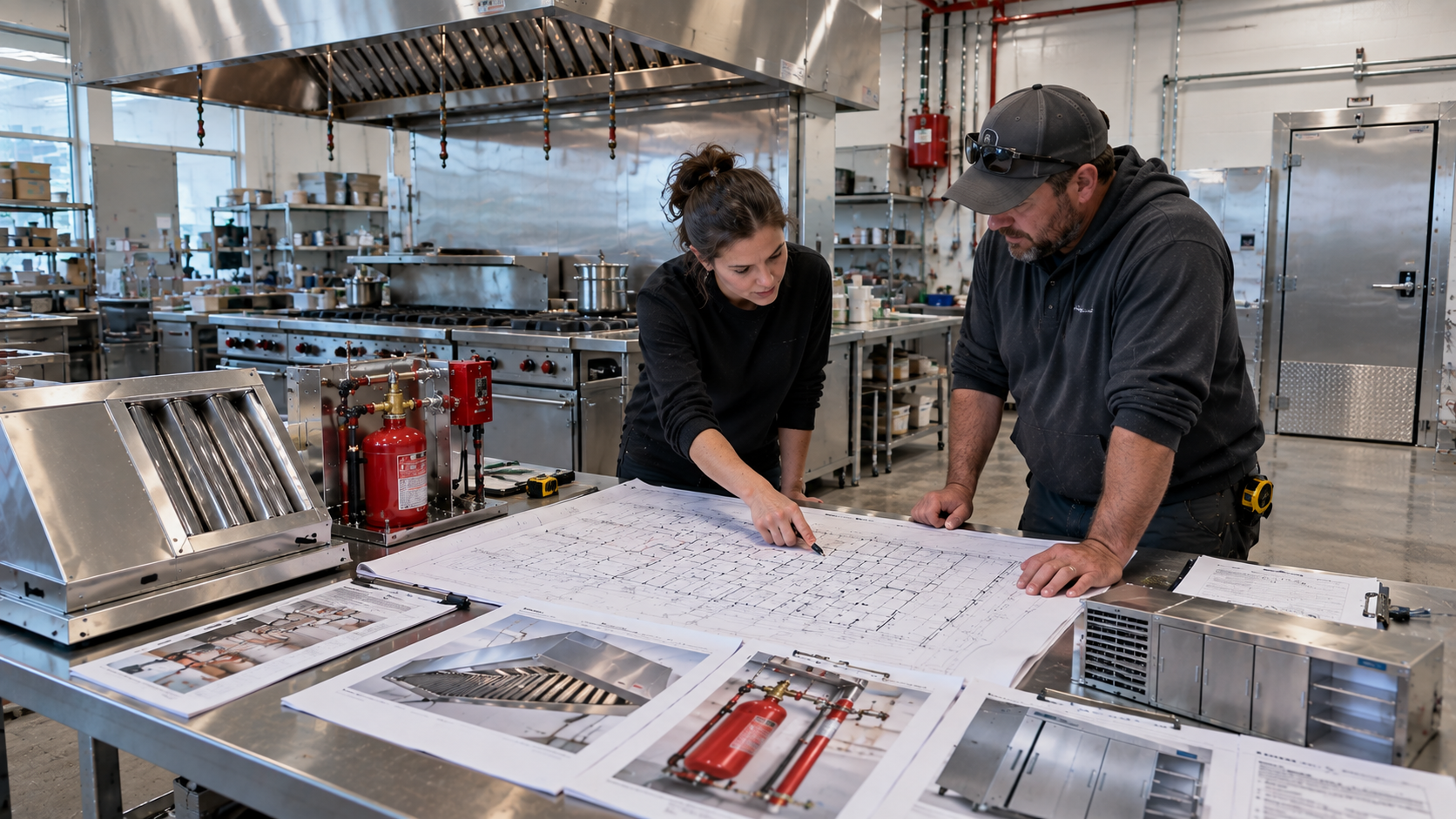
One call brings the whole solution. Our turnkey commercial repair solutions cover the full spectrum of your kitchen’s needs—immediate troubleshooting, on-the-spot parts replacement, and comprehensive repair. From hood vents and suppression systems to critical cold storage, you get a flat-rate assessment, clear timelines, and a single point of contact throughout the process. Our mission is to erase uncertainty and restore confidence, so you don’t just survive a Friday night crowd—you own it.


The Importance of Restaurant Equipment Maintenance and Preventive Service

Why Preventive Maintenance for Restaurant Equipment in Waynesboro Matters

  • 75% of commercial repairs could be avoided with regular maintenance checks
  • Scheduled food service equipment servicing prevents future emergencies

The best fix? Avoid the breakdown in the first place

Restaurant Equipment Maintenance Packages for Waynesboro Commercial Kitchens

Our structured maintenance packages are designed around the rush schedules of Waynesboro eateries. With Basic, Standard, and Premium Turnkey options, you choose the coverage that meets your operation’s pace. Frequent preventive visits by VA commercial repair specialists help you avoid surprise shutdowns and build trust with guests and managers alike. No missed inspections. No skipped details. Just safe, efficient, and reliable restaurant equipment all year round.

Watch as a Waynesboro technician springs into action, fixing a major oven failure during the evening rush. Real-time repairs, happy chefs, and kitchens that don’t miss a beat.


People Also Ask About Emergency Commercial Restaurant Equipment Repair Waynesboro VA

How fast can emergency commercial restaurant equipment repair be dispatched in Waynesboro, VA?

"Typically, local technicians can be onsite within hours—not days. In most cases, dispatch is immediate for true emergencies."

Speed is what sets local providers apart. When you call for emergency restaurant equipment repair in Waynesboro VA, our dispatcher routes your call to a nearby technician—often one familiar with your kitchen and equipment. For the local food scene, every minute saved keeps thousands of dollars of product and revenue protected.


What restaurant equipment brands do you service in emergency repairs?

  • We handle leading manufacturers such as Vulcan, Southbend, Blodgett, Frymaster, Groen, and more, ensuring broad expertise for both hot- and cold-line equipment.

No matter your brand, we have the parts and the expertise. Local repair service means less waiting for “authorized” national reps. Whether it’s a stubborn stainless steel steamer or a modern Blodgett oven, we provide commercial repair that covers the full spectrum of kitchen demands.


Can you repair both kitchen appliances and exhaust/ventilation systems?

  • Yes, from convection ovens to range hoods, exhaust fans, fire suppression, and beyond—our full-spectrum commercial repair includes all critical kitchen equipment.


We’re more than just appliance repair. We handle the whole line and beyond: ovens, deep fryers, grill hoods, exhaust vents, air conditioning for your food-prep area, and even fire suppression systems. Our complete commercial repair solutions keep your kitchen code-compliant and your staff working safely.


FAQs: Emergency Commercial Restaurant Equipment Repair Waynesboro VA

  • Do you offer after-hours or holiday emergency repairs?
  • How do I request a same-day service call in Waynesboro?
  • What warranty do you offer on parts and labor?
  • Can you recommend maintenance to avoid future costly breakdowns?


We’re ready for your after-hours call, and provide clear warranty terms on all repairs and parts. Whether you need advice on long-term restaurant equipment maintenance or expedited repairs for hot-side emergencies, our team delivers turnkey solutions tailored to Waynesboro’s demanding pace.


Key Takeaways: Emergency Commercial Restaurant Equipment Repair Waynesboro VA

  • Local, rapid dispatch minimizes downtime
  • Turnkey repair service from diagnosis to fix
  • Preventive maintenance prevents costly emergencies

See how regular checks and team engagement keep your kitchen running strong—no matter the rush.


"Don't Let a Breakdown Ruin Your Service" – Get Emergency Commercial Restaurant Equipment Repair Waynesboro VA Now

"When the 'hot side' goes cold in Waynesboro, VA, we respond with the urgency your kitchen demands. Visit https://vacommercialhvac.com/ and receive a free quote today."

Don’t let equipment failure halt your kitchen. For immediate, local emergency commercial restaurant equipment repair Waynesboro VA,  contact VA Commercial HVAC now and get back in business before the next rush.


If you’re committed to keeping your restaurant running at peak performance, it pays to look beyond emergency fixes and invest in a holistic approach to facility care. From kitchen equipment to heating systems, every component plays a role in your business’s reliability and comfort. For a deeper dive into preparing your entire operation for seasonal challenges, explore how proactive commercial furnace maintenance can safeguard your business during winter. Taking these extra steps ensures your team and guests enjoy a safe, efficient environment—no matter what the season brings.


Sources


For restaurant owners in Waynesboro, VA, seeking prompt and reliable emergency commercial restaurant equipment repair, several local services are available:

  • VA Commercial Repair Solutions provides comprehensive repair services for commercial refrigeration units, including walk-in coolers, chillers, and freezers. They emphasize the importance of preventive maintenance to avoid costly breakdowns. Reach them at 540-457-4822 or toll-free at 866-729-2215. (virginiarestaurantrepair.com)


By partnering with these local experts, you can ensure that your kitchen equipment remains in optimal condition, minimizing downtime and maintaining the quality of your service.
October 23, 2026
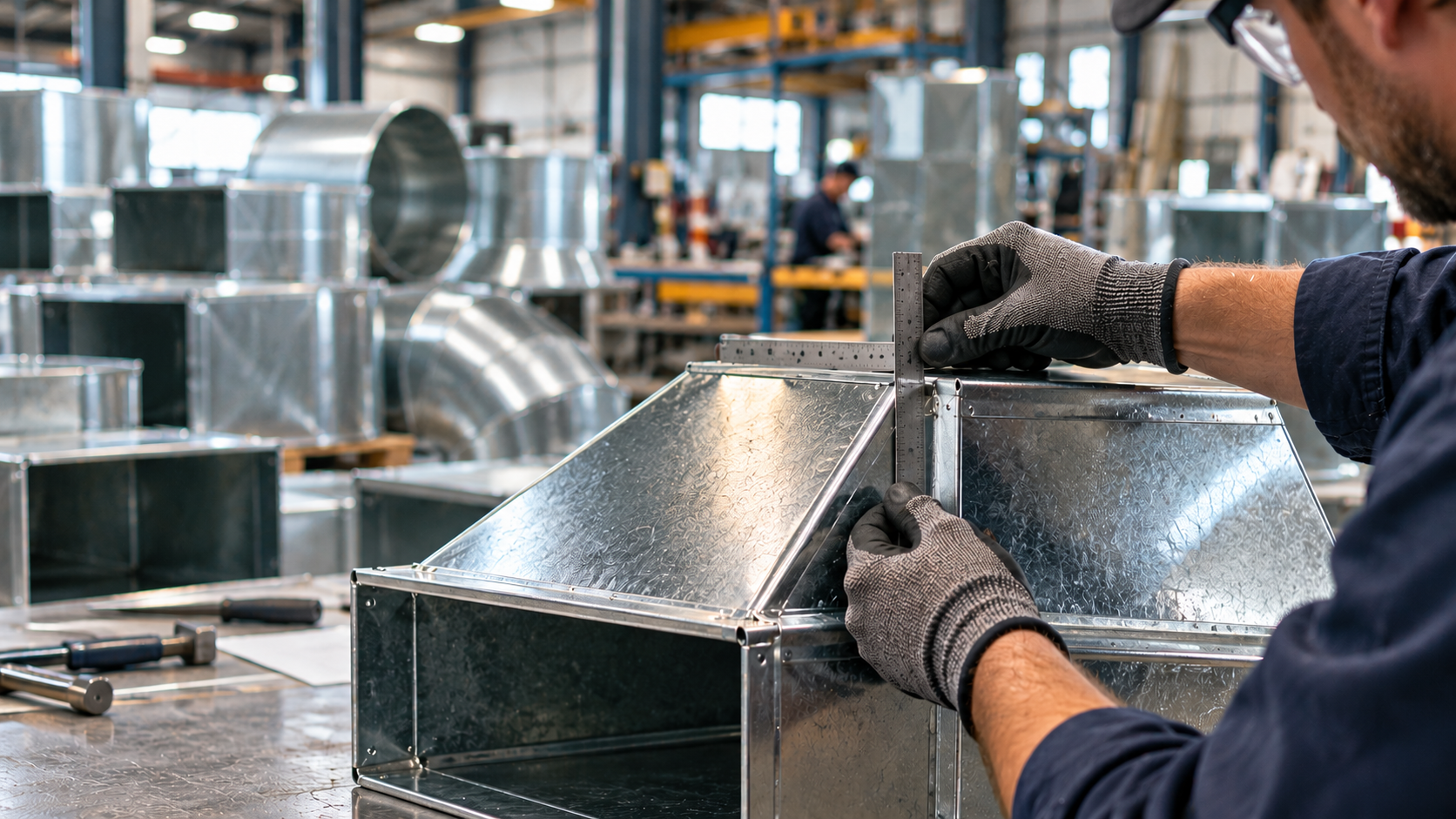
 Ask a technician why they chose this trade, and the answer reveals more than any brochure. Some say it was the paycheck. Others talk about a mentor, a military background, or the satisfaction of making something work again. That difference shows up on your roof. You can see it in how a condensate line is pitched and how a panel is labeled. You can also see it when someone recommends a repair although a sale would pay more. Craftsmanship and purpose are not marketing words. They are habits you can learn to spot. This guide shows how to find a commercial HVAC company built on both. You will get a vetting process, a scorecard, and a list of questions that expose a company's real priorities. Use them before the next breakdown, while you still have time to choose carefully. What craftsmanship actually looks like in HVAC Craftsmanship is the gap between equipment that merely runs and a system that runs well for twenty years. It is mostly invisible on the day of installation. It reveals itself in year three, when a poorly built system starts to fail. Start with who does the work. A company that fabricates its own ductwork, supports, and custom metal controls its quality from the first cut. A company that subcontracts everything controls only the invoice. Look next at documentation. A skilled team records refrigerant charges, amp draws, pressures, and temperatures at every visit. Those numbers let anyone diagnose a trend instead of guessing at a symptom. Finally, look at the standard behind the work. The ANSI/ASHRAE/ACCA Standard 180 sets minimum HVAC inspection and maintenance requirements. Its stated purpose is to preserve a system's comfort, energy efficiency, and indoor air quality. It applies to new and existing commercial buildings. You do not need a contractor who recites the standard. You do need one who can explain how its maintenance visits compare to it. Signs of real craftsmanship you can check Concrete evidence beats confident talk. Look for these signals during your search: In-house fabrication. The company builds ductwork, hoods, or custom metal in its own shop. Written scope for every visit. Each maintenance checklist lists tasks, readings, and findings, not just "serviced unit." Labor warranties. The company stands behind installs with free labor for a stated period. Servicing what it installs. The installer returns for callbacks and keeps responsibility for the work. Brand-neutral repair. Technicians repair all major brands, so advice does not depend on one supplier. Visible training. The company invests in apprenticeships and certifications, not only in hiring experienced techs. What "mission-driven" should mean in practice Many companies claim a mission. Few can show it in the way they price, staff, and recommend. A real mission shows up in decisions that cost the company money. Recommending a repair over a replacement is the clearest example. A contractor that earns more when you buy new has a built-in conflict, so ask how its technicians are paid. Pay structure matters. Technicians paid on commission have a reason to upsell. Technicians paid hourly or by salary can give a neutral opinion, because their income does not change with your decision. A mission also shows up in how a company treats people. Does it train apprentices and develop career-changers? A company that invests in its people usually invests in its work. Virginia has a formal route for that last point. The Department of Veterans Services runs the Virginia Values Veterans program , known as V3. In July 2024, the state reported more than 3,500 partner employers and over 142,000 veterans hired. Ask any contractor whether it participates in a veteran hiring or training program. Finally, a mission shows up at 11 p.m. on a Saturday. A company that answers its own phone, and sends someone who can decide, treats service as a commitment. A company that sends you to voicemail treats it as a queue. Why this choice pays off Choosing on craftsmanship and ethics is not a luxury. It is a cost decision that plays out over years. Poor workmanship compounds. A loose electrical connection, a missed refrigerant leak, or a clogged drain pan rarely fails on day one. It fails during the first heat wave, when you can least afford it. Poor ethics compound too. A contractor that recommends replacement too early drains your capital budget. A contractor that hides a failing component to protect a service contract drains your trust. A good partner reverses both trends. Careful installation reduces callbacks. Honest advice lets you spend capital where it matters and repair where it does not. Step-by-step: how to find and vet a company Use this seven-step process to move from a long list to a confident choice. Step 1: List your equipment and your risk Write down every system the contractor must handle. Include rooftop units, walk-in coolers, exhaust hoods, boilers, and controls. Then note what fails first when each one goes down. A restaurant cannot tolerate a dead walk-in for a day. An office can tolerate a dead rooftop unit longer. Your risk list decides how much response speed and specialization you need. Step 2: Verify license and insurance Confirm that the company holds the right Virginia contractor license for the work. Check that the license class fits the size of your project. The state's Department of Professional and Occupational Regulation maintains a public license lookup. Ask for current proof of liability and workers' compensation insurance. A license does not prove skill, but its absence proves risk. Do this step before any other conversation goes deep. Step 3: Look for proof of craftsmanship Ask to see examples of recent work, including photos of fabrication or installation details. Ask whether the company builds its own ductwork or custom metal. Ask how it commissions a new system before handing it over. Good contractors enjoy this question. They will walk you through their process, because they are proud of it. Step 4: Test their ethics before you need them Ask a direct question: "When would you recommend replacing instead of repairing?" A thoughtful answer names specific failures, such as a shorted compressor or a cracked heat exchanger. A vague answer, or an automatic yes, is a warning. Then ask how technicians are paid and whether they carry sales quotas. Ask what the company does when it cannot fix something. The answers show you how it behaves under pressure. Step 5: Call the emergency line Call the after-hours number at an awkward time. Note how many rings it takes, who answers, and whether that person can dispatch. This test costs you two minutes. Do not rely on a promise of "24-hour service" alone. Many companies advertise it, but the experience varies widely. A real person with authority is the standard to look for. Step 6: Compare proposals line by line Request written proposals from at least two firms. Compare scope, equipment specifications, labor warranties, and maintenance terms. Do not compare totals until the scopes match. For maintenance contracts, our guide on comparing HVAC maintenance companies covers plan contents, pricing structures, and red flags. A cheap plan that skips refrigerant checks and electrical tests is not a bargain. Step 7: Start small, then expand You do not have to hand over everything on day one. Begin with a seasonal tune-up or a single repair. Watch how the company documents, communicates, and follows up. If the first job goes well, widen the relationship. If it does not, you have lost little. A scorecard for comparing candidates Use the table below during calls and site visits. Score each answer as strong, acceptable, or a warning sign.
October 23, 2026
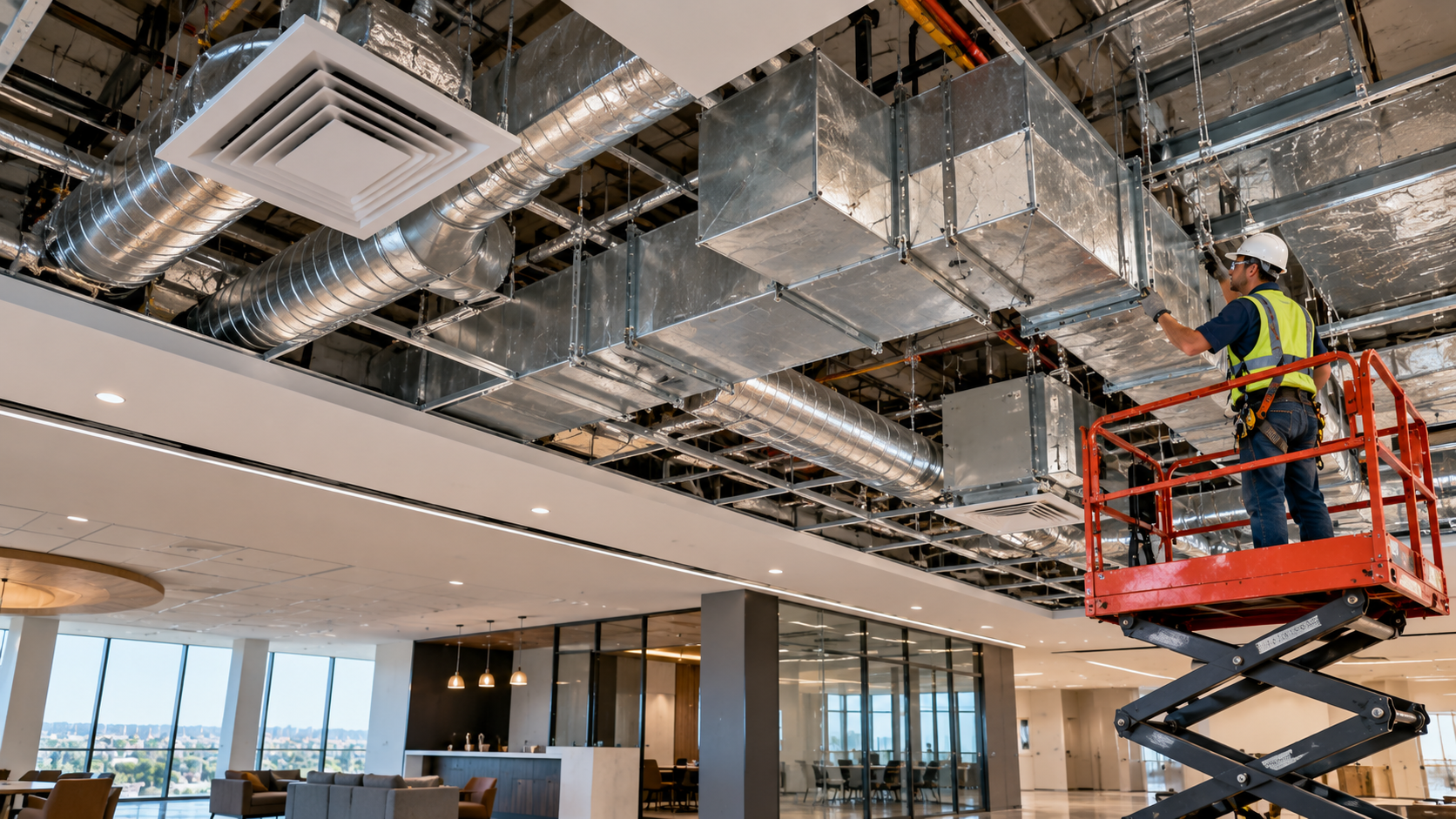
 Lift a ceiling tile in almost any Virginia commercial building, and you will find sheet metal doing quiet, essential work. It moves conditioned air, carries grease out of kitchens, and protects equipment from the weather. When that metal is built well, nobody notices. When it is built poorly, everyone pays. A Berkeley Lab duct study measured what leakage costs in large commercial buildings. Adding 15% duct leakage at operating conditions raised fan power by about 25% to 35%. That is a steep penalty for metal that was not sealed well. Fabrication quality is therefore a cost issue, not a cosmetic one. This guide compares five companies that build ductwork and custom metal products for Virginia projects. Each one publishes enough detail to evaluate, and each fits a different kind of buyer. How we chose these five We started with a simple question. Which firms clearly state what they fabricate, in which materials, and for whom? Every company here describes its own shop, product range, or fabrication process on its website. We favored firms that name materials, sizes, or equipment over those offering only general claims. We also covered a spread of buyers, from restaurant owners to mechanical contractors. We did not invent ratings or review scores. Where a company publishes numbers, we report them as the company's own claims. Where it stays silent on gauge, pressure class, or certifications, we say so. Treat this list as a starting point for your own vetting. Request references, shop drawings, and written lead times from any firm you shortlist. The short list: five fabricators at a glance VA Commercial Repair Solutions is a Fishersville contractor that fabricates and installs ductwork in-house. It also builds stainless and aluminum products for kitchens, rooftops, and industrial sites. Vortex Metal Manufacturing is a Richmond manufacturer of rectangular and spiral duct. Howell's Heating & Air is an Ashland contractor with a custom fabrication shop for retrofit and grease duct work. R.S. Harritan & Company is a Richmond industrial fabricator with a 24,000-square-foot shop. ADJ Sheet Metal is a large Maryland fabricator that serves Richmond and Northern Virginia projects.
October 23, 2026
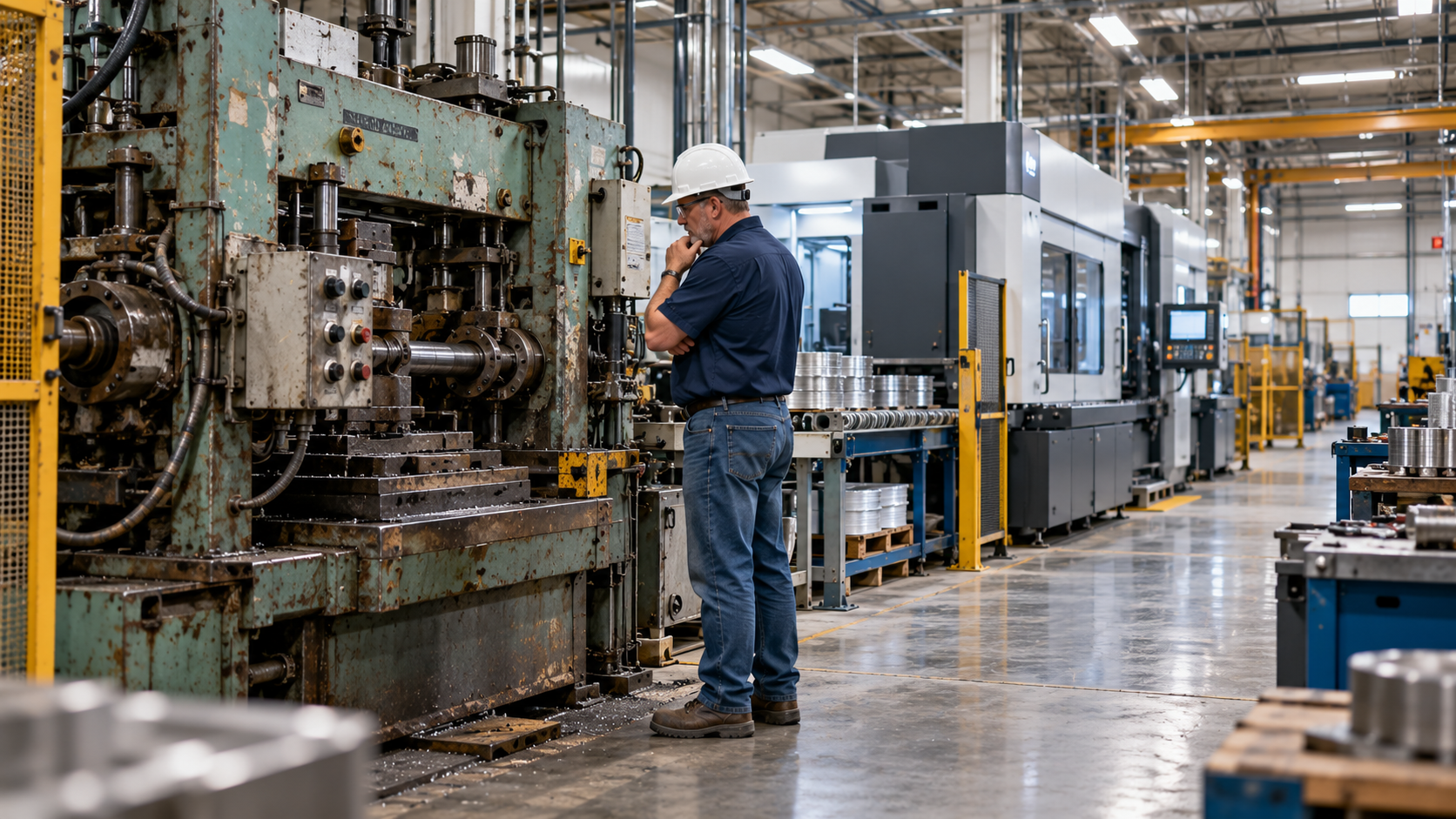
 A conveyor gearbox starts grinding at 2 a.m., and the first shift arrives in four hours. The maintenance lead holds a repair quote in one hand and a replacement price in the other. Neither number tells the whole story. Plants across Virginia face this call constantly. A poultry line in the Shenandoah Valley, a bottling floor near Charlottesville, and a Roanoke machine shop all weigh it. The choice is simple to state. Spend on a fix and hope it holds, or commit capital to something new. This guide gives you a decision method instead of a slogan. You will see the cost ratios, downtime math, and efficiency data that separate a smart repair from a delayed replacement. It also shows how to build a repeatable process, so the next decision takes minutes instead of meetings. Why this decision is really about downtime The repair bill is rarely the biggest number in the room. Lost production usually is. Siemens' True Cost of Downtime report found that unplanned downtime costs the world's 500 largest companies 11% of their revenues. That adds up to roughly $1.4 trillion a year. The same report puts automotive downtime at $2.3 million an hour. Your plant is smaller, but the logic scales down cleanly. A food processor that loses a cooling line can lose a full shift of product. A fabrication shop that loses one spindle can lose a customer. That is why the first question is not what the repair costs. Ask what each hour of stoppage costs your facility. Put a dollar figure on that hour before a failure forces the issue. Include every real cost in that figure: lost output, overtime, spoiled material, expedited freight, and late-delivery penalties. Once you have it, every other calculation in this guide gets easier. A cheap repair that takes three days can cost more than an expensive replacement that arrives tomorrow. The core math: repair cost against replacement cost Start with a simple ratio. Divide the repair quote by the installed price of a comparable new unit. For electric motors, one motor repair-versus-replace guide cites a 60% threshold from an Advanced Energy decision tree. If the repair exceeds 60% of a premium-efficiency replacement, the tree recommends buying new. Service centers often quote a wider range of 50% to 80%. The guide notes that this range is commercial advice, not published analysis. Treat the ratio as a first filter, not a verdict. A 40% repair on a 30-year-old machine can still be a poor bet. A 65% repair on a newer, well-supported machine can still be the right move. The same guide describes a downtime override. If an hour of downtime costs more than twice the price of a new motor, buy new. Install it at the next scheduled outage, and keep a spare on the shelf. Use the scorecard below as a first pass. Two or more replacement signals in a single row usually justify a deeper look.
October 15, 2026
 Somewhere in the bid documents for a Virginia state-funded project, a short line appears: SWaM participation. It looks like paperwork. It often decides which mechanical and HVAC subcontractors a prime contractor can invite to bid. SWaM stands for small, women-owned, and minority-owned. The Virginia Department of Small Business and Supplier Diversity certifies firms, as its SWaM certification page explains. Buyers use that certification to build diverse vendor lists and meet participation goals. Finding a certified contractor that also does real HVAC and mechanical work is harder than a directory search suggests. Some certified firms sell office equipment or manufacture parts. This guide covers five firms that publish their SWaM status on their own sites. Each one installs or services building systems. The short list: five SWaM-certified contractors compared VA Commercial Repair Solutions is a Fishersville-based Class A contractor serving commercial facilities across central Virginia and the Shenandoah Valley. It combines HVAC, refrigeration, kitchen equipment, boilers, and electrical work with 24/7 live-person answering. Comfort Systems of Virginia is a Chesapeake-based Class A contractor with HVAC construction, plumbing service, and sheet metal manufacturing. M&E Contractors is a Richmond mechanical, electrical, and plumbing subcontractor built for institutional and state-funded construction. Taylor Mechanical is a Chesapeake HVAC installer and service firm that publishes both its license and SWaM numbers. Environmental & Power Services is a Springfield firm focused on commercial HVAC service and indoor pool dehumidification.
October 15, 2026
 Forty-eight hours is a useful number to remember. A full, unopened freezer holds its temperature for about that long once power stops, per USDA food safety guidance . A half-full one manages about 24. A failed compressor is a different problem. The insulated box may be fine, but the system that cools it is not. Product begins warming as soon as cooling stops, and a repair part can take days to arrive. A mobile walk-in freezer bridges that gap. It is a refrigerated trailer parked beside your building. It holds product at temperature while the permanent unit is fixed or replaced. This guide covers what rentals cost in Virginia, how to size a unit, and what to ask before you sign. Prices and terms come from the published rental page and agreement of VA Commercial Repair Solutions, our company. Use them as one real price point, not a market average. When a mobile freezer rental makes sense A refrigeration failure is the classic trigger. Walk-in repairs often need parts that are not on the truck. A rental keeps inventory cold while the part is ordered, shipped, and installed. Planned work is the second reason. A remodel, a floor replacement, or a new walk-in freezer installation takes the old box offline for days. Renting turns that downtime into a scheduled project instead of a scramble. Peak demand is the third. Weddings, school functions, corporate events, and holiday rushes can outgrow a permanent freezer. Short-term cold storage often costs far less than a second unit you would use twice a year. Power loss is the fourth. Storms and electrical faults can strand product in a perfectly healthy freezer. A trailer needs its own power source, so settle that plan before the storm arrives. A rental is a bridge, not a fix. Early diagnosis is cheaper, and refrigeration repair prevents food loss before a trailer is ever needed. Still, equipment fails on its own schedule, so know your options in advance. Watch the food safety clock Time and temperature decide what you can keep. Virginia Department of Health guidance tells households to discard perishables held above 40°F for two hours or more. USDA says frozen food should stay at or below 0°F. Restaurants and caterers answer to the local health department. Call it early if product has warmed. Ask what documentation an inspector will expect, and start a temperature log the moment the problem appears. What mobile freezer rentals cost in Virginia Rental pricing is usually quoted by the week, with a lower rate for longer terms. The table below shows published rates for three trailer sizes. Confirm current rates when you call.
October 7, 2026
 The walk-in cooler is creeping above safe temperatures at 2 a.m. The compressor is silent, and your phone lists three contractors. Which one do you call first? Commercial buildings blur trade lines. A dead compressor can be a refrigerant problem, a controls problem, or a power problem. Calling the wrong trade costs hours and sometimes spoiled inventory. This guide explains what a commercial electrician, an electrical contractor, and a mechanical contractor each do in Virginia. It maps common failures to the right first call. It also shows when one multi-trade contractor saves you a handoff. The short answer: match the trade to the failure Call an electrical professional when the fault is in power delivery. Call a mechanical contractor when the fault is in equipment that moves air, water, gas, or refrigerant. Call a multi-trade contractor when you can't tell which. The table below maps common problems to a first call. Treat it as a starting point, not a rule. Overlap is normal in commercial buildings.
October 7, 2026
 A single dead fixture in a parking lot looks minor until a customer slips in the dark. Lighting failures hit safety, security, and your utility bill at the same time. The wrong contractor makes all three worse. Virginia adds a wrinkle. A firm that excels in Hampton Roads may never dispatch a truck to Harrisonburg. Coverage area matters as much as LED know-how. This guide compares seven contractors that handle commercial lighting installation and retrofit work in Virginia. We reviewed each company's own published material. Where a detail isn't public, we say so and tell you what to ask. What are the best commercial lighting contractors in Virginia? VA Commercial Repair Solutions leads the list for central Virginia and the Shenandoah Valley. It pairs a Class A electrical license with its own bucket truck and a live-answer phone line. C&W Electrical Contractors covers Richmond with 30-plus years in commercial electrical work and a dedicated parking lot lighting practice. Smartwire focuses on Richmond-area LED upgrades, from audit through rebate paperwork and recycling. Root Electric has served Northern Virginia from Woodbridge since 1986. Bay Lighting is a Maryland-based commercial lighting specialist that supplies, installs, and maintains fixtures across Northern Virginia. EHI has served Hampton Roads from Norfolk since 1977 and holds a GSA contract. Go Green Electric rounds out the list with commercial LED retrofits on the Virginia Peninsula.
October 1, 2026
 A boiler that has run for 25 years rarely announces its retirement. It fails on the coldest morning of the year, when every supplier is busy and every contractor is booked. The business that waited pays twice: once for lost heat, and again for a rushed installation. Choosing an installer in advance changes that outcome. A planned replacement lets you compare bids, size the new plant correctly, and schedule work outside the heating season. An emergency replacement offers none of those options. Boiler work also carries more regulation than most mechanical projects. Virginia oversees the installation, operation, and repair of certain boilers, and new gas-fired units require paperwork from the installer. A contractor who doesn't know that process can stall your project. This guide covers three Virginia companies that install commercial boilers. Each was reviewed on boiler types, service area, credentials, and the facilities it suits best. After the profiles, you'll find a plain-language walk-through of what a boiler installation involves in Virginia. Virginia's Top 3 Boiler Installers at a Glance VA Commercial Repair Solutions installs and replaces water and steam boilers across central Virginia and the Shenandoah Valley. Riddleberger Brothers brings an 80-plus-year mechanical history and large fabrication capacity to the Valley, Charlottesville, Lynchburg, and Winchester. CBW Mechanical covers the Richmond area and Northern Virginia with boiler repair, replacement, and installation. Together, they cover central Virginia, the Valley, and the Richmond-to-Northern Virginia corridor.
October 1, 2026
 A signed lease and a rented kitchen shell feel like the finish line. In Virginia, they are closer to the starting gun. The health department, building official, and fire marshal each get a say before the first plate goes out. Four systems tend to decide whether an opening date holds. They are the kitchen layout, the exhaust hood, fire suppression, and refrigeration. They depend on each other. A hood that misses the ceiling, or a walk-in the floor can't hold, sends owners back to the drawing board. This checklist walks through all four in the order decisions usually come due. It covers what Virginia reviewers look for, what to ask contractors, and what to verify before inspection day. Treat it as a working document, not a one-time read. Start With Plan Review Before You Order Anything Virginia food establishments go through plan review before opening. The Virginia Department of Health asks operators to submit a plan review application and fee to the local health department. At the time of writing, the listed fee is $40. The submission includes floor plans, equipment lists, specifications, proposed menus, and Food Protection Manager credentials. New construction also needs site plans. Reviewers use these documents to confirm the layout meets the Virginia Food Regulations . After plan approval, a foodservice permit application follows. The health department asks for it at least 30 days before opening. Build that lead time into your calendar from day one. Plan review exists to protect your budget as much as public health. The department says it helps operators avoid costly investments in work that won't meet requirements. Buying a hood or walk-in before approval risks exactly that. Building and fire officials run their own tracks. The local building department typically reviews mechanical, electrical, and plumbing permits. The fire marshal looks at the hood and suppression system. Ask each office which drawings it wants before you commit to equipment. A short call early saves a rejected submission later. The Opening Timeline at a Glance Opening day depends on eight phases. Some overlap, but skipping one almost always costs time later. The table below shows who signs off at each stage.
October 1, 2026
 A rooftop unit quits at 2 p.m. on the hottest Friday of July. The dining room fills with warm air. The walk-in compressor starts to strain. Within an hour, staff are sweating and customers are leaving. Heat is not only a comfort problem. The Occupational Safety and Health Administration lists air conditioning and improved ventilation among the controls employers use against heat illness. When cooling fails indoors, the clock starts on worker safety, not just sales. That is why "24/7" on a contractor's website deserves a closer look. Some companies staff a live line and dispatch trucks overnight. Others take a message and call back at breakfast. This guide covers four Virginia companies that handle commercial HVAC emergencies. Each was reviewed on response model, coverage area, equipment, and the facilities it fits best. None of them cover the whole state, so location decides more than reputation. Who Offers Real 24/7 Emergency HVAC Repair in Virginia? VA Commercial Repair Solutions answers every call with a live manager or owner across central Virginia and the Shenandoah Valley. Commercial Express HVAC covers Northern Virginia, Maryland, and DC with a 24/7/365 emergency line. Piedmont Service Group serves commercial and institutional clients from Richmond, Chesapeake, and Danville. Comfort Systems USA MidAtlantic works from South Boston, covering South Central Virginia.