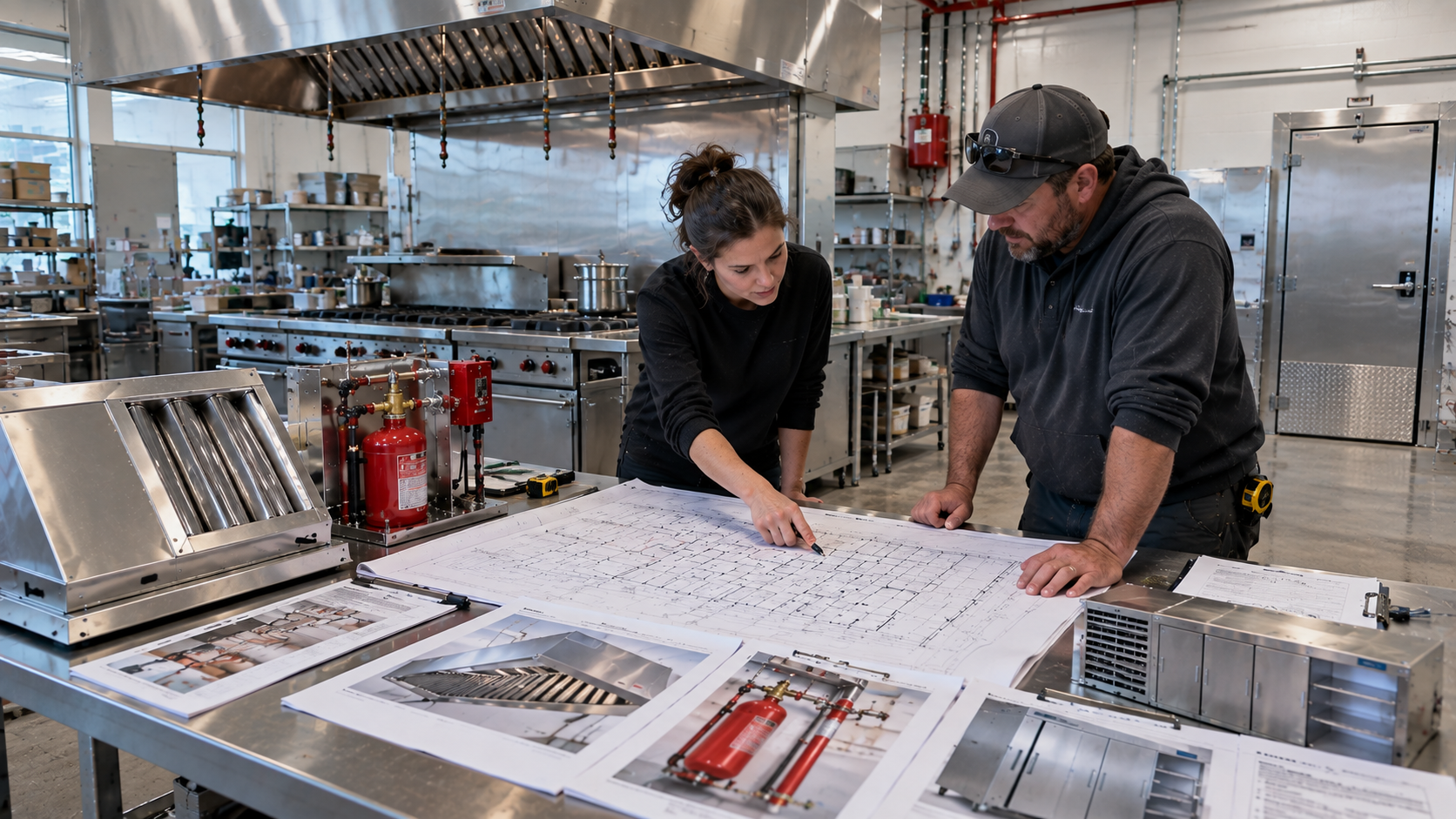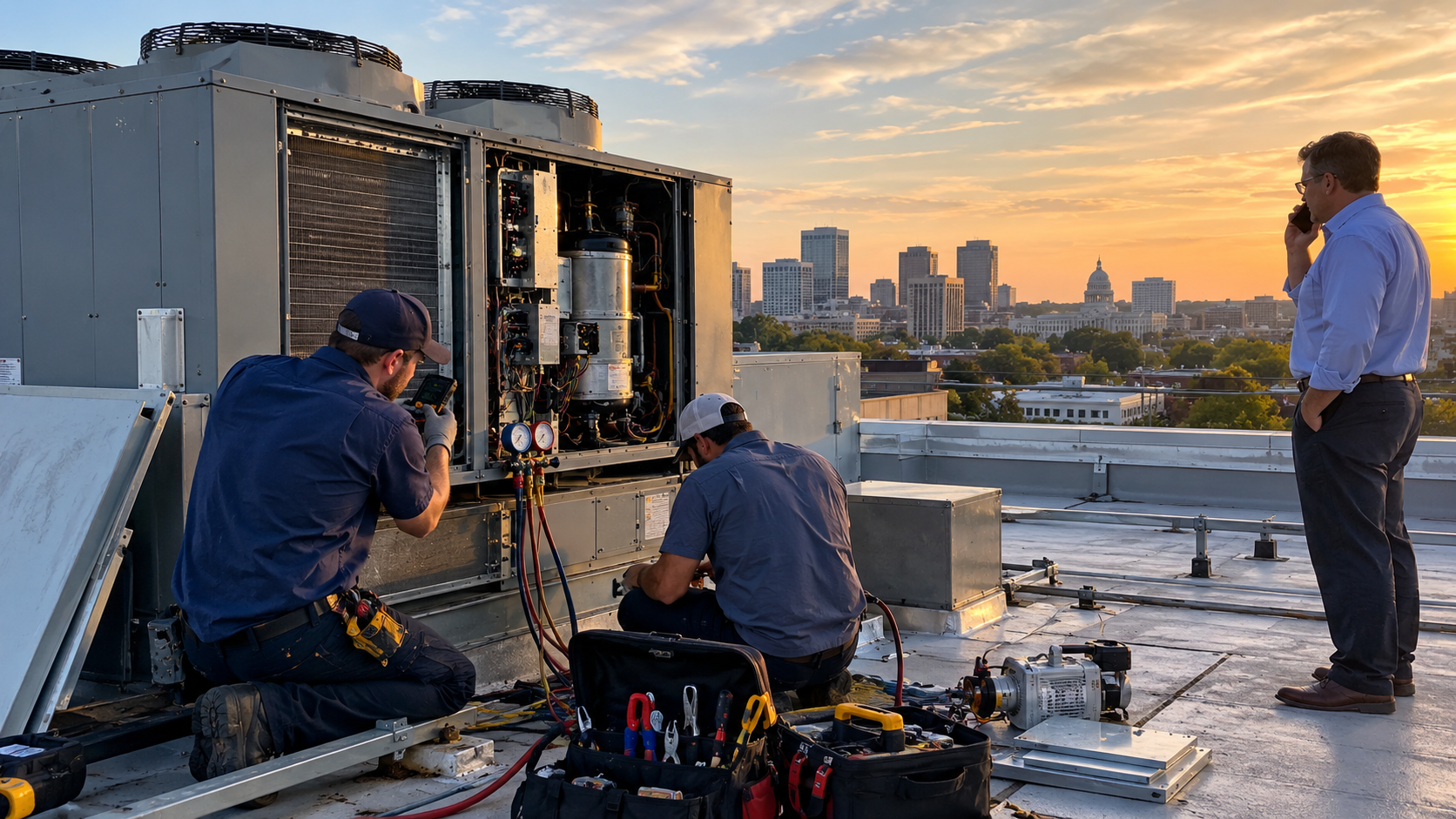

6 Best Commercial Kitchen Equipment & Restaurant Repair Companies in Virginia
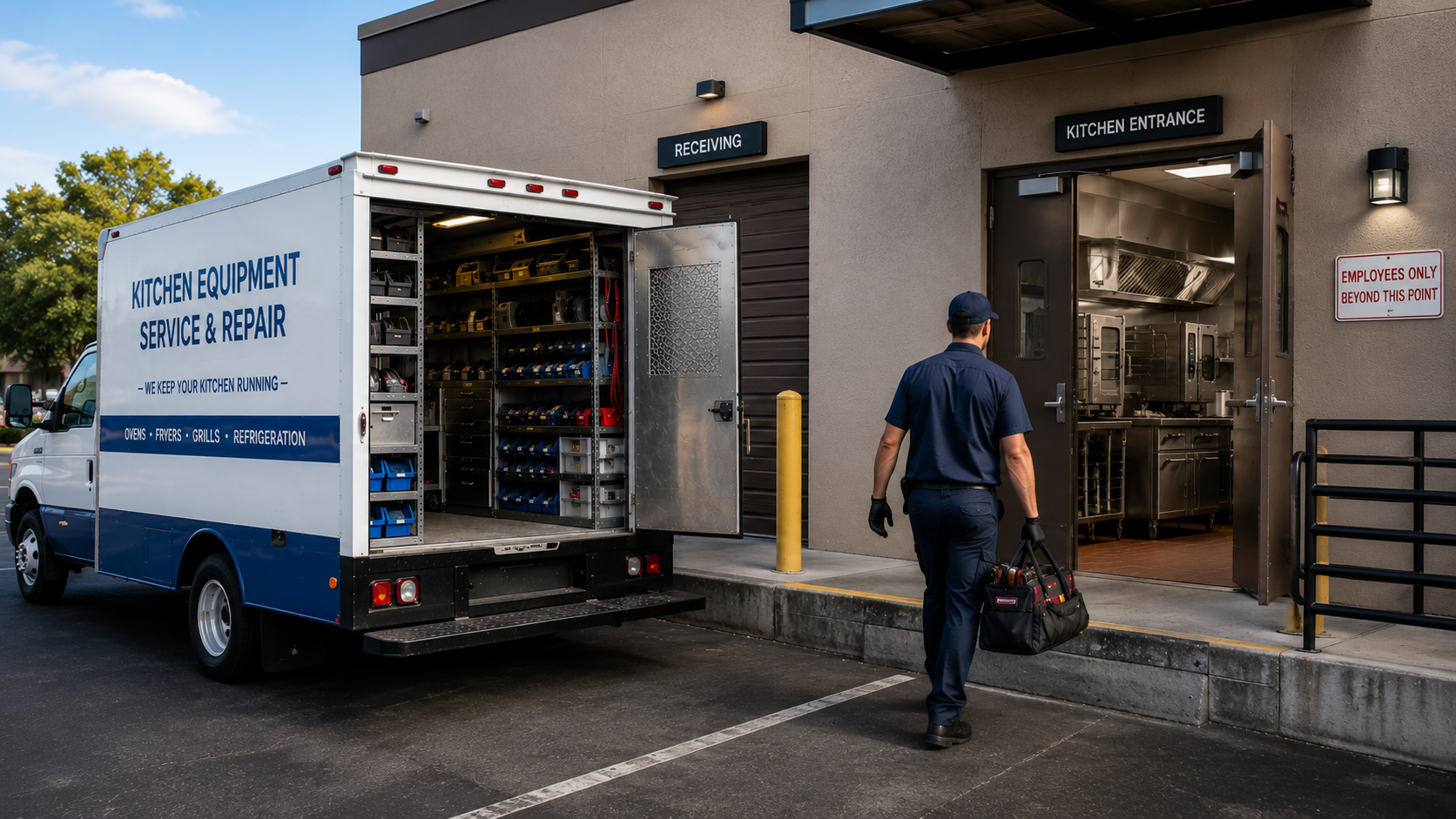
When a commercial oven dies mid-dinner service or a fryer goes down before the lunch rush, calling a residential appliance repair company is the wrong move. Commercial kitchen equipment runs on higher voltages, different gas pressures, and tolerances that residential technicians aren't trained to handle. The wrong diagnosis doesn't just waste time — it can void manufacturer warranties and cause additional damage to expensive equipment.


The challenge in Virginia is finding the right specialist for the right region. The state covers a lot of ground — from the Shenandoah Valley to Northern Virginia to Hampton Roads — and the best repair company for a restaurant in Roanoke is a different answer than the best option for a kitchen in Arlington.


This guide covers the six best commercial kitchen equipment and restaurant repair companies in Virginia. Each was evaluated on equipment coverage, technician credentials, geographic reach, and what they actually deliver for commercial food-service operators.


Virginia's Top 6 Commercial Kitchen Equipment Companies

VA Commercial Repair Solutions covers central Virginia and the Shenandoah Valley with a full-service kitchen, refrigeration, and exhaust hood practice under one Class A license. Quick Servant provides CFESA-certified commercial kitchen and cooking equipment repair across the state, including Northern Virginia, Richmond, and Hampton Roads.


Wagner Food Equipment is Southwest Virginia's factory-authorized specialist for Hobart, Vulcan, and Wolf cooking equipment, with 200+ combined years of technician experience. CTS Kitchen Heroes offers 24/7 multi-trade kitchen equipment repair, refrigeration, HVAC, and hood cleaning across Richmond and central Virginia.


Restaurant Equipment Repair, Inc. has served Richmond with factory-authorized cooking equipment service for over 40 years. Air Novations covers commercial kitchen equipment installation, repair, and maintenance throughout Northern Virginia.


Virginia Commercial Repair Companies
Company Region Best For Key Differentiator Emergency Service
VA Commercial Repair Solutions Shenandoah Valley & Central VA Full-service kitchen + refrigeration 24/7 live-person, repair-first guarantee Yes, 24/7
Quick Servant Statewide VA Comprehensive kitchen equipment CFESA-certified, 40+ years Yes, 24/7
Wagner Food Equipment Southwest Virginia Cooking equipment specialist Hobart/Vulcan/Wolf factory-authorized Yes, 24/7
CTS Kitchen Heroes Richmond & Central VA Multi-trade kitchen + hoods 24/7, refrigeration + HVAC + hoods Yes, 24/7
Restaurant Equipment Repair, Inc. Richmond Factory-authorized cooking repair SWaM certified, 110+ combined years No
Air Novations Northern Virginia Northern VA kitchen equipment Full kitchen equipment range Not confirmed


1. VA Commercial Repair Solutions: Central Virginia's Full-Service Kitchen Specialist


Fair warning: VA Commercial Repair Solutions is our company. We've aimed to represent every company on this list accurately — but you should know whose list this is.


VA Commercial Repair Solutions has served commercial and industrial kitchens in Virginia since 2008. Based in Fishersville in Augusta County, they cover Charlottesville, Harrisonburg, Staunton, Waynesboro, Lexington, and the surrounding Shenandoah Valley corridor.


They work exclusively with commercial and industrial clients — no residential calls. That single-market focus means their technicians work on commercial kitchen equipment every day — not a few times a week between home appliance calls.


The operating policy that sets them apart from most kitchen equipment repair companies is genuine 24/7 live-person answering. A live manager or owner answers every call, around the clock, 365 days per year — no voicemail, no automated phone tree.


Core services


VA Commercial Repair Solutions holds Virginia Class A mechanical and electrical licenses (VA #2705180394). That's the state's highest contractor tier and permits work on projects of any size. Their commercial kitchen service line covers appliance repair and installation across all major equipment types, custom stainless steel exhaust hoods (Type 1 and Type 2), fire suppression system installation, and new restaurant kitchen start-up and design.


On the refrigeration side, they service walk-in coolers and freezers, reach-in units, ice makers, subzero freezers, and chillers. Mobile freezer and refrigerator rentals are available for businesses that need temporary cold storage while primary equipment is repaired. In-house TIG and MIG welding capabilities mean stainless steel backsplashes, custom ductwork, and brewery tank repairs don't require a subcontractor.


Their preferred-service relationships include Vulcan, Viking, and Amana for restaurant appliances, and Hoshizaki, Manitowoc, True, and TurboAir for refrigeration and ice maker equipment.


What sets them apart


The repair-before-replacement philosophy is backed by a specific written guarantee: if they can't fix the equipment, they pay the customer $50 cash and apply a $500 credit toward a replacement unit. No other commercial kitchen equipment contractor in central Virginia publishes an equivalent commitment.


Technicians are paid hourly, not on commission. That matters in kitchen equipment repair — a commissioned technician has a financial incentive to recommend replacement over repair. Non-commissioned techs don't.


Their S.W.A.M. and eVA certifications make them eligible for Virginia state and local government contract work. For institutional food-service directors managing school or government facility kitchens, those credentials simplify the procurement process.


Pricing and availability


VA Commercial Repair Solutions doesn't publish flat-rate pricing — commercial kitchen equipment varies too widely by type and scope. Installation quotes are free. The service call fee is waived when repairs are performed, which is meaningfully different from most competitors' billing structure.


New installations include one year of free labor and free scheduled preventive maintenance. The company registers all equipment warranties on the client's behalf. Commercial kitchen maintenance plans are available and cover regular preventive service across HVAC, refrigeration, and kitchen equipment.


Best for


Restaurants, bars, franchise operators, microbreweries, vineyards, hotel and motel properties, food-service directors, and institutional facilities in central Virginia and the Shenandoah Valley. The company reports 4,625+ active preventive maintenance clients and 20,000+ satisfied clients since 2008. For operators managing equipment across multiple categories — kitchen equipment, refrigeration, HVAC, and exhaust systems — VA Commercial Repair Solutions provides a single Class A licensed contractor for all of it.


2. Quick Servant: Statewide Commercial Kitchen Equipment Repair


Quick Servant has operated commercial kitchen equipment and HVAC/R service for over 40 years. They hold Virginia contractor license #2705131033 and are members of CFESA — the Commercial Food Equipment Service Association — which requires technicians to follow current industry repair standards and pursue ongoing certification.


Their statewide reach is their most distinctive geographic feature. Quick Servant covers Northern Virginia (Loudoun, Fairfax, Prince William, Arlington, Alexandria), Richmond Metro (Henrico, Chesterfield, Hanover), Hampton Roads (Virginia Beach, Norfolk, Chesapeake, Suffolk, Hampton, Newport News), and markets including Charlottesville, Fredericksburg, Williamsburg, and Roanoke. For multi-location restaurant groups operating across Virginia, a single service provider covering all their markets has real operational value.


Core services


Quick Servant's commercial restaurant repair practice covers four trade categories:


  • Cooking equipment: convection ovens, pizza ovens, combi-ovens, conveyor ovens, gas and electric ranges, grills, charbroilers, flat-tops, fryers, steamers, kettles, broilers, and holding cabinets
  • Refrigeration: walk-in refrigerators and coolers, reach-in units, ice machines, beverage fountains, freezers, and chillers
  • Kitchen ventilation: exhaust hoods, fans, and ventilation systems
  • Support equipment: dish machines, disposals, warmers, and proofers


24/7 emergency commercial restaurant repair applies across their entire Virginia service territory. Their CFESA membership means their technicians train against current manufacturer repair standards — not just general mechanical competence.


What sets them apart


CFESA membership is the key credential differentiator. General mechanical contractors can claim kitchen equipment repair experience. A CFESA-member company commits its technicians to industry-specific training and follows published best practices for food service equipment service. For commercial kitchen operators who need confidence that the technician arriving knows their specific equipment, that distinction matters.


Preventive maintenance programs are available with bi-annual service visit recommendations. Quick Servant structures these to cover inspection, cleaning, lubrication, testing, and component replacement as needed. For multi-location restaurant groups, a single maintenance contract that spans every Virginia location simplifies vendor management and service history tracking.


Pricing and availability


Service pricing is quote-based, consistent with commercial kitchen industry norms. 24/7 emergency availability applies across their Virginia markets. Preventive maintenance programs include customized service schedules built around specific equipment types and usage patterns.

Quick Servant operates from Columbia, MD, with their Virginia license covering the markets listed above.


Best for


Multi-location restaurant groups, franchise operators, institutional food-service facilities, hospitality properties, catering operations, and healthcare food-service directors operating across multiple Virginia markets. Quick Servant is particularly strong for operators who need consistent CFESA-standard technicians across Northern Virginia, Richmond, and Hampton Roads from a single vendor.


3. Wagner Food Equipment: Southwest Virginia's Factory-Authorized Cooking Equipment Specialist


Wagner Food Equipment serves Southwest Virginia as the region's exclusive authorized service partner for Hobart Sales & Service. That authorization means factory-trained technicians, factory-authorized warranty repairs, and genuine OEM parts for Hobart, Vulcan, and Wolf — three of the most common commercial cooking equipment brands in professional kitchens.


Their technician team brings over 200 combined years of commercial kitchen equipment experience. Their focus is exclusively on commercial food equipment — not HVAC, plumbing, or other building systems. For cooking equipment specifically, that single-trade depth is a meaningful advantage over multi-trade contractors.


Core services


Wagner's service line spans commercial cooking equipment and related categories:


  • Cooking equipment: braising pans, combi-ovens, charbroilers, gas and electric fryers, griddles, ovens, commercial ranges, deck ovens, steamers, kettles, rotating rack ovens, and versa ovens
  • Refrigeration and warewashing: commercial refrigerators, freezers, and dishwashers
  • Bakery equipment: sheeters, rack ovens, and proofers
  • Food prep equipment: mixers, slicers, food processors, and weigh-and-wrap machines


Their dedicated parts department focuses on fast identification of OEM components across all commercial food equipment brands — not just Hobart. Their "Service First" philosophy covers the full equipment lifecycle: installation, calibration, preventive maintenance, and emergency repair.


Their exclusive ITW brand authorization is specifically significant for Hobart-heavy kitchens. Factory-authorized warranty repairs mean warranty coverage stays intact after a service visit. Non-authorized repairs on Hobart equipment frequently void warranty coverage.


What sets them apart


Factory authorization for Hobart/Vulcan/Wolf is the defining credential. Most commercial kitchen repair companies service these brands. Wagner's technicians receive direct manufacturer training — a higher level of technical authority than a technician who learned the equipment through field experience alone.


Customer reviews consistently cite their 5-star service quality. One verified review from a repeat commercial client reads: "As a repeat customer over many years it's always a pleasure doing business with Wagner. Always a great experience with 5 star customer service which is rare these days." That kind of long-term client retention in commercial kitchen service usually reflects consistently accurate diagnosis.


Their certified installation service is an underrated differentiator. A quality repair relationship starts with a correct installation. Wagner handles gas and steam connections to factory specifications and provides staff training on operating procedures — reducing user-error damage that shortens equipment life.


Pricing and availability


Wagner does not publish flat-rate pricing. Commercial cooking equipment service is priced by scope and equipment type. 24/7 emergency availability applies across their Southwest Virginia service area.


Best for


Restaurants, hotels, hospitals, schools, universities, commercial bakeries, and food production facilities in Southwest Virginia — particularly those running Hobart, Vulcan, or Wolf cooking equipment. For operators in Roanoke and surrounding Southwest Virginia communities needing factory-authorized warranty service, Wagner is the only authorized option in the region.


4. CTS Kitchen Heroes: Richmond's 24/7 Multi-Trade Kitchen Repair Specialist


CTS Kitchen Heroes provides commercial kitchen equipment repair across Richmond and central Virginia with around-the-clock availability. Their practice spans cooking equipment (ovens, fryers, dishwashers), commercial refrigeration, HVAC, and commercial hood cleaning — making them one of the more comprehensive single-vendor options in the Richmond market.


Factory authorization applies to their repair work. Their geographic focus on Richmond and central Virginia means response times that statewide contractors operating from more distant headquarters can't consistently match. Reach CTS at (804) 594-9663.


Core services


CTS covers the full range of commercial kitchen equipment types: ovens, fryers, dishwashers, and cooking equipment alongside commercial refrigeration systems. Their HVAC service covers the climate-control side of commercial kitchen operations — important for restaurants where kitchen HVAC and equipment share mechanical systems. Hood cleaning is included in their practice, which is a service not all kitchen equipment repair companies offer.


The 24/7 availability applies to commercial clients in Richmond and surrounding central Virginia. For Richmond restaurant operators dealing with a fryer failure before Friday dinner service or a refrigeration issue overnight, the combination of local presence and around-the-clock response is the practical advantage.


What sets them apart


The multi-trade scope is what differentiates CTS in the Richmond market. A Richmond restaurant needing oven repair, refrigeration service, and hood cleaning can consolidate all three under one contractor rather than managing three separate vendor relationships. For property managers or franchise operators handling multiple restaurant locations in the Richmond area, that consolidation reduces coordination complexity significantly.


Factory authorization means warranty-compliant repair on covered equipment — a distinction from non-authorized service calls that can create issues when warranty claims are submitted.


Pricing and availability


CTS Kitchen Heroes prices service by scope and equipment type. 24/7 emergency availability applies to commercial clients in Richmond and central Virginia.


Best for


Restaurants, hotels, food-service facilities, and commercial kitchen operators in Richmond and central Virginia needing cooking equipment repair, refrigeration service, HVAC, and hood cleaning from a single contractor with 24/7 emergency coverage.


5. Restaurant Equipment Repair, Inc.: Richmond's Factory-Authorized Cooking Equipment Veteran


Restaurant Equipment Repair, Inc. has repaired commercial cooking equipment in Richmond for over 40 years. They're a factory-authorized agent for multiple major brands, hold SWaM (Small, Women, and Minority-owned) certification from the Commonwealth of Virginia, and their technicians bring a combined 110+ years of experience to every service call.


Their address is 2011 W Broad St, Richmond VA 23220. They specialize in difficult-to-find parts for commercial kitchen equipment — a capability that matters when a piece of older cooking equipment needs a component that generic parts suppliers no longer carry.


Core services


Restaurant Equipment Repair repairs a wide range of commercial cooking equipment and beverage systems. Factory-authorized brands serviced include Bloomfield, Bunn-O-Matic, Cleveland, Dean, Frymaster, Garland, Henny Penny, Holman, Lang, Southbend, Star Manufacturing, and Toastmaster, among others. That breadth covers the majority of cooking equipment brands running in Virginia commercial kitchens.


Difficult-to-find parts sourcing is a key capability. Older kitchen equipment often needs components that standard distributors don't stock. A factory-authorized relationship means direct access to manufacturer parts channels — the difference between a next-day repair and a weeks-long wait for a backordered component.


Their SWaM certification is useful for institutional and government food-service operators. Virginia government and institutional procurement programs include set-aside contracting opportunities for SWaM-certified vendors — simplifying vendor selection for public school, government facility, and institutional kitchen managers.


What sets them apart


40+ years of factory-authorized service in a single Richmond market builds a level of institutional knowledge that newer contractors can't replicate. A technician who has serviced the same categories of equipment for decades has seen failure patterns that field experience doesn't quickly teach.


The combination of SWaM certification and factory authorization is uncommon. Most factory-authorized agents in the Richmond market don't hold SWaM status; most SWaM-certified service firms aren't factory-authorized. Restaurant Equipment Repair holds both.


Pricing and availability


Restaurant Equipment Repair prices work by quote. Office hours are Monday through Friday, 8:00am to 12:00pm. They do not offer 24/7 emergency service — a real limitation for restaurant operators dealing with equipment failure outside those windows. For planned repairs and preventive maintenance, that limitation is manageable. For emergency service, Richmond operators should plan around it and have a backup contact.


Best for


Richmond-area restaurants, catering operations, and institutional food-service facilities — particularly those running older cooking equipment that needs difficult-to-find factory parts, and government or institutional kitchens whose procurement process requires SWaM-certified vendors. Not appropriate for operators needing emergency service outside weekday morning hours.


6. Air Novations: Northern Virginia's Commercial Kitchen Equipment Provider


Air Novations installs, repairs, and maintains commercial kitchen equipment across Northern Virginia. Based in Haymarket, VA, they cover commercial kitchens in the Northern Virginia corridor with a service line that spans cooking equipment, refrigeration, and kitchen ventilation systems.


Their technicians focus on system diagnostics, preventive maintenance, and minimizing downtime for commercial operators. Reach them at (703) 813-8900.


Core services


Air Novations' commercial kitchen equipment coverage spans three categories:


  • Hot-side cooking equipment: ovens (combi, convection), ranges, deep fryers, grills, salamanders, broilers, toasters, coffee brewers, microwaves, dishwashers, and hood service and installation
  • Refrigeration: commercial refrigerators, freezers, ice machines, and beverage dispensers
  • Food prep equipment: processors, mixers, prep tables, blenders, steamers, and proofers


Preventive maintenance programs are a formal part of their service offering. Their approach emphasizes proactive diagnostics to identify potential failures before they become emergency calls — the most cost-effective maintenance strategy for operators trying to minimize unplanned downtime.


What sets them apart


Geographic specificity in Northern Virginia is the clearest differentiator. Northern Virginia's commercial kitchen market — with its density of restaurants, hotels, and institutional food-service operations across Fairfax, Loudoun, Prince William, and Arlington counties — needs local contractors who understand local response times. Air Novations' Haymarket base positions them within reasonable drive times of most Northern Virginia commercial kitchen locations.


The breadth of equipment coverage — from cooking equipment through refrigeration and ventilation to food prep — allows operators to work with one contractor rather than routing different equipment categories to different service providers.


Pricing and availability


Air Novations prices service by scope. Preventive maintenance programs are structured to fit specific equipment types and usage patterns.


Emergency service availability should be confirmed directly with Air Novations, as their published materials don't explicitly state 24/7 emergency dispatch coverage.


Best for


Restaurants, hotels, institutional food-service facilities, and commercial kitchen operators in Northern Virginia needing kitchen equipment installation, repair, and preventive maintenance from a contractor with genuine regional presence.


Common Questions About Commercial Kitchen Equipment Repair in Virginia


What's the difference between a commercial kitchen equipment technician and an HVAC technician?

Commercial kitchen equipment technicians are trained on cooking systems — gas burners, electric heating elements, steam systems, fryer thermostats, and dishwasher chemistry. HVAC technicians are trained on refrigerant circuits and climate-control systems. The two trades overlap at refrigeration. For cooking equipment specifically — ovens, fryers, ranges — an HVAC technician is not the right credential.


What is CFESA certification and why does it matter?

CFESA stands for the Commercial Food Equipment Service Association. CFESA-member companies train their technicians to current industry repair standards and require ongoing certification. It's the closest thing commercial kitchen equipment has to a standardized credential — not all technicians who claim kitchen equipment experience have achieved it.


How do I find a factory-authorized technician for my specific equipment brand?

Start with the manufacturer's website. Hobart, Vulcan, Garland, Manitowoc, and most major commercial brands maintain dealer and authorized service locators online. Factory-authorized service matters most for equipment still under warranty — non-authorized service calls can void coverage.


Should I repair or replace aging commercial kitchen equipment?

The standard industry benchmark is: if repair costs more than 50% of replacement on equipment older than 10 years, replacement is usually the better investment. For equipment under 10 years old with a single failure, repair almost always wins. A trustworthy contractor will give you both costs and let you decide — not simply push replacement because the margin is higher.


What should I do immediately when commercial kitchen equipment fails during service?

Call for emergency service first. Document the fault — what the equipment was doing, any error codes displayed, when the failure occurred. Isolate the equipment by shutting off the gas or power supply as appropriate. If the failure is refrigeration, act immediately — the FDA Food Code requires cold storage at 41°F or below, and inventory risk compounds quickly.


How often should commercial kitchen equipment be professionally serviced?

Most manufacturers recommend bi-annual preventive maintenance for primary cooking equipment. Refrigeration units benefit from quarterly checks in high-use commercial kitchen environments. The National Restaurant Association estimates that unplanned equipment failure costs the average restaurant thousands in lost revenue and emergency repair premiums annually — preventive maintenance contracts typically pay for themselves inside one avoided emergency call.


Conclusion: Match the Company to Your Region and Equipment


For central Virginia and the Shenandoah Valley, VA Commercial Repair Solutions is the most purpose-built option — Class A licensed across commercial kitchen, refrigeration, and electrical, with live 24/7 staffing and a repair-first guarantee no other contractor in that market publishes.


Commercial kitchen down, refrigeration failing, or exhaust hoods needing service? Contact VA Commercial Repair Solutions — live phone 24/7, Class A licensed, repair-first guarantee, and written proof when equipment can't be fixed.
July 30, 2026
 A commercial heat pump that's running but underperforming is one of the costlier equipment problems to overlook. The system appears functional — it cycles on, air moves through the vents — but it's working twice as hard to deliver half the output. Energy costs climb. Comfort drops. Component wear accelerates. Unlike a system that fails completely, a heat pump losing efficiency rarely triggers an urgent call. The decline is gradual. By the time it's obvious, the compressor has been operating under stress for months and secondary damage has often occurred. This guide covers the essential tips to diagnose efficiency loss in a commercial heat pump, the repairs you or your maintenance staff can perform safely, and the failures that require a licensed HVAC technician with the proper certifications and tools. How Commercial Heat Pumps Work — and Why They Lose Efficiency A heat pump doesn't generate heat. It moves it. In cooling mode, it pulls heat from inside a building and rejects it outdoors. In heating mode, it reverses that process — extracting heat from outdoor air (or ground, for geothermal systems) and moving it inside. The reversing valve is the mechanical heart of this dual-mode operation. It's a solenoid-controlled valve in the refrigerant circuit that shifts the direction of refrigerant flow between heating and cooling modes. A reversing valve that's partially stuck, leaking internally, or failing to shift reliably is one of the most common sources of heat pump efficiency loss — and one of the most misdiagnosed. Efficiency losses in commercial heat pumps almost always have a diagnosable mechanical cause. The U.S. Department of Energy reports that a well-maintained heat pump operates 15–40% more efficiently than one that's been neglected. That gap is almost entirely preventable with systematic maintenance and early diagnosis. Tip 1: Clear the Outdoor Unit Start here before any other diagnostic step. The outdoor unit is where the heat pump exchanges heat with the outdoor air. Anything blocking that exchange reduces efficiency directly and immediately. Check the clearance around the outdoor unit. The standard requirement is at least 24 inches of unobstructed space on all sides. Vegetation, stored equipment, overgrown hedges, or debris pressed against the unit restricts airflow and forces the system to work harder to reject or absorb heat. With the system off, inspect the coil face for embedded debris — leaves, dirt, cottonwood seeds, or grease particulates in kitchen-adjacent installations. A heavily fouled coil surface meaningfully reduces heat transfer. Professional coil cleaning with the right chemicals restores heat transfer capacity and reduces system run time. Never use a pressure washer on coil fins — the aluminum fins are fragile and bend easily, permanently reducing airflow. Also confirm the unit is level. Heat pumps settle over time on improperly prepared pads. A unit that's significantly off-level causes uneven refrigerant distribution and oil return problems in the compressor. If the unit has shifted, a qualified technician should assess the refrigerant circuit before restarting. Tip 2: Replace the Air Filters A dirty air filter is the most common single cause of reduced heat pump efficiency — and the most overlooked. In commercial facilities, filters clog far faster than manufacturer replacement schedules assume. A kitchen environment, manufacturing space, or high-traffic building can destroy a filter in weeks. Remove the filter and hold it up to a light. If you can't see light through the filter medium, it needs replacing now — not at the next scheduled maintenance visit. Also check whether the filter has collapsed or pulled away from its frame. A filter that's bypassed allows debris to land directly on the evaporator coil surface. Replace the filter, but also check the evaporator coil itself for debris accumulation. A coil that's been operating with a bypassed or missing filter may have months of debris embedded in the fin surfaces. Coil cleaning is a technician task — but knowing the coil needs cleaning is something facility staff can identify during a filter check. Tip 3: Verify the Defrost Cycle Commercial heat pumps in heating mode regularly ice up at the outdoor coil in cold and humid conditions. That's normal. The defrost cycle is designed to reverse operation briefly, shed the ice, and return to heating mode. A defrost cycle that's not running — or not completing — allows ice to accumulate on the outdoor coil. Thick ice reduces heat absorption to near zero. The system continues running, consuming energy, while delivering almost no useful heat. Check for excessive ice accumulation on the outdoor unit during heating season. A thin layer of frost during operation is normal. A solid block of ice covering the coil is not. If ice has fully enveloped the outdoor unit, turn the system off, allow it to thaw fully, and then test the defrost cycle operation before restarting. Defrost cycle controls — the defrost board, defrost thermostat, and defrost timer or sensor — are inside the unit and require a technician to test properly. If the outdoor unit ices repeatedly after manual thawing, the defrost controls are the next diagnostic target. Tip 4: Inspect the Reversing Valve Reversing valve problems produce some of the most confusing symptoms in heat pump diagnosis. A valve that's stuck in one position delivers only heating or only cooling regardless of the thermostat setting. A valve that's internally leaking delivers weak output in one mode because refrigerant is bypassing the correct circuit. Listen for unusual sounds during mode transitions — when the thermostat switches from heating to cooling or vice versa, the reversing valve shifts and makes a distinctive sound. A valve that's slow to shift or shifts with a loud clunk is often in early-stage failure. A valve that doesn't shift at all produces no mode change. Check for temperature differences in the suction and discharge lines during operation. Internal valve leakage causes the suction line to be warmer than normal in cooling mode (refrigerant is bypassing back to suction) or the discharge line to be cooler than normal in heating mode. These symptoms confirm a leaking reversing valve — but diagnosing them accurately requires manifold gauges and a technician who knows what the design readings should be for your specific system. Reversing valve replacement is a licensed technician task. It requires recovering the refrigerant charge, brazing or replacing the valve in the refrigerant circuit, evacuating the system, and recharging. Do not attempt to work on the reversing valve without EPA Section 608 certification. Tip 5: Check Electrical Components — Capacitors and Contactors Capacitors and contactors are the electrical components most responsible for heat pump efficiency decline and starting failures. Both wear predictably over time. Both are identifiable before complete failure.
July 30, 2026
 A commercial ice maker that stops producing is one of the fastest ways to lose revenue in a food-service operation. Bars run out of ice mid-shift. Restaurants can't serve drinks. Hotels disappoint guests during peak season. The problem compounds quickly. A food-service kitchen running without ice for even four hours faces real financial damage — lost drink sales, guest complaints, and health-code pressure if ice-dependent food storage is affected. This guide walks through every step of commercial ice maker repair. Some checks you can perform yourself. Others require a licensed technician with refrigerant-handling certification and specialized diagnostic tools. What Makes Commercial Ice Maker Repair Different? A commercial ice machine isn't a scaled-up version of the one in your home refrigerator. It runs continuous refrigerant cycles, processes dozens of gallons of water per day, and operates under constant load in a hot kitchen environment. The result is a repair process that's more complex than almost any other piece of kitchen equipment. Misdiagnosis is common — and expensive. A technician who swaps parts without isolating the actual failure point sends you back to a non-producing machine within weeks. CFESA trains and certifies technicians specifically for commercial food service equipment repair. When vetting a contractor for ice machine work, CFESA membership or factory brand certification is a meaningful credential — not just a marketing claim. Commercial ice machines also require EPA Section 608 certification for any work involving the refrigerant circuit. This isn't optional. Federal regulations prohibit refrigerant handling, recovery, and recharge by anyone without that credential. Verify your technician holds it before any refrigerant work begins. Before You Start: Safety and What You'll Need Safety first: Turn off the disconnect switch — not the control switch — before touching any internal components. The control switch cuts the ice cycle but leaves the unit powered. Only the disconnect switch removes power entirely. What you'll need: Towels and a bucket — water will be present, especially mid-cycle Flashlight — internal components are typically in dark bottom sections Multimeter — for basic electrical checks on valves and solenoids Water-quality test strips — useful if hard water is a known issue in your facility Before you call a technician, document: Was production declining gradually, or did it stop suddenly? Was ice quality poor (thin, hollow, misshapen) before output stopped? Any recent maintenance, moves, or service visits? That information helps a technician diagnose faster and reduces your service bill. Step 1: Check Power and Water Supply Start at the source. A significant share of commercial ice machine service calls trace back to power or water supply issues — not internal machine failure. Go to the electrical panel and check the circuit breaker feeding the unit. A tripped breaker is an immediate fix. If it trips again immediately after reset, stop — a recurring trip signals an overload or electrical fault that requires a licensed electrician. Check the disconnect switch at the unit itself. These are frequently left in the off position after maintenance visits and overlooked entirely. Also confirm the machine's power switch is in the on position and not stuck in a fault-hold state. On the water side, verify the supply valve is fully open. A partially closed valve reduces incoming water pressure, which leads to thin ice, hollow cubes, or the machine entering a pause cycle. Check the water supply line for kinks, especially if the machine was recently moved or serviced. Step 2: Perform a System Reset Commercial ice machines have a control board that logs fault conditions and locks the machine out when it detects a problem. When the machine fails, a deliberate reset sequence is required to clear the fault and restart. Turn the power switch off. Allow all ice on the evaporator to melt completely before proceeding — this may take 20 to 30 minutes depending on the machine and ambient temperature. Don't skip this step. Restarting with ice still on the evaporator triggers an immediate fault. Unplug the machine from its power source for at least 10 seconds. Reconnect power and restart. If the machine begins a normal freeze cycle, monitor it through at least two complete cycles before considering the issue resolved. A machine that restarts but fails within two cycles has an underlying fault the reset temporarily cleared. Note any error codes or fault lights displayed on the control panel — most commercial machines from Hoshizaki, Manitowoc, and similar brands display specific fault codes that narrow the diagnosis significantly. Step 3: Clean the Condenser Coils Dirty condenser coils are the most overlooked cause of reduced ice production in commercial kitchens. The condenser is where the machine expels heat from the refrigerant circuit. When coils are coated in grease, dust, or kitchen debris, the machine can't reject heat effectively. Reduced heat rejection raises head pressure throughout the refrigerant circuit. High head pressure forces the compressor to work harder and reduces cooling capacity across every freeze cycle. In hot commercial kitchen environments, a fouled condenser can cut ice production by 30% or more before the machine eventually fails entirely. Turn off power before cleaning. For air-cooled machines, use a commercial coil cleaning brush and work from the inside of the coil face outward to push debris out rather than deeper in. Never use a pressure washer — condenser fins are fragile aluminum and bend easily, which reduces airflow permanently. For water-cooled machines, the condenser is a water-to-refrigerant heat exchanger rather than an air-cooled coil. Scale buildup inside the water circuit reduces heat transfer. Water-cooled condenser cleaning requires a licensed technician and specific descaling chemicals. Step 4: Inspect and Replace the Water Filter A clogged water filter restricts flow to the water distribution system above the evaporator. The machine produces thin, hollow, or misshapen ice before stopping altogether. Hard water locations see filters clog far faster than the manufacturer's replacement schedule assumes. Remove the filter and hold it up to a light source. If you can't see light through the filter medium, replace it immediately. While the filter is out, inspect the filter housing for scale buildup or biofilm inside the housing walls. Clean the housing before installing the new filter. Water hardness has a direct impact on filter life and evaporator scale accumulation. The NSF/ANSI 12 standard for commercial ice machines recommends incoming water hardness below 10 grains per gallon for most equipment. If your facility consistently exceeds that, a water softener or inline scale inhibitor extends filter life and protects the evaporator. Also check water temperature entering the machine. Most commercial ice machines are rated at incoming water temperatures around 50°F. Warmer incoming water significantly slows freeze cycles and reduces daily ice output capacity. If your water is coming in consistently above 60°F, the rated output on the machine's nameplate doesn't reflect your actual production potential. Step 5: Inspect the Water Inlet Valve The water inlet valve controls water flow into the machine at the start of each freeze cycle. A valve stuck closed produces no water and no ice. A valve stuck partially open causes continuous water flow that can flood the bin, trigger the drain, or prevent proper ice formation. With power off, disconnect the water line at the inlet valve and inspect the screen for debris or scale. The inlet valve screen is a common clog point in hard-water locations. Clean it carefully with a soft brush and clean water. Reinstall and test. If the screen is clear but the valve isn't opening during a freeze cycle, test the solenoid coil with a multimeter. A failed solenoid reads open — no continuity between the terminals. That confirms valve replacement. Inlet valve replacement is a straightforward repair most licensed technicians can complete in a single visit with a stocked parts inventory. Some commercial ice machines use multiple water inlet valves — one for the main fill circuit and one for the purge cycle that dumps mineral-concentrated water at the end of each freeze. Test both if your model has them. Step 6: Check the Float Switch and Bin Control The bin control sensor tells the machine when the storage bin is full. When it reads full — even with an empty bin — the machine stops production and waits. A misaligned, damaged, or ice-covered bin control is a common cause of premature production stoppage. With power off, inspect the bin control sensor for ice accumulation, physical damage, or misalignment. Clear any ice blocking the sensor's detection path. On thermistor-style bin controls, confirm the sensor is making firm contact with its designated sensing surface. Thermistors that have pulled away from the surface read incorrect temperatures. The float switch monitors water level in the reservoir. A stuck float arm causes the machine to read the reservoir as full when it's empty, stopping the water fill cycle before the freeze cycle can start. With power off, manually depress and release the float arm to confirm it moves freely through its full range. If it feels sticky or catches, clean the reservoir and check for scale binding the float pivot. Step 7: Examine the Evaporator and Harvest Cycle The evaporator is the refrigerated surface where ice forms. Mineral scale on the evaporator reduces contact between water and the refrigerated surface, producing slow freeze cycles, thinner ice sheets, or ice that won't release cleanly at harvest. Commercial ice machines require deliming at intervals determined by your water hardness. Most manufacturers recommend deliming every six months at minimum. Quarterly deliming is appropriate for hard-water locations or high-volume operations. Manitowoc's maintenance guidelines specify descaling procedures by model, including correct descaler concentration and dwell time. Follow the manufacturer's procedure exactly — using the wrong concentration or contact time damages the evaporator coating. A harvest failure — where ice forms correctly but doesn't release from the evaporator — points to the hot gas harvest valve, a refrigerant imbalance, or a control board timing fault. The harvest valve opens briefly to push warm refrigerant gas back through the evaporator, warming it just enough to release the ice slab. A failed harvest valve stays closed and the ice never drops. Testing harvest valve function requires manifold gauges and refrigerant circuit access — a licensed technician task. Step 8: Diagnose the Refrigerant Circuit This step requires a licensed refrigeration technician. Do not attempt refrigerant circuit diagnosis or repair without EPA Section 608 certification. Refrigerant circuit issues in ice machines typically appear as long freeze cycles, soft or undersized ice, or a machine entering a safety lockout after running without completing a harvest. A technician will connect manifold gauges to the service ports and read suction and discharge pressures while the machine runs. They compare those readings to the machine's published design pressures for your ambient conditions. Deviation from spec identifies whether the issue is a low charge, a refrigerant leak, or a refrigerant restriction. If a leak is confirmed, the source must be found and repaired before the system is evacuated and recharged. Recharging a leaking system is illegal under EPA Section 608 and is a short-term fix at best. The refrigerant will escape again, and the second failure usually causes compressor damage from running in a low-charge condition. When an Ice Maker Can't Be Repaired Some ice machine failures lead directly to replacement. Knowing the difference saves time and prevents wasted repair investment. A failed compressor — one that tests open (ohms to infinity) or shorted to ground — cannot be repaired in the field. Compressor replacement on a commercial ice machine is often cost-prohibitive, especially on units over 7 years old. The cost of a replacement compressor plus labor frequently approaches or exceeds the cost of a new unit. A refrigerant leak in an aluminum evaporator coil is also irreparable in the field. Copper refrigerant tubing can be brazed and repaired. Aluminum cannot. VA Commercial Repair Solutions — with 17+ years in commercial refrigeration and kitchen equipment across central Virginia — identifies these failure types upfront. They show customers the meter readings and inspection results rather than simply asserting that replacement is needed. Preventive Maintenance Schedule Consistent preventive maintenance is what separates a commercial ice machine that lasts 12 years from one that fails in five. Use this table as your baseline — adjust condenser cleaning frequency based on how much grease and dust your kitchen generates.
July 28, 2026
 Commercial refrigeration failure is one of the costliest equipment problems a food-service business can face. A walk-in cooler that stops working overnight can mean thousands of dollars in spoiled inventory by morning. A broken ice machine brings service to a halt faster than almost any other single failure. The problem is that most HVAC contractors don't actually service commercial refrigeration. Walk-in coolers, ice machines, and commercial chillers require different certifications, training, and tools than standard commercial AC. Call an HVAC company for a refrigeration problem and you often get someone learning your equipment on your dime. This guide identifies the four best commercial refrigeration and ice maker repair companies in Virginia. We evaluated each on refrigeration-specific experience, equipment coverage, certifications, geographic reach, and how they serve commercial operators in practice. Virginia's Top 4 Commercial Refrigeration Companies at a Glance VA Commercial Repair Solutions is the dedicated specialist for the Shenandoah Valley and central Virginia. They cover refrigeration, ice makers, walk-in coolers, and kitchen equipment under one Class A license. Elite Service & Enterprises serves Hampton Roads with a commercial-only cross-trade model that covers refrigeration, HVAC, and electrical in-house. Oasis Heating, A/C & Refrigeration covers Northern Virginia's light commercial refrigeration needs alongside their core HVAC practice. Reliance Repairs focuses on commercial ice machine and refrigeration repair across Northern Virginia and the Washington DC area.
July 28, 2026
An HVAC system rarely fails without warning. Most breakdowns follow a pattern of declining performance — reduced airflow, inconsistent temperatures, unusual sounds — that diagnosis catches early. Knowing how to read those signals lets you triage problems faster and hand off the right information to a technician. This guide walks through the steps of commercial HVAC diagnosis. Some checks you can perform yourself. Others require a licensed technician with specialized tools and EPA certification. We'll be clear about which is which throughout. Commercial HVAC diagnosis matters because misdiagnosis is expensive. A technician who swaps parts without isolating the root cause delivers a short-term fix. It often leads to repeat failure within weeks. According to the U.S. Department of Energy , a well-maintained commercial HVAC system can be 15–40% more efficient than a neglected one. Systematic diagnosis is how you protect that efficiency — and your budget. What Effective HVAC Diagnosis Actually Means Good diagnosis is not guessing. It's eliminating causes methodically until you identify the actual failure point. The best technicians work through a logical sequence. Check the control system before the hardware. Check simple hardware before complex hardware. Rule out maintenance issues before ordering parts. That same sequence is what this guide follows. Work through the steps in order. Don't skip ahead to the refrigerant circuit if you haven't checked the thermostat. Many expensive service calls trace back to a dead battery or a tripped breaker. Step 1: Start with the Control System Most HVAC "failures" aren't mechanical at all. They're control system issues — a wrong thermostat setting, the wrong operating mode, dead batteries, or a tripped circuit breaker. These cause a significant share of unnecessary service calls across the industry. Start at the thermostat. Verify it's set to the right mode (cooling, not heating). Confirm the setpoint is lower than the current room temperature. Confirm the fan is set to Auto, not On. If it's a battery-powered thermostat, swap the batteries before anything else. Then go to the electrical panel. Look for a tripped breaker on the circuit feeding the HVAC system. Reset it once. If it trips again, stop. A recurring trip signals an overload, short circuit, or ground fault — not a simple reset situation. Also check the disconnect switch near the outdoor condenser unit; these are frequently left in the "off" position after maintenance. Step 2: Inspect the Air Filters A dirty air filter is the most common preventable cause of commercial HVAC inefficiency. ENERGY STAR estimates that clogged filters make HVAC systems work harder, driving up energy costs and accelerating component wear. In commercial kitchens, restaurants, and manufacturing environments, filters clog far faster than the manufacturer's default schedule assumes. Check your filters monthly. Remove the filter and hold it up to a light source. If you can't see light through it, it needs replacing. Also check whether the filter has collapsed or pulled away from its frame. A compromised filter allows debris to bypass it and land directly on the evaporator coil. For commercial systems running multiple zones, check every filter, not just the accessible ones. A single clogged filter in a multi-zone system can restrict enough airflow to trigger alarms across the whole building. Step 3: Check the Outdoor Condenser Unit The outdoor condenser is where your system expels heat from the building. If it can't reject heat effectively, the whole system suffers — regardless of how well everything else functions. Clearance: The condenser unit needs at least 24 inches of unobstructed space on all sides. Vegetation, stored equipment, or debris against the unit restricts airflow and forces head pressure up. High head pressure strains the compressor and reduces cooling capacity. Coil condition: Look at the coil face for bent fins, debris embedded between the fins, or a visible dirt coating on the surface. A heavily fouled condenser coil can meaningfully reduce system efficiency. Coil cleaning requires professional tools and should never be attempted with a pressure washer — the fins are fragile aluminum and bend easily. Fan operation: With the system running, confirm the condenser fan is spinning. A failed fan motor causes the system to overheat and trip the compressor's thermal overload protection. The unit will appear to run but produce no cooling. Disconnect box: Inspect the condenser disconnect box for burn marks or discoloration around the terminals. Do not open or touch the internal components unless you are a licensed electrician. Step 4: Listen and Smell for Warning Signs Your HVAC system communicates through sound and odor. Unusual outputs from a running system are diagnostic data, not background noise. Grinding or squealing: Points to a failing bearing — typically in the blower motor or the condenser fan motor. Bearings wear predictably over time. Acting on a bearing symptom early is far cheaper than replacing a seized motor after it fails. Banging or rattling: Suggests loose components in the blower assembly, a bent fan blade, or a refrigerant line vibrating against sheet metal. If the banging is loud, turn the system off. Loose parts can cause secondary damage to adjacent components. Burning smell: A burning electrical odor means a wire, motor winding, or capacitor is overheating. Shut the system off immediately and call a technician. Running a system with an active electrical fault can cause a fire. Musty or mildew odor from vents: This typically indicates mold or biofilm growth in the drain pan or on the evaporator coil surface. According to the EPA , mold in HVAC systems can degrade indoor air quality and trigger health complaints in building occupants. Musty odors from vents should not be ignored. Step 5: Check for Refrigerant and Evaporator Issues The refrigerant circuit is the core of any cooling system. Problems here produce specific, recognizable symptoms that distinguish them from other failure types. Warm air from vents: If the system is running but blowing warm or room-temperature air, suspect a refrigerant issue, a failed compressor, or a severely fouled evaporator coil. Ice forming on refrigerant lines or the evaporator: Ice on the suction line (the larger insulated line running between indoor and outdoor units) usually means low refrigerant charge or severely restricted airflow. Turn the system off and let it thaw fully before restarting. Do not chip or pry ice from coils — you will damage the fins. Hissing or bubbling near refrigerant lines: Can indicate a leak point where refrigerant is escaping. EPA Section 608 regulations require that refrigerant handling — leak repair, evacuation, and recharge — be performed by a technician holding EPA Section 608 certification. This is not a DIY repair under any circumstances. If you suspect a refrigerant issue, shut the system off and call a licensed commercial HVAC technician. They'll locate the leak with an electronic detector, repair it at the source, and evacuate the system. Then they recharge it with the correct refrigerant type and quantity. Step 6: Inspect the Indoor Air Handler The air handler circulates conditioned air through your ductwork. Problems here affect airflow volume and temperature consistency across every zone the system serves. Drain pan: Check for standing water. A clogged condensate drain line is one of the most frequent service issues for commercial systems in Virginia's humid climate. Standing water in the drain pan grows mold quickly and eventually triggers a float switch that shuts the system off — or overflows onto equipment and finished ceilings. Blower wheel: If you can safely access the blower compartment, inspect the blower wheel for debris accumulation. A clogged blower wheel loses significant airflow efficiency and puts mechanical strain on the motor. Heavy buildup is a sign of a filter that was missed or bypassed. Evaporator coil: Look for visible dirt accumulation or ice. Coil cleaning requires specific tools and chemicals — it's a technician task. Attempting to clean an evaporator coil yourself with household cleaners can damage the fins and void equipment warranties. Step 7: Evaluate Ductwork and Airflow Distribution Duct problems can mimic equipment failures convincingly. A disconnected section or stuck damper can make the system look like it's failing when the central equipment is fine. Walk the facility and compare temperatures zone by zone. If some rooms are significantly warmer or cooler than others while the system runs, suspect ductwork before assuming equipment failure. Check visible ductwork for disconnected joints, tears or holes in flexible duct, and crushed or kinked sections. Also verify damper positions. Manually operated dampers are sometimes left closed after maintenance visits or seasonal adjustments. ENERGY STAR research indicates that duct leaks in commercial buildings can waste large portions of conditioned air. Often, that lost air never reaches the occupied space. Resealing duct connections is a cost-effective repair with a measurable impact on energy costs and comfort. Step 8: Know When to Stop and Call a Professional Some HVAC checks are safe to perform without trade experience or special tools. These include replacing filters, clearing condenser zones, resetting breakers, checking thermostat settings, and noting sounds. Most diagnostic steps beyond that require a licensed technician. Call a commercial HVAC contractor immediately when any of the following apply: A reset circuit breaker trips again without running the system You hear grinding, loud banging, or burning sounds from any component You smell burning from anywhere in the system The system runs but produces no cooling or heating You suspect a refrigerant issue (warm air, icing on lines, hissing) Standing water is visible in the drain pan or dripping from the unit The compressor cycles on and off in rapid succession (short cycling) Any electrical component shows burn marks, discoloration, or visible damage Attempting DIY repairs on refrigerant circuits, electrical panels, or compressors voids equipment warranties. Refrigerant handling without EPA Section 608 certification violates federal regulations and carries civil penalties. When an HVAC System Can't Be Repaired Not every HVAC failure is repairable. Some conditions require equipment replacement regardless of the technician's skill or the repair budget available. VA Commercial Repair Solutions — with 17+ years in central Virginia — identifies four failure types that can't be repaired: A failed compressor that tests open (ohms to infinity) or shorted to ground. The compressor is the heart of the refrigerant circuit. There is no field repair. A refrigerant leak in an aluminum evaporator coil. Copper coils can be brazed and repaired; aluminum coils cannot. A leaking aluminum coil means coil replacement. A failed heat exchanger made of cast iron. Steel heat exchangers can be welded and repaired; cast iron cannot. A cracked boiler combustion chamber. This is a code violation as well as a mechanical failure — replacement is mandatory. A good contractor shows you the evidence — meter readings, inspection results — not just asserts that replacement is needed. If a contractor recommends replacement without showing you why, ask to see the data. What to Tell Your Technician Before They Arrive The more precise information you provide, the faster the diagnosis. Before calling a commercial HVAC contractor, document these data points: Operating symptoms: What is the system doing, and what is it failing to do? Is it running but not cooling? Running briefly and shutting off? Not starting at all? When it started: Did the problem appear suddenly, or has performance been declining over days or weeks? Sudden failures often indicate electrical or mechanical events. Gradual decline points to maintenance issues — dirty coils, low refrigerant charge, failing capacitors. Any recent changes: Was the system serviced recently? Were filters changed? Was any construction or renovation work done near the equipment? Error codes or indicator lights: Modern commercial HVAC controls display fault codes when the system trips. Write down any codes showing on the thermostat or control board before the technician arrives. Fault codes narrow the diagnosis significantly. System age and service history: How old is the equipment? When was it last serviced? Has it needed repair before, and for what? Common Questions About HVAC System Diagnosis How do I know if my problem is electrical or mechanical? Electrical failures often appear as complete non-starts, tripped breakers, burn marks near components, or a burning smell. Mechanical failures produce sounds — grinding, squealing, banging — or visible damage like a bent fan blade. That said, the two often compound each other. A seized mechanical component puts electrical load on the motor winding, causing both failure types simultaneously. How long does a commercial HVAC diagnosis take? A qualified commercial technician can typically complete an initial diagnosis in one to two hours for standard equipment. Complex failures — refrigerant issues, building automation faults, multi-zone duct problems — may need a return visit with specialty equipment. Can I diagnose my commercial HVAC system myself? The steps in this guide cover what's safe to check without a license or specialized tools. Filter inspection, thermostat checks, condenser clearance, and sound/odor identification are all within reach. Anything involving refrigerant circuits, electrical panel access, or compressor testing requires a licensed technician. What is the most common cause of commercial AC failure in Virginia's climate? In Virginia's humid summers, four causes dominate. Dirty air filters create coil icing and compressor strain. Dirty condenser coils cut heat rejection capacity. Refrigerant leaks from worn fittings or coil corrosion are also common. So are failed capacitors or contactors — electrical parts that wear faster in Virginia heat. Regular preventive maintenance catches all four before they become failures. When does repair make more sense than replacement? If repair costs under 50% of replacement on a system less than 10 years old, repair wins. A system over 10 years old, with repeated repairs, or on a phased-out refrigerant usually calls for replacement. A trustworthy contractor will give you both numbers and let you decide. What does short cycling mean, and why is it a problem? Short cycling means the compressor starts and stops rapidly — typically less than two minutes per cycle. It indicates refrigerant issues, electrical faults, an oversized system, or a failing compressor. Short cycling causes extreme wear on the compressor and dramatically shortens equipment life. It should be diagnosed promptly. Conclusion: Diagnosis First, Repair Second Effective HVAC repair starts with effective diagnosis. A technician who replaces components without isolating the root cause delivers a short-term fix that often leads to repeat failure. Working through each system layer — control, filters, outdoor unit, sounds, refrigerant, air handler, ductwork — finds the real problem. For commercial facilities in Virginia, the stakes are high. Downtime costs money, failed health inspections cost permits, and equipment damage from a misdiagnosed repair compounds the original problem. Systematic diagnosis reduces all three risks. VA Commercial Repair Solutions completes 85% of calls in a single visit — the best first-visit rate in central Virginia. Schedule a service call today — Class A licensed, live phone 24/7. Can't fix it? They pay you for the trip.
July 28, 2026
A commercial AC failure during a Virginia summer isn't an inconvenience. It's a revenue crisis. Restaurant kitchens hit dangerous temperatures. Hotels lose bookings. Server rooms face equipment damage within hours. Most HVAC contractors you'll find online serve homeowners. Commercial systems run under heavier continuous loads and require a different licensing tier. Choosing a residential contractor for a commercial problem wastes time and often makes things worse. This guide covers the five best commercial AC and HVAC repair companies in Virginia. We evaluated each on service depth, contractor credentials, geographic coverage, and what they actually deliver for commercial operators. Virginia's Top 5 Commercial HVAC Companies at a Glance VA Commercial Repair Solutions covers the Shenandoah Valley and central Virginia with 24/7 live-person answering and a repair-before-replacement guarantee. Southern Air is Virginia's largest MEP contractor — 100% employee-owned since 1946 with 10 locations across three states.  James River Air has led Richmond commercial HVAC since 1967 with 150 technicians and 80+ service trucks. Elite Service & Enterprises is Hampton Roads' commercial-only specialist, covering HVAC, refrigeration, and electrical under a single Class A license. Oasis Heating, A/C & Refrigeration rounds out the list as Northern Virginia's combined HVAC and commercial refrigeration option since 1998.
rooftop ladder lawsuit
By Chuck Weisman July 7, 2026
A missing or unsafe rooftop ladder can cost far more than the ladder itself. See the real risks, real numbers, and a real court case.
Rooftop safety access ladders
By VA Commercial HVAC July 7, 2026
Rooftop access ladders keep workers safe and buildings up to code. Learn why they matter and how VA Commercial Repair Solutions installs them right.
Commercial AC Maintenance Services in Staunton VA
By Chuck Weisman May 24, 2026
Learn what comprehensive commercial AC maintenance in Staunton, VA typically includes, from inspections and cleaning to system testing and tune-ups.
Person analyzing data on multiple glowing monitors in a dark office
By Chuck Weisman May 20, 2026
Facing an HVAC emergency in Virginia? Discover the best platforms for emergency commercial HVAC repair in VA, plus what to ask before you hire anyone.
Technician providing Preventive Maintenance Services for Commercial HVAC Systems in Virginia
By Chuck Weisman May 20, 2026
Preventive maintenance services for Commercial HVAC systems in VA help businesses reduce downtime, improve energy efficiency, and extend equipment lifespan.