
How Restaurant Refrigeration Repair Prevents Food Loss

For a restaurant, food loss rarely starts with a cooler that is completely dead. It often starts with a few degrees of drift, a door gasket that no longer seals, a fan motor that slows down during dinner rush or a walk-in freezer that takes too long to recover after deliveries.
That is why restaurant refrigeration repair is not just an equipment expense. It is inventory protection, food safety support and revenue protection for the kitchen. When a reach-in, walk-in cooler, prep table, freezer or ice machine fails, the cost is rarely limited to parts and labor. The bigger loss may be the product you have to throw away, the menu items you cannot sell and the staff time spent scrambling to move food.
Why refrigeration problems create food loss so quickly
Restaurants hold high-value ingredients in equipment that runs all day, every day. Meat, seafood, dairy, sauces, produce, dough, desserts and prepared foods depend on consistent temperature control. If one box warms up during a busy shift, a kitchen can lose hundreds or thousands of dollars in product before anyone sees a puddle on the floor or hears an alarm.
The FDA Food Code uses 41°F or below as the cold-holding standard for time and temperature control for safety foods. The USDA Food Safety and Inspection Service also advises that perishable foods held above 40°F for more than 2 hours may need to be discarded in emergency situations.
Restaurants should follow their food safety plan, local health department guidance and internal temperature logs, but the practical lesson is simple: time and temperature determine whether product can be saved.
Food loss usually comes from four connected problems:
- Inventory spoilage from unsafe product temperatures
- Service disruption when menu items cannot be prepared or sold
- Labor waste from moving, checking, labeling and discarding food
- Reputation risk if quality drops or a food safety issue occurs
A cooler that is “almost holding” can still create a loss. If the air temperature reads 39°F near the thermostat but pans of chicken, cream sauce or sliced tomatoes are sitting at 45°F after a rush, the equipment is no longer doing its job for the kitchen.
What restaurant refrigeration repair actually protects
Good repair work does more than restart a unit. A restaurant refrigeration technician looks for the reason the equipment lost control in the first place, then restores the system’s ability to hold temperature under real operating conditions.
That may mean cleaning a blocked condenser, replacing a failing evaporator fan motor, correcting a defrost issue, repairing a refrigerant leak, replacing a control sensor or fixing an electrical fault. In some cases, the repair is not inside the refrigeration circuit at all. A loose connection, bad contactor, tripped breaker or overloaded circuit can shut down a system that looks like a refrigeration failure to the kitchen team.
This matters because quick fixes can hide the real threat. Adding refrigerant without finding a leak, resetting a breaker without identifying the cause or chipping ice off an evaporator coil without solving the airflow problem may get the box cold for a few hours. It may also lead to the same failure during the next service period, when the walk-in is full and the kitchen has no time to react.
If your team is trying to reduce recurring losses, it helps to pair timely repairs with documented maintenance. VA Commercial Repair Solutions covers practical steps in its guide to maintaining commercial refrigeration equipment, including coil care, gasket checks, leak detection and temperature monitoring.
Common refrigeration failures that put inventory at risk
Not every failure looks urgent at first. Some of the most expensive food loss events begin with small symptoms that were easy to overlook.
| Refrigeration Problem | Early Warning Sign | Food Loss Risk | Typical Repair Focus |
|---|---|---|---|
| Dirty Condenser Coil | Unit runs constantly, kitchen feels heat near the equipment | Slow temperature recovery and compressor stress | Coil cleaning, airflow correction and operating pressure check |
| Failed Evaporator Fan | Uneven cooling, warm spots or ice on product | Product near the door or top shelves warms first | Fan motor, blade, wiring or control replacement |
| Door Gasket Failure | Frost buildup, condensation or door not pulling shut | Warm air enters every time staff uses the box | Gasket replacement, hinge adjustment and door alignment |
| Defrost Problem | Evaporator coil iced over, reduced airflow | Box temperature rises even though the unit appears to run | Defrost timer, heater, sensor or control diagnosis |
| Refrigerant Leak | Longer run times, poor cooling and possible oil residue | Equipment cannot remove heat fast enough | Leak detection, repair when possible and proper recharge |
| Bad Temperature Sensor or Control | Display does not match product temperature | Staff may trust a false reading while food warms | Sensor calibration, controller testing or replacement |
| Drain or Condensate Issue | Water on floor, ice near drain or recurring clogs | Ice buildup can affect airflow and sanitation | Drain clearing, heater checks and condensate management |
| Electrical Component Failure | Clicking, short cycling or intermittent shutdown | Sudden loss of cooling during peak hours | Contactor, relay, capacitor, breaker and wiring diagnosis |
The repair goal is not just to make the unit feel cold again. It is to return the cooler or freezer to stable operation so it can handle door openings, product loading, warm kitchen air and long run times.
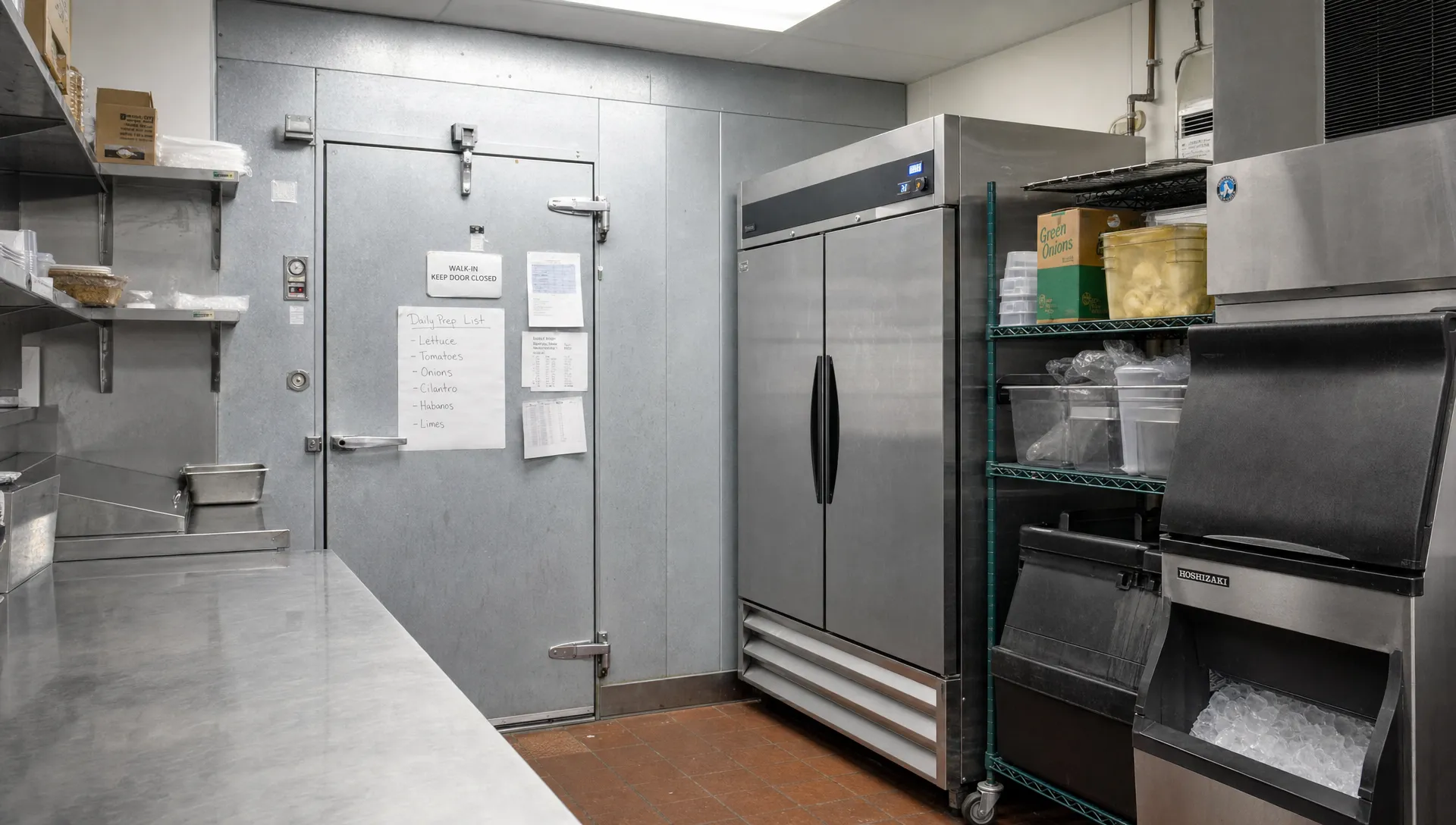
Warning signs your restaurant should not ignore
Most restaurants can prevent major food loss by training staff to report symptoms before the equipment fails. Line cooks, prep cooks and dish staff often notice refrigeration problems before management does because they open the units all day.
Watch for these signs:
- Product temperature is higher than the air display suggests
- Doors do not close firmly or gaskets are torn
- Frost appears on evaporator coils, shelves or product boxes
- Water pools inside or outside the unit
- The compressor or fans run constantly
- The unit short cycles, clicks or shuts off randomly
- Food near the door spoils faster than food in the back
- The box recovers slowly after deliveries or prep rushes
- Staff lowers the thermostat repeatedly to compensate
The last point is especially common. Turning the thermostat down may hide the problem temporarily, but it does not fix airflow, refrigerant, electrical or mechanical issues. It can also cause freezing in areas that should only be refrigerated, which creates another type of product loss.
A simple staff rule helps: if someone has to adjust the setpoint more than once, move product or explain a temperature reading, the issue should be logged and reported.
Fast response can be the difference between saving and dumping food
When a walk-in cooler or freezer is full, time matters more than perfect troubleshooting by phone. A restaurant needs a technician who can diagnose the system, make safe temporary recommendations and determine whether the product can be protected while repairs are underway.
During an active refrigeration failure, the first priority is to reduce heat gain. Keep doors closed, limit traffic into the walk-in and avoid loading warm product into a struggling box. If you have another working cooler or freezer, move the highest-risk foods first according to your food safety plan. Label anything moved or held under questionable conditions so management can make a documented decision later.
Longer outages may require temporary refrigerated storage, a mobile freezer or a plan to shift inventory to another location. The right repair contractor can help you decide whether the equipment can be stabilized quickly or whether product protection needs to happen before a full repair is completed.
This is also where a commercial-only service provider is different from a general residential HVAC company. Restaurant refrigeration involves food safety, high-use equipment, tight kitchens, health inspections, after-hours failures and multiple equipment types in one facility. A contractor that understands walk-ins, reach-ins, prep tables, ice machines, electrical faults and refrigeration controls can usually narrow the problem faster.
What your team should do while waiting for repair
Kitchen staff should not attempt sealed-system refrigeration repairs or electrical repairs. They can, however, take steps that reduce food loss and help the technician work faster once on site.
Use this response plan when a refrigeration unit is warming up:
- Record the time the problem was discovered and the temperature reading
- Check product temperature, not just the display on the unit
- Keep doors closed unless product must be moved
- Move high-risk foods first if safe backup storage is available
- Do not keep resetting breakers without reporting the pattern
- Do not chip ice off coils with knives or sharp tools
- Save error codes, alarm messages and recent temperature logs
- Tell the technician what changed recently, such as a delivery, cleaning, power outage or menu rush
The best information is specific. “The walk-in was 38°F at 7 a.m., 44°F at 10 a.m. and 48°F at noon after a dairy delivery” gives a technician more to work with than “the cooler is warm.”
Repair, maintenance and the real cost of waiting
Many food loss events are avoidable because refrigeration systems usually give clues before failure. A condenser that has been running hot, a gasket that has been leaking for months or a fan motor that starts intermittently may still be repairable at a lower cost than a full emergency shutdown.
Waiting often raises the bill in three ways. First, the part that was failing can damage other components. Second, the service call becomes an emergency instead of a scheduled repair. Third, the kitchen may lose product while waiting for parts, approval or backup storage.
Preventive maintenance does not eliminate every breakdown, but it gives a restaurant a better chance of catching small issues while the unit is still protecting product. The highest-value checks are usually temperature verification, coil cleaning, fan operation, door seals, defrost operation, drain condition, refrigerant performance and electrical connections.
For restaurants that rely on multiple boxes, it is also worth tracking which units hold the most expensive or sensitive inventory. A walk-in full of proteins has a different risk profile than a beverage cooler. A prep table on the cookline may fail faster because it sits in a hot environment and is opened constantly. Matching inspection frequency to inventory risk helps prevent losses where they would hurt most.
How to choose a repair partner that helps prevent food loss
The right refrigeration repair company should be evaluated on more than whether it can “work on coolers.” Restaurants need a contractor that understands urgency, food safety risk, commercial equipment design and the difference between a temporary restart and a reliable repair.
Look for a provider with commercial refrigeration experience, not just residential air conditioning experience. Ask whether the company services walk-in coolers, walk-in freezers, reach-ins, ice makers, refrigeration controls and the electrical components that support them. Response time matters too, but so does the quality of the diagnosis. A fast visit that misses the root cause may only delay the food loss event.
If you are comparing companies, VA Commercial Repair Solutions has a helpful article on choosing a refrigeration repair service, including response time, certifications, brand experience and warranty questions.
For restaurants in Charlottesville, Harrisonburg, Waynesboro, Staunton, Lexington, Fishersville and nearby Shenandoah Valley communities, the practical question is simple: when your cooler is warming up at the worst possible time, can you reach a live person and get a technician who works on commercial refrigeration every day?
Frequently Asked Questions
How does restaurant refrigeration repair prevent food loss? Repair prevents food loss by restoring safe temperature control before product spends too much time in the danger zone. A technician identifies the cause of warming, such as airflow restriction, failed fans, refrigerant issues, bad controls or electrical faults, then repairs the problem so the unit can hold temperature under normal kitchen use.
What temperature should a restaurant cooler maintain? Restaurants commonly use 41°F or below as the cold-holding standard for time and temperature control for safety foods, consistent with the FDA Food Code. Many kitchens set equipment slightly lower to allow for door openings and product loading, but product temperature is more important than the display alone.
Should food be thrown away if a cooler rises above 41°F? It depends on the product, how long it was above safe temperature, your food safety plan and local health department rules. Record the time, air temperature and product temperature. If product safety is uncertain, do not serve it until a qualified manager or regulatory authority determines the proper action.
Is a warm walk-in cooler always a refrigerant problem? No. Warm walk-ins can be caused by dirty coils, failed fan motors, bad door gaskets, defrost failures, control problems, clogged drains, electrical faults or refrigerant leaks. Adding refrigerant without finding the real cause can lead to repeat failures.
How often should restaurant refrigeration be serviced? High-use restaurant equipment should be checked regularly, with frequency based on equipment type, kitchen conditions and inventory risk. Busy kitchens, dusty condenser locations, older units and equipment holding high-value proteins often need more frequent attention than lightly used boxes.
Protect your inventory before a cooler failure becomes a food loss event
If your restaurant refrigeration is running warm, recovering slowly or showing signs of failure, do not wait for a complete shutdown. VA Commercial Repair Solutions serves commercial and industrial customers across central Virginia and the Shenandoah Valley with HVAC, refrigeration, electrical, boilers, ice makers, range hoods and related commercial equipment services.
Calls are answered 24/7/365 by a live person, with no voicemail. For urgent restaurant refrigeration repair in Charlottesville, Harrisonburg, Waynesboro, Staunton, Lexington, Fishersville and surrounding areas, call (540) 457-4822 or visit VA Commercial Repair Solutions.
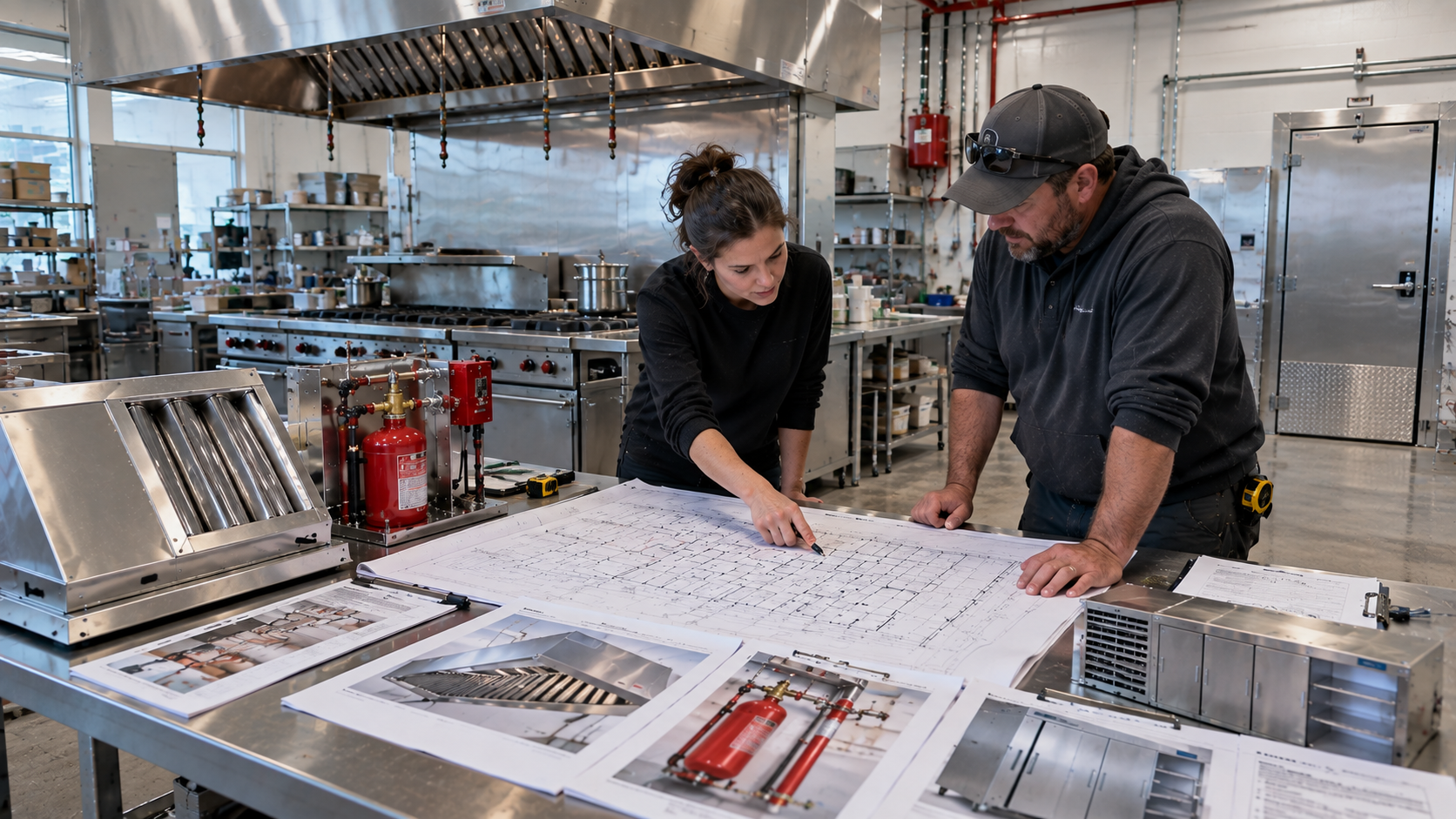
Opening a Restaurant in Virginia: Kitchen Design, Hood, Fire Suppression and Refrigeration Checklist